Scorpions in South Carolina: Species, Season, and Prevention Guide
Quick Answer: Yes, scorpions are common in South Carolina, with 130 verified GBIF sightings concentrated in Greenville, Oconee, Edgefield, Richland, and Pickens counties. Recorded species include the southern unstriped scorpion (Vaejovis carolinianus), the Hentz striped scorpion (Centruroides hentzi), and Telegonus cellus.
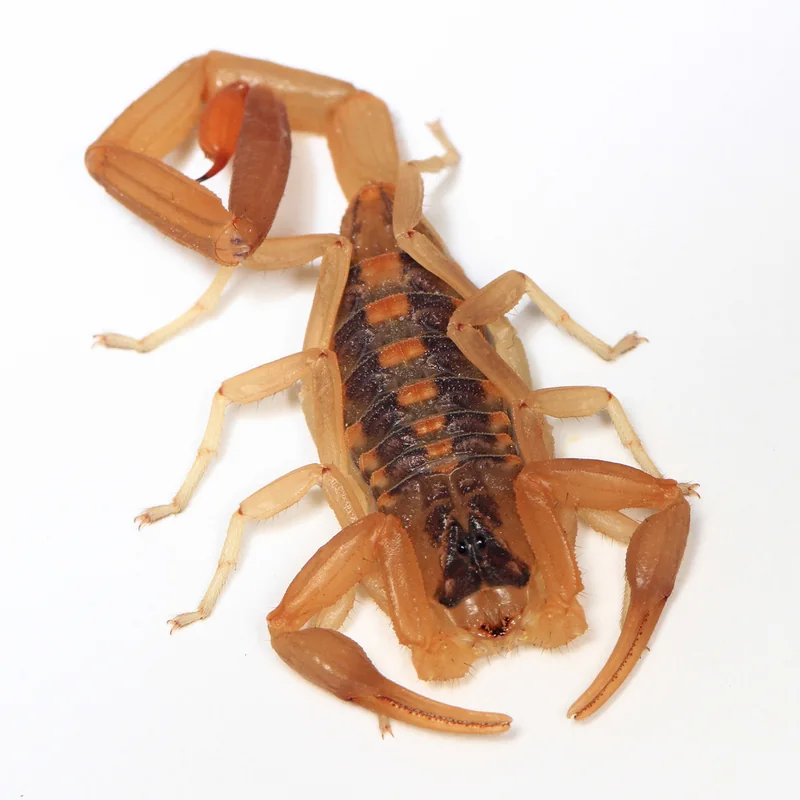
When Scorpions Are Most Active in South Carolina
Now (November): Lower Outdoor ActivityVerified South Carolina Counties, Species & US Range
Counties with Verified Observations
- Greenville
- Oconee
- Edgefield
- Richland
- Pickens
- Newberry
- Spartanburg
- McCormick
- Abbeville
- Lexington
Species Recorded in South Carolina
| Species | Scientific Name | GBIF Records |
|---|---|---|
| southern unstriped scorpion | Vaejovis carolinianus | 122 |
| Hentz striped scorpion | Centruroides hentzi | 4 |
| Telegonus cellus | Telegonus cellus | 2 |
How South Carolina Compares to Neighboring States
Note: Wildlife does not follow state or county lines. GBIF totals reflect verified citizen and museum records, so low counts in a neighboring county do not guarantee absence.
How to Identify Scorpions
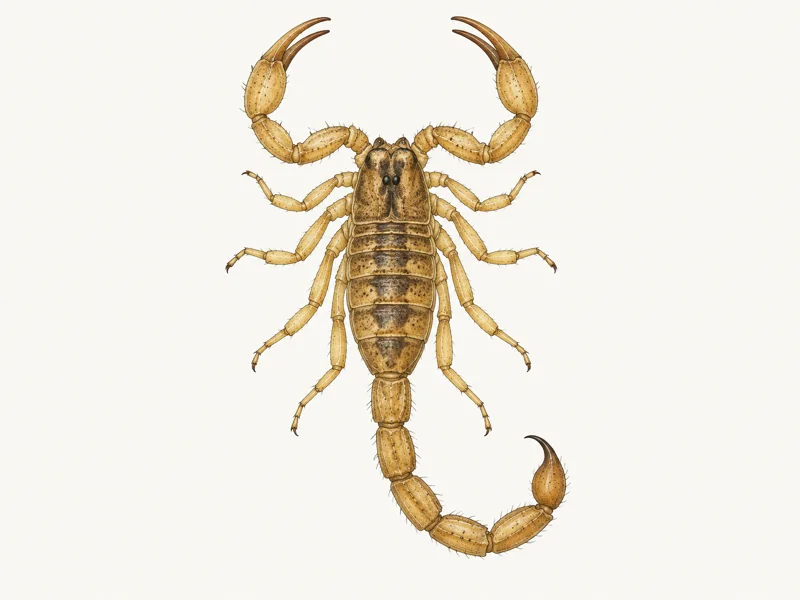
Annotated Anatomy Key (Scorpion)
- Front pincers: Two large curved pedipalps (pincers) used to grasp prey—slender in bark scorpions.
- Segmented trunk: Compact cephalothorax fused to a 7-segmented mesosoma that fluoresces under UV blacklight.
- Eight walking legs: Four pairs of jointed walking legs attached cleanly behind the front pincers.
- Tail & stinger: Five-segmented metasoma tail curving toward a bulbous venomous stinger (telson).
Scorpions Field Checklist
- Eight legs with two large front pincers (pedipalps)
- Segmented tail curving over the back ending in a venomous stinger
- Fluoresces bright blue-green under UV blacklight at night
- Color ranges from pale straw-yellow to dark brown or black
Side-by-Side Look-Alike Comparisons
Scorpions Size at True Relative Scale
Quick Answer: Yes, scorpions are common in South Carolina, with 130 verified GBIF sightings concentrated in Greenville, Oconee, Edgefield, Richland, and Pickens counties. Recorded species include the southern unstriped scorpion (Vaejovis carolinianus), the Hentz striped scorpion (Centruroides hentzi), and Telegonus cellus. Activity peaks in May, June, and September, and stings can be medically significant for some people.
Where Scorpions Live in South Carolina
Anyone asking whether there are scorpions in South Carolina may be surprised by how widespread they are. The state's humid subtropical climate, with hot, muggy summers and mild coastal winters (USDA zones 7a to 9a), supports several species. Verified records cluster in the Upstate, especially Greenville, Oconee, and Pickens counties, with additional hotspots in Edgefield and Richland counties.
Recorded Species
- Southern unstriped scorpion (Vaejovis carolinianus): A small, dark brown to blackish scorpion with no stripes. It favors forested slopes, leaf litter, loose bark, and rock crevices, which helps explain its frequency in the wooded foothills of the Upstate.
- Hentz striped scorpion (Centruroides hentzi): A slender, tan to yellowish-brown scorpion with dark stripes along its back. It is an agile climber that often shelters under bark, boards, and debris.
- **Telegonus cellus:** A less frequently recorded species in the state's GBIF data. Homeowners who find an unusual scorpion can photograph it and submit it to a local extension office or a citizen-science platform for confirmation.
Around homes, scorpions use woodpiles, mulch beds, stone walls, crawl spaces, and cluttered garages. They also slip indoors through gaps under doors, around plumbing, and in damaged screens.
When Scorpions Are Most Active in South Carolina
South Carolina scorpion season generally runs from spring through fall, with GBIF sightings peaking in May, June, and September. Warm nights and high humidity draw scorpions out to hunt insects, spiders, and other small prey.
Scorpions are nocturnal, so most encounters happen after dark or when people move stored items, firewood, or yard debris. Summer heat and dry spells can push them toward the cooler, damper spaces inside homes. Activity slows in the winter months, though coastal warmth can extend their active period.
Look-Alikes Frequently Mistaken for Scorpions
Good South Carolina scorpion identification starts with the basics: scorpions have eight legs, a pair of grasping pincers (pedipalps), and a segmented tail ending in a bulb-shaped stinger. Several local creatures are commonly confused with them.
- Centipedes: Long, flattened bodies with one pair of legs per body segment and no pincers or curled tail. House centipedes and larger outdoor species can bite, but they look far more leggy than a scorpion.
- Earwigs: Small, elongated insects with six legs and pincer-like forceps at the rear of the body. Those rear forceps often lead people to mistake them for tiny scorpions.
- Tarantulas: Large, hairy spiders with eight legs but no pincers and no tail. They are rarely encountered and are generally harmless to people.
How to Keep Scorpions Out of Your South Carolina Home
The most effective approach to preventing scorpions in South Carolina is Integrated Pest Management (IPM). Cooperative extension guidance across the Southeast emphasizes exclusion, habitat reduction, and moisture control before any chemical treatment.
Seal Entry Points
- Install door sweeps and weatherstripping on all exterior doors.
- Caulk gaps around windows, utility lines, pipes, and vents.
- Repair torn window and crawl space screens.
Reduce Shelter and Food Sources
- Store firewood, lumber, and stones away from the foundation and off the ground.
- Keep mulch, leaf litter, and dense ground cover pulled back from exterior walls.
- Control insects indoors and out, since scorpions follow their prey.
- Declutter garages, basements, and attics, and keep stored items in sealed plastic bins.
Control Moisture
- Fix leaky faucets, hoses, and air conditioning drips.
- Improve crawl space ventilation or use a dehumidifier.
- Make sure gutters and downspouts carry water away from the house.
Everyday Precautions
Shake out shoes, gloves, and clothing left in garages or outdoors. Wear gloves when moving wood or debris, and use a flashlight when walking outside at night. Pull beds slightly away from walls and keep bedding off the floor.
If chemical control becomes necessary, use only EPA-registered products and follow the EPA product label directions exactly. Labels specify where and how a product may legally and safely be applied.
When to Call a Licensed Professional
Contact a licensed South Carolina pest control professional if:
- Scorpions show up indoors repeatedly, especially in bedrooms or living spaces.
- Someone in the home has been stung more than once.
- Scorpions are found in the attic, walls, or crawl space.
- Exclusion and sanitation efforts have not reduced sightings after several weeks.
Safety note: This guide is for general information only and is not medical advice. If someone is stung, especially a child, an older adult, or a person showing a strong reaction, call US Poison Control at 1-800-222-1222 and contact a doctor. For severe symptoms such as trouble breathing, call 911.
IPM Prevention Checklist for South Carolina Homes
- Seal exterior cracks, door sweeps, and plumbing penetrations
- Remove rock piles, firewood, and debris within 20 feet of the foundation
- Shake out shoes, towels, and bedding before use in active regions
 EXCLUSION BLUEPRINT
Inspect eaves, screens, door sweeps, foundation cracks, and utility penetrations around South Carolina homes before peak season.
Scorpions in South Carolina: Frequently Asked Questions
Are there scorpions in South Carolina?
Yes. Scorpions are common in South Carolina, with 130 verified GBIF sightings and recorded species including Vaejovis carolinianus, Centruroides hentzi, and Telegonus cellus.
Which South Carolina counties have the most scorpion sightings?
Verified records are highest in Greenville, Oconee, Edgefield, Richland, and Pickens counties, with the Upstate foothills especially well represented.
When is scorpion season in South Carolina?
Scorpions are active from spring through fall, with sightings peaking in May, June, and September. They hunt mostly at night.
What should someone do after a scorpion sting in South Carolina?
Call US Poison Control at 1-800-222-1222 and contact a doctor for guidance. Seek emergency care right away for severe symptoms, and avoid relying on home remedies.
Sources & Verification
- University of Arizona Cooperative Extension — Scorpions
- Texas A&M AgriLife Extension — Scorpions
- GBIF Global Biodiversity Occurrence Records
Data refreshed · Editorial & GBIF Methodology