Carpenter Ant vs Termite: How to Tell Them Apart and Protect Your Home
Quick ID Verdict: A winged insect on the windowsill in spring can send any homeowner into a quiet panic. Is it a carpenter ant or termite? Both damage wood, both swarm, and both cost money when ignored. But the right ID changes the whole response.
Carpenter Ant
Termite
Side-by-Side Comparison Table
| Trait | Carpenter Ant | Termite |
|---|---|---|
| Scientific Group | Camponotus | Blattodea (Isoptera) |
| Category | Insect | Insect |
| Typical Size | 6–16 mm | 4–12 mm |
| Danger Level | Structural | Structural |
| Bites or Stings? | Yes | No |
| Peak US Months | April, May, June, July | April, May |
| Key ID Trait | Large black, red-and-black, or brown ant with a smoothly rounded thorax profile | Straight, bead-like antennae (unlike the elbowed antennae of ants) |
Carpenter Ant vs. Termite: True Size Comparison
Side-by-Side Anatomy Blueprint
Compare body segments, antennae, leg count, and key markings directly before treating or removing either species.
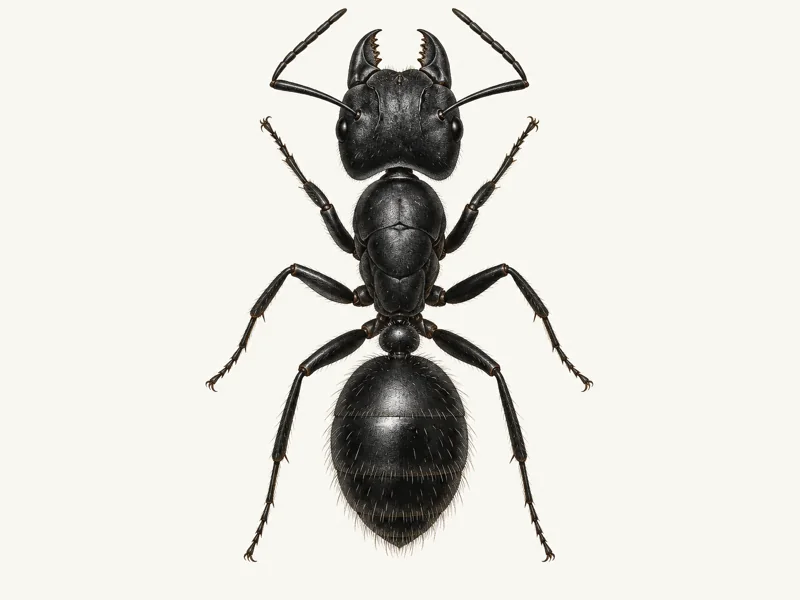
- Elbowed antennae: Sharply bent antennae on a broad heart-shaped black head (straight in termites).
- Rounded black thorax: Evenly arched wingless thorax without spines; workers vary widely in size (6–13 mm).
- Single waist node: EXACTLY ONE distinct small node (petiole) pinching the narrow waist.
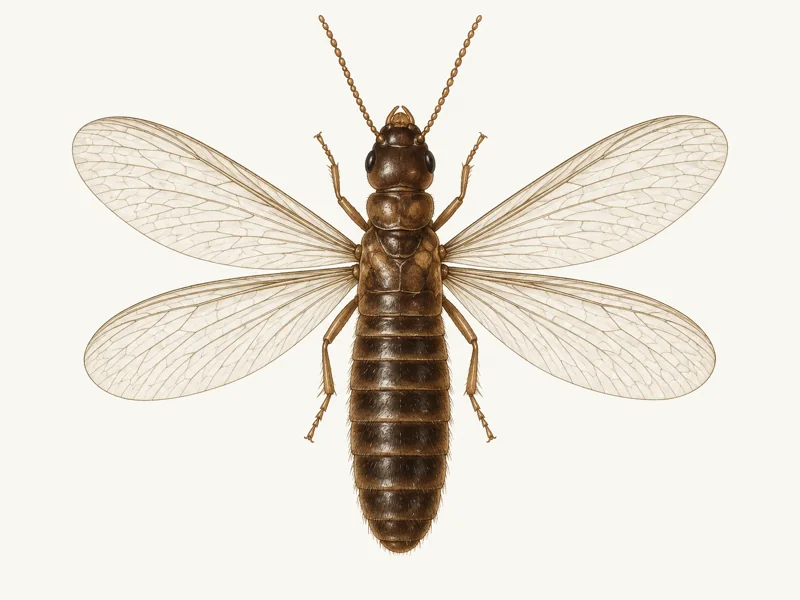
- Straight antennae: Straight, bead-like (moniliform) antennae—never sharply bent like ant antennae.
- Four equal wings: Two pairs of equal-length translucent veined wings extending far past the abdomen (shed easily).
- Six insect legs: Three pairs of slender crawling legs beneath the pale translucent wings.
Quick ID verdict: Look at the waist and antennae. Carpenter ants have a pinched waist and elbowed antennae, while termites have a thick, straight body and straight, bead-like antennae.
Key Physical Differences for Quick Identification
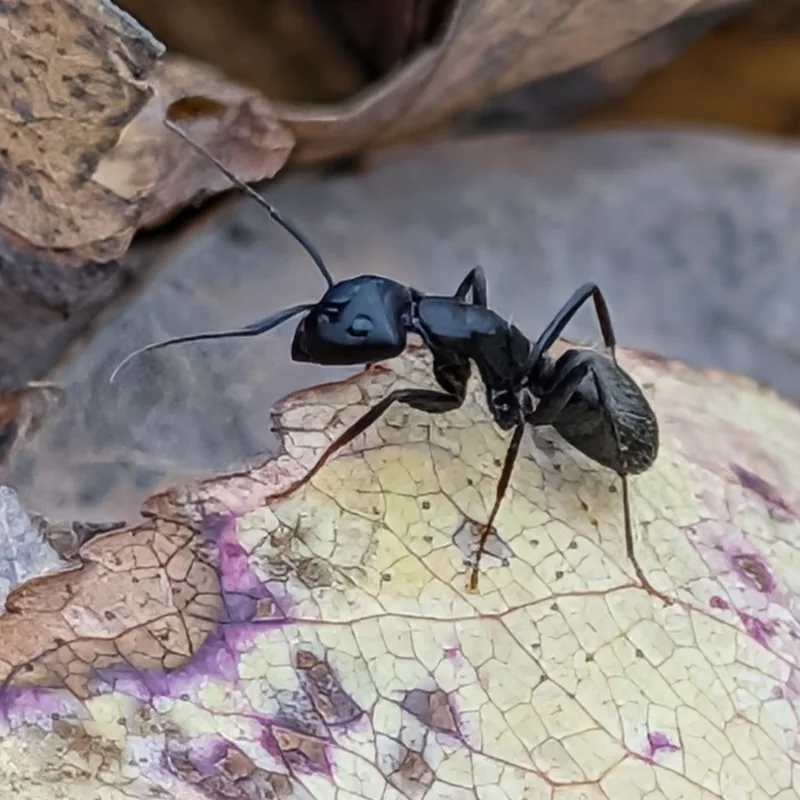
The difference between carpenter ant and termite workers is obvious once someone knows where to look. Carpenter ants (Camponotus) are large, typically 6 to 16 mm, and come in black, red-and-black, or brown. Their thorax has a smoothly rounded profile when viewed from the side.
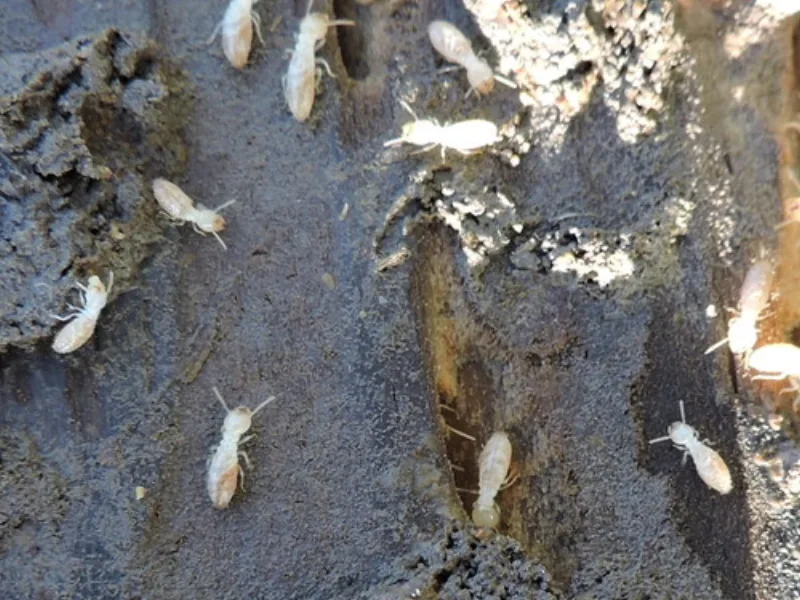
Termites (Blattodea, formerly Isoptera) run smaller, about 4 to 12 mm. Workers are pale, soft-bodied, and rarely seen in the open because they avoid light and dry air.
FeatureCarpenter AntTermiteSize6–16 mm4–12 mmAntennaeElbowedStraight, bead-likeWaistNarrow, pinchedBroad, no pinchColor (workers)Black, red-and-black, brownCreamy white to pale
Swarmers and Wings: What to Look For
Swarmers (winged reproductives) are where most carpenter ant vs termite identification mix-ups happen. Termite swarmers have two pairs of wings that are equal in length and often extend well past the body. Carpenter ant swarmers have front wings that are noticeably longer than the hind wings.
Shed wings are another clue. Termites drop their wings quickly, so piles of identical wings near windows, doors, or light fixtures usually point to termites. Ant wings are found less often in large piles.
Damage Clues: Frass, Galleries, and Mud Tubes
Sometimes the insects stay hidden, and the damage tells the story. Here's what each pest leaves behind:
- Carpenter ants: They don't eat wood. They excavate it to nest, pushing out coarse, sawdust-like frass that often contains insect parts and bits of insulation. Their galleries are smooth and clean, almost sanded.
- Subterranean termites: They eat wood and leave galleries packed with soil and debris. Pencil-width mud tubes running along foundations, piers, or basement walls are a classic sign.
- Drywood termites: They leave small, hard, six-sided fecal pellets that pile up beneath kick-out holes.
Wood that sounds hollow when tapped can point to either pest. Probing it with a screwdriver and checking whether the tunnels are clean or soil-lined usually settles it.
Where and When Each Pest Is Active in the US
Subterranean termites are found across nearly the entire lower 48, with the heaviest pressure in the Southeast, Gulf Coast, and warm western states. They typically swarm in spring, often on warm days after rain. Drywood termites stick mainly to southern coastal regions, the Southwest, and California, and tend to swarm later in summer or early fall.
Carpenter ants are widespread too, but they're especially common in the Northeast, Upper Midwest, and Pacific Northwest, where moist, mature woodlands are plentiful. Swarms usually appear from spring into early summer. Workers forage mostly at night, so homeowners often first spot them in kitchens after dark.
Which Pest Is More Dangerous to Your Home?
Both are structural pests, and neither should be ignored. Still, termites generally pose the bigger long-term threat. They consume cellulose around the clock, colonies can number in the hundreds of thousands, and damage often goes unnoticed for years. Termite damage costs US property owners billions of dollars each year, and standard homeowner's insurance rarely covers it.
Carpenter ant damage builds more slowly because they only hollow out nesting space. But, it's usually a symptom of a moisture problem, such as a leaky roof, failed flashing, or rotting sill plates. Left alone for years, an established colony with satellite nests can seriously weaken framing.
Safe IPM Strategies for Control and Prevention
Integrated Pest Management starts with removing what both pests need: moisture, wood contact, and easy entry. These steps help against either pest:
- Fix moisture: Repair leaks, clean gutters, and direct downspouts away from the foundation. Ventilate crawl spaces.
- Eliminate wood-to-soil contact: Keep siding and wooden structures at least 6 inches above grade.
- Move firewood and debris: Stack firewood well away from the house and off the ground.
- Trim vegetation: Cut back branches touching the roof or siding, since carpenter ants use them as bridges.
- Seal entry points: Caulk gaps around utility lines, windows, and foundation cracks.
If a treatment is needed, homeowners should use targeted products like ant baits and always follow the EPA-registered product label exactly. The label is the law, and misuse can harm people, pets, and pollinators.
When to Call a Licensed Pest Professional
Any confirmed termite activity calls for a licensed professional. Soil treatments, bait systems, and fumigation require specialized equipment and state licensing.
For carpenter ants, call a pro if ants keep appearing indoors even though baiting, frass keeps returning, or the nest sits inside walls. A good inspector will also pinpoint the moisture source, which is the real fix.
Frequently Asked Questions
What's the difference between carpenter ant and termite identification?
Carpenter ants have a pinched waist, elbowed antennae, and are larger (6–16 mm). Termites have a broad body, straight bead-like antennae, and are smaller (4–12 mm). Carpenter ant workers are dark-colored; termite workers are pale and avoid light.
How can you tell carpenter ant swarmers from termite swarmers?
Termite swarmers have equal-length wing pairs that extend past their body. Carpenter ant swarmers have noticeably longer front wings than hind wings. Termites drop wings quickly in large piles; carpenter ant wings are found less frequently.
What damage signs indicate carpenter ants versus termites?
Carpenter ants leave smooth, clean galleries and coarse sawdust-like frass. Termites leave soil-packed galleries and mud tubes along foundations. Drywood termites produce hard, six-sided fecal pellets. Probing tunnels with a screwdriver reveals whether they're clean or soil-lined.
Are termites more dangerous than carpenter ants?
Yes, termites pose a greater long-term threat. They consume wood continuously, form massive colonies, and cause unnoticed damage for years. Carpenter ants only hollow nesting space but signal moisture problems. Termite damage costs US property owners billions annually and usually isn't covered by homeowner's insurance.
What preventative measures work against both carpenter ants and termites?
Fix moisture leaks, keep wood structures 6 inches above grade, remove firewood piles from the house, trim vegetation, and seal entry points. These Integrated Pest Management strategies eliminate conditions both pests need: moisture, wood contact, and easy access.
When should you call a professional for carpenter ant or termite treatment?
Call a licensed pest professional for any confirmed termite activity requiring specialized soil treatments or bait systems. For carpenter ants, contact a pro if indoor activity persists despite baiting, frass returns, or nests are inside walls. Professionals also identify underlying moisture issues.