Earwig vs Scorpion: How to Tell Them Apart and Which Is Dangerous
Quick ID Verdict: Count the legs and look at the front of the body. An earwig is a six-legged insect, 12-22 mm long, with pincers on its rear. A scorpion is an eight-legged arachnid, 25-120 mm long, with two large pincers (pedipalps) at the front and a stinger-tipped tail curled over its back.
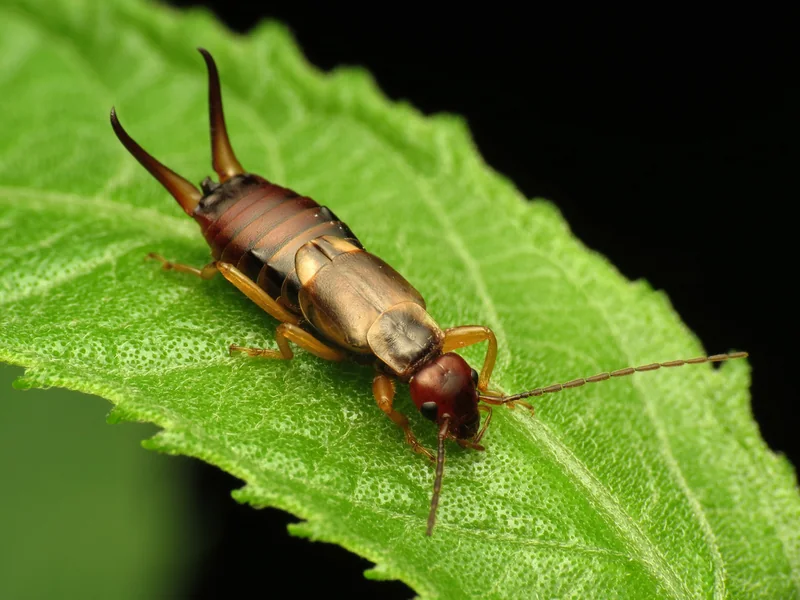
Earwig
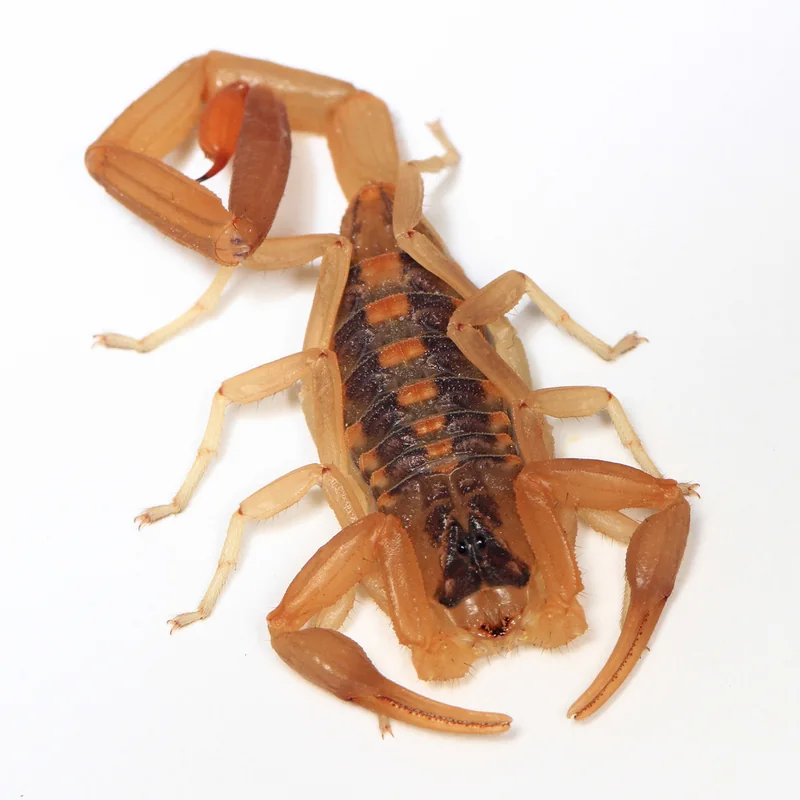
Scorpion
Side-by-Side Comparison Table
| Trait | Earwig | Scorpion |
|---|---|---|
| Scientific Group | Dermaptera | Scorpiones |
| Category | Insect | Arachnid |
| Typical Size | 12–22 mm | 25–120 mm |
| Danger Level | Nuisance | Medically Significant |
| Bites or Stings? | No | Yes |
| Peak US Months | June, July, August, September | April, May, August, September |
| Key ID Trait | Slender, flattened dark reddish-brown body | Eight legs with two large front pincers (pedipalps) |
Earwig vs. Scorpion: True Size Comparison
Side-by-Side Anatomy Blueprint
Compare body segments, antennae, leg count, and key markings directly before treating or removing either species.
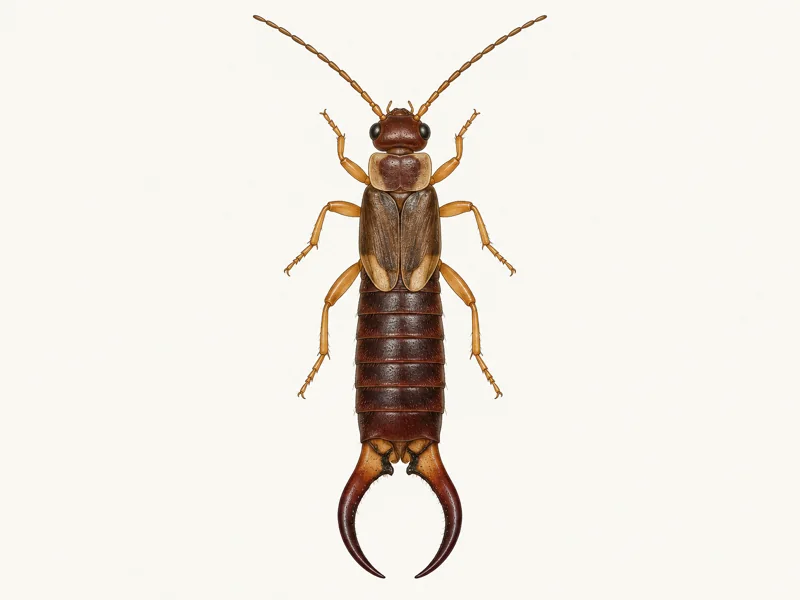
- Thread-like antennae: Segmented medium-length antennae on a flat chestnut-brown head.
- Short wing covers: Compact leathery forewings (tegmina) leave most of the flexible abdomen exposed.
- Six amber legs: Three pairs of slender pale tan legs suited for damp mulch and baseboard crevices.
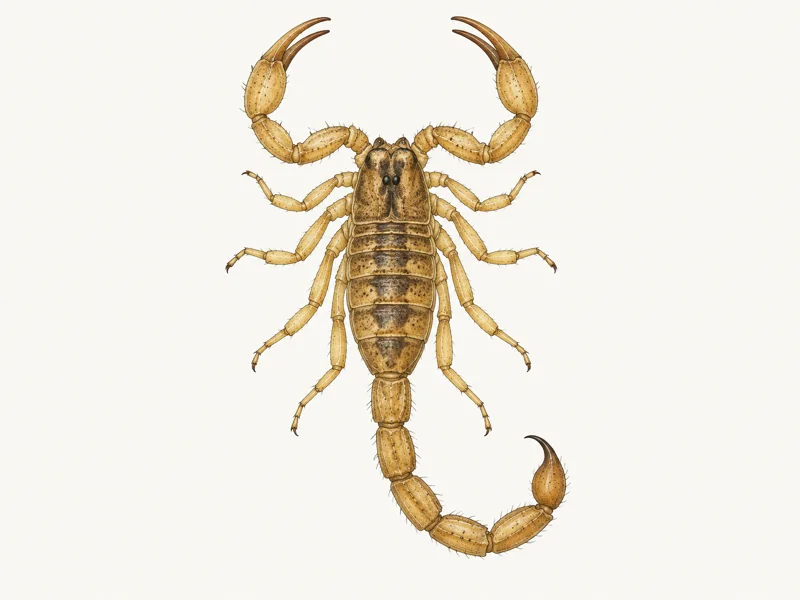
- Front pincers: Two large curved pedipalps (pincers) used to grasp prey—slender in bark scorpions.
- Segmented trunk: Compact cephalothorax fused to a 7-segmented mesosoma that fluoresces under UV blacklight.
- Eight walking legs: Four pairs of jointed walking legs attached cleanly behind the front pincers.
Quick Answer: Count the legs and look at the front of the body. An earwig is a six-legged insect, 12-22 mm long, with pincers on its rear. A scorpion is an eight-legged arachnid, 25-120 mm long, with two large pincers (pedipalps) at the front and a stinger-tipped tail curled over its back.
That front-versus-back pincer check settles almost every earwig or scorpion question in about three seconds. The stakes differ, too: earwigs are a nuisance, while scorpions are medically significant and should never be handled.
Key Visual & Physical Differences
The difference between an earwig and a scorpion starts with what they are. Earwigs belong to the insect order Dermaptera, and scorpions belong to the arachnid order Scorpiones. Insects and arachnids are built very differently, which makes the features below reliable field marks.
Earwigs (Dermaptera)
- Size: 12-22 mm, about half an inch to just under an inch.
- Body: Slender, flattened, dark reddish-brown.
- Legs: Six, like all insects.
- Pincers: Forceps-like cerci at the tip of the abdomen, pointing backward.
- Antennae: Long and thread-like.
- Tail: No stinger. The abdomen stays low and flat.
Scorpions (Scorpiones)
- Size: 25-120 mm, roughly 1 to nearly 5 inches depending on species.
- Legs: Eight walking legs, as with all arachnids.
- Pincers: Two large front pincers (pedipalps) held forward like claws.
- Antennae: None.
- Tail: A segmented tail ending in a bulb and stinger, often arched over the back.
The 3-Second Checklist
- Pincers at the back, six legs, antennae: earwig.
- Pincers at the front, eight legs, curled tail: scorpion.
- Under one inch with a flat, reddish-brown body: almost certainly an earwig.
Behavior, Habitat & Danger Comparison
Both pests are nocturnal and seek shelter during the day, which is why homeowners often find them in similar spots. Their reasons for moving indoors and the risk they pose are quite different.
Earwig Behavior and Habitat
Earwigs thrive in damp places like mulch beds, leaf litter, under stones, and around leaky spigots. They feed on decaying plant matter, small insects, and sometimes tender seedlings or soft fruit. They usually come indoors when it is too wet or too dry outside, often turning up in basements, bathrooms, and laundry rooms.
Earwigs are classed as a nuisance. Their pincers can give a mild pinch if they are handled, but they have no venom and do not spread disease. Despite the old myth, they do not crawl into people's ears to lay eggs.
Scorpion Behavior and Habitat
Scorpions are ambush predators that hunt insects and spiders at night. They shelter under rocks, woodpiles, bark, debris, and in wall voids or crawl spaces. In the US they are most common in the Southwest and South, though some species range farther north.
Scorpions are medically significant. A sting is usually painful, and some species, especially bark scorpions in the Southwest, can cause more serious reactions. This is a particular concern for young children, older adults, and people with health conditions. If someone is stung, call US Poison Control at 1-800-222-1222 and contact a doctor. Get emergency care right away for trouble breathing, muscle twitching, or other severe symptoms, and do not rely on home remedies.
Which One Is Worse for Homeowners?
Earwigs show up in larger numbers and can damage gardens, but scorpions are clearly the bigger concern because of their sting. An earwig problem is mostly about moisture and annoyance. A scorpion problem is a safety issue, especially in homes with children or pets.
Non-Chemical IPM First
Integrated Pest Management works well for both pests because each depends on shelter and nearby food.
- Moisture control: Fix leaks, clean gutters, improve drainage, and run a dehumidifier in damp basements. This matters most for earwigs.
- Exclusion: Seal gaps around doors, windows, pipes, and foundation cracks, and install door sweeps and tight screens.
- Sanitation: Pull mulch, leaf litter, woodpiles, and stones back from the foundation. Fewer insects outside means less prey for scorpions.
- Traps and monitoring: Rolled damp newspaper catches earwigs overnight. In scorpion areas, sticky traps along walls and a UV flashlight at night (scorpions glow) can help find activity.
- Safe habits: In scorpion country, shake out shoes, bedding, and towels, and wear gloves when moving debris.
When to Use Products or Call a Pro
If IPM steps don't solve the problem, targeted perimeter treatments may help. Always read and follow the EPA product label exactly, including application sites and pet and child safety precautions. Repeated scorpion sightings indoors call for a licensed pest management professional.
Frequently Asked Questions
Can an earwig sting like a scorpion?
No. Earwigs have no stinger or venom. Their rear pincers can give a light pinch if they are grabbed, but that is a nuisance, not a medical concern.
Is a small scorpion less dangerous than a big one?
Not necessarily. Some of the most medically significant US species, such as bark scorpions, are relatively slender and small. Treat every scorpion with caution.
Why do earwigs and scorpions both show up in bathrooms?
Earwigs are drawn to the moisture, while scorpions often follow the insects or seek cool shelter. Sealing gaps around pipes and fixing leaks helps keep both out.
What should someone do after a scorpion sting?
Call US Poison Control at 1-800-222-1222 and contact a doctor for guidance. Seek emergency care immediately for severe symptoms, especially in children or older adults.