Scorpions in North Carolina: Species, Season, and Prevention
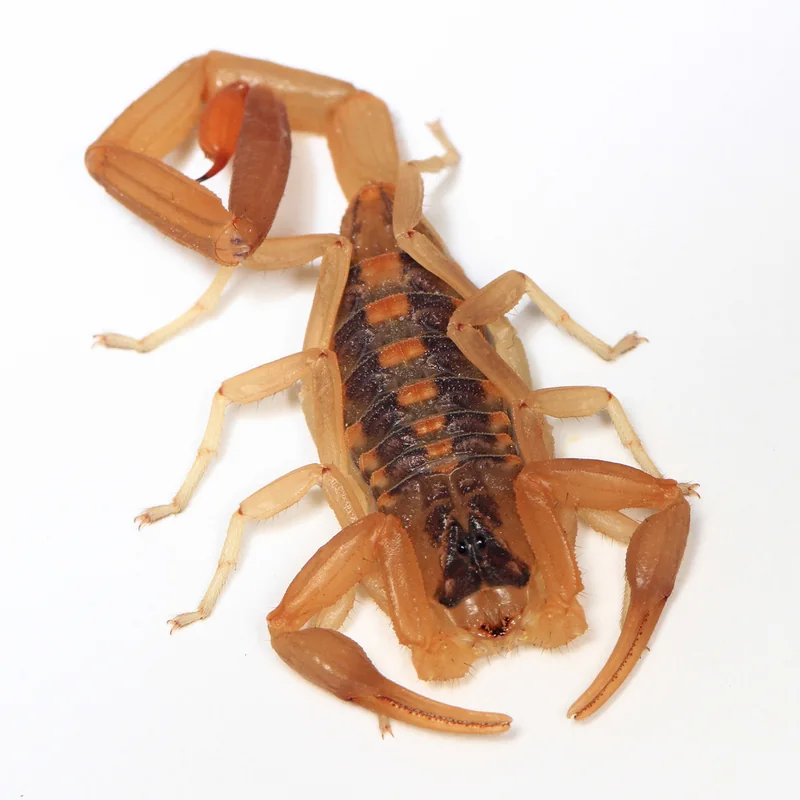
Quick Answer: Yes, there are scorpions in North Carolina, though most residents will never see one. The native southern unstriped scorpion (Vaejovis carolinianus) lives mainly in the western mountains, and the Hentz striped scorpion (Centruroides hentzi) appears in rare records. Both are small and shy, and neither is considered life-threatening to healthy adults.
When Scorpions Are Most Active in North Carolina
Now (November): Lower Outdoor ActivityVerified North Carolina Counties, Species & US Range
Counties with Verified Observations
- Madison
- Cherokee
- Cocke
- Greene
- Macon
- Transylvania
- McDowell
- Forsyth
- Swain
- Brunswick
Species Recorded in North Carolina
| Species | Scientific Name | GBIF Records |
|---|---|---|
| Telegonus cellus | Telegonus cellus | 38 |
| southern unstriped scorpion | Vaejovis carolinianus | 33 |
| Hentz striped scorpion | Centruroides hentzi | 24 |
How North Carolina Compares to Neighboring States
Note: Wildlife does not follow state or county lines. GBIF totals reflect verified citizen and museum records, so low counts in a neighboring county do not guarantee absence.
How to Identify Scorpions
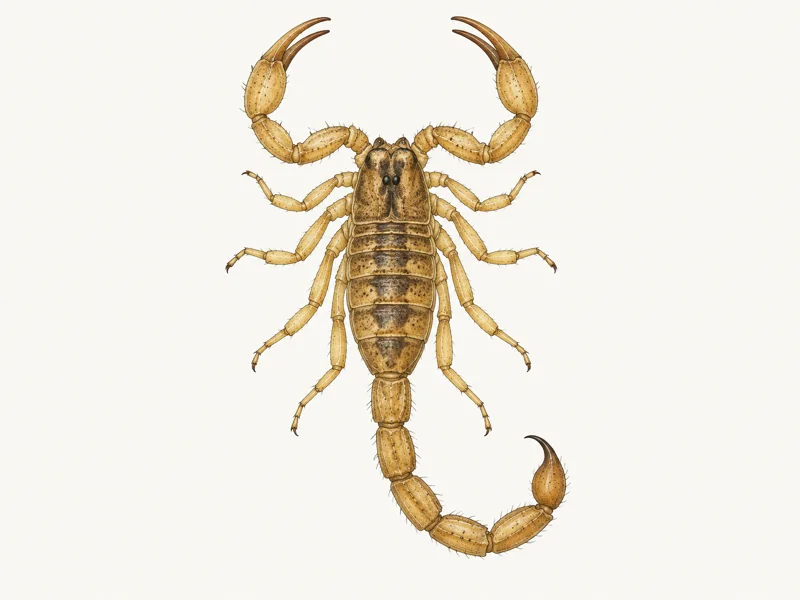
Annotated Anatomy Key (Scorpion)
- Front pincers: Two large curved pedipalps (pincers) used to grasp prey—slender in bark scorpions.
- Segmented trunk: Compact cephalothorax fused to a 7-segmented mesosoma that fluoresces under UV blacklight.
- Eight walking legs: Four pairs of jointed walking legs attached cleanly behind the front pincers.
- Tail & stinger: Five-segmented metasoma tail curving toward a bulbous venomous stinger (telson).
Scorpions Field Checklist
- Eight legs with two large front pincers (pedipalps)
- Segmented tail curving over the back ending in a venomous stinger
- Fluoresces bright blue-green under UV blacklight at night
- Color ranges from pale straw-yellow to dark brown or black
Side-by-Side Look-Alike Comparisons
Scorpions Size at True Relative Scale
Where Scorpions Live in North Carolina
GBIF occurrence data include 98 verified scorpion sightings tied to North Carolina. The records cluster in the southern Appalachians, with the top counties listed as Madison, Cherokee, Cocke, Greene, and Macon. Cocke County lies just across the Tennessee line from Madison County, which shows how these populations follow the mountains rather than state borders.
The southern unstriped scorpion is the species most residents encounter. It favors the cooler Blue Ridge, where it hides under loose bark, flat rocks, leaf litter, and rotting logs on wooded slopes. It sometimes wanders into cabins, basements, and crawl spaces near forest edges.
The Hentz striped scorpion is far more common farther south, in Florida and Georgia. North Carolina records are scattered, and some may reflect scorpions carried in on firewood, landscape plants, or moving boxes.
North Carolina Scorpion Identification
- Southern unstriped scorpion: About 1 to 2 inches long, dark reddish-brown to nearly black, with fairly stout pincers and no stripes on the back.
- Hentz striped scorpion: Slender, tan to yellowish-brown, often with darker bands or mottling on the back and a thin tail and pincers.
The GBIF dataset for this state also lists Telegonus cellus, a name used for a skipper butterfly, not a scorpion. It is likely a tagging error in the public data. It is a useful reminder that crowd-sourced records need careful review.
When Scorpions Are Most Active in North Carolina
Sightings peak in May and June, when warm nights bring scorpions out to hunt insects and look for mates. Activity continues through summer and tapers off as mountain temperatures drop in fall.
North Carolina scorpion season is mostly a nighttime event. Scorpions shelter under cover during the day and come out after dark. Heavy rain or a sudden heat wave can push them indoors in search of stable, sheltered spots.
In winter, native scorpions tuck into protected crevices and become largely inactive. Finding one indoors during cold months usually means it was already sheltering in the wall void, woodpile, or basement.
Look-Alikes Frequently Mistaken for Scorpions
Several common North Carolina arthropods get confused with scorpions, especially when glimpsed quickly in a dim basement.
- Centipedes: Long, flattened bodies with one pair of legs on each segment. They move very fast and have no pincers or curled stinging tail. The house centipede, with its long, feathery legs, is the one most often found indoors.
- Earwigs: Small brown insects with pincer-like forceps at the rear of the body, not the front. They have six legs, while scorpions have eight legs plus a pair of front pincers.
A true scorpion always has two front claws, eight walking legs, and a segmented tail ending in a bulb-shaped stinger.
How to Keep Scorpions Out of Your North Carolina Home
Integrated Pest Management (IPM), as recommended by university cooperative extension programs across the Southeast, starts with non-chemical steps. Scorpions follow their prey, so reducing insects and hiding places does most of the work.
Exclusion
- Seal cracks in foundations, around pipes, and where utility lines enter the home.
- Install tight door sweeps and repair torn window and vent screens.
- Caulk gaps along baseboards and around crawl space openings.
Sanitation and Habitat Reduction
- Store firewood off the ground and at least 20 feet from the house.
- Clear leaf litter, rock piles, and loose boards from the foundation line.
- Shake out shoes, gloves, and bedding in cabins and seasonal homes.
- Inspect boxes and potted plants shipped from farther south.
Moisture Control
- Fix leaky faucets and gutters that keep soil damp near walls.
- Run a dehumidifier in basements and ventilate crawl spaces.
Sticky traps along walls help monitor activity. If pesticides become necessary, choose products labeled for scorpions and follow the EPA product label exactly. The label is the law, and it covers safe use around children and pets.
When to Call a Licensed Professional
Contact a licensed North Carolina pest control professional if:
- Scorpions appear indoors repeatedly, especially in bedrooms.
- Several scorpions are found in a short period, suggesting a nearby population.
- You find a striped scorpion, which may indicate a hitchhiking species.
- Infants, elderly relatives, or allergic household members live in the home.
If Someone Is Stung
Stings from North Carolina scorpions typically cause local pain similar to a bee sting. This guide does not provide medical advice. For any sting, call US Poison Control at 1-800-222-1222 and contact a doctor. Seek emergency care right away for trouble breathing, swelling of the face or throat, or stings to young children.
IPM Prevention Checklist for North Carolina Homes
- Seal exterior cracks, door sweeps, and plumbing penetrations
- Remove rock piles, firewood, and debris within 20 feet of the foundation
- Shake out shoes, towels, and bedding before use in active regions
 EXCLUSION BLUEPRINT
Inspect eaves, screens, door sweeps, foundation cracks, and utility penetrations around North Carolina homes before peak season.
Scorpions in North Carolina: Frequently Asked Questions
Are there scorpions in North Carolina?
Yes. GBIF holds 98 verified sightings, mostly of the southern unstriped scorpion in western mountain counties such as Madison, Cherokee, and Macon.
Are North Carolina scorpions dangerous?
They are not considered life-threatening to healthy adults, but stings hurt. Call Poison Control at 1-800-222-1222 and a doctor after any sting.
When is scorpion season in North Carolina?
Activity peaks in May and June and continues on warm summer nights before slowing in fall.
What is the best way to prevent scorpions in North Carolina?
Seal entry points, move firewood and debris away from the house, and reduce moisture. Use labeled pesticides only as a follow-up, following the EPA label.
Sources & Verification
- University of Arizona Cooperative Extension — Scorpions
- Texas A&M AgriLife Extension — Scorpions
- GBIF Global Biodiversity Occurrence Records
Data refreshed · Editorial & GBIF Methodology