Scorpions in Arkansas: Species, Season, and Prevention Guide
Quick Answer: Yes, scorpions are common in Arkansas. GBIF holds 257 verified records, most from the Ozarks and western counties such as Washington, Benton, and Sebastian. The striped bark scorpion (Centruroides vittatus) is the species homeowners meet most often, and sightings peak in April and again from June through August.
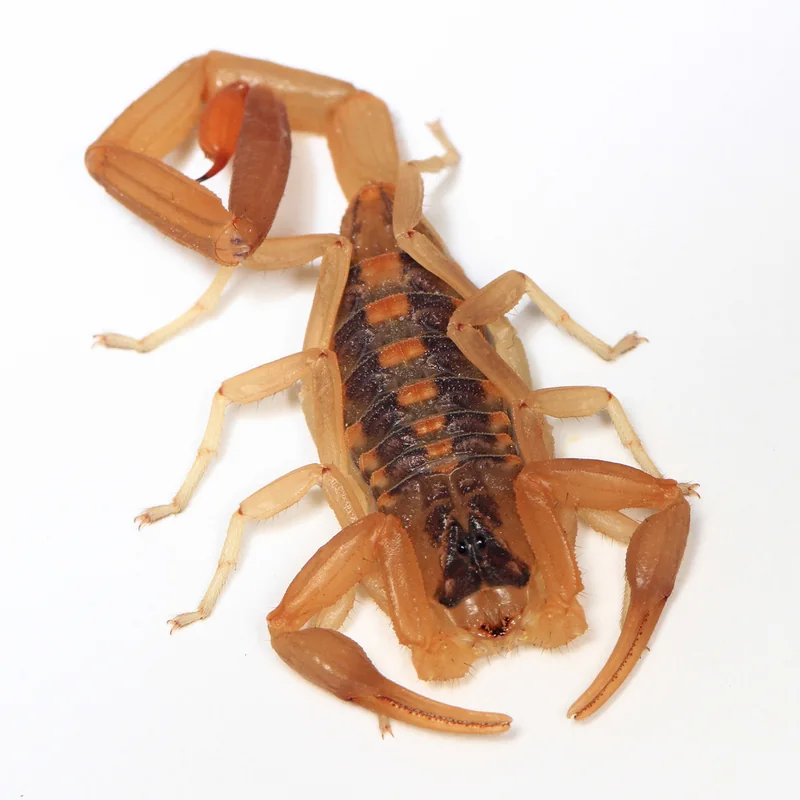
When Scorpions Are Most Active in Arkansas
Now (November): Lower Outdoor ActivityVerified Arkansas Counties, Species & US Range
Counties with Verified Observations
- Washington
- Benton
- Sebastian
- Baxter
- Carroll
- Pulaski
- Madison
- Perry
- Stone
- Crawford
Species Recorded in Arkansas
| Species | Scientific Name | GBIF Records |
|---|---|---|
| striped bark scorpion | Centruroides vittatus | 211 |
| Telegonus cellus | Telegonus cellus | 34 |
How Arkansas Compares to Neighboring States
Note: Wildlife does not follow state or county lines. GBIF totals reflect verified citizen and museum records, so low counts in a neighboring county do not guarantee absence.
How to Identify Scorpions
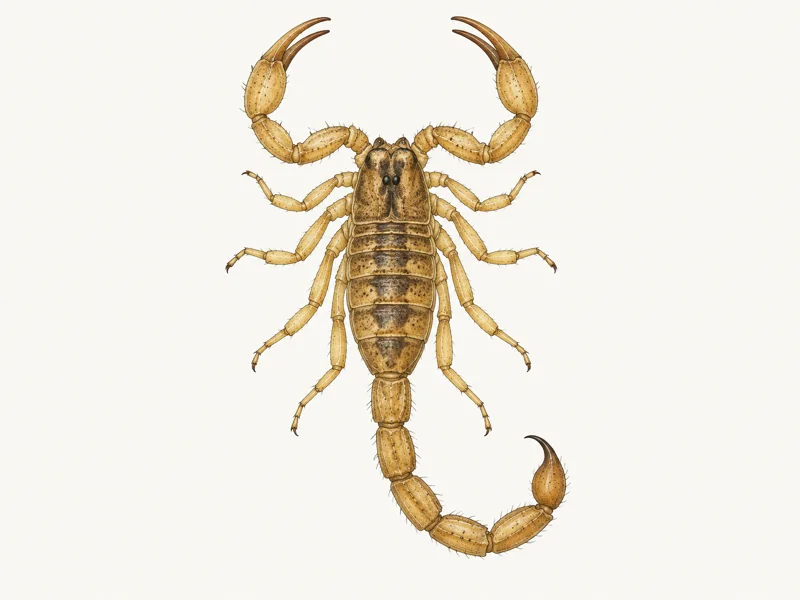
Annotated Anatomy Key (Scorpion)
- Front pincers: Two large curved pedipalps (pincers) used to grasp prey—slender in bark scorpions.
- Segmented trunk: Compact cephalothorax fused to a 7-segmented mesosoma that fluoresces under UV blacklight.
- Eight walking legs: Four pairs of jointed walking legs attached cleanly behind the front pincers.
- Tail & stinger: Five-segmented metasoma tail curving toward a bulbous venomous stinger (telson).
Scorpions Field Checklist
- Eight legs with two large front pincers (pedipalps)
- Segmented tail curving over the back ending in a venomous stinger
- Fluoresces bright blue-green under UV blacklight at night
- Color ranges from pale straw-yellow to dark brown or black
Side-by-Side Look-Alike Comparisons
Scorpions Size at True Relative Scale
Quick Answer: Yes, scorpions are common in Arkansas. GBIF holds 257 verified records, most from the Ozarks and western counties such as Washington, Benton, and Sebastian. The striped bark scorpion (Centruroides vittatus) is the species homeowners meet most often, and sightings peak in April and again from June through August.
Where Scorpions Live in Arkansas
People often ask, "Are there scorpions in Arkansas?" The answer is a clear yes. Verified GBIF occurrence records cluster in the northwest and north-central parts of the state. The top counties are Washington, Benton, Sebastian, Baxter, and Carroll. These areas have rocky hillsides, limestone outcrops, and wooded edges that give scorpions plenty of cover.
Two species appear in Arkansas records:
- Striped bark scorpion (Centruroides vittatus): This scorpion is tan to yellowish and about 2 to 2.75 inches long. It has two dark stripes running down its back and long, slender pincers. It climbs well and often shelters under bark, rocks, firewood, and siding.
- **Telegonus cellus:** This smaller species is recorded far less often. It is generally found under leaf litter, stones, and debris in wooded settings.
Arkansas has a humid subtropical climate with hot, muggy summers and mild, damp winters, spanning USDA Zones 6b to 8b. Scorpions here are drawn to moisture and to the insects they hunt. That is why they turn up in crawl spaces, garages, basements, and woodpiles.
When Scorpions Are Most Active in Arkansas
Scorpion activity in Arkansas begins in spring. GBIF records peak in April, when warming nights draw scorpions out of their winter shelters. A second, longer peak runs through June, July, and August, during the hottest and most humid stretch of the year.
Scorpions are nocturnal. They hunt after dark and hide in tight, cool spaces during the day. In midsummer heat or after heavy rain, they may wander indoors looking for moisture or shelter. Activity drops in late fall, and scorpions stay largely inactive through winter.
A Simple Detection Tip
Scorpions glow blue-green under ultraviolet light. Walking the yard, foundation, and garage with a UV flashlight after dark is a reliable way to check for them. This works best during the warm-season peaks.
Look-Alikes Frequently Mistaken for Scorpions
Correct identification helps homeowners respond calmly and appropriately. Several common Arkansas creatures are often confused with scorpions:
- Centipedes: Centipedes have long, flattened bodies with one pair of legs per segment, often 15 pairs or more. They have no pincers and no curled tail. Some larger species can deliver a painful bite.
- Earwigs: Earwigs carry pincer-like forceps at the rear of the body rather than the front. They are small, usually under an inch, and have six legs. They are harmless to people.
- Tarantulas: Arkansas's native tarantulas are large, hairy, and brown, with eight legs and no pincers or tail. They are shy and rarely bite.
A true scorpion has eight legs, a pair of front pincers (pedipalps), and a segmented tail that ends in a stinger. If all three features are present, the animal is a scorpion.
How to Keep Scorpions Out of Your Arkansas Home
Integrated Pest Management (IPM) guidance from university cooperative extension programs emphasizes non-chemical steps first. Exclusion, habitat reduction, and moisture control do most of the work in preventing scorpions in Arkansas homes.
Exclusion
- Seal cracks in the foundation, around utility lines, and along the bottom edges of siding with silicone caulk.
- Install tight door sweeps and weatherstripping. Striped bark scorpions can slip through gaps as thin as a credit card.
- Repair torn window and vent screens.
Habitat and Moisture Control
- Store firewood, lumber, and stones well away from the house and off the ground.
- Clear leaf litter, mulch buildup, and debris from the foundation perimeter.
- Fix leaky faucets and improve drainage, and use a dehumidifier in damp crawl spaces or basements.
- Reduce outdoor lighting near doors, since it attracts the insects scorpions feed on.
Indoor Habits
Shake out shoes, gloves, and clothing left in garages or closets. Move beds slightly away from walls, and keep bedding off the floor. Sticky traps placed along baseboards can help monitor activity.
Chemical Options
If non-chemical steps aren't enough, perimeter treatments may help. Always read and follow EPA product labels exactly. Scorpions are less sensitive to many insecticides than common insects, so results vary.
When to Call a Licensed Arkansas Pest Professional
- Scorpions are found indoors repeatedly, especially in bedrooms or living areas.
- A UV inspection reveals several scorpions around the foundation.
- Someone in the home is young, elderly, or has known sensitivities to stings.
- Exclusion and cleanup have not reduced sightings after several weeks.
Sting Safety
A striped bark scorpion sting is usually painful but rarely dangerous for healthy adults. Reactions can be more serious for children, older adults, and people with allergies. This guide does not provide medical advice. After any sting, contact US Poison Control at 1-800-222-1222 or a doctor, and seek emergency care for breathing trouble or severe symptoms.
IPM Prevention Checklist for Arkansas Homes
- Seal exterior cracks, door sweeps, and plumbing penetrations
- Remove rock piles, firewood, and debris within 20 feet of the foundation
- Shake out shoes, towels, and bedding before use in active regions
 EXCLUSION BLUEPRINT
Inspect eaves, screens, door sweeps, foundation cracks, and utility penetrations around Arkansas homes before peak season.
Scorpions in Arkansas: Frequently Asked Questions
Are there scorpions in Arkansas?
Yes. Scorpions are common in Arkansas, with 257 verified GBIF records. Most of these come from Washington, Benton, Sebastian, Baxter, and Carroll counties.
When is Arkansas scorpion season?
Activity peaks in April, then again from June through August. Scorpions are mostly inactive during the colder winter months.
What is the most common scorpion in Arkansas?
The striped bark scorpion (Centruroides vittatus) is the most common. It is tan with two dark stripes down its back. Telegonus cellus is also recorded in the state.
What should someone do after a scorpion sting?
Call US Poison Control at 1-800-222-1222 or contact a doctor for guidance. Seek emergency help right away for severe reactions, especially in children or older adults.
Sources & Verification
- University of Arizona Cooperative Extension — Scorpions
- Texas A&M AgriLife Extension — Scorpions
- GBIF Global Biodiversity Occurrence Records
Data refreshed · Editorial & GBIF Methodology