Brown Recluse in Louisiana: Identification, Season, and Prevention
Quick Answer: Yes, brown recluse spiders (Loxosceles reclusa) are common in Louisiana. GBIF records show 32 verified sightings, with the most in Natchitoches, East Baton Rouge, Bossier, Caddo, and Orleans parishes. Sealing entry points, reducing clutter, and controlling moisture are the best first steps for keeping them out.
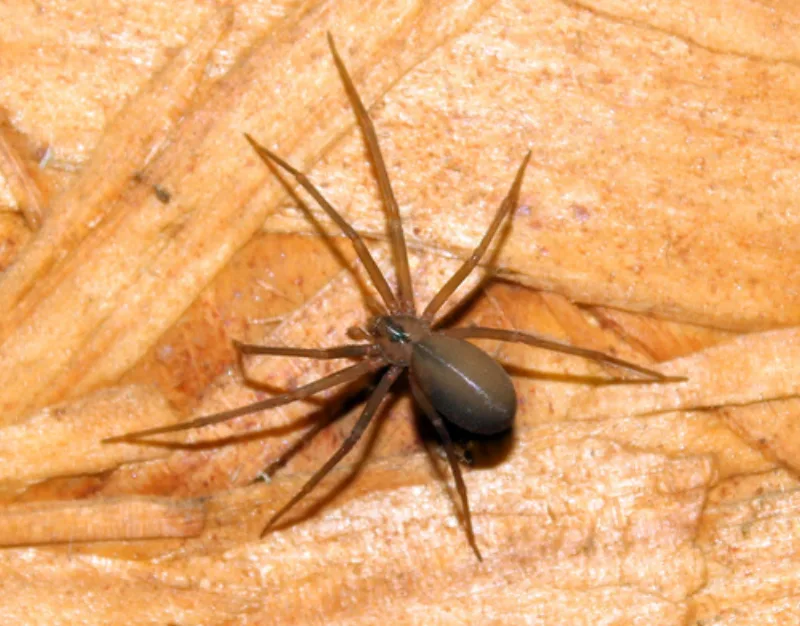
When Brown Recluse Spiders Are Most Active in Louisiana
Now (November): Peak ActivityVerified Louisiana Counties, Species & US Range
Counties with Verified Observations
- Natchitoches
- East Baton Rouge
- Bossier
- Caddo
- Orleans
- Winn
- Bienville
- Ouachita
- Tensas
- Terrebonne
Species Recorded in Louisiana
| Species | Scientific Name | GBIF Records |
|---|---|---|
| brown recluse | Loxosceles reclusa | 32 |
How Louisiana Compares to Neighboring States
Note: Wildlife does not follow state or county lines. GBIF totals reflect verified citizen and museum records, so low counts in a neighboring county do not guarantee absence.
How to Identify Brown Recluse Spiders
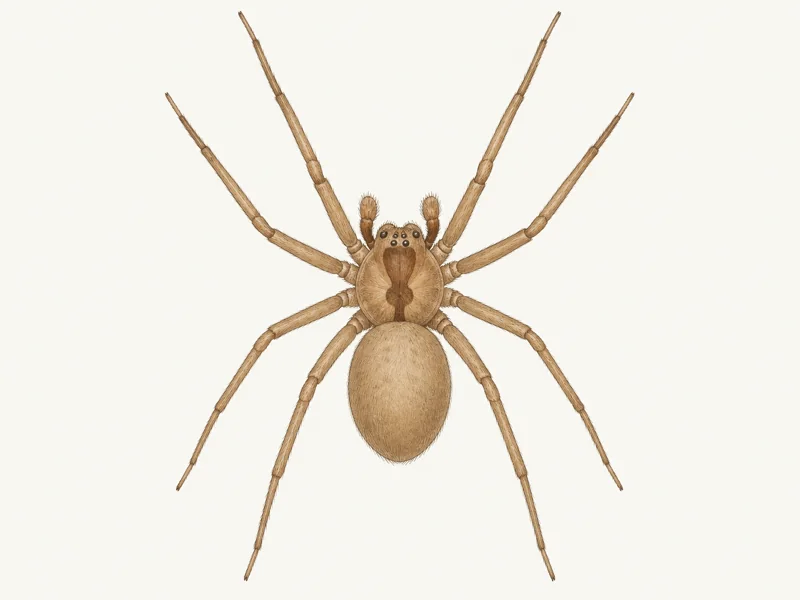
Annotated Anatomy Key (Brown Recluse)
- Six eyes (3 pairs): Six eyes arranged in 3 distinct dyads (pairs) rather than the typical 8 spider eyes.
- Dark violin mark: Dark brown violin-shaped mark on the cephalothorax—wide base behind eyes, thin neck pointing toward abdomen.
- Unbanded smooth legs: Eight uniformly tan-brown legs with NO stripes, rings, or heavy macro-spines.
- Velvety oval abdomen: Uniformly tan to medium brown abdomen covered in fine velvety hairs—no spots or chevrons.
Brown Recluse Spiders Field Checklist
- Uniformly tan to medium brown body with NO stripes, bands, or spines on the legs
- Dark violin-shaped mark on the cephalothorax (neck pointing toward abdomen)
- Six eyes arranged in three distinct pairs (dyads) rather than eight eyes
- Smooth, velvety fine hairs on abdomen; spins messy sheet-like retreat webs
Side-by-Side Look-Alike Comparisons
Brown Recluse Spiders Size at True Relative Scale
Quick Answer: Yes, brown recluse spiders (Loxosceles reclusa) are common in Louisiana. GBIF records show 32 verified sightings, with the most in Natchitoches, East Baton Rouge, Bossier, Caddo, and Orleans parishes. Sealing entry points, reducing clutter, and controlling moisture are the best first steps for keeping them out.
Where Brown Recluse Spiders Live in Louisiana
Louisiana has a humid subtropical climate (USDA zones 8a-10a) with hot, wet summers and mild winters. That climate lets brown recluses live both outdoors and inside buildings. Verified GBIF sightings cluster in Natchitoches, East Baton Rouge, Bossier, Caddo, and Orleans, which are the counties (parishes) with the most records.
Brown recluses are shy and prefer undisturbed, dry, sheltered spots. Common hiding places include:
- Closets, attics, and crawl spaces
- Cardboard boxes and stored clothing
- Behind baseboards, furniture, and wall hangings
- Garages, sheds, and woodpiles
- Inside shoes and folded linens left untouched
Louisiana Brown Recluse Identification
Adults are light to medium brown and about 1/4 to 1/2 inch in body length. The most reliable feature is the eye pattern: six eyes arranged in three pairs, rather than the eight eyes most spiders have. The legs are uniformly colored and lack spines, and the abdomen is plain.
The dark violin marking on the back is helpful but unreliable on its own, since many harmless spiders have similar markings. Entomologists confirm identification by examining the eyes under magnification.
When Brown Recluse Spiders Are Most Active in Louisiana
Louisiana brown recluse season is nearly year-round because winters are mild. GBIF records show reporting peaks in April and November. These peaks likely reflect spring activity and fall movement indoors as temperatures drop, along with when people are cleaning and handling stored items.
Brown recluses are nocturnal hunters and rarely seen in daylight. They tend to bite defensively, usually when pressed against skin in bedding, clothing, or shoes.
Safety note: This guide is not medical advice. If you suspect a brown recluse bite, wash the area gently, seek medical care promptly, and call US Poison Control at 1-800-222-1222. If possible, safely collect the spider for identification. Do not attempt home venom remedies.
Look-Alikes Frequently Mistaken for Brown Recluse Spiders
Many Louisiana spiders get blamed for brown recluse sightings. Checking the eyes, legs, and body shape usually settles it.
- Wolf spiders: Heavier, hairy, and often striped, with eight eyes in three rows. They run across lawns and garages and are often found on the ground.
- Cellar spiders: Very long, thin legs and a small body, usually hanging in loose webs in corners. They are sometimes called daddy longlegs.
- Other brown spiders: Many common house and funnel-type spiders are brown but have eight eyes, banded or spiny legs, or patterned abdomens.
If you cannot tell, photograph the spider or save it in a sealed container for a pest professional or your local LSU AgCenter parish office to examine.
How to Keep Brown Recluse Spiders Out of Your Louisiana Home
Anyone wondering how to prevent brown recluse in Louisiana should start with non-chemical steps. These are based on general entomology and university extension IPM guidance.
Exclusion
- Seal gaps around pipes, windows, doors, and foundation cracks with caulk.
- Install door sweeps and repair damaged window screens.
- Check weatherstripping on garage and attic access points.
Sanitation and Clutter
- Replace cardboard storage with sealed plastic bins.
- Keep clothing, shoes, and linens off the floor.
- Move woodpiles, firewood, and debris away from the house.
- Vacuum corners, baseboards, and closets regularly, including egg sacs.
Moisture and Monitoring
- Fix leaks and run dehumidifiers in crawl spaces and humid rooms.
- Place glue traps along walls and in closets to monitor activity.
- Shake out shoes and gloves before wearing them, and wear gloves when moving stored boxes.
If you use any insecticide, choose a product labeled for spiders and follow the EPA-approved label exactly. Sprays alone rarely solve an infestation, since brown recluses hide in protected spots.
When to Call a Licensed Louisiana Pest Professional
- You catch several brown recluses on glue traps within a few weeks.
- You find spiders repeatedly in bedrooms or in bedding.
- Someone in the home has been bitten and spiders keep appearing.
- Heavy clutter, an attic, or a crawl space makes treating it yourself impractical.
Choose a pest control company licensed by the Louisiana Department of Agriculture and Forestry.
IPM Prevention Checklist for Louisiana Homes
- Replace cardboard storage with sealed plastic totes
- Keep bed skirts off the floor and pull beds away from walls
- Shake out shoes, towels, and stored clothing before wearing
 EXCLUSION BLUEPRINT
Inspect eaves, screens, door sweeps, foundation cracks, and utility penetrations around Louisiana homes before peak season.
Brown Recluse Spiders in Louisiana: Frequently Asked Questions
Are there brown recluse in Louisiana?
Yes. Brown recluse spiders are common in Louisiana, with GBIF records concentrated in Natchitoches, East Baton Rouge, Bossier, Caddo, and Orleans.
When is brown recluse season in Louisiana?
Activity continues most of the year because winters are mild. Recorded sightings peak in April and November.
How can I tell a brown recluse from other brown spiders?
Look for six eyes in three pairs, uniformly colored legs without spines, and a plain abdomen. The violin mark alone is not reliable.
What should I do after a suspected bite?
Seek medical care promptly and call US Poison Control at 1-800-222-1222. Do not rely on home remedies, and save the spider if you can do so safely.
Sources & Verification
- UC Riverside Spider Biology — Brown Recluse Range & Myths
- University of Kentucky Entomology — Brown Recluse Spider
- GBIF Global Biodiversity Occurrence Records
Data refreshed · Editorial & GBIF Methodology