Black Widow vs Brown Recluse: How to Tell These Venomous Spiders Apart at Home
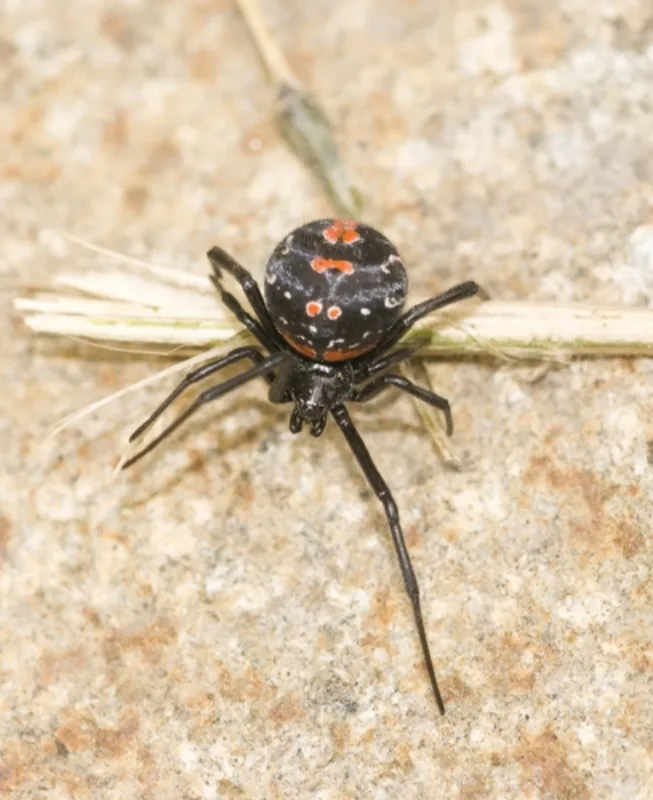
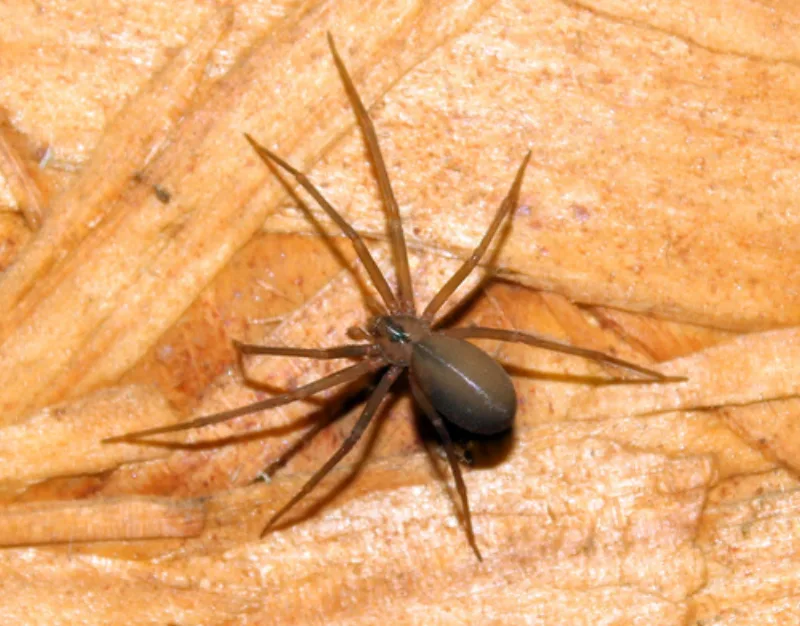
Quick ID Verdict: Spot a dark spider in the garage or a brown one behind a storage box, and the same question comes up fast: is it a black widow or brown recluse? Here's the 3-second verdict: a black widow has a glossy, jet-black, round abdomen on long slender black legs. A brown recluse is uniformly tan to medium brown, with no stripes, bands, or spines on its legs.
Black Widow
Brown Recluse
Side-by-Side Comparison Table
| Trait | Black Widow | Brown Recluse |
|---|---|---|
| Scientific Group | Latrodectus | Loxosceles reclusa |
| Category | Spider | Spider |
| Typical Size | 8–15 mm | 7–12 mm |
| Danger Level | Medically Significant | Medically Significant |
| Bites or Stings? | Yes | Yes |
| Peak US Months | July, August, September, October | May, June, July, August |
| Key ID Trait | Glossy jet-black globular abdomen with long slender black legs | Uniformly tan to medium brown body with NO stripes, bands, or spines on the legs |
Black Widow vs. Brown Recluse: True Size Comparison
Side-by-Side Anatomy Blueprint
Compare body segments, antennae, leg count, and key markings directly before treating or removing either species.
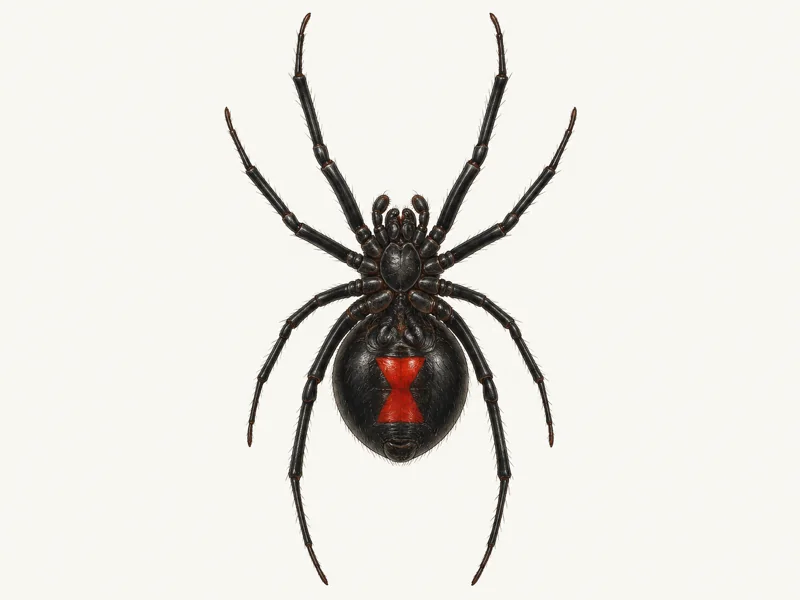
- Compact cephalothorax: Small glossy jet-black front body segment with no dorsal markings.
- Slender black legs: Eight long, glossy, tapered jet-black legs (third pair noticeably shorter than front/rear pairs).
- Globular abdomen: Large, rounded, shiny jet-black bulbous abdomen proportional to the slender legs.
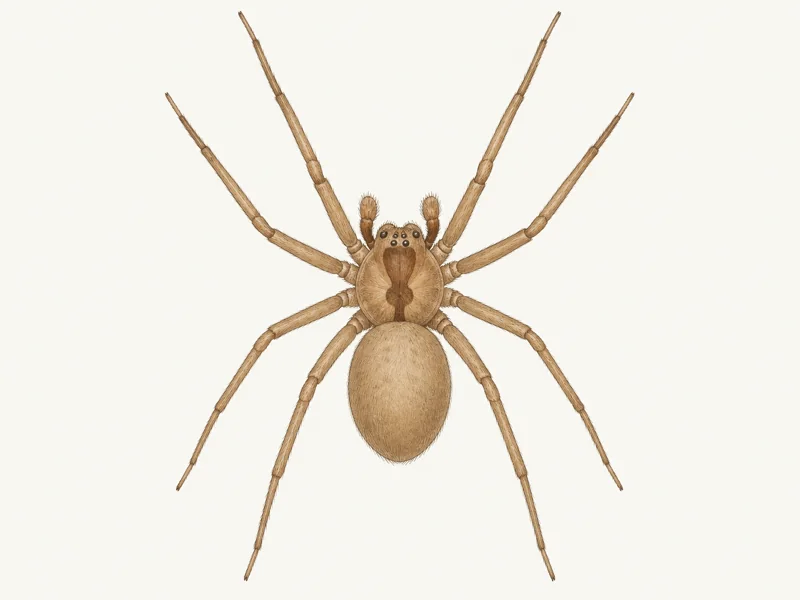
- Six eyes (3 pairs): Six eyes arranged in 3 distinct dyads (pairs) rather than the typical 8 spider eyes.
- Dark violin mark: Dark brown violin-shaped mark on the cephalothorax—wide base behind eyes, thin neck pointing toward abdomen.
- Unbanded smooth legs: Eight uniformly tan-brown legs with NO stripes, rings, or heavy macro-spines.
Both are medically significant, so accurate identification matters. This guide covers markings, habitat, seasonal activity, bite risks, and practical Integrated Pest Management (IPM) steps.
Black Widow vs Brown Recluse Identification at a Glance
The main difference between black widow and brown recluse spiders is color and body shape. Size is similar, so it won't settle the question on its own.
FeatureBlack Widow (Latrodectus)Brown Recluse (Loxosceles reclusa)Body length8–15 mm7–12 mmColorGlossy jet-blackUniformly tan to medium brownAbdomenGlobular, shinySmall, oval, finely haired, no patternLegsLong, slender, blackNo stripes, bands, or spinesDanger levelMedically significantMedically significant
Key Physical Markings, Size, and Color Differences
For black widow vs brown recluse identification, start with the abdomen. A female black widow's abdomen is round and shiny, almost like a polished bead. Many have a red or orange hourglass on the underside, but it's not always visible from above.
The brown recluse looks plain by comparison. Its body is one even shade of tan to brown, and the legs have no stripes, bands, or spines. Many show a darker violin-shaped mark behind the eyes, but plenty of harmless brown spiders have similar markings. Plain, spineless legs are a more reliable clue.
Webs, Hiding Spots, and Behavior Clues
Black widows build messy, tangled cobwebs with strong, sticky silk, usually close to the ground. They tend to stay in or near the web.
Brown recluses spin small, irregular retreat webs but hunt away from them at night. They're more likely to be found inside a shoe, in a folded towel, or in a cardboard box than in an open web.
Where Each Spider Lives in the US and When They're Most Active
Black widows live across most of the contiguous United States. Several Latrodectus species cover the South, the West, and northern states. Outdoors they favor woodpiles, meter boxes, rock walls, and patio furniture. Indoors they turn up in garages, crawl spaces, and sheds.
The brown recluse has a narrower range. It is concentrated in the south-central and Midwestern US, including Missouri, Kansas, Oklahoma, Arkansas, Tennessee, Kentucky, and nearby states. Outside that core range, true recluse infestations are uncommon, and many sightings turn out to be other brown spiders.
- Black widows: most active from late spring through early fall, when webs and egg sacs are easiest to find.
- Brown recluses: most active from spring through fall in heated homes, where they can stay active year-round in attics, closets, and basements.
Bite Symptoms and Health Risks Compared
Neither spider is aggressive. Most bites happen when someone presses one against bare skin, often while dressing, reaching into storage, or working in a garage. Their venoms work differently, though.
- Black widow venom is neurotoxic. It can cause pain that spreads from the bite site, muscle cramping, and other whole-body symptoms.
- Brown recluse venom affects tissue. Some bites stay mild, while others develop into a slow-healing wound over several days.
Only a medical professional can assess a bite. Anyone who suspects a bite from either spider should call US Poison Control at 1-800-222-1222 and contact a doctor. Get emergency care right away if symptoms are severe or the person is a child, an older adult, or has health conditions. If it's safe to do so, collecting the spider in a sealed container can help with identification.
Safe Integrated Pest Management Steps for Homeowners
IPM starts with non-chemical controls that make a home less inviting to spiders and the insects they eat.
- Exclusion: Seal gaps around doors, windows, utility lines, and foundation cracks. Repair torn screens and add door sweeps.
- Sanitation: Reduce clutter in garages, closets, and basements. Store items in sealed plastic bins instead of cardboard boxes.
- Moisture control: Fix leaks, run dehumidifiers in damp basements, and improve crawl space ventilation.
- Outdoor cleanup: Move woodpiles, debris, and dense vegetation away from the foundation.
- Monitoring: Place sticky traps along baseboards and behind furniture to see where spiders are active.
- Personal protection: Wear gloves when handling stored items or firewood, and shake out shoes and clothing left on the floor.
A vacuum can remove webs, egg sacs, and visible spiders. Seal and discard the bag right away. If pesticides are used, they should support these steps, not replace them, and every EPA product label must be followed exactly.
When to Call a Pest Professional
Call a licensed pest professional if:
- spiders keep appearing after exclusion and cleanup
- you see several brown recluses, especially in bedrooms or living areas
- black widow egg sacs show up in spots children or pets can reach
A professional can confirm the species, find harborage areas, and apply targeted, label-compliant treatments.
Frequently Asked Questions
What's the easiest way to tell a black widow from a brown recluse?
Look at the abdomen and legs. A black widow has a glossy, jet-black, round abdomen with long slender black legs. A brown recluse is uniformly tan to brown with plain, spineless legs and no stripes or bands.
Where do black widow and brown recluse spiders live in the US?
Black widows live across most of the contiguous United States, favoring garages, sheds, and outdoor areas. Brown recluses are concentrated in the south-central and Midwestern US, including Missouri, Kansas, Oklahoma, and Arkansas.
What are the symptoms of a black widow spider bite?
Black widow venom is neurotoxic and causes pain that spreads from the bite, muscle cramping, and whole-body symptoms. Brown recluse bites affect tissue and can develop into slow-healing wounds. Always call Poison Control at 1-800-222-1222 after any suspected bite.
How can I tell if a spider hiding in my home is a brown recluse?
Brown recluses hunt at night and hide in shoes, folded towels, cardboard boxes, and retreat webs. They're uniformly brown with plain legs. Black widows stay near messy, tangled webs close to the ground.
What's the best way to prevent black widow and brown recluse infestations?
Use Integrated Pest Management: seal gaps around doors and windows, reduce clutter, store items in plastic bins instead of cardboard, fix leaks, and move woodpiles away from your foundation. Wear gloves when handling stored items.
Can a black widow or brown recluse bite kill you?
Both spiders are medically significant, but deaths are rare with prompt medical care. Neither is aggressive—most bites occur during accidental contact. Seek immediate medical attention if bitten, especially for children, elderly individuals, or those with health conditions.