Brown Recluse in New Mexico: Are They Really Here?
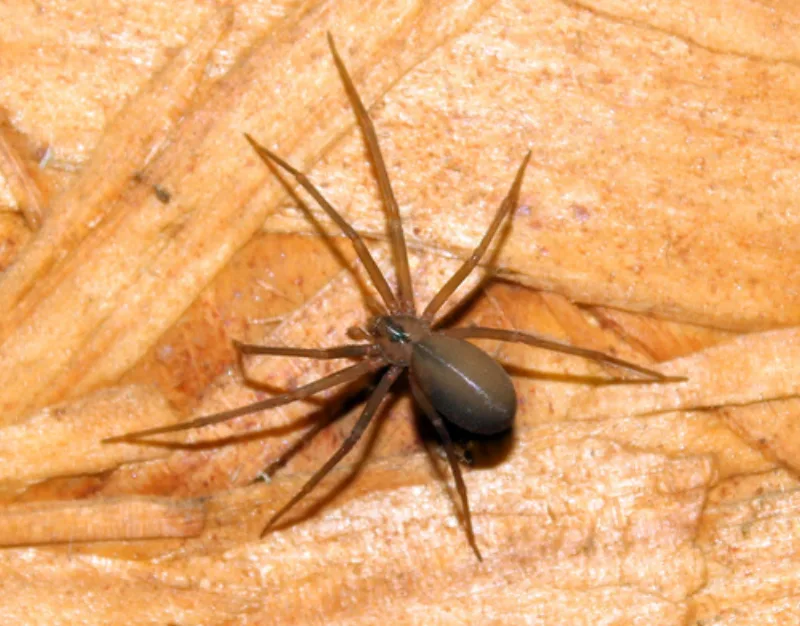
Quick Answer: Breeding populations of brown recluse spiders (Loxosceles reclusa) do not occur in New Mexico. The species is native to the central and southeastern US, and GBIF occurrence records do not show it established in the state. Most spiders reported as brown recluses here are look-alikes such as wolf spiders and cellar spiders.
When Brown Recluse Spiders Are Most Active in New Mexico
Now (November): Lower Outdoor ActivityVerified New Mexico Counties, Species & US Range
Counties with Verified Observations
- Chaves
- Eddy
Species Recorded in New Mexico
| Species | Scientific Name | GBIF Records |
|---|---|---|
| brown recluse | Loxosceles reclusa | 6 |
How New Mexico Compares to Neighboring States
Note: Wildlife does not follow state or county lines. GBIF totals reflect verified citizen and museum records, so low counts in a neighboring county do not guarantee absence.
How to Identify Brown Recluse Spiders
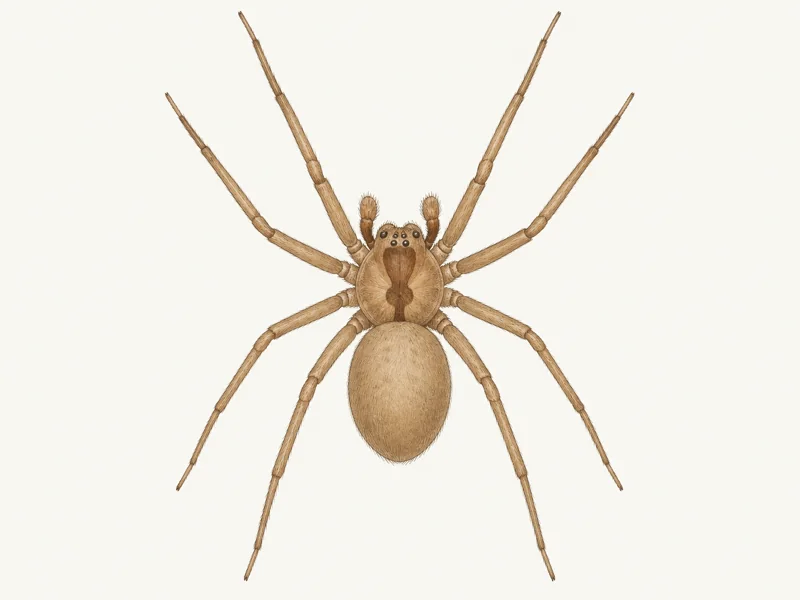
Annotated Anatomy Key (Brown Recluse)
- Six eyes (3 pairs): Six eyes arranged in 3 distinct dyads (pairs) rather than the typical 8 spider eyes.
- Dark violin mark: Dark brown violin-shaped mark on the cephalothorax—wide base behind eyes, thin neck pointing toward abdomen.
- Unbanded smooth legs: Eight uniformly tan-brown legs with NO stripes, rings, or heavy macro-spines.
- Velvety oval abdomen: Uniformly tan to medium brown abdomen covered in fine velvety hairs—no spots or chevrons.
Brown Recluse Spiders Field Checklist
- Uniformly tan to medium brown body with NO stripes, bands, or spines on the legs
- Dark violin-shaped mark on the cephalothorax (neck pointing toward abdomen)
- Six eyes arranged in three distinct pairs (dyads) rather than eight eyes
- Smooth, velvety fine hairs on abdomen; spins messy sheet-like retreat webs
Side-by-Side Look-Alike Comparisons
Brown Recluse Spiders Size at True Relative Scale
Where Brown Recluse Spiders Live in New Mexico
So, are there brown recluse in New Mexico? Not as an established species. Their natural range centers on the Midwest and South, from Nebraska and Kansas east to Ohio and south to the Gulf states. New Mexico's high desert, mountain, and semi-arid conditions fall outside that range.
Rare accidental hitchhikers are the only realistic exception. A spider can arrive in moving boxes, furniture, or stored goods shipped from within its native range. Such single arrivals do not create breeding populations, and a lone specimen does not mean the species lives locally.
- Established in New Mexico: No.
- Possible: Isolated transported individuals.
- Common instead: Wolf spiders, cellar spiders, and other harmless household spiders.
When Brown Recluse Spiders Are Most Active in New Mexico
There is no true New Mexico brown recluse season, because the species does not have local populations. In its native range, activity peaks in warm months and spiders hide in sheltered spots during cold weather. That pattern does not apply to New Mexico.
Spiders you see here follow local conditions. Summer monsoon moisture and warm evenings push many species indoors or into view. Fall brings more wandering males of several native species looking for mates.
Look-Alikes Frequently Mistaken for Brown Recluse Spiders
Good New Mexico brown recluse identification starts with ruling out the common local species. Brown color alone proves nothing, since many spiders are tan or brown. The "violin" marking is also unreliable, because other spiders show similar patterns.
Wolf Spiders
Wolf spiders are robust, hairy, and brown with striped or mottled markings. They have eight eyes, including two large ones, and hunt on the ground rather than in webs. They often wander into garages and doorways at night.
Cellar Spiders
Cellar spiders are pale, with very long, thin legs and small bodies. They hang upside down in loose, messy webs in corners, basements, and crawl spaces. Their delicate build is quite unlike a recluse's.
Other Common Household Spiders
Many other brownish spiders turn up indoors and are often lumped together as "recluses." Without a hand lens and an expert eye, home identification is guesswork. A true recluse has just six eyes arranged in three pairs, a feature that requires magnification to confirm.
If you collect a specimen, place it in a sealed container or on sticky tape, take clear photos, and share it with a local expert. The New Mexico State University Cooperative Extension Service is a good place to ask about identification.
How to Keep Brown Recluse Spiders Out of Your New Mexico Home
For anyone wondering how to prevent brown recluse in New Mexico, the answer is the same as for any household spider. Reduce entry points, hiding places, and the insects spiders feed on. Non-chemical steps come first.
Non-Chemical Steps
- Exclusion: Seal gaps around doors, windows, pipes, and utility lines. Install door sweeps and repair damaged screens.
- Sanitation: Reduce clutter in garages, closets, and storage areas. Vacuum corners and remove webs and egg sacs.
- Storage: Use sealed plastic bins instead of cardboard boxes. Inspect secondhand furniture and boxes shipped from other states.
- Moisture control: Fix leaks and ventilate crawl spaces and basements, since damp areas attract prey insects.
- Outdoor tidying: Move woodpiles, debris, and stacked materials away from the foundation. Shake out gloves and shoes left outdoors.
- Lighting: Switch exterior lights to yellow bulbs or move them away from entrances to draw fewer night-flying insects.
- Monitoring: Place sticky traps along baseboards to see what is actually in the home.
Chemical Options
If insecticides are used, apply only products labeled for spiders and follow all EPA label directions for use, safety, and placement. Keep products away from children and pets. Treatments work best as a supplement to sealing and cleaning.
When to Call a Licensed New Mexico Pest Professional
- You find many spiders repeatedly despite cleaning and sealing.
- You have a specimen you cannot identify and want confirmation.
- Spiders keep appearing in bedrooms or heavily used areas.
- You recently moved belongings from the central or southeastern US and want an inspection.
Bites and Safety
This article is not medical advice. If you suspect a spider bite, wash the area and seek care from a doctor, especially if symptoms worsen. For guidance, contact US Poison Control at 1-800-222-1222.
IPM Prevention Checklist for New Mexico Homes
- Replace cardboard storage with sealed plastic totes
- Keep bed skirts off the floor and pull beds away from walls
- Shake out shoes, towels, and stored clothing before wearing
 EXCLUSION BLUEPRINT
Inspect eaves, screens, door sweeps, foundation cracks, and utility penetrations around New Mexico homes before peak season.
Brown Recluse Spiders in New Mexico: Frequently Asked Questions
Are there brown recluse in New Mexico?
Not as an established species. Breeding populations do not occur in the state, though a rare hitchhiker could arrive in shipped goods.
Is there a New Mexico brown recluse season?
No, because the species has no local populations. The brown spiders seen in summer and fall are typically wolf spiders or other native species.
What spider is most often mistaken for a brown recluse here?
Wolf spiders and cellar spiders are the most common mix-ups. Their color, size, or leg shape can resemble a recluse at a quick glance.
What should I do after a suspected spider bite?
Seek medical care and call US Poison Control at 1-800-222-1222 for guidance. If possible, safely save the spider for identification.
Sources & Verification
- UC Riverside Spider Biology — Brown Recluse Range & Myths
- University of Kentucky Entomology — Brown Recluse Spider
- GBIF Global Biodiversity Occurrence Records
Data refreshed · Editorial & GBIF Methodology