Brown Recluse in Indiana: Identification, Season, and Prevention
Quick Answer: Yes, the brown recluse (Loxosceles reclusa) is common in Indiana, with 184 verified GBIF sightings concentrated in Vanderburgh, Gibson, Marion, Clark, and Perry counties. Activity peaks in June, July, and August, when these shy spiders are most likely to turn up in homes, garages, and storage areas.
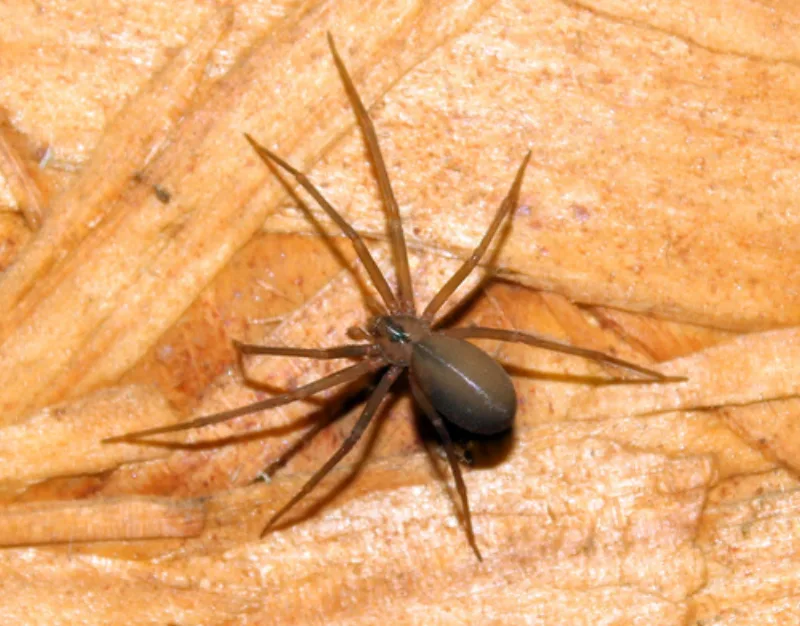
When Brown Recluse Spiders Are Most Active in Indiana
Now (November): Lower Outdoor ActivityVerified Indiana Counties, Species & US Range
Counties with Verified Observations
- Vanderburgh
- Gibson
- Marion
- Clark
- Perry
- Warrick
- Vigo
- Floyd
- Henderson
- Hamilton
Species Recorded in Indiana
| Species | Scientific Name | GBIF Records |
|---|---|---|
| brown recluse | Loxosceles reclusa | 184 |
How Indiana Compares to Neighboring States
Note: Wildlife does not follow state or county lines. GBIF totals reflect verified citizen and museum records, so low counts in a neighboring county do not guarantee absence.
How to Identify Brown Recluse Spiders
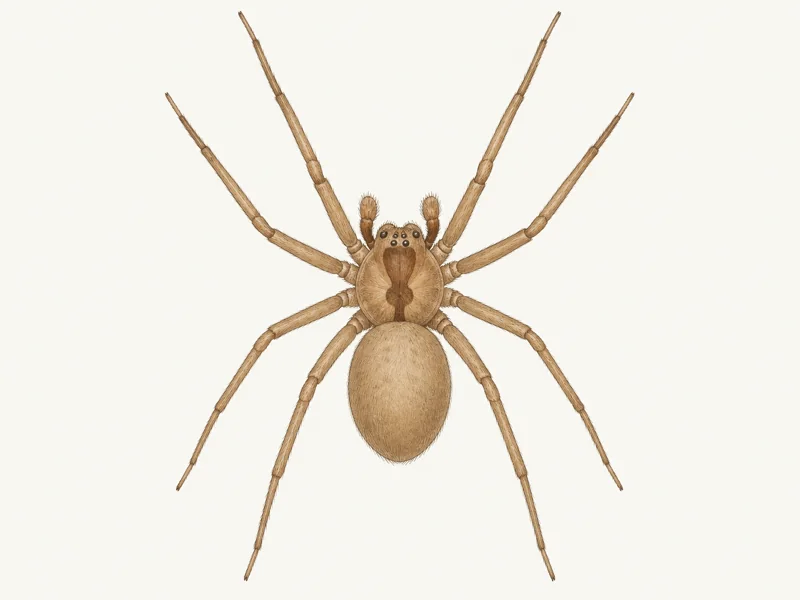
Annotated Anatomy Key (Brown Recluse)
- Six eyes (3 pairs): Six eyes arranged in 3 distinct dyads (pairs) rather than the typical 8 spider eyes.
- Dark violin mark: Dark brown violin-shaped mark on the cephalothorax—wide base behind eyes, thin neck pointing toward abdomen.
- Unbanded smooth legs: Eight uniformly tan-brown legs with NO stripes, rings, or heavy macro-spines.
- Velvety oval abdomen: Uniformly tan to medium brown abdomen covered in fine velvety hairs—no spots or chevrons.
Brown Recluse Spiders Field Checklist
- Uniformly tan to medium brown body with NO stripes, bands, or spines on the legs
- Dark violin-shaped mark on the cephalothorax (neck pointing toward abdomen)
- Six eyes arranged in three distinct pairs (dyads) rather than eight eyes
- Smooth, velvety fine hairs on abdomen; spins messy sheet-like retreat webs
Side-by-Side Look-Alike Comparisons
Brown Recluse Spiders Size at True Relative Scale
Quick Answer: Yes, the brown recluse (Loxosceles reclusa) is common in Indiana, with 184 verified GBIF sightings concentrated in Vanderburgh, Gibson, Marion, Clark, and Perry counties. Activity peaks in June, July, and August, when these shy spiders are most likely to turn up in homes, garages, and storage areas. Exclusion, clutter reduction, and sticky traps are the best first steps for Indiana homeowners.
Where Brown Recluse Spiders Live in Indiana
People often ask, "Are there brown recluse in Indiana?" Verified records answer clearly. The state sits near the northern edge of the species' native range, and its 184 GBIF observations lean heavily toward southern Indiana along the Ohio River, though Marion County shows they also establish in central Indiana.
The top counties for verified sightings are:
- Vanderburgh County (Evansville area)
- Gibson County
- Marion County (Indianapolis area)
- Clark County
- Perry County
Indiana's humid continental climate, with warm, muggy summers and chilly winters across USDA zones 5b to 6b, pushes brown recluses toward sheltered indoor spaces. They favor dry, undisturbed spots such as basements, attics, closets, crawl spaces, wall voids, and cardboard boxes. Outdoors, they hide under woodpiles, rocks, and debris, but heated buildings help them survive Indiana winters.
When Brown Recluse Spiders Are Most Active in Indiana
Indiana brown recluse season peaks in June, July, and August, matching the GBIF sighting pattern. Warm temperatures speed up feeding, mating, and wandering, and males roam farther in search of mates. This is when homeowners most often find them in sinks, bathtubs, shoes, and bedding.
Brown recluses are nocturnal hunters that do not build webs to catch prey. Instead, they spin loose, irregular retreat webs in hidden corners. In cooler months they slow down but remain inside heated homes, so sightings can happen year-round.
Look-Alikes Frequently Mistaken for Brown Recluse Spiders
Accurate Indiana brown recluse identification starts with a few key features. Look for a tan to medium-brown body about 1/4 to 1/2 inch long, a dark violin-shaped mark on the back of the cephalothorax with the neck pointing toward the abdomen, uniformly colored legs without bands or spines, and six eyes arranged in three pairs. Most other spiders have eight eyes.
Wolf Spiders
Wolf spiders are larger, hairier, and often striped or mottled in brown and gray. They have eight eyes, including two large, forward-facing ones, and they run quickly across floors. They lack the clean violin marking of the brown recluse.
Cellar Spiders
Cellar spiders have tiny bodies and extremely long, thin legs. They hang in messy webs in basements and corners and vibrate when disturbed. Their delicate build sets them apart from the compact brown recluse.
Other Common House Spiders
Many brown spiders in Indiana homes are harmless species with banded legs, spiny legs, or patterned abdomens. Any of these traits rules out a brown recluse. When in doubt, capture the spider in a sealed jar and ask a county extension office or a licensed professional to confirm it.
How to Keep Brown Recluse Spiders Out of Your Indiana Home
Knowing how to prevent brown recluse in Indiana homes starts with Integrated Pest Management (IPM). University extension guidance consistently recommends non-chemical steps first, since these spiders hide in places sprays rarely reach.
- Reduce clutter: Swap cardboard boxes for sealed plastic bins, especially in basements, attics, and garages.
- Seal entry points: Caulk cracks, repair window screens, and install door sweeps.
- Use sticky traps: Place glue boards along walls, behind furniture, and under beds to monitor and capture spiders.
- Shake out items: Check shoes, gloves, clothing, and bedding stored in closets or garages before use.
- Move beds from walls: Keep bed skirts and blankets off the floor.
- Clean outdoors: Store firewood and debris away from the foundation.
- Control moisture: Run a dehumidifier in damp basements to cut down on the insects they eat.
If you use insecticides, choose products labeled for spiders and always follow EPA product label directions. Targeted crack-and-crevice treatments work better than broad spraying.
When to Call a Licensed Indiana Pest Professional
- You find several brown recluses or catch them repeatedly on sticky traps.
- You see shed skins or egg sacs, which signal a breeding population.
- Spiders appear in bedrooms or living areas.
- Someone in the home is at higher risk, such as young children or older adults.
Bite Safety
Brown recluse spiders are medically significant, though bites are uncommon and many cause only mild symptoms. This guide does not provide medical advice. If you suspect a bite, call US Poison Control at 1-800-222-1222 and contact a doctor. Do not rely on home remedies.
IPM Prevention Checklist for Indiana Homes
- Replace cardboard storage with sealed plastic totes
- Keep bed skirts off the floor and pull beds away from walls
- Shake out shoes, towels, and stored clothing before wearing
 EXCLUSION BLUEPRINT
Inspect eaves, screens, door sweeps, foundation cracks, and utility penetrations around Indiana homes before peak season.
Brown Recluse Spiders in Indiana: Frequently Asked Questions
Are brown recluse spiders common in Indiana?
Yes. Indiana has 184 verified GBIF sightings, with the most records in Vanderburgh, Gibson, Marion, Clark, and Perry counties.
What months are brown recluses most active in Indiana?
Activity peaks in June, July, and August. Indoor populations can still be seen in other months because heated homes shelter them.
Do brown recluses live in northern Indiana?
Verified records are concentrated in southern and central counties. They can still be moved north in boxes and furniture, so confirm any suspected find.
What should I do if a brown recluse bites me in Indiana?
Call US Poison Control at 1-800-222-1222 and see a doctor. If possible, safely save the spider for identification.
Sources & Verification
- UC Riverside Spider Biology — Brown Recluse Range & Myths
- University of Kentucky Entomology — Brown Recluse Spider
- GBIF Global Biodiversity Occurrence Records
Data refreshed · Editorial & GBIF Methodology