Brown Recluse in Mississippi: Identification, Season, and Prevention
Quick Answer: *Yes, brown recluse spiders (Loxosceles reclusa) are common in Mississippi.* GBIF holds 136 verified sightings in the state, with the most records from Desoto, Panola, Coahoma, Grenada, and Lafayette counties. Sightings peak from May through August, and most problems can be reduced with sanitation, exclusion, and moisture control.
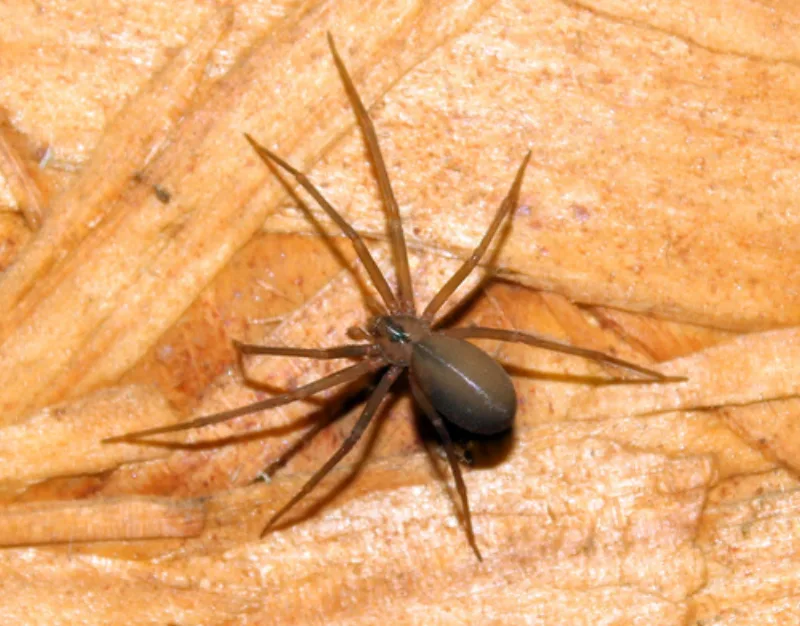
When Brown Recluse Spiders Are Most Active in Mississippi
Now (November): Lower Outdoor ActivityVerified Mississippi Counties, Species & US Range
Counties with Verified Observations
- Desoto
- Panola
- Coahoma
- Grenada
- Lafayette
- Oktibbeha
- Tishomingo
- Lowndes
- Leflore
- Tunica
Species Recorded in Mississippi
| Species | Scientific Name | GBIF Records |
|---|---|---|
| brown recluse | Loxosceles reclusa | 136 |
How Mississippi Compares to Neighboring States
Note: Wildlife does not follow state or county lines. GBIF totals reflect verified citizen and museum records, so low counts in a neighboring county do not guarantee absence.
How to Identify Brown Recluse Spiders
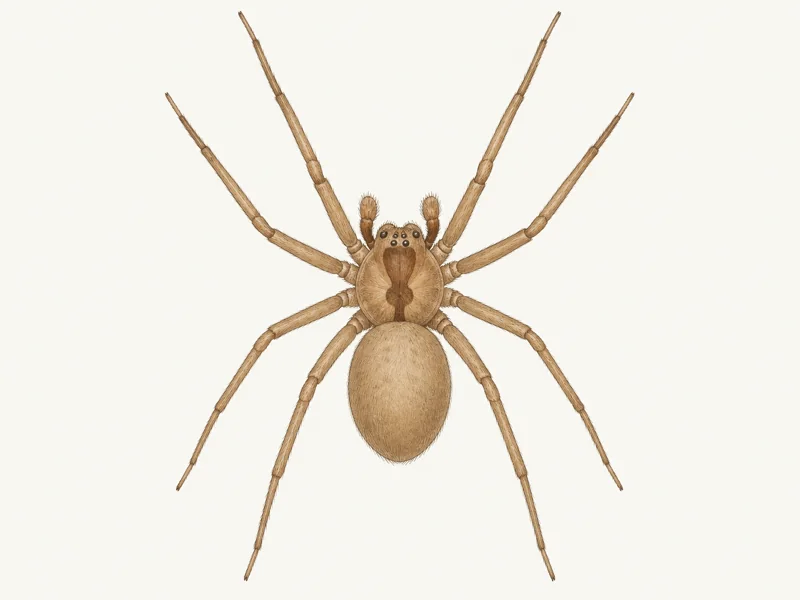
Annotated Anatomy Key (Brown Recluse)
- Six eyes (3 pairs): Six eyes arranged in 3 distinct dyads (pairs) rather than the typical 8 spider eyes.
- Dark violin mark: Dark brown violin-shaped mark on the cephalothorax—wide base behind eyes, thin neck pointing toward abdomen.
- Unbanded smooth legs: Eight uniformly tan-brown legs with NO stripes, rings, or heavy macro-spines.
- Velvety oval abdomen: Uniformly tan to medium brown abdomen covered in fine velvety hairs—no spots or chevrons.
Brown Recluse Spiders Field Checklist
- Uniformly tan to medium brown body with NO stripes, bands, or spines on the legs
- Dark violin-shaped mark on the cephalothorax (neck pointing toward abdomen)
- Six eyes arranged in three distinct pairs (dyads) rather than eight eyes
- Smooth, velvety fine hairs on abdomen; spins messy sheet-like retreat webs
Side-by-Side Look-Alike Comparisons
Brown Recluse Spiders Size at True Relative Scale
Where Brown Recluse Spiders Live in Mississippi
People often ask, are there brown recluse in Mississippi? There are, and the state's humid subtropical climate (USDA zones 7b to 9a) suits them well. Mild winters and warm, damp summers let populations persist both outdoors and inside buildings.
Recorded sightings cluster in north and northwest counties, including Desoto, Panola, Coahoma, Grenada, and Lafayette. Records reflect where people and observers report spiders, so the species may be present in other counties too.
Brown recluses are shy and prefer undisturbed, dry, cluttered spots. Common hiding places include:
- Cardboard boxes in garages, sheds, and attics
- Closets, storage rooms, and crawl spaces
- Behind baseboards, furniture, and wall hangings
- Woodpiles, stacked lumber, and rock piles outdoors
- Inside seldom-worn shoes, clothing, and bedding
When Brown Recluse Spiders Are Most Active in Mississippi
The Mississippi brown recluse season runs strongest from May through August, based on GBIF records. Warm nights increase their hunting, and people see more of them when they roam in search of food or mates.
They can be found indoors year-round, since heated homes keep them active through winter. Spring and fall cleaning of storage areas often turns up hidden spiders.
Look-Alikes Frequently Mistaken for Brown Recluse Spiders
Mississippi brown recluse identification starts with a careful look, because many harmless spiders are brown. Most brown spiders in the home are not recluses.
Key Features of a Brown Recluse
- Uniformly tan to dark brown body with no stripes or bands on the abdomen or legs
- Six eyes arranged in three pairs (needs magnification to see)
- A darker violin-shaped mark on the front body section, though this mark alone is unreliable
- Thin, evenly colored legs without noticeable spines
- Body roughly 1/4 to 1/2 inch long
Common Mix-Ups
- Wolf spiders: Heavier, hairy, often striped, with eight eyes and large forward-facing eyes. They hunt on the ground and are frequently found in yards and garages.
- Cellar spiders: Pale, very long, spindly legs, often hanging in loose webs in basements and corners.
- Other common house spiders: Many have mottled patterns, spines, or banded legs, which rule out a recluse.
If identification matters, capture the spider in a jar and ask your county Extension office or a licensed professional to confirm it.
How to Keep Brown Recluse Spiders Out of Your Mississippi Home
For anyone wondering how to prevent brown recluse in Mississippi, start with non-chemical steps. Integrated pest management focuses on removing hiding places and blocking entry.
- Declutter: Reduce stored boxes and piles, especially in garages, attics, and closets.
- Use sealed storage: Switch to plastic bins with tight lids and keep items off the floor.
- Seal entry points: Caulk gaps around pipes, windows, and foundations, and install door sweeps and tight screens.
- Control moisture: Fix leaks and ventilate crawl spaces, since damp areas attract the insects spiders eat.
- Move woodpiles away: Store firewood and debris well away from the house and off the ground.
- Shake out items: Check shoes, gloves, and stored clothing before use, and wear gloves when moving stored items.
- Place glue traps: Set them along baseboards and in corners to monitor activity.
- Vacuum regularly: Remove spiders, webs, and egg sacs from corners and under furniture.
If you use any insecticide, choose a product labeled for spiders and follow the EPA-approved label exactly, including where it may be applied.
When to Call a Licensed Mississippi Pest Professional
- You find several brown recluses, or repeated sightings over weeks
- Glue traps catch multiple recluses in different rooms
- Heavy clutter, a crawl space, or an attic makes DIY treatment impractical
- You are unsure of the species and need a confirmed identification
Bites and Safety
Brown recluses are medically significant spiders, though bites are uncommon and they bite mainly when pressed against skin. This guide offers no medical diagnosis or treatment. If you suspect a bite, seek medical care promptly and call US Poison Control at 1-800-222-1222. If possible, bring the spider with you for identification.
IPM Prevention Checklist for Mississippi Homes
- Replace cardboard storage with sealed plastic totes
- Keep bed skirts off the floor and pull beds away from walls
- Shake out shoes, towels, and stored clothing before wearing
 EXCLUSION BLUEPRINT
Inspect eaves, screens, door sweeps, foundation cracks, and utility penetrations around Mississippi homes before peak season.
Brown Recluse Spiders in Mississippi: Frequently Asked Questions
Are there brown recluse in Mississippi?
Yes. The species is common statewide, with 136 verified GBIF sightings and the most records in Desoto, Panola, Coahoma, Grenada, and Lafayette counties.
When is brown recluse season in Mississippi?
Activity peaks from May through August. Spiders living inside heated buildings may be seen in any month.
Does a violin mark prove a spider is a brown recluse?
No. Several harmless spiders have similar markings. Look for six eyes in pairs, uniformly colored legs, and an unpatterned abdomen, and have a professional confirm when in doubt.
What should I do if I think a brown recluse bit me?
Seek medical care and call US Poison Control at 1-800-222-1222. Do not rely on home remedies, and keep the spider if you can safely capture it.
Sources & Verification
- UC Riverside Spider Biology — Brown Recluse Range & Myths
- University of Kentucky Entomology — Brown Recluse Spider
- GBIF Global Biodiversity Occurrence Records
Data refreshed · Editorial & GBIF Methodology