Brown Recluse in West Virginia: Are They Here? Facts and Look-Alikes
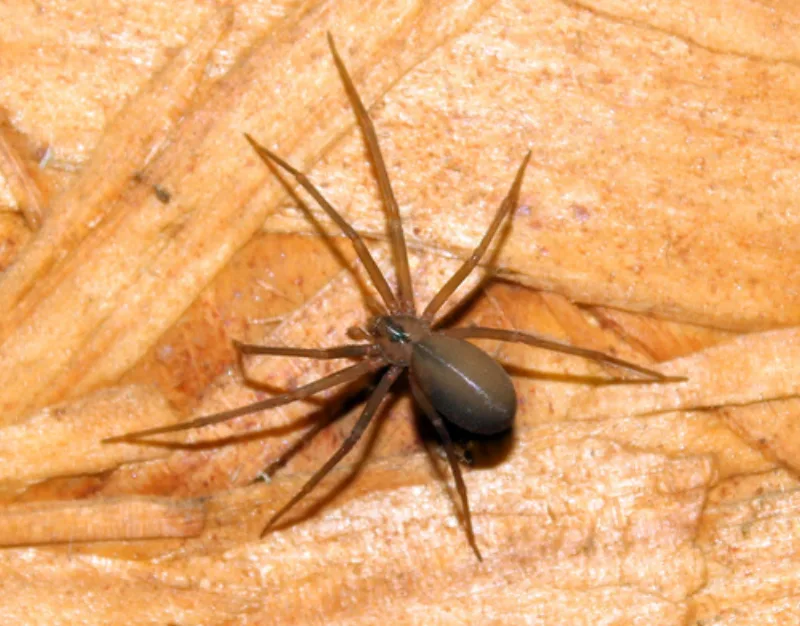
Quick Answer: Breeding populations of brown recluse spiders (Loxosceles reclusa) do not occur in West Virginia. The species is native to the central and south-central US, and occasional single specimens arrive as hitchhikers in boxes, furniture, or vehicles. Nearly every "recluse" found in a West Virginia home turns out to be a wolf spider, cellar spider, or another common house spider.
When Brown Recluse Spiders Are Most Active in West Virginia
November: Rare / AbsentBrown Recluse Spiders Range in West Virginia vs. Neighboring States
How West Virginia Compares to Neighboring States
Note: Wildlife does not follow state or county lines. GBIF totals reflect verified citizen and museum records, so low counts in a neighboring county do not guarantee absence.
How to Identify Brown Recluse Spiders
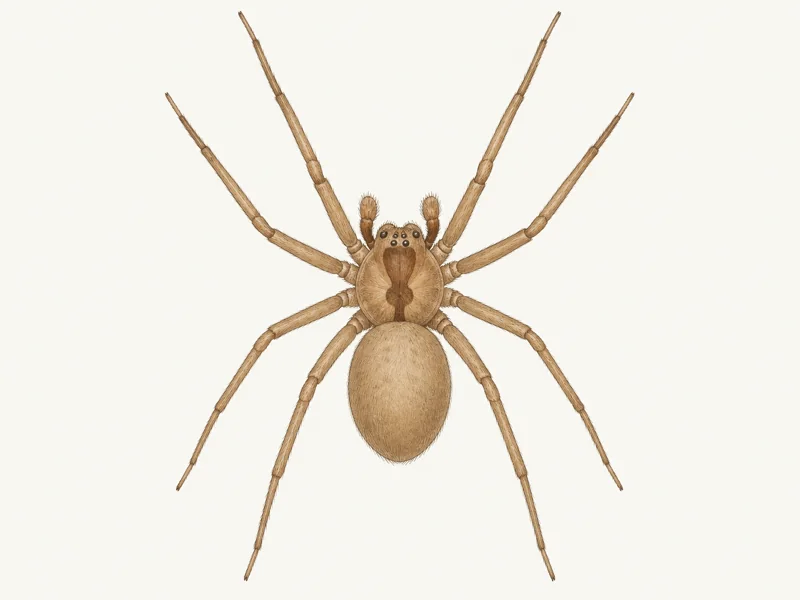
Annotated Anatomy Key (Brown Recluse)
- Six eyes (3 pairs): Six eyes arranged in 3 distinct dyads (pairs) rather than the typical 8 spider eyes.
- Dark violin mark: Dark brown violin-shaped mark on the cephalothorax—wide base behind eyes, thin neck pointing toward abdomen.
- Unbanded smooth legs: Eight uniformly tan-brown legs with NO stripes, rings, or heavy macro-spines.
- Velvety oval abdomen: Uniformly tan to medium brown abdomen covered in fine velvety hairs—no spots or chevrons.
Brown Recluse Spiders Field Checklist
- Uniformly tan to medium brown body with NO stripes, bands, or spines on the legs
- Dark violin-shaped mark on the cephalothorax (neck pointing toward abdomen)
- Six eyes arranged in three distinct pairs (dyads) rather than eight eyes
- Smooth, velvety fine hairs on abdomen; spins messy sheet-like retreat webs
Side-by-Side Look-Alike Comparisons
Brown Recluse Spiders Size at True Relative Scale
Where Brown Recluse Spiders Live in West Virginia
So, are there brown recluse in West Virginia? Not as an established species. GBIF occurrence records and university extension range maps place the brown recluse's native range in the Midwest and South-Central states, and West Virginia falls outside it. The state's humid continental and Appalachian highland climate, with moist forested valleys in USDA zones 5b to 7a, is not where this species has settled.
Rare accidental arrivals are possible. A spider can travel in moving boxes, stored furniture, or freight from within its native range. One of these isolated individuals does not mean a local population exists.
- Established in West Virginia: No.
- Possible: A lone hitchhiker brought in from elsewhere.
- Most likely explanation for a sighting: A common look-alike.
When Brown Recluse Spiders Are Most Active in West Virginia
Because the species does not breed here, there is no true West Virginia brown recluse season. In its native range, recluses are active mostly at night and are most often noticed in warmer months. Any seasonal pattern you see in West Virginia reflects other spiders.
Wolf spiders and house spiders wander more in late summer and fall. Males search for mates then, and cooler weather pushes spiders indoors. Cellar spiders are present year-round in basements and crawl spaces.
Look-Alikes Frequently Mistaken for Brown Recluse Spiders
Proper West Virginia brown recluse identification starts with features, not color. A true recluse has six eyes arranged in three pairs, uniformly colored legs with no spines or bands, and a plain abdomen. The "violin" marking is unreliable because many harmless spiders look similar to the eye.
Wolf Spiders
Wolf spiders are brown, hairy, and fast, often seen on floors or in garages. They have eight eyes, with two large ones prominent on the front of the head. Their legs are banded or spiny, and the body is robust.
Cellar Spiders
Cellar spiders, often called daddy longlegs, have very long, thin legs and tiny bodies. They hang in loose webs in basements, crawl spaces, and corners. Their shape differs sharply from a recluse.
Other Common House Spiders
Many tan or brown spiders found indoors are harmless species in the same general size range. Look for patterned or banded legs, spines, and eye count. A hand lens or a clear photo helps a great deal.
For a confirmed ID, collect the spider in a sealed container or take sharp photos. Your local extension office can identify it.
How to Keep Brown Recluse Spiders Out of Your West Virginia Home
Anyone wondering how to prevent brown recluse in West Virginia is really asking how to reduce spiders in general. The same non-chemical steps work for all of them, and they come first in Integrated Pest Management (IPM).
- Exclusion: Seal gaps around pipes, foundation cracks, and utility lines. Install door sweeps and repair torn window screens.
- Sanitation: Reduce clutter in basements, garages, and closets. Store items in sealed plastic bins instead of cardboard.
- Moisture control: Run a dehumidifier in damp basements and fix leaks. Moist spaces attract the insects spiders eat.
- Outdoor habits: Move woodpiles, debris, and stacked materials away from the foundation. Shake out stored clothing, shoes, and gloves before use.
- Monitoring: Place sticky traps along baseboards and in corners to see what is actually present.
- Used items: Inspect boxes and furniture arriving from other states before bringing them inside.
If you use any insecticide, choose a product labeled for spiders and follow the EPA-registered label exactly. Do not rely on sprays alone, since they will not fix the conditions drawing spiders in.
When to Call a Licensed West Virginia Pest Professional
- You find many spiders repeatedly, which suggests a heavy insect problem behind them.
- An identified specimen turns out to be a medically significant species.
- Sealing and sanitation have not reduced activity after several weeks.
- You cannot reach or inspect crawl spaces or attics safely.
Safety note: This article is not medical advice. If you suspect a spider bite, wash the area, keep the spider if you safely can, and contact a doctor. You can also call US Poison Control at 1-800-222-1222. Do not try home remedies for venom.
IPM Prevention Checklist for West Virginia Homes
- Replace cardboard storage with sealed plastic totes
- Keep bed skirts off the floor and pull beds away from walls
- Shake out shoes, towels, and stored clothing before wearing
 EXCLUSION BLUEPRINT
Inspect eaves, screens, door sweeps, foundation cracks, and utility penetrations around West Virginia homes before peak season.
Brown Recluse Spiders in West Virginia: Frequently Asked Questions
Are there brown recluse in West Virginia?
No established populations exist in the state. Rare individuals may arrive in shipped goods or moved belongings, but they do not form breeding colonies here.
What spider is most often mistaken for a brown recluse in West Virginia?
Wolf spiders are the most common mix-up, followed by cellar spiders and other brown house spiders. Eye arrangement and leg features separate them.
Does the violin mark prove a spider is a brown recluse?
No. Several harmless spiders have similar markings. Six eyes in pairs and plain, unbanded legs are more dependable features.
What should I do if I think I found one?
Capture it in a jar or take clear photos, then contact your local extension office for identification. If someone is bitten, call a doctor and US Poison Control at 1-800-222-1222.
Sources & Verification
- UC Riverside Spider Biology — Brown Recluse Range & Myths
- University of Kentucky Entomology — Brown Recluse Spider
- GBIF Global Biodiversity Occurrence Records
Data refreshed · Editorial & GBIF Methodology