Brown Recluse vs Wolf Spider: How to Tell Them Apart and Protect Your Home
Quick ID Verdict: A brown spider darting across the basement floor sends plenty of homeowners straight to a search engine. The question is almost always the same: brown recluse vs wolf spider? The answer matters, because one is a medically significant species and the other is mostly a harmless nuisance. This guide covers identification, behavior, US range, bite risks, and safe Integrated Pest Management (IPM) steps.
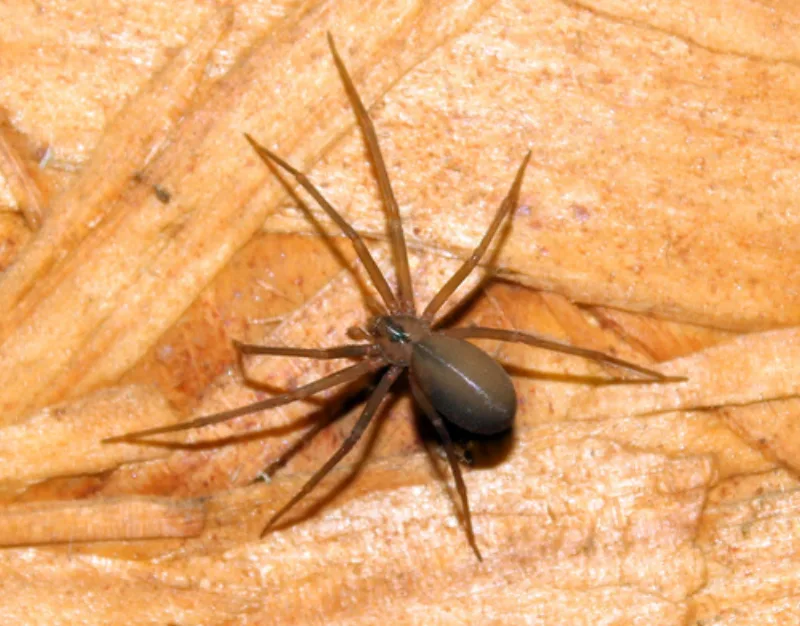
Brown Recluse
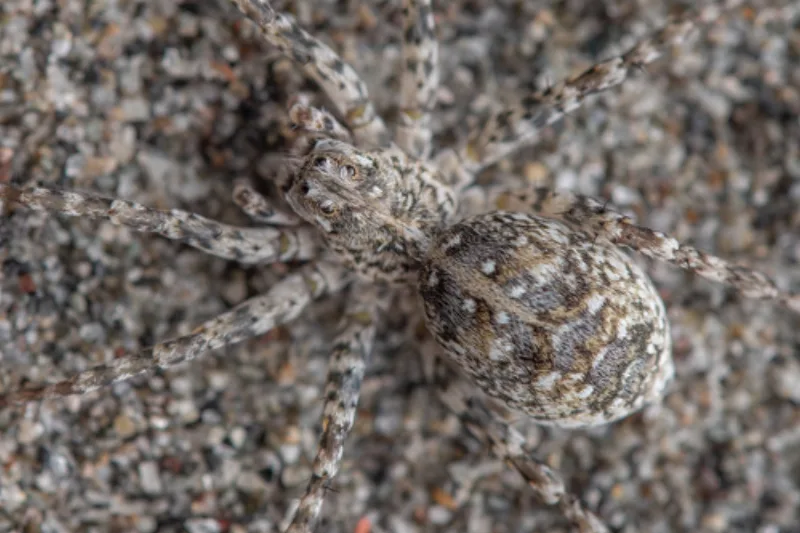
Wolf Spider
Side-by-Side Comparison Table
| Trait | Brown Recluse | Wolf Spider |
|---|---|---|
| Scientific Group | Loxosceles reclusa | Lycosidae |
| Category | Spider | Spider |
| Typical Size | 7–12 mm | 10–35 mm |
| Danger Level | Medically Significant | Nuisance |
| Bites or Stings? | Yes | Yes |
| Peak US Months | May, June, July, August | May, June, July, August |
| Key ID Trait | Uniformly tan to medium brown body with NO stripes, bands, or spines on the legs | Stout, hairy brown-and-gray striped spider with prominent spiny legs |
Brown Recluse vs. Wolf Spider: True Size Comparison
Side-by-Side Anatomy Blueprint
Compare body segments, antennae, leg count, and key markings directly before treating or removing either species.
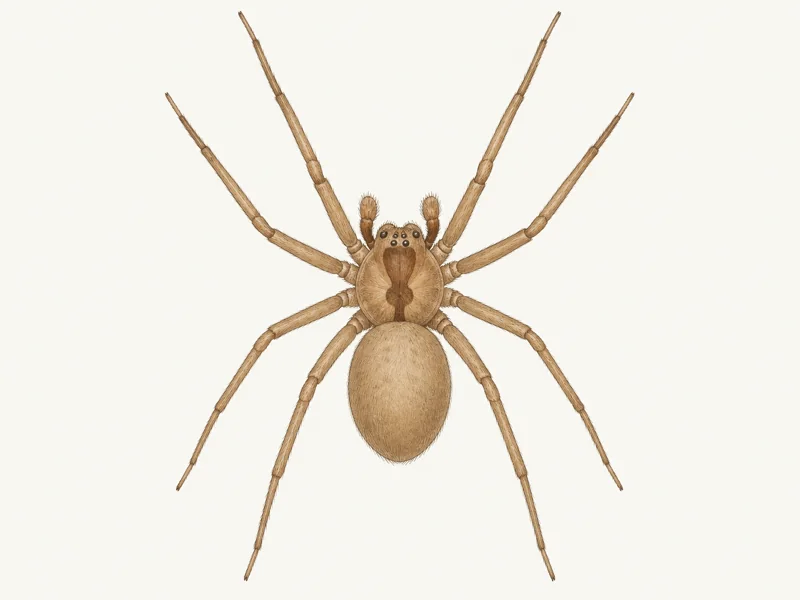
- Six eyes (3 pairs): Six eyes arranged in 3 distinct dyads (pairs) rather than the typical 8 spider eyes.
- Dark violin mark: Dark brown violin-shaped mark on the cephalothorax—wide base behind eyes, thin neck pointing toward abdomen.
- Unbanded smooth legs: Eight uniformly tan-brown legs with NO stripes, rings, or heavy macro-spines.
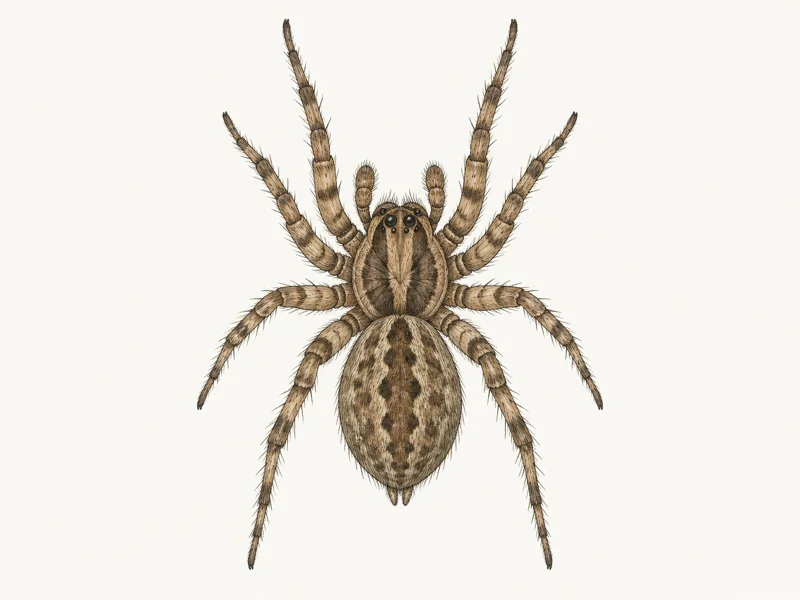
- Large front eyes: Eight eyes in 3 distinct rows (two very large middle eyes reflect flashlight beams at night).
- Striped cephalothorax: Robust front carapace marked with twin dark lengthwise stripes—no recluse violin mark.
- Eight stout hairy legs: Four pairs of strong, spiny, mottled hunting legs built for chasing prey without webs.
Key Differences Between Brown Recluse and Wolf Spider at a Glance
Quick ID verdict: A brown recluse is uniformly tan to medium brown with smooth legs that have no stripes, bands, or spines. A wolf spider is a stout, hairy spider with brown-and-gray stripes and prominent spiny legs.
FeatureBrown Recluse (Loxosceles reclusa)Wolf Spider (Lycosidae)Body length7–12 mm10–35 mmColoringUniform tan to medium brown, no stripesBrown and gray, striped or mottledLegsSmooth, no bands or spinesHairy, prominently spinyEyes6, in three pairs8, with two large forward-facing eyesDanger levelMedically significantNuisance
Brown Recluse vs Wolf Spider Identification: Size, Color, and Eye Patterns
Size alone can mislead, since a small wolf spider overlaps with an adult recluse. That's why brown recluse vs wolf spider identification should rely on several traits at once.
- Color: The recluse looks plain and evenly colored. Many have a darker violin-shaped mark behind the eyes, but the absence of stripes or leg bands is the more dependable clue.
- Legs: Recluse legs look long, thin, and smooth. Wolf spider legs are thick, hairy, and bristle with visible spines.
- Eyes: A recluse has six eyes arranged in three pairs. A wolf spider has eight, including two large eyes that reflect light. Shine a flashlight across a lawn at night and that green eyeshine is often a wolf spider.
If the spider has stripes anywhere, it's not a brown recluse.
Behavior, Webs, and Where Each Spider Hides
The difference between brown recluse and wolf spider behavior is just as telling as their looks. Brown recluses are shy, nocturnal hunters that build loose, irregular retreat webs in undisturbed spots. Indoors, they hide in:
- Cardboard boxes and stored clothing
- Closets, attics, and wall voids
- Behind baseboards and under furniture
Wolf spiders don't build capture webs at all. They chase prey on the ground, usually outdoors in leaf litter, mulch, and grass. Those found indoors have typically wandered in through gaps under doors, and they tend to run along floors and walls rather than settle into clutter. Females are often seen carrying an egg sac or a back full of spiderlings.
US Range and Seasonal Activity
Wolf spiders live in all 50 states, from deserts to suburban lawns. The brown recluse has a much narrower range, centered in the south-central and Midwestern US, including Missouri, Kansas, Oklahoma, Arkansas, Tennessee, Kentucky, and parts of neighboring states. Outside that core area, true brown recluse finds are uncommon, and many reported sightings turn out to be other brown spiders.
Seasonally, wolf spiders are most noticeable in late summer and fall, when they move toward buildings as temperatures drop. Brown recluses are active in warmer months, but in heated homes they can stay active year-round.
Bite Risks and Symptoms Compared
Brown recluse bites are uncommon because the spider avoids people, and most happen when someone presses against one hidden in clothing, shoes, or bedding. Some bites cause little reaction, while others can lead to serious skin damage that needs medical attention.
Wolf spiders will bite if handled or trapped, but their bites are generally comparable to a bee sting in discomfort, with localized pain and redness.
If a brown recluse bite is suspected, or symptoms worsen with either spider, contact US Poison Control at 1-800-222-1222 and see a doctor. Don't rely on home remedies, and bring the spider (safely contained) for identification if possible.
Brown Recluse or Wolf Spider? Safe IPM Steps for Control
Whether it's a brown recluse or wolf spider, the better long-term answer is prevention, not spraying. For most homeowners, the recluse is the bigger concern because it can establish breeding populations indoors, while wolf spiders are usually occasional visitors.
- Exclusion: Install door sweeps, repair torn screens, and seal cracks around foundations, pipes, and windows.
- Sanitation: Replace cardboard with sealed plastic bins, reduce clutter, and vacuum corners and under furniture regularly.
- Moisture and landscaping: Fix leaks, run a dehumidifier in damp basements, and pull mulch, woodpiles, and leaf litter away from the foundation.
- Monitoring: Place sticky traps along walls and behind furniture to gauge activity.
- Habits: Shake out shoes, gloves, and stored clothing, and keep beds away from walls.
If a pesticide is needed, use one labeled for spiders and follow the EPA product label exactly.
When to Call a Pest Professional
Calling a licensed pest professional makes sense when sticky traps keep catching brown recluses, when spiders turn up in bedrooms or bedding, or when the identification is uncertain. Recluse infestations can be stubborn because the spiders hide deep in wall voids and clutter. A professional can confirm the species, inspect hidden harborage, and combine exclusion with targeted, label-compliant treatments. For an occasional wolf spider, simply escorting it outside is usually enough.
Frequently Asked Questions
What's the main difference between a brown recluse and wolf spider?
Brown recluses are uniformly tan-brown with smooth, non-spiny legs, while wolf spiders are stout and hairy with visible spines and brown-gray stripes. Brown recluses have six eyes; wolf spiders have eight with two large forward-facing eyes.
How can I identify a brown recluse vs wolf spider by their eyes?
A brown recluse has six eyes arranged in three pairs. A wolf spider has eight eyes, including two large ones that often reflect light. At night, shine a flashlight across your lawn—the green eyeshine typically belongs to a wolf spider.
Where do brown recluse spiders live in the United States?
Brown recluses are found in the south-central and Midwestern US, primarily in Missouri, Kansas, Oklahoma, Arkansas, Tennessee, Kentucky, and neighboring states. Wolf spiders, by contrast, live in all 50 states.
Are wolf spider bites dangerous compared to brown recluse bites?
Wolf spider bites are generally harmless and comparable to a bee sting—causing localized pain and redness. Brown recluse bites are medically significant and can cause serious skin damage, though bites are rare since they avoid contact.
What should I do if I think I've been bitten by a brown recluse?
Contact US Poison Control at 1-800-222-1222 and see a doctor immediately. Never rely on home remedies. If possible, safely contain and bring the spider for identification to confirm the bite source.
What's the best way to prevent brown recluse spiders in your home?
Use exclusion (door sweeps, sealed cracks), sanitation (replace cardboard with plastic bins, reduce clutter), manage moisture, and maintain landscaping away from foundations. These IPM steps are more effective long-term than pesticides alone.