Brown Recluse in Pennsylvania: Are They Here? Facts and Look-Alikes
Quick Answer: Breeding populations of the brown recluse (Loxosceles reclusa) do not occur in Pennsylvania. The state sits well outside the species' established range, and nearly every "recluse" found in a Pennsylvania home turns out to be a harmless look-alike. Rare hitchhikers can arrive in boxes or furniture shipped from the South and Midwest, but they do not form local colonies.
When Brown Recluse Spiders Are Most Active in Pennsylvania
November: Rare / AbsentBrown Recluse Spiders Range in Pennsylvania vs. Neighboring States
How Pennsylvania Compares to Neighboring States
Note: Wildlife does not follow state or county lines. GBIF totals reflect verified citizen and museum records, so low counts in a neighboring county do not guarantee absence.
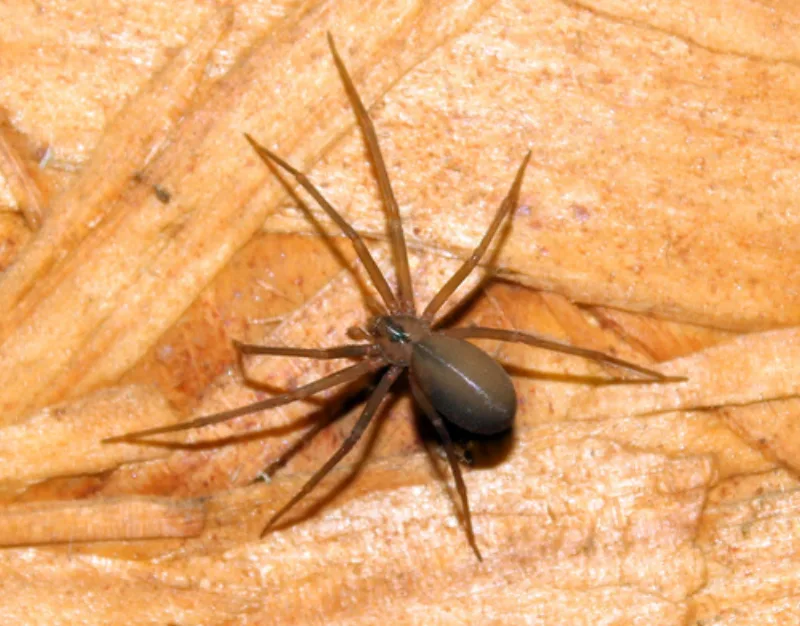
How to Identify Brown Recluse Spiders
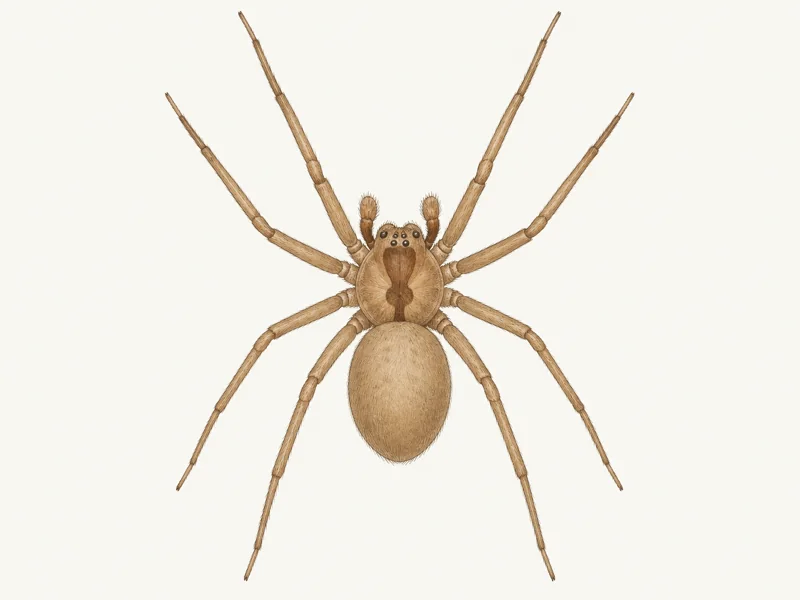
Annotated Anatomy Key (Brown Recluse)
- Six eyes (3 pairs): Six eyes arranged in 3 distinct dyads (pairs) rather than the typical 8 spider eyes.
- Dark violin mark: Dark brown violin-shaped mark on the cephalothorax—wide base behind eyes, thin neck pointing toward abdomen.
- Unbanded smooth legs: Eight uniformly tan-brown legs with NO stripes, rings, or heavy macro-spines.
- Velvety oval abdomen: Uniformly tan to medium brown abdomen covered in fine velvety hairs—no spots or chevrons.
Brown Recluse Spiders Field Checklist
- Uniformly tan to medium brown body with NO stripes, bands, or spines on the legs
- Dark violin-shaped mark on the cephalothorax (neck pointing toward abdomen)
- Six eyes arranged in three distinct pairs (dyads) rather than eight eyes
- Smooth, velvety fine hairs on abdomen; spins messy sheet-like retreat webs
Side-by-Side Look-Alike Comparisons
Brown Recluse Spiders Size at True Relative Scale
Where Brown Recluse Spiders Live in Pennsylvania
So, are there brown recluse in Pennsylvania? Not as an established species. GBIF occurrence records and general entomology references place Loxosceles reclusa in the south-central and Mississippi Valley states, not in the Mid-Atlantic.
Pennsylvania's humid continental climate, with cold winters across USDA zones 5a to 7b, is not where this spider settles. An occasional individual may travel in moving boxes, used furniture, or stored goods from within its native range. A single transported spider is an accidental arrival, not evidence of a local population.
- Established breeding populations: none in Pennsylvania.
- Possible exceptions: isolated hitchhikers in freight or household goods.
- Most likely explanation for a sighting: a common native spider misidentified.
When Brown Recluse Spiders Are Most Active in Pennsylvania
There is no true Pennsylvania brown recluse season, because the species does not live here. In its native range, these spiders are active mostly at night and wander most in warm months, with indoor encounters often tied to stored items and quiet, undisturbed spaces.
In Pennsylvania, the spiders people actually see follow their own patterns. Wolf spiders wander in late summer and fall as they look for shelter. Cellar spiders persist indoors year-round in damp basements and crawl spaces.
Look-Alikes Frequently Mistaken for Brown Recluse Spiders
Pennsylvania brown recluse identification starts with what you are really seeing. Many tan or brown spiders get the label, but a few features separate the true recluse from local species.
A true brown recluse has a violin-shaped mark on the front body section, six eyes arranged in three pairs, and uniformly colored legs with no spines or bands. Most look-alikes fail at least one of these checks.
Wolf Spiders
Wolf spiders are stocky, hairy, and brown with darker stripes or patterns. They have eight eyes, with two large ones prominent in the middle of the face. They hunt on the ground and often wander into garages and basements.
Cellar Spiders
Cellar spiders, often called daddy longlegs, have tiny bodies and extremely long, thin legs. They hang in loose, messy webs in basements, crawl spaces, and corners. Their pale tan color leads to frequent confusion, but they are not recluses.
Other Common House Spiders
Many ordinary brown house spiders have faint markings that homeowners read as a violin. Look for banded or spiny legs, eight eyes, or a patterned abdomen. Any of these rules out a recluse. When in doubt, a local Penn State Extension office can help with identification.
How to Keep Brown Recluse Spiders Out of Your Pennsylvania Home
How to prevent brown recluse in Pennsylvania mostly comes down to general spider prevention, which also blocks the look-alikes. Start with non-chemical Integrated Pest Management (IPM) steps.
- Exclusion: seal gaps around pipes, utility lines, and foundation cracks. Install door sweeps and repair torn window screens.
- Sanitation: reduce clutter in basements, garages, and closets. Store items in sealed plastic bins instead of cardboard boxes.
- Moisture control: run a dehumidifier in damp basements and fix leaks, since moisture draws the insects spiders eat.
- Outdoor tidying: move firewood, leaf piles, and debris away from the foundation.
- Inspect shipped goods: shake out and check used furniture, boxes, and bedding that come from the South or Midwest.
- Monitor: place sticky traps along baseboards to see what is actually present.
If you use any pesticide, choose a product labeled for spiders and follow the EPA-approved label exactly. Do not apply products in ways the label does not allow.
When to Call a Licensed Pennsylvania Pest Professional
- You keep finding many spiders of one kind despite cleanup and exclusion.
- You captured a spider you suspect is a true recluse, especially after receiving shipped goods from the South.
- Spiders are entering from hard-to-reach wall voids or crawl spaces.
Save the specimen in a sealed container so the professional or an extension office can confirm the identification.
This article is general information, not medical advice. If someone has a suspected spider bite, wash the area gently and contact US Poison Control at 1-800-222-1222 or see a doctor. Do not attempt home venom remedies.
IPM Prevention Checklist for Pennsylvania Homes
- Replace cardboard storage with sealed plastic totes
- Keep bed skirts off the floor and pull beds away from walls
- Shake out shoes, towels, and stored clothing before wearing
 EXCLUSION BLUEPRINT
Inspect eaves, screens, door sweeps, foundation cracks, and utility penetrations around Pennsylvania homes before peak season.
Brown Recluse Spiders in Pennsylvania: Frequently Asked Questions
Are there brown recluse in Pennsylvania?
No established populations exist in Pennsylvania. Rare individuals can arrive in shipped goods, but they do not breed here.
What spider is most often mistaken for a brown recluse in Pennsylvania?
Wolf spiders and cellar spiders are the most common mix-ups, along with other brown house spiders. Check eye count, leg spines, and body shape.
Should I worry about a spider bite in Pennsylvania?
Most bites blamed on recluses are from other causes. Clean the area and call US Poison Control at 1-800-222-1222 or a doctor for any concerning symptoms.
How can I confirm a spider's identity?
Capture it in a sealed container and contact Penn State Extension or a licensed Pennsylvania pest professional. A clear photo of the eyes and legs helps.
Sources & Verification
- UC Riverside Spider Biology — Brown Recluse Range & Myths
- University of Kentucky Entomology — Brown Recluse Spider
- GBIF Global Biodiversity Occurrence Records
Data refreshed · Editorial & GBIF Methodology