Brown Recluse vs Cellar Spider: How to Tell Them Apart and Protect Your Home
Quick ID Verdict: A tan spider in the basement can raise an urgent question: is it a brown recluse or a cellar spider? The fastest way to settle the brown recluse vs cellar spider question is to look at the legs. Quick ID verdict: A cellar spider has a pale, peanut-shaped body on extraordinarily long, thread-thin legs, often hanging upside down in a messy web. A brown recluse has a compact, uniformly brown body with shorter, sturdier legs that show no stripes, bands, or spines, and it hides rather than hangs.
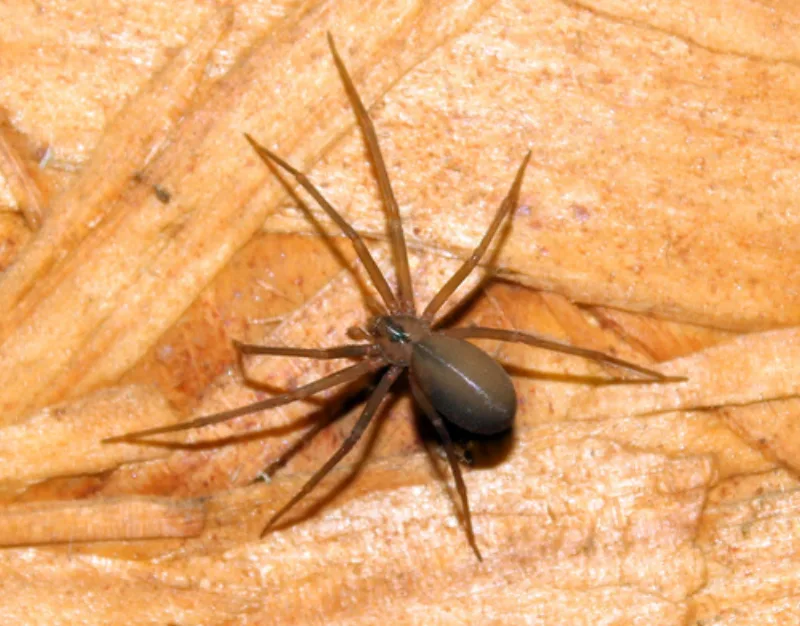
Brown Recluse
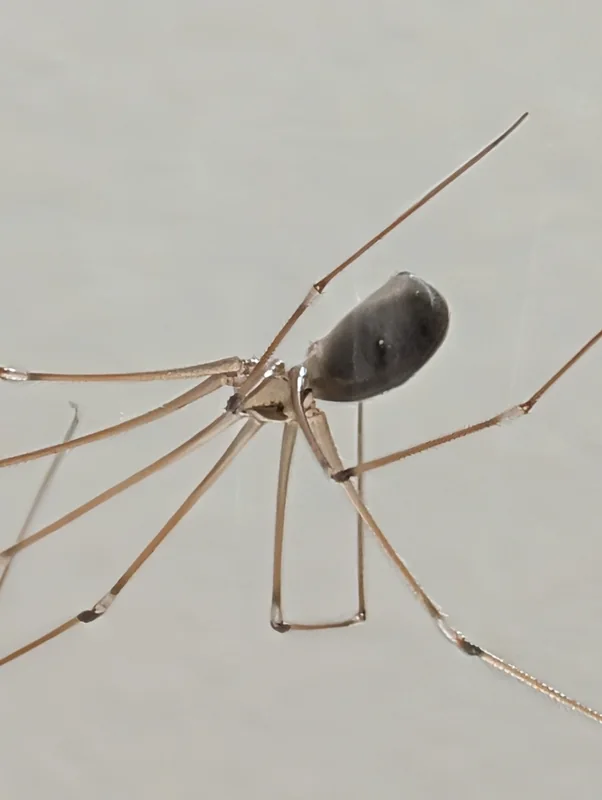
Cellar Spider
Side-by-Side Comparison Table
| Trait | Brown Recluse | Cellar Spider |
|---|---|---|
| Scientific Group | Loxosceles reclusa | Pholcidae |
| Category | Spider | Spider |
| Typical Size | 7–12 mm | 6–10 mm |
| Danger Level | Medically Significant | None |
| Bites or Stings? | Yes | No |
| Peak US Months | May, June, July, August | May, June, July, August |
| Key ID Trait | Uniformly tan to medium brown body with NO stripes, bands, or spines on the legs | Very pale tan peanut-shaped body with extraordinarily long, thread-thin legs (up to 50mm span) |
Brown Recluse vs. Cellar Spider: True Size Comparison
Side-by-Side Anatomy Blueprint
Compare body segments, antennae, leg count, and key markings directly before treating or removing either species.
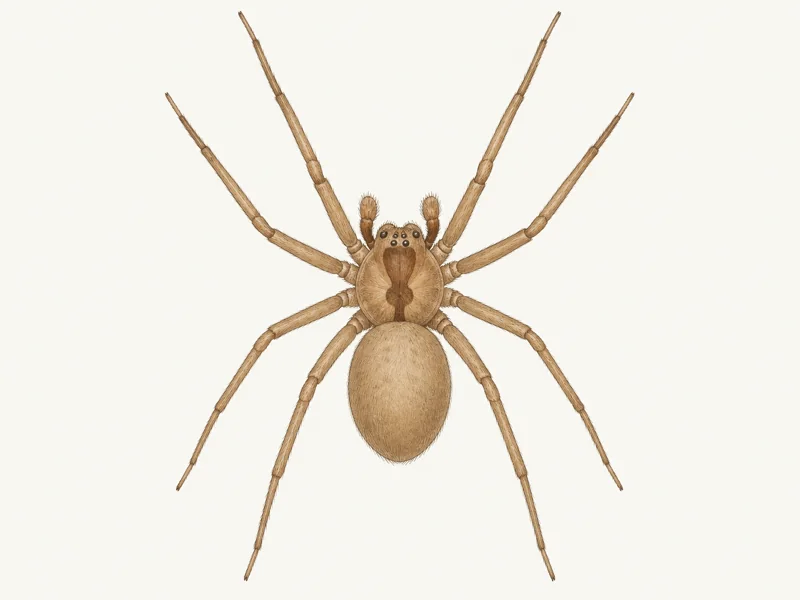
- Six eyes (3 pairs): Six eyes arranged in 3 distinct dyads (pairs) rather than the typical 8 spider eyes.
- Dark violin mark: Dark brown violin-shaped mark on the cephalothorax—wide base behind eyes, thin neck pointing toward abdomen.
- Unbanded smooth legs: Eight uniformly tan-brown legs with NO stripes, rings, or heavy macro-spines.
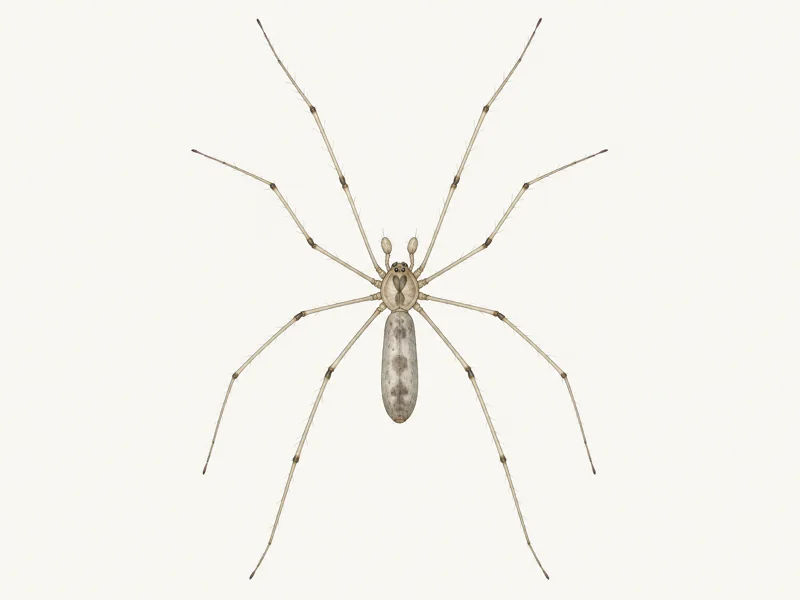
- Tiny pale carapace: Small translucent beige cephalothorax with a faint gray heart smudge (not a violin).
- Hair-thin long legs: Eight extraordinarily long, spindly thread-like legs up to 5× body length.
- Dark knee joints: Subtle dusky bands mark the delicate femur-tibia joints on pale legs.
Key Physical Differences at a Glance
Both spiders are small and tan, which is why they get confused. Up close, though, the difference between brown recluse and cellar spider anatomy is obvious.
FeatureBrown Recluse (Loxosceles reclusa)Cellar Spider (Pholcidae)Body length7–12 mm6–10 mmBody colorUniformly tan to medium brownVery pale tan, almost translucentBody shapeCompact, oval abdomenPeanut-shapedLegsModerate length, no stripes, bands, or spinesExtremely long and thread-thin, up to a 50 mm spanDangerMedically significantNone
Body Shape, Leg Length, and Violin Marking
Leg length is the single best clue. A cellar spider's legs can span up to 50 mm, several times its body length, so it looks like a tiny body suspended on hair-thin stilts. A brown recluse has proportionate legs that are smooth and uniformly colored.
The recluse also often shows a darker, violin-shaped mark on the front body section, with the violin's neck pointing toward the abdomen. Treat this as a supporting clue only. Many harmless spiders have similar markings, and the mark can be faint.
Eyes, Color, and Size Clues
For confident brown recluse vs cellar spider identification, a magnifying glass helps. Brown recluses have six eyes arranged in three pairs in a shallow arc. Most cellar spiders have eight eyes clustered in a tight group.
Color also tells a story. The recluse's abdomen is a solid, even brown with no pattern. The cellar spider is lighter, sometimes grayish, with a soft, elongated abdomen.
Webs, Hiding Spots, and Behavior Indoors
Behavior often answers the question before anyone gets close. Cellar spiders build loose, tangled, irregular webs in ceiling corners, basements, and crawl spaces. They hang upside down in plain sight, and when disturbed they shake or whirl rapidly in the web until they blur.
Brown recluses don't use webs to catch prey in the open. They spin small, irregular retreat webs in hidden spots and hunt at night. Common hiding places include:
- Cardboard boxes and stored clutter
- Behind baseboards, furniture, and picture frames
- Inside shoes, gloves, and clothing left on the floor
- Closets, attics, and seldom-used storage rooms
A spider dangling from a ceiling web is almost always a cellar spider. One found hiding in a box or shoe deserves a closer look.
Where Each Spider Lives in the US and When It's Active
Location narrows things down fast. Cellar spiders live in all 50 states and are common in homes from Maine to California. Indoors, they stay active year-round wherever temperatures stay mild and humidity runs high.
The brown recluse has a much smaller native range centered on the south-central and lower Midwest. Established populations are found in states such as Missouri, Kansas, Oklahoma, Arkansas, Tennessee, Kentucky, and parts of Texas, Louisiana, Illinois, Indiana, and Ohio. Outside that range, confirmed recluse infestations are rare, and many reports turn out to be other spiders.
Recluses are most active from spring through early fall. Activity often peaks in warmer months when males wander in search of mates.
Bite Risk: Which Spider Is Actually Dangerous?
Only one of these spiders poses a real health concern. The brown recluse is medically significant. Its bites are uncommon and usually happen when a spider is trapped against skin, such as in clothing or bedding.
Cellar spiders pose no danger to people. The popular myth that they carry extremely potent venom but can't bite through skin has no scientific support.
If someone suspects a brown recluse bite, don't rely on home remedies. Call US Poison Control at 1-800-222-1222 and contact a doctor promptly. If possible, safely capture the spider in a sealed container so a professional can confirm the species.
Safe IPM Steps to Control Either Spider
Whether a homeowner is dealing with a brown recluse or cellar spider, Integrated Pest Management (IPM) starts with non-chemical steps.
Exclusion
- Seal cracks around foundations, windows, doors, and utility lines
- Repair torn screens and install door sweeps
Sanitation and clutter control
- Swap cardboard boxes for sealed plastic bins
- Vacuum webs, egg sacs, and spiders regularly
- Shake out shoes, gloves, and stored clothing before use
- Pull beds away from walls and remove bed skirts in recluse areas
Moisture and monitoring
- Run a dehumidifier in damp basements, which cellar spiders favor
- Place glue traps along baseboards and in closets to track activity
If insecticides are needed, always read and follow the EPA-registered product label exactly. For confirmed brown recluse infestations, a licensed pest management professional is the safest choice.
Frequently Asked Questions
What's the fastest way to tell a brown recluse from a cellar spider?
Look at the legs. A cellar spider has extraordinarily long, thread-thin legs (up to 50 mm span) and hangs upside down in a web. A brown recluse has shorter, sturdier legs and hides rather than hangs in webs. Leg length is the single best identifying clue.
Can a brown recluse vs cellar spider be identified by body shape?
Yes. The brown recluse has a compact, oval, uniformly brown body, while the cellar spider has a pale, peanut-shaped body that appears almost translucent. The cellar spider's body looks tiny compared to its long legs.
Where do brown recluses live in the United States?
Brown recluses have an established range centered on the south-central and lower Midwest, including Missouri, Kansas, Oklahoma, Arkansas, Tennessee, Kentucky, Texas, Louisiana, Illinois, Indiana, and Ohio. Outside this range, confirmed infestations are rare.
Are cellar spiders dangerous or venomous?
No. Cellar spiders pose no danger to people. The myth that they carry extremely potent venom but cannot bite through skin has no scientific support. Only the brown recluse is medically significant among these two spiders.
What should I do if I think a brown recluse bit me?
Call US Poison Control at 1-800-222-1222 and contact a doctor promptly. Don't rely on home remedies. If possible, safely capture the spider in a sealed container so a professional can confirm the species.
How can I prevent brown recluse and cellar spider infestations?
Use Integrated Pest Management: seal foundation cracks and gaps around doors, replace cardboard boxes with sealed plastic bins, vacuum webs regularly, shake out stored clothing, and use a dehumidifier to reduce moisture that cellar spiders favor.