Brown Recluse vs Hobo Spider: How to Tell These Look-Alike Spiders Apart
Quick ID Verdict: A brown spider darting across a basement floor sends plenty of homeowners straight to a search engine. The question is almost always the same: brown recluse or hobo spider?
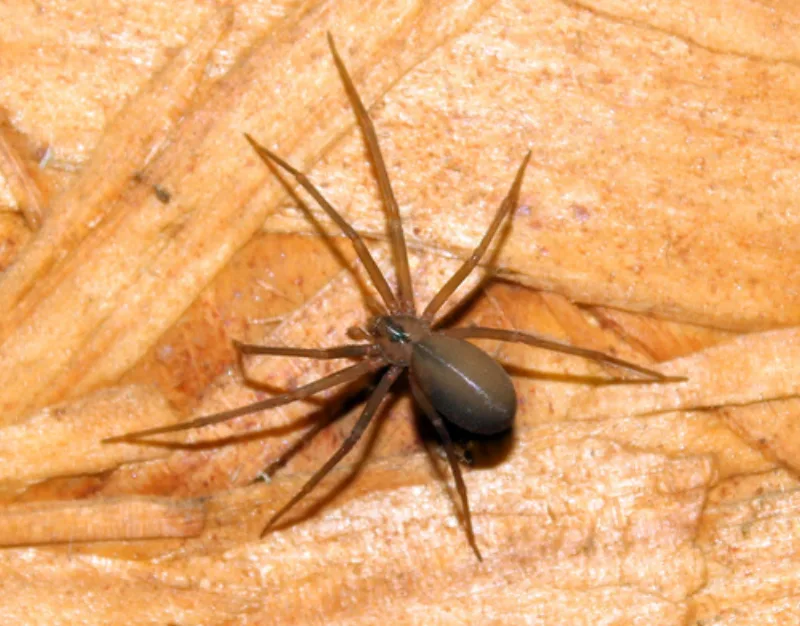
Brown Recluse
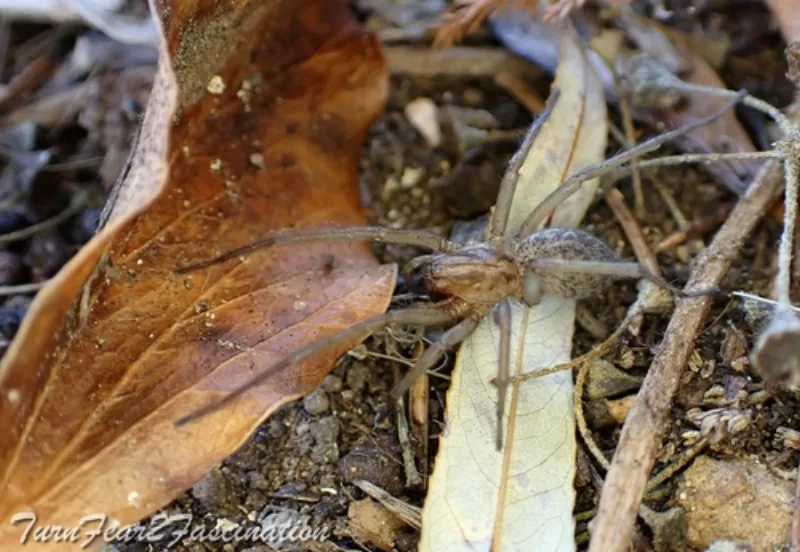
Hobo Spider
Side-by-Side Comparison Table
| Trait | Brown Recluse | Hobo Spider |
|---|---|---|
| Scientific Group | Loxosceles reclusa | Eratigena agrestis |
| Category | Spider | Spider |
| Typical Size | 7–12 mm | 10–18 mm |
| Danger Level | Medically Significant | Nuisance |
| Bites or Stings? | Yes | Yes |
| Peak US Months | May, June, July, August | August, September |
| Key ID Trait | Uniformly tan to medium brown body with NO stripes, bands, or spines on the legs | Fast-running brown funnel-web spider with faint chevron markings on the abdomen |
Brown Recluse vs. Hobo Spider: True Size Comparison
Side-by-Side Anatomy Blueprint
Compare body segments, antennae, leg count, and key markings directly before treating or removing either species.
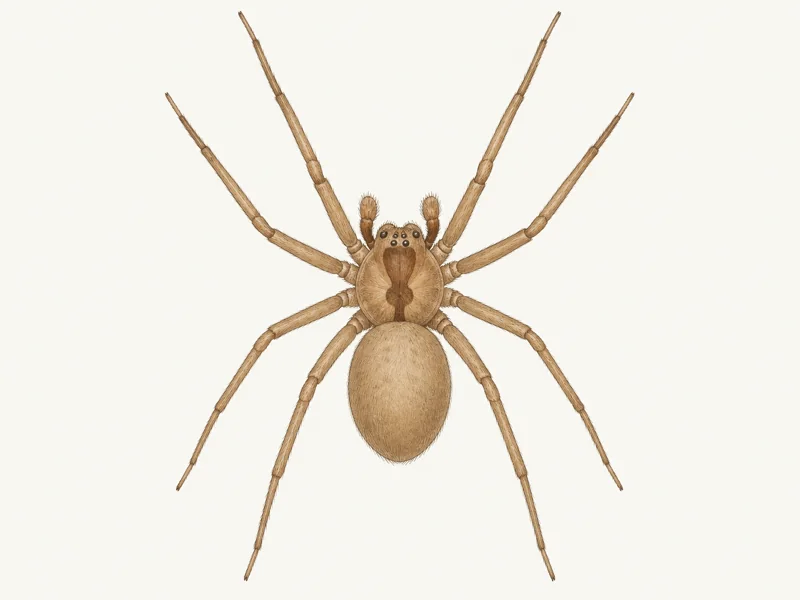
- Six eyes (3 pairs): Six eyes arranged in 3 distinct dyads (pairs) rather than the typical 8 spider eyes.
- Dark violin mark: Dark brown violin-shaped mark on the cephalothorax—wide base behind eyes, thin neck pointing toward abdomen.
- Unbanded smooth legs: Eight uniformly tan-brown legs with NO stripes, rings, or heavy macro-spines.
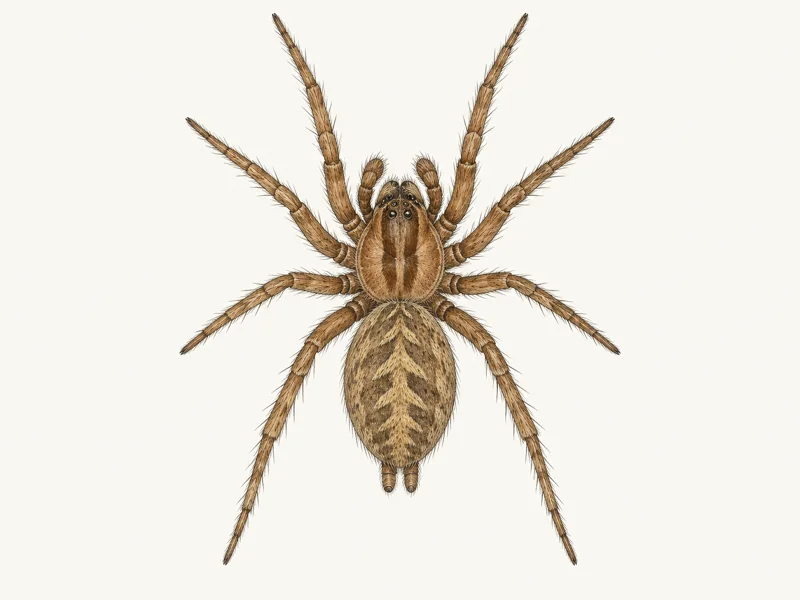
- Eight clustered eyes: Eight small eyes in two rows above prominent hairy front pedipalps.
- Twin dusky stripes: Warm amber cephalothorax with two faint lengthwise stripes—never a crisp violin.
- Unbanded hairy legs: Eight solid tan-brown legs covered in fine hairs and spines—no dark rings.
Quick ID verdict: A brown recluse is plain tan to medium brown with no stripes, bands, or spines on its legs, and it hides rather than runs. A hobo spider is a fast-running funnel-web builder with faint chevron (V-shaped) markings on its abdomen. The guide below covers brown recluse vs hobo spider identification, range, behavior, bite risk, and safe control.
Key Physical Differences for Accurate Identification
At a glance, both are medium-sized brown spiders. The real difference between brown recluse and hobo spider shows up in a few specific features, and a phone camera with zoom is usually enough to check them.
Eye Pattern, Violin Marking, and Leg Features
- Brown recluse (Loxosceles reclusa): Six eyes arranged in three pairs, set in a shallow curve. Most adults show a darker violin-shaped mark on the front body section, with the violin's neck pointing toward the abdomen.
- Hobo spider (Eratigena agrestis): Eight eyes in two rows, typical of funnel weavers. There's no violin mark.
- Legs: Brown recluse legs are long, slender, and uniformly colored, with no stripes, bands, or spines. Any visible banding rules out a recluse.
The violin mark can be faint or misread on other spiders, so the eye pattern is the most reliable tell.
Size, Color, and Abdomen Markings
FeatureBrown RecluseHobo SpiderBody length7–12 mm10–18 mmColorUniformly tan to medium brownBrown, often with lighter and darker patterningAbdomenPlain, no patternFaint chevron markingsThe recluse's abdomen looks smooth and featureless, while a hobo's abdomen usually shows a row of V-shapes pointing toward the head.
Where Each Spider Lives: US Range and State Presence
Geography settles many ID debates before anyone grabs a magnifying glass. These two species barely overlap in the US.
- Brown recluse: Concentrated in the south-central and lower Midwest, including Missouri, Kansas, Oklahoma, Arkansas, Tennessee, Kentucky, and parts of surrounding states.
- Hobo spider: Established in the Pacific Northwest and Intermountain West, including Washington, Oregon, Idaho, Montana, Utah, and Wyoming.
A "brown recluse" found in Seattle or Boise is far more likely to be a hobo or another harmless funnel weaver. Recluses do occasionally hitchhike in moving boxes, but established populations outside their native range are uncommon.
Webs, Behavior, and Seasonal Activity Indoors
Their habits are almost opposites, which helps homeowners figure out what they're dealing with.
Brown recluse spiders live up to their name. They spin small, irregular retreat webs in undisturbed spots like cardboard boxes, closets, attics, wall voids, and stored shoes or clothing. They hunt at night and are most active from spring through fall, though indoor populations can persist year-round.
Hobo spiders build horizontal, sheet-like webs that funnel into a crevice, often in window wells, woodpiles, basements, and along foundations. They're fast runners. Most indoor sightings happen from late summer into fall, when mature males wander in search of mates and end up inside homes.
Bite Risks: What Science Says About Each Spider
This is where the comparison matters most. The brown recluse is considered medically significant. Its venom can cause localized tissue damage in some cases, though many bites are mild and bites in general are rare because the spider avoids people.
The hobo spider is rated a nuisance species. Older claims linked it to serious wounds, but later research has not confirmed that hobo bites cause medically significant injury.
If anyone suspects a bite from either spider, don't attempt home remedies. Call US Poison Control at 1-800-222-1222 and contact a doctor. If possible, safely collect the spider in a sealed container for identification.
Which one is worse for homeowners? The brown recluse, clearly. It hides in clutter, reproduces indoors, and carries real bite risk. Hobos are mostly a seasonal annoyance.
Safe IPM Steps to Prevent and Control Both Spiders at Home
Integrated Pest Management (IPM) works well for both species, and non-chemical steps should always come first.
Exclusion
- Seal gaps around doors, windows, utility lines, and foundation cracks.
- Install tight door sweeps and repair torn screens.
Sanitation
- Swap cardboard boxes for sealed plastic bins.
- Reduce clutter in closets, garages, and basements.
- Shake out shoes, gloves, and stored clothing before use, especially in recluse country.
Moisture and habitat control
- Run a dehumidifier in damp basements.
- Move woodpiles and debris away from the foundation and keep window wells clear.
Monitoring
- Place glue traps along walls, behind furniture, and in closets to confirm which spider is present and track activity.
If an infestation persists, especially with brown recluses, a licensed pest professional can help. Any pesticide use should strictly follow the EPA-registered product label.
Frequently Asked Questions
What's the easiest way to tell a brown recluse from a hobo spider?
The most reliable distinction is eye pattern: brown recluse has six eyes in three pairs, while hobo spiders have eight eyes in two rows. Brown recluses also feature a violin-shaped mark on their body and lack leg banding, whereas hobos have faint V-shaped markings on their abdomen.
Where do brown recluse and hobo spiders typically live in the US?
Brown recluses inhabit the south-central and lower Midwest, including Missouri, Kansas, Oklahoma, and Arkansas. Hobo spiders are found in the Pacific Northwest and Intermountain West, including Washington, Oregon, Idaho, and Montana. Established populations rarely overlap.
Are hobo spider bites dangerous compared to brown recluse bites?
Brown recluse bites are medically significant and can cause localized tissue damage, though many bites are mild. Hobo spider bites are considered non-threatening; older claims of serious wounds were not confirmed by later research. Contact Poison Control (1-800-222-1222) if bitten.
How can I identify which spider built a web in my home?
Brown recluses build small, irregular retreat webs in undisturbed areas like boxes and closets. Hobo spiders create horizontal, sheet-like funnel webs near window wells and foundations. If you see a fast-running spider, it's likely a hobo; recluses prefer hiding and are rarely seen.
What's the best way to prevent brown recluse and hobo spider infestations?
Use Integrated Pest Management: seal cracks around doors, windows, and foundations; replace cardboard boxes with sealed plastic bins; reduce clutter; shake out stored items before use; control moisture with dehumidifiers; and move debris from your foundation. Place glue traps to monitor activity.
Why do hobo spiders enter homes more frequently in the fall?
Mature male hobo spiders wander indoors in late summer and fall while searching for mates. This seasonal behavior explains the increased indoor sightings during autumn months. Brown recluses, by contrast, remain relatively inactive and hidden year-round.