Water Bugs in Louisiana: Identification, Season, and Prevention
Quick Answer: Yes, true water bugs (family Belostomatidae) occur in Louisiana, but they are rare. GBIF has only 6 verified sightings in the state, led by Cameron, Bossier, and Calcasieu parishes' records, with March as the peak month. They are aquatic insects, and most "water bugs" found indoors are actually cockroaches.
When Water Bugs Are Most Active in Louisiana
Now (November): Lower Outdoor ActivityVerified Louisiana Counties, Species & US Range
Counties with Verified Observations
- Cameron
- Bossier
- Calcasieu
How Louisiana Compares to Neighboring States
Note: Wildlife does not follow state or county lines. GBIF totals reflect verified citizen and museum records, so low counts in a neighboring county do not guarantee absence.
How to Identify Water Bugs
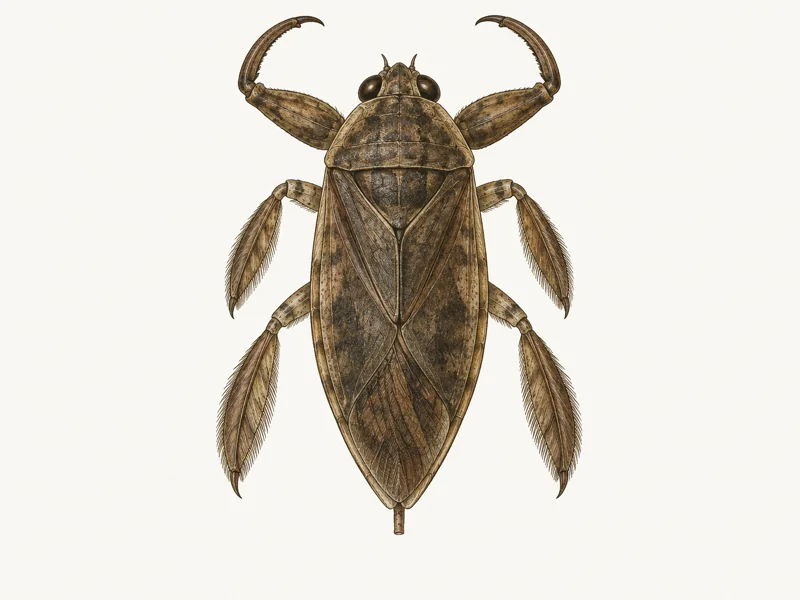
Annotated Anatomy Key (Water Bug)
- Raptorial front claws: Massive curved pincer-like forelegs grasp prey—cockroaches never have these claws.
- Pointed piercing beak: Short stout rostrum tucked under the head can deliver a painful defensive bite.
- Flat olive wing covers: Broad oval leathery-brown wings (45–65 mm) drawn to porch lights at night.
- Oar-like swimming legs: Broad, flattened, hair-fringed middle and hind legs act as aquatic paddles.
Water Bugs Field Checklist
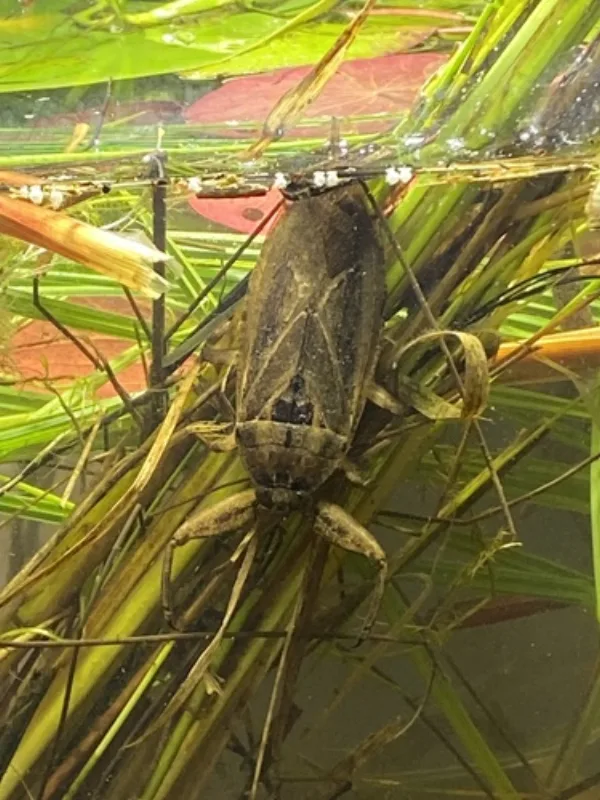
- True giant water bugs have flattened oval brown bodies with powerful grasping front legs and short piercing beaks
- Strong swimmers and night fliers attracted to bright parking-lot and porch lights
- Can deliver a painfully sharp defensive bite ('toe-biter') if handled
- NOTE: Many homeowners mistakenly call Oriental or American cockroaches 'water bugs'
Water Bugs Size at True Relative Scale
Quick Answer: Yes, true water bugs (family Belostomatidae) occur in Louisiana, but they are rare. GBIF has only 6 verified sightings in the state, led by Cameron, Bossier, and Calcasieu parishes' records, with March as the peak month. They are aquatic insects, and most "water bugs" found indoors are actually cockroaches.
Where Water Bugs Live in Louisiana
Belostomatidae are large, flat, brown aquatic insects that live in still or slow water. They favor ponds, marsh edges, ditches, and the vegetated margins of shallow pools. Louisiana's humid subtropical climate (USDA zones 8a-10a) provides plenty of this habitat, yet records remain scarce.
The few verified GBIF records come mainly from Cameron, Bossier, and Calcasieu. Cameron and Calcasieu lie in the southwest coastal region, while Bossier sits in the northwest. A small record count usually reflects limited reporting as much as true scarcity, so the insects may be more widespread than the data suggest.
Giant water bugs are strong fliers and are drawn to lights at night. That is how they sometimes end up on porches, in parking lots, or beside swimming pools far from natural water.
When Water Bugs Are Most Active in Louisiana
Verified records peak in March, which fits the mild, frost-light Louisiana winters. As temperatures rise in spring, adults become more active, move between water bodies, and breed. Anyone searching for a Louisiana water bug season should think of late winter through spring as the time sightings are most likely, based on the limited data.
Because the dataset is only six records, treat this timing as a general pattern rather than a firm calendar. Warm, wet weather can bring adults out at other times of year too.
Quick identification checklist
For Louisiana water bug identification, look for these features:
- Size: Often 1 to 3 inches long, much larger than most roaches.
- Shape: Broad, flat, oval body, tan to dark brown.
- Front legs: Thick, grasping legs used to catch prey.
- Mouthpart: A short, beak-like piercing mouthpart rather than chewing jaws.
- Setting: Found in or near water, or under lights near water.
Water bugs can deliver a painful defensive bite if handled. The danger level is a nuisance, and they are not a household infestation pest. If a bite causes a severe reaction, call US Poison Control at 1-800-222-1222 and contact a doctor.
Look-Alikes Frequently Mistaken for Water Bugs
In everyday Louisiana speech, "water bug" often means a large cockroach. These are the local look-alikes:
- American cockroaches: Reddish-brown, up to about 2 inches, with a pale yellowish band behind the head. Common in drains, sewers, and damp areas.
- Oriental cockroaches: Shiny, dark brown to black, about 1 inch, and fond of cool, damp spots such as basements and crawl spaces.
- Palmetto bugs: A regional nickname for large cockroaches, usually American cockroaches.
- General cockroaches: Other roach species found in kitchens and bathrooms.
The easiest test is habitat and body shape. Cockroaches have long antennae, spiny running legs, and a body built for scurrying. True water bugs are broader and smoother, with powerful front grasping legs, and they are not found breeding in kitchens.
How to Keep Water Bugs Out of Your Louisiana Home
For how to prevent water bugs in Louisiana, begin with non-chemical IPM. Most of the work is moisture control, sanitation, and exclusion, which also discourages cockroaches.
- Switch outdoor lights near ponds or pools to yellow or warm LED bulbs, or use motion sensors, so flying insects are less attracted.
- Seal gaps around doors, windows, utility lines, and weep holes, and fit door sweeps.
- Fix leaks and clear standing water from gutters, planters, and low spots.
- Keep pool and pond edges trimmed of dense vegetation.
- Store food in sealed containers, take out trash regularly, and clean up pet food.
- Run dehumidifiers in damp basements and crawl spaces.
Pesticides are rarely needed for true water bugs. If you use any product for roaches, follow the EPA-registered label exactly, including where and how it may be applied.
When to call a licensed Louisiana pest professional
- You see large roaches repeatedly, in daytime, or in multiple rooms.
- You find egg cases, droppings, or a musty odor.
- Sealing and sanitation have not stopped the problem within a few weeks.
- You cannot tell what the insect is and want a confirmed identification.
IPM Prevention Checklist for Louisiana Homes
- Switch bright white outdoor lights near pools/patios to warm yellow bulbs
- Keep swimming pools skimmed and covered at night
 EXCLUSION BLUEPRINT
Inspect eaves, screens, door sweeps, foundation cracks, and utility penetrations around Louisiana homes before peak season.
Water Bugs in Louisiana: Frequently Asked Questions
Are there water bugs in Louisiana?
Yes, but they are rare. GBIF lists 6 verified Belostomatidae sightings in the state, mostly in Cameron, Bossier, and Calcasieu parishes' records.
Are water bugs dangerous?
They are considered a nuisance. They can bite defensively if handled, so avoid picking them up. For a severe reaction, call Poison Control at 1-800-222-1222 and see a doctor.
Why do I find "water bugs" in my house?
Most are American or Oriental cockroaches, often called palmetto bugs. True water bugs live in water and only wander indoors when attracted to lights.
What is the best way to prevent them?
Reduce outdoor lighting near water, seal entry points, fix moisture problems, and keep food and trash secured. Follow EPA label directions for any product you use.
Sources & Verification
Data refreshed · Editorial & GBIF Methodology