Water Bug vs Earwig: How to Tell Them Apart Fast
Quick ID Verdict: Earwigs are slender, flattened, dark reddish-brown insects 12-22 mm long with obvious pincers (cerci) at the tail end. True giant water bugs are much larger at 20-65 mm, with flattened oval brown bodies, powerful grasping front legs, and a short piercing beak. If you see tail pincers, it's an earwig.
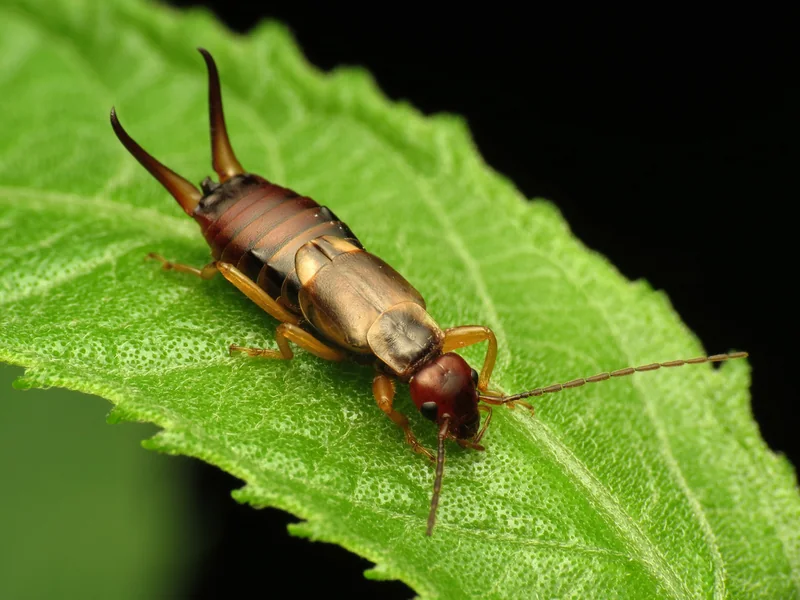
Earwig
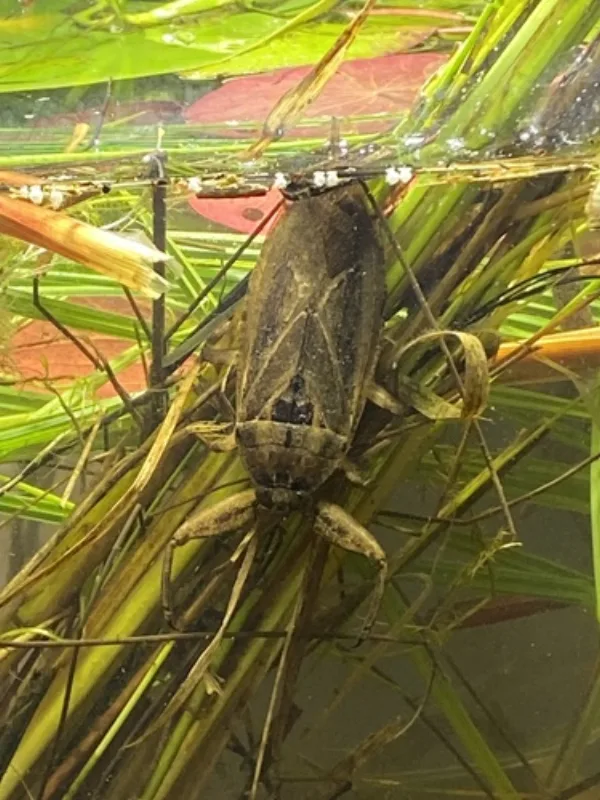
Water Bug
Side-by-Side Comparison Table
| Trait | Earwig | Water Bug |
|---|---|---|
| Scientific Group | Dermaptera | Belostomatidae |
| Category | Insect | Insect |
| Typical Size | 12–22 mm | 20–65 mm |
| Danger Level | Nuisance | Nuisance |
| Bites or Stings? | No | Yes |
| Peak US Months | June, July, August, September | July, August, September, October |
| Key ID Trait | Slender, flattened dark reddish-brown body | True giant water bugs have flattened oval brown bodies with powerful grasping front legs and short piercing beaks |
Earwig vs. Water Bug: True Size Comparison
Side-by-Side Anatomy Blueprint
Compare body segments, antennae, leg count, and key markings directly before treating or removing either species.
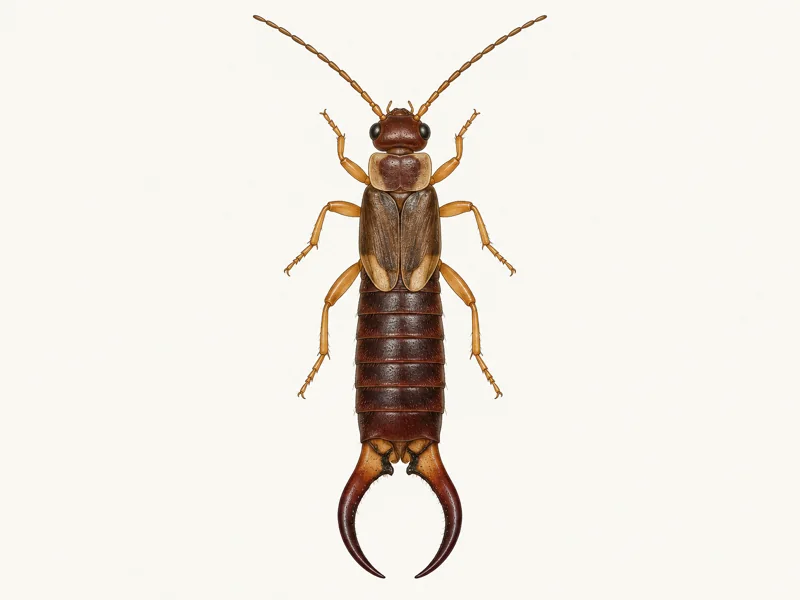
- Thread-like antennae: Segmented medium-length antennae on a flat chestnut-brown head.
- Short wing covers: Compact leathery forewings (tegmina) leave most of the flexible abdomen exposed.
- Six amber legs: Three pairs of slender pale tan legs suited for damp mulch and baseboard crevices.
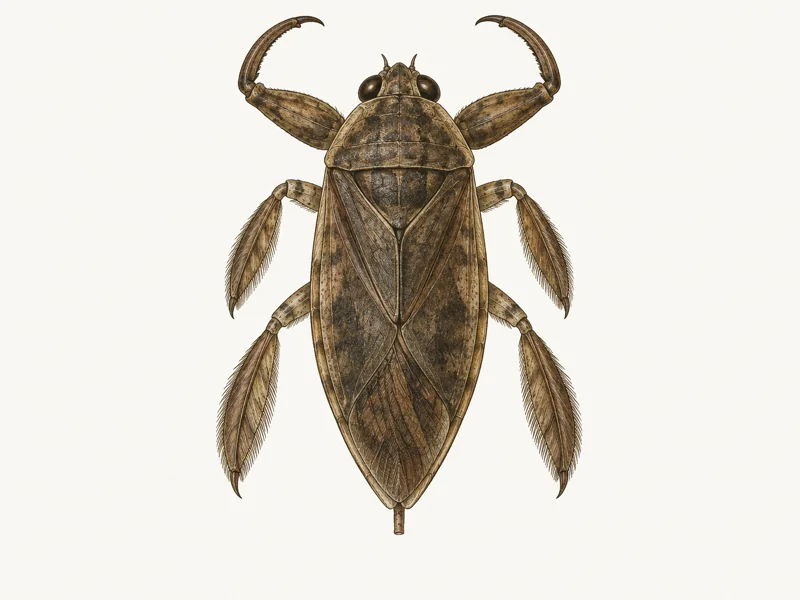
- Raptorial front claws: Massive curved pincer-like forelegs grasp prey—cockroaches never have these claws.
- Pointed piercing beak: Short stout rostrum tucked under the head can deliver a painful defensive bite.
- Flat olive wing covers: Broad oval leathery-brown wings (45–65 mm) drawn to porch lights at night.
Quick Answer: Earwigs are slender, flattened, dark reddish-brown insects 12-22 mm long with obvious pincers (cerci) at the tail end. True giant water bugs are much larger at 20-65 mm, with flattened oval brown bodies, powerful grasping front legs, and a short piercing beak. If you see tail pincers, it's an earwig. If you see a broad oval body with raptorial front legs, it's a water bug.
Quick ID Verdict: Earwig or Water Bug in 3 Seconds
Look at the back end first. Pincers on the tail mean an earwig (order Dermaptera). Grasping front legs and a beak under the head mean a giant water bug (family Belostomatidae).
Size is the second clue. Earwigs top out around 22 mm, while many water bugs are two to three times that length.
Key Visual & Physical Differences
Both insects have flattened bodies, which is why homeowners sometimes confuse them. A closer look shows very different body plans built for very different lifestyles.
Earwigs (Dermaptera)
- Size: 12-22 mm long.
- Shape: Slender, flattened, and elongated.
- Color: Dark reddish-brown, often with lighter legs.
- Signature feature: Forceps-like pincers at the tip of the abdomen.
- Mouthparts: Chewing jaws, not a beak.
Giant Water Bugs (Belostomatidae)
- Size: 20-65 mm long, making them among the largest true bugs in North America.
- Shape: Flattened and broadly oval.
- Color: Brown, blending with pond debris and mud.
- Signature feature: Thick, powerful front legs used to grab prey.
- Mouthparts: A short, piercing beak folded under the head.
For quick earwig vs water bug identification, remember this: pincers in back point to an earwig, while grabbing arms in front point to a water bug.
Behavior, Habitat & Danger Comparison
The difference between an earwig and a water bug becomes even clearer when you consider where each one lives. One is a damp-soil scavenger, and the other is an aquatic predator.
Where They Live
- Earwigs: Damp outdoor spots such as mulch, leaf litter, under pavers, and in garden beds. They wander indoors through gaps near foundations, especially in hot or dry spells.
- Water bugs: Ponds, marshes, slow streams, and other still freshwater. Adults fly at night and are drawn to bright lights, which is how they end up on porches, near pools, or occasionally inside.
How They Behave
Earwigs are nocturnal and hide in tight, moist crevices during the day. They feed on decaying plant matter, small insects, and sometimes tender seedlings or soft fruit.
Giant water bugs are ambush predators. They seize insects, tadpoles, and small fish with their front legs, then use their beak to inject digestive saliva.
Danger Level
Both are rated as nuisance pests, not medically significant ones. Earwig pincers can give a mild pinch if the insect is handled, but they rarely break the skin.
A giant water bug can deliver a painful bite with its beak if it's picked up or stepped on in water. The bite hurts but is not considered dangerous. Anyone with an unusual reaction should contact US Poison Control at 1-800-222-1222 or see a doctor rather than try home remedies.
Which One Is Worse for Homeowners?
For most households, earwigs cause more trouble. They show up more often, can enter in larger numbers, and may chew garden plants. Water bugs usually arrive one at a time and don't breed indoors because they need water.
Both respond well to Integrated Pest Management (IPM). Start with non-chemical steps:
- Control moisture: Fix leaky spigots, clean gutters, and direct downspouts away from the foundation.
- Reduce harborage: Pull mulch, leaf piles, and boards a few inches back from the house.
- Seal entry points: Caulk foundation cracks and install door sweeps and tight window screens.
- Change lighting: Use yellow "bug" bulbs or motion-activated lights to draw fewer flying water bugs.
- Trap earwigs: Rolled damp newspaper or shallow oil traps in garden beds collect earwigs overnight.
If problems persist, a labeled perimeter treatment may help with earwigs. Always read and follow the EPA product label exactly, and never apply insecticides near ponds or other water where they can harm aquatic life.
Frequently Asked Questions
Is a water bug the same as a cockroach?
No. Many people call large cockroaches "water bugs," but true giant water bugs belong to the family Belostomatidae and have grasping front legs and a beak, which cockroaches lack.
Can earwigs or water bugs infest my house?
Earwigs can gather indoors in damp areas but don't usually establish lasting indoor populations. Giant water bugs can't breed indoors because they need standing freshwater.
Do earwigs crawl into people's ears?
That's a myth. Earwigs seek dark, moist crevices outdoors and have no special attraction to human ears.
Why do water bugs show up near my pool or porch light?
Adult giant water bugs fly at night between bodies of water and are strongly attracted to bright lights. Dimming or switching to yellow outdoor bulbs usually reduces visits.