Bed Bug vs Water Bug: How to Tell Them Apart Fast
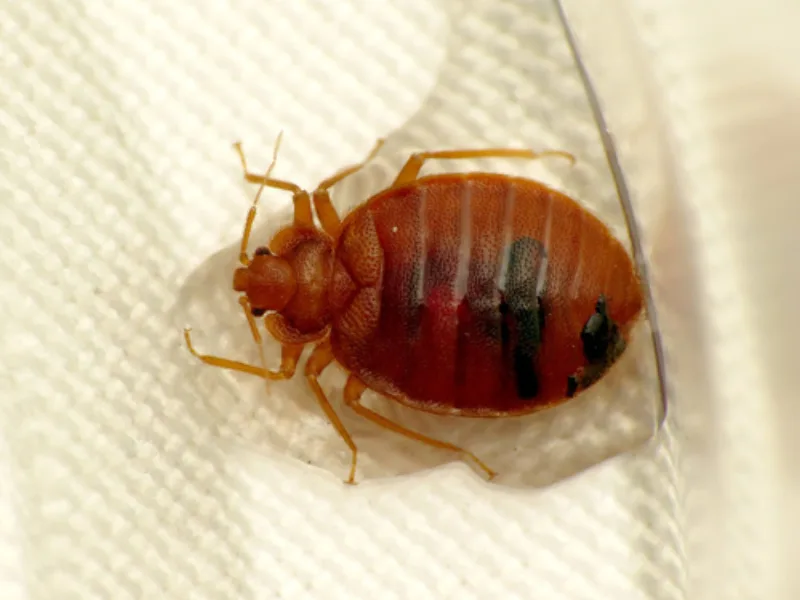
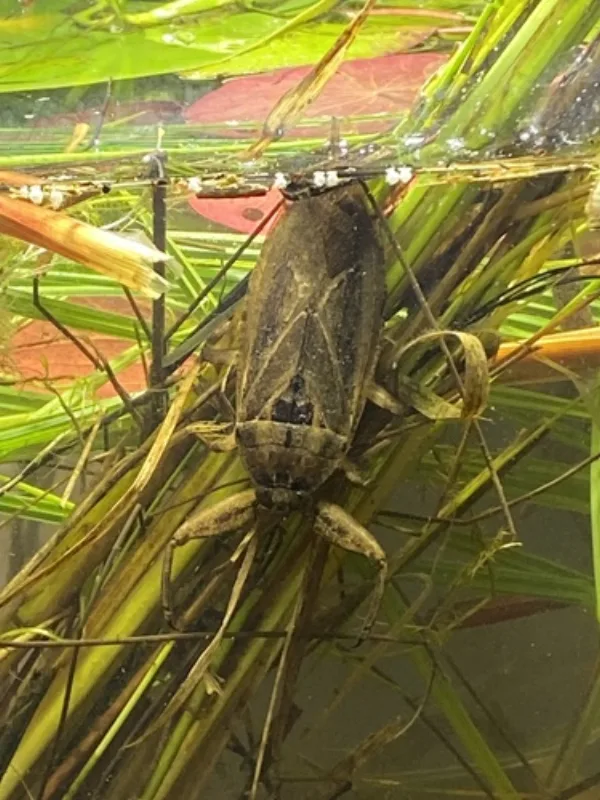
Quick ID Verdict: A bed bug is a tiny (4-7 mm), flat, apple-seed-shaped, reddish-brown insect without wings that hides in mattresses and furniture. A true giant water bug is far larger (20-65 mm), with a flattened oval brown body, powerful grasping front legs, and a short piercing beak, and it lives in ponds and wetlands rather than beds.
Bed Bug
Water Bug
Side-by-Side Comparison Table
| Trait | Bed Bug | Water Bug |
|---|---|---|
| Scientific Group | Cimex lectularius | Belostomatidae |
| Category | Insect | Insect |
| Typical Size | 4–7 mm | 20–65 mm |
| Danger Level | Nuisance | Nuisance |
| Bites or Stings? | Yes | Yes |
| Peak US Months | May, July, October, November | July, August, September, October |
| Key ID Trait | Flat, oval, apple-seed-shaped reddish-brown body without wings | True giant water bugs have flattened oval brown bodies with powerful grasping front legs and short piercing beaks |
Bed Bug vs. Water Bug: True Size Comparison
Side-by-Side Anatomy Blueprint
Compare body segments, antennae, leg count, and key markings directly before treating or removing either species.
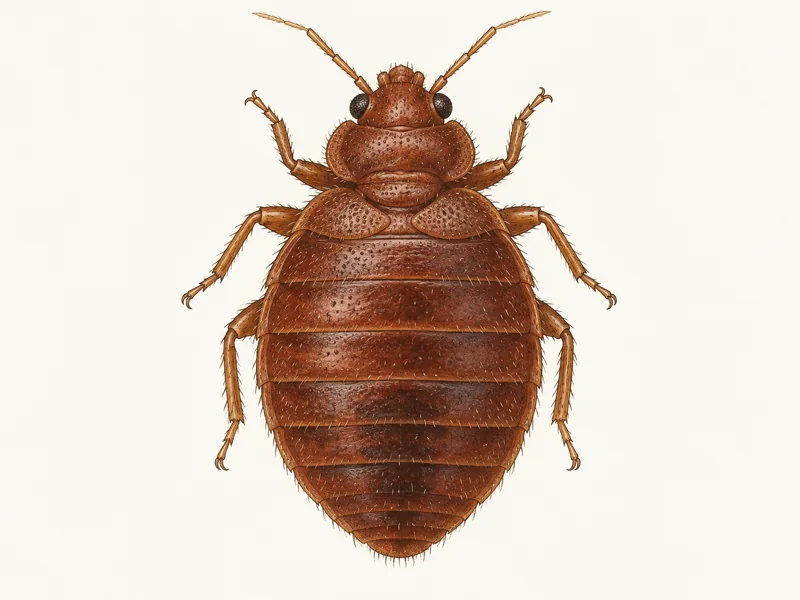
- Short 4-part antennae: Compact head with dark compound eyes and short 4-segmented antennae (shorter than roach feelers).
- Scalloped pronotum: Curved collar plate behind the head followed by tiny stubby wing pads—bed bugs cannot fly.
- Six short legs: Three pairs of short crawling legs suited for clinging to mattress piping and wood cracks.
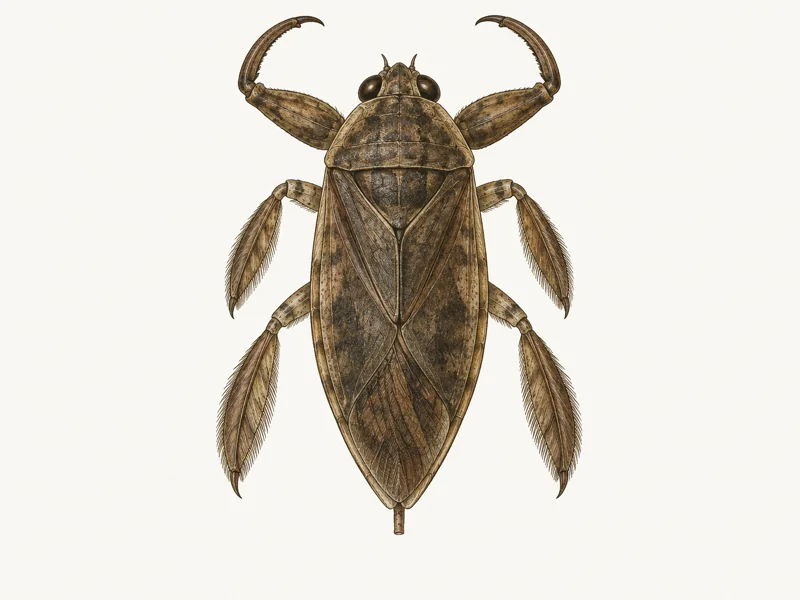
- Raptorial front claws: Massive curved pincer-like forelegs grasp prey—cockroaches never have these claws.
- Pointed piercing beak: Short stout rostrum tucked under the head can deliver a painful defensive bite.
- Flat olive wing covers: Broad oval leathery-brown wings (45–65 mm) drawn to porch lights at night.
Quick Answer: A bed bug is a tiny (4-7 mm), flat, apple-seed-shaped, reddish-brown insect without wings that hides in mattresses and furniture. A true giant water bug is far larger (20-65 mm), with a flattened oval brown body, powerful grasping front legs, and a short piercing beak, and it lives in ponds and wetlands rather than beds. If the bug fits on a pencil eraser and turned up in bedding, it's almost certainly a bed bug.
Key Visual and Physical Differences
Size is the fastest way to settle the bed bug vs water bug question. Even the largest adult bed bug (Cimex lectularius) tops out around 7 mm, while giant water bugs in the family Belostomatidae range from 20 mm to an impressive 65 mm. That means a mature water bug can be roughly ten times longer than a bed bug.
Body shape and color overlap a little, which is why people sometimes confuse them. Both are flattened and oval, and both lean toward brown. The details below make bed bug vs water bug identification simple.
Bed Bug Field Marks
- Size: 4-7 mm, about the size of an apple seed
- Color: Reddish-brown, becoming darker and more swollen after feeding
- Wings: None; bed bugs crawl and cannot fly
- Legs: Six slender legs built for walking, not grabbing
- Clues: Shed skins, tiny dark fecal spots, and pale eggs in mattress seams
Giant Water Bug Field Marks
- Size: 20-65 mm, often longer than a thumb
- Color: Brown, sometimes mottled for camouflage in water
- Front legs: Thick, powerful, pincer-like legs for seizing prey
- Mouthparts: A short, sturdy piercing beak
- Hind legs: Flattened and fringed for swimming
One more note: many homeowners say "water bug" when they mean a large cockroach. Cockroaches have long antennae and lack the grasping front legs of a true giant water bug, so check the front legs if you're unsure.
Behavior, Habitat and Danger Comparison
The difference between bed bug and water bug behavior is stark. Bed bugs are indoor parasites that feed on human blood, usually at night, then retreat to cracks near sleeping areas. Giant water bugs are aquatic predators that hunt insects, tadpoles, small fish, and frogs in ponds, marshes, and slow streams.
Where You'll Find Each One
- Bed bugs: Mattress seams, box springs, headboards, upholstered furniture, luggage, and wall outlets near beds
- Water bugs: Freshwater habitats; adults fly at night and are drawn to porch lights, pools, and lit windows
Danger Level
Both pests are rated as a nuisance rather than a serious medical threat. Bed bug bites can cause itchy welts, lost sleep, and stress, but bed bugs are not known to spread disease. Giant water bugs don't seek out people, though they can deliver a painful bite with their beak if handled or stepped on in water.
If a bite causes severe swelling, trouble breathing, or symptoms that worsen, contact a doctor or call US Poison Control at 1-800-222-1222. Avoid home remedies for any reaction that concerns you.
Which One Is Worse for Homeowners?
For most households, bed bugs are the bigger problem by a wide margin. They breed indoors, hide in tiny crevices, and spread through furniture and travel bags. A water bug inside the house is usually a lone visitor attracted by lights, and it cannot establish an infestation away from water.
Managing Bed Bugs With IPM
- Wash and dry bedding and clothing on high heat for at least 30 minutes
- Vacuum mattress seams and furniture, then seal and discard the bag outdoors
- Install encasements on mattresses and box springs
- Reduce clutter and inspect secondhand furniture before bringing it home
- Hire a licensed professional for heat treatment or targeted applications
Managing Water Bugs With IPM
- Switch outdoor bulbs to yellow or warm LED lights that attract fewer insects
- Repair window screens and seal gaps around doors
- Skim pools and reduce standing water near the home
- Gently relocate a stray bug outdoors with a container instead of using bare hands
Non-chemical steps should always come first. If you choose an insecticide for either pest, read and follow the EPA product label exactly, including application sites and safety precautions.
Frequently Asked Questions
Can a water bug infest my bed?
No. True giant water bugs need freshwater habitats to live and breed. A water bug found indoors is usually a stray drawn in by lights.
How can I tell if I have a bed bug or water bug problem?
Look at size and location. A small, wingless, reddish-brown bug in bedding points to bed bugs, while a large brown bug with grasping front legs near a light or pool points to a water bug.
Do giant water bugs bite people?
They can bite defensively if handled or stepped on in water, and the bite is painful. They don't feed on human blood the way bed bugs do.
Is a "water bug" in my kitchen actually a cockroach?
Often, yes. Large cockroaches are commonly called water bugs. Check for long antennae and the absence of thick, pincer-like front legs to confirm.