American Cockroach vs Water Bug: How to Tell Them Apart
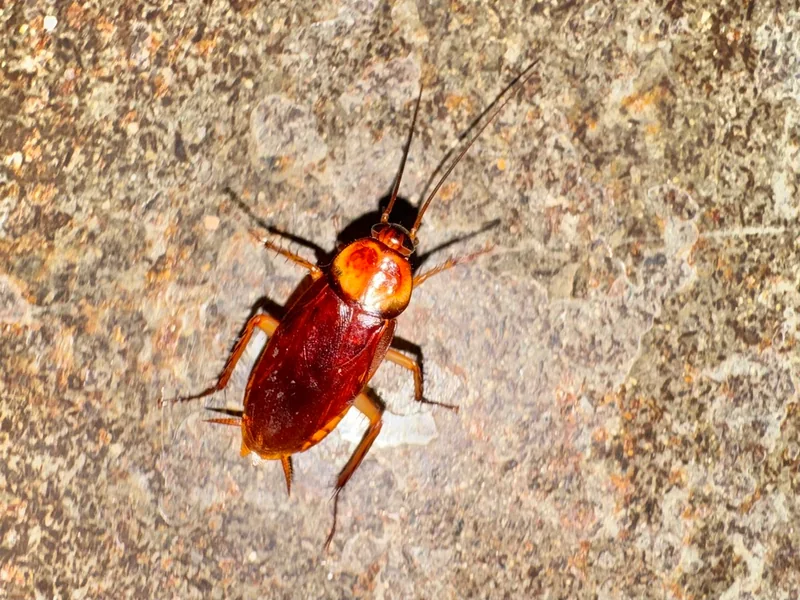
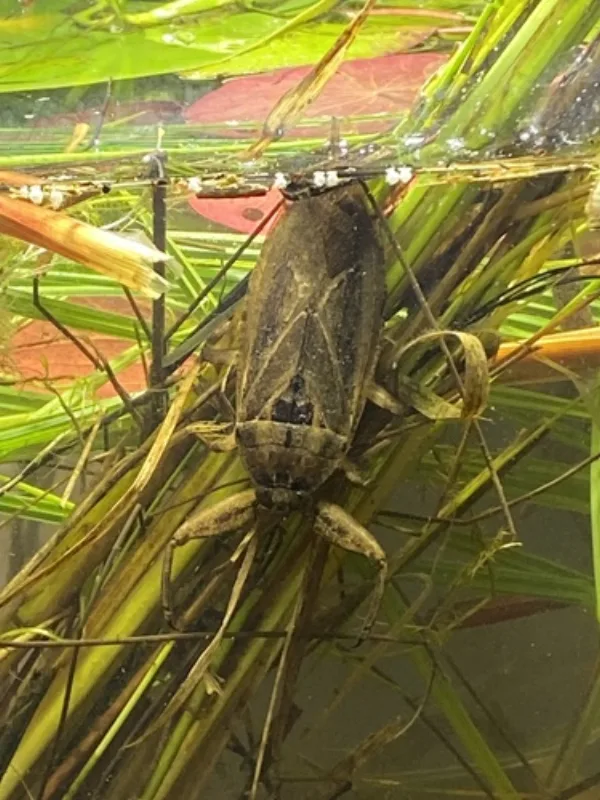
Quick ID Verdict: An American cockroach (Periplaneta americana) is a reddish-brown, long-legged runner with long antennae and a pale yellow figure-8 halo on the shield behind its head. A true giant water bug (family Belostomatidae) has a flattened, oval brown body, thick grasping front legs, and a short piercing beak.
American Cockroach
Water Bug
Side-by-Side Comparison Table
| Trait | American Cockroach | Water Bug |
|---|---|---|
| Scientific Group | Periplaneta americana | Belostomatidae |
| Category | Insect | Insect |
| Typical Size | 35–53 mm | 20–65 mm |
| Danger Level | Nuisance | Nuisance |
| Bites or Stings? | No | Yes |
| Peak US Months | April, August, September, October | July, August, September, October |
| Key ID Trait | Large reddish-brown cockroach (up to 2 inches) with a pale yellow figure-8 halo around the pronotum | True giant water bugs have flattened oval brown bodies with powerful grasping front legs and short piercing beaks |
American Cockroach vs. Water Bug: True Size Comparison
Side-by-Side Anatomy Blueprint
Compare body segments, antennae, leg count, and key markings directly before treating or removing either species.
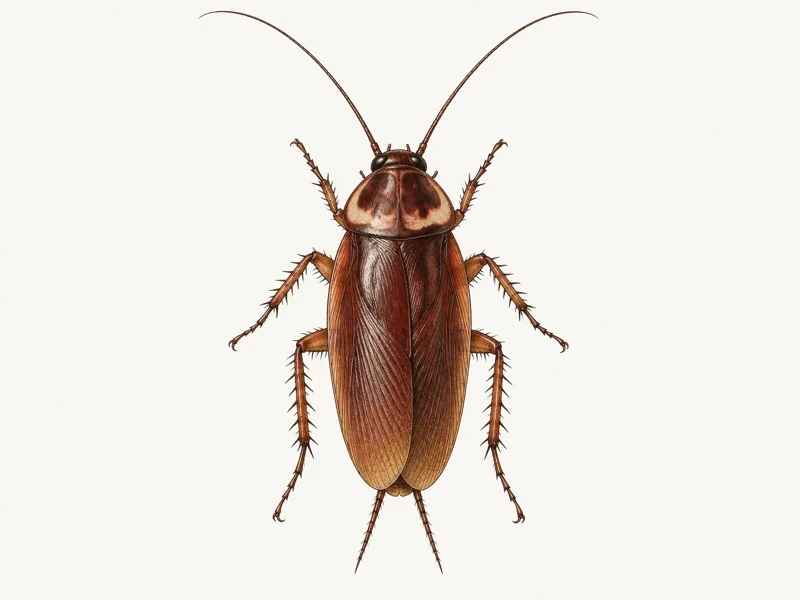
- Long whip antennae: Thread-like filiform antennae sweeping longer than the 35–50 mm reddish-brown body.
- Yellow figure-8 shield: Broad chestnut pronotum behind the head ringed by a distinctive pale yellowish halo.
- Spiny running legs: Six fast-running bristled legs built for rapid sprinting along sewer lines and basements.
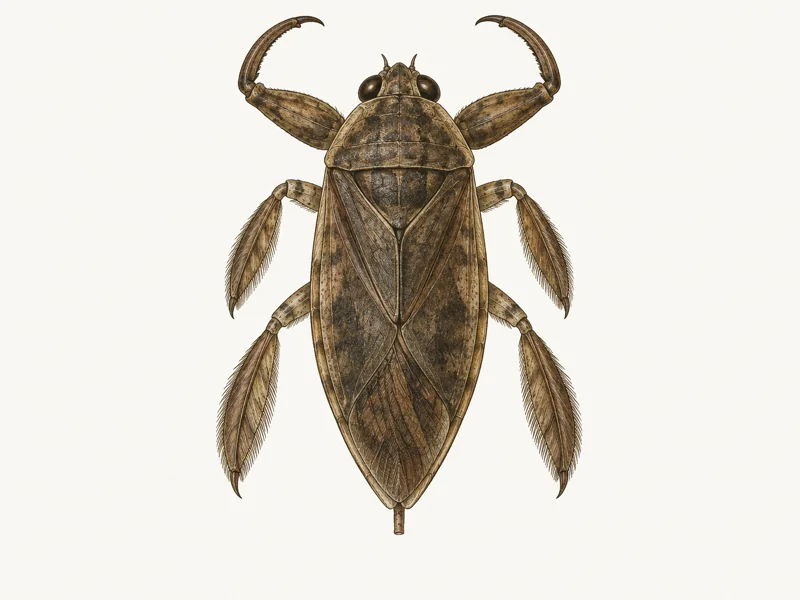
- Raptorial front claws: Massive curved pincer-like forelegs grasp prey—cockroaches never have these claws.
- Pointed piercing beak: Short stout rostrum tucked under the head can deliver a painful defensive bite.
- Flat olive wing covers: Broad oval leathery-brown wings (45–65 mm) drawn to porch lights at night.
Quick Answer: An American cockroach (Periplaneta americana) is a reddish-brown, long-legged runner with long antennae and a pale yellow figure-8 halo on the shield behind its head. A true giant water bug (family Belostomatidae) has a flattened, oval brown body, thick grasping front legs, and a short piercing beak. If it sprints across your kitchen floor with waving antennae, it's almost certainly a cockroach. If it has pincer-like front legs and came from a pond or porch light, it's a water bug.
Key Visual & Physical Differences
Many people say "water bug" when they mean a large cockroach, but the two insects belong to entirely different orders. Once you know which features to check, telling them apart is simple.
Body Shape and Size
- American cockroach: 35-53 mm long (up to about 2 inches), with a slender, elongated body and wings that lie flat over the back.
- Giant water bug: 20-65 mm long, with a broad, flattened, oval body built for swimming. Large specimens can easily outsize a cockroach.
Color and Markings
- American cockroach: Glossy reddish-brown, with a pale yellow figure-8 halo around the pronotum, the plate just behind the head.
- Giant water bug: Dull brown to olive-brown, with no yellow halo, which helps it blend into muddy water.
Legs, Antennae, and Mouthparts
- American cockroach: Six spiny, similar-looking legs made for running. It has very long, threadlike antennae, often as long as its body, and chewing mouthparts.
- Giant water bug: Powerful, raptorial front legs that look like pincers, plus flattened hind legs for paddling. Its antennae are tiny and tucked out of sight, and it has a short, piercing beak.
Behavior, Habitat & Danger Comparison
Where you find the insect is often the strongest clue for identifying an American cockroach or a water bug. Both are listed as nuisance pests, but they live very different lives.
American Cockroach Behavior
American cockroaches favor warm, damp, dark places such as sewers, basements, boiler rooms, drains, and crawl spaces. They come out at night to scavenge on food scraps, grease, and organic debris. When disturbed, they run quickly for cover, and adults can glide short distances.
Giant Water Bug Behavior
Giant water bugs are aquatic predators that live in ponds, marshes, and slow streams. They ambush insects, tadpoles, and small fish, grabbing prey with their front legs and injecting digestive saliva through the beak. Adults fly at night and are strongly drawn to lights, so they often land on porches, patios, and around pools. That habit is what earned them the nickname "electric light bugs."
Danger Level
- American cockroach: Rated a nuisance. It does not bite people in any meaningful way, but it can contaminate food surfaces, and its droppings and shed skins may worsen indoor allergies.
- Giant water bug: Also rated a nuisance. It does not infest homes, but if handled it can deliver a painful defensive bite with its beak. Never pick one up bare-handed. If a bite causes severe pain, swelling, or an unusual reaction, contact US Poison Control at 1-800-222-1222 or see a doctor.
Which One Is Worse for Homeowners?
For most households, the American cockroach is the bigger problem. A water bug indoors is usually a lone visitor that flew toward a light and wandered in. It can't breed inside your home, and it will die without water. Cockroaches, by contrast, can establish breeding populations in drains, walls, and basements.
Managing American Cockroaches
Start with Integrated Pest Management (IPM) methods before reaching for chemicals:
- Moisture control: Fix leaky pipes, run a dehumidifier in basements, and ventilate crawl spaces.
- Exclusion: Seal gaps around pipes, install drain covers, and add door sweeps and weatherstripping.
- Sanitation: Store food in sealed containers, clean up grease, and take out trash nightly.
- Monitoring: Place sticky traps along walls and under sinks to find hot spots.
If the problem continues, gel baits or bait stations placed in cracks are usually the most targeted options. Always read and follow the EPA product label exactly, or hire a licensed pest professional.
Managing Giant Water Bugs
Prevention is mostly about lighting. Switch porch fixtures to yellow "bug" bulbs or warm LEDs, turn off unneeded outdoor lights, and keep doors and screens closed at night. Use a pool cover when the pool isn't in use. To remove one, scoop it into a container and release it near water. Insecticides are rarely necessary.
Frequently Asked Questions
Is a "water bug" in my basement actually a cockroach?
Usually, yes. Large insects found in basements, drains, and bathrooms are most often American cockroaches. True giant water bugs rarely show up indoors except after flying toward lights.
What is the fastest way to tell an American cockroach from a water bug?
Look at the front legs and antennae. Cockroaches have long antennae and slim running legs, while water bugs have pincer-like grasping front legs and barely visible antennae.
Can giant water bugs infest a house?
No. Giant water bugs need ponds or other standing water to live and reproduce. Any that come indoors are accidental visitors.
Do American cockroaches or water bugs bite?
American cockroaches almost never bite people. Giant water bugs can give a painful bite if handled, so move them with a container instead of your hands, and call Poison Control at 1-800-222-1222 if you have concerns after a bite.