Hornets in Louisiana: Rare Sightings, Identification, and Prevention
Quick Answer: True hornets are rare in Louisiana. GBIF holds just one verified sighting, a European hornet (Vespa crabro) recorded in Bossier Parish and dated to October. Most stinging insects mistaken for hornets here are yellow jackets, paper wasps, cicada killers, or honey bees.
When Hornets Are Most Active in Louisiana
Now (November): Lower Outdoor ActivityVerified Louisiana Counties, Species & US Range
Counties with Verified Observations
- Bossier
Species Recorded in Louisiana
| Species | Scientific Name | GBIF Records |
|---|---|---|
| European Hornet | Vespa crabro | 1 |
How Louisiana Compares to Neighboring States
Note: Wildlife does not follow state or county lines. GBIF totals reflect verified citizen and museum records, so low counts in a neighboring county do not guarantee absence.
How to Identify Hornets
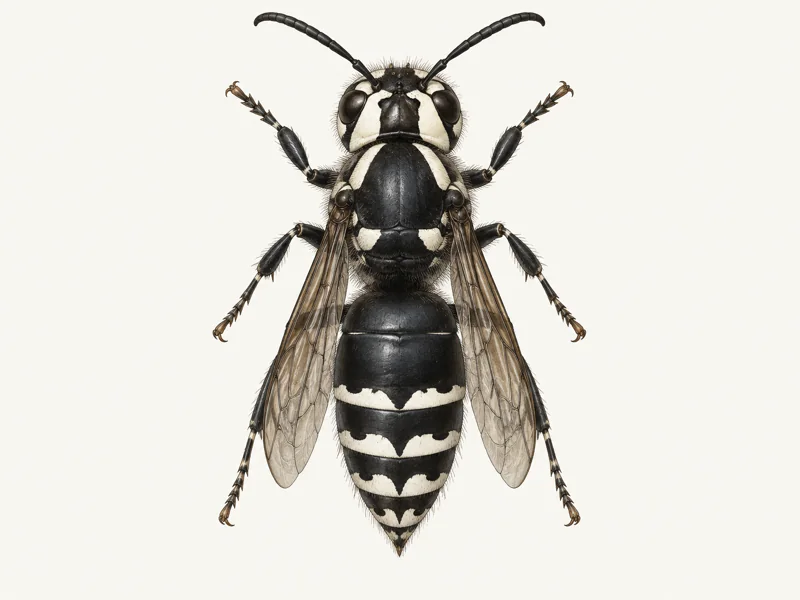
Annotated Anatomy Key (Hornet)
- Ivory-white face: Bold creamy-white face and thorax-side markings distinguish it from yellow jackets.
- Stout black thorax: Heavy-bodied glossy jet-black aerial wasp measuring 15–20 mm.
- Smoky veined wings: Dark-veined translucent wings powering rapid defense around aerial paper nests.
- White rear bands: Crisp ivory-white stripes strictly on the final three jet-black abdominal segments.
Hornets Field Checklist
- Notably larger and stouter than typical yellow jackets or paper wasps
- European hornet has reddish-brown head/thorax with yellow-and-brown striped abdomen
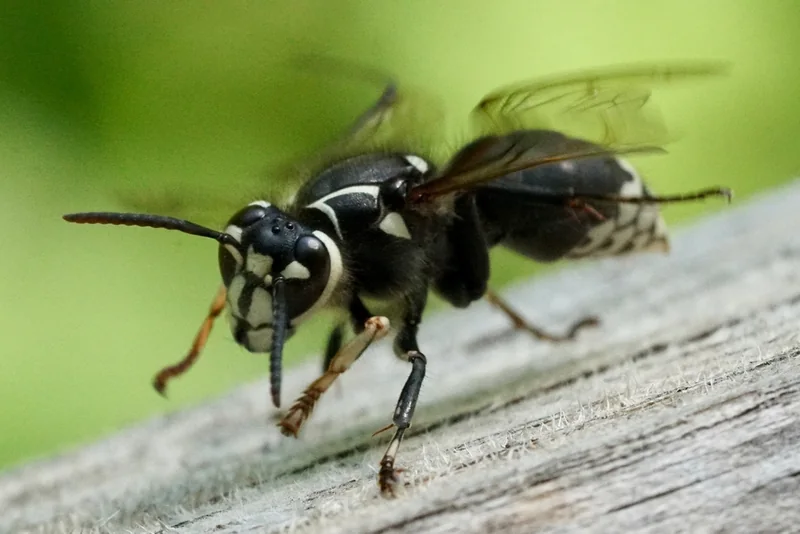
- Bald-faced hornet (an aerial yellow jacket) is stark black with ivory-white face and tail markings
- Constructs large football-shaped gray paper nests in trees, shrubs, or hollow cavities
Side-by-Side Look-Alike Comparisons
Hornets Size at True Relative Scale
Quick Answer: True hornets are rare in Louisiana. GBIF holds just one verified sighting, a European hornet (Vespa crabro) recorded in Bossier Parish and dated to October. Most stinging insects mistaken for hornets here are yellow jackets, paper wasps, cicada killers, or honey bees.
Where Hornets Live in Louisiana
So, are there hornets in Louisiana? Barely. The verified GBIF record lists a single European hornet in Bossier, in the northwest corner of the state. One record does not show an established population, so treat any hornet claim with caution until it is confirmed.
The European hornet typically nests in hollow trees, wall voids, attics, and sheds. Colonies are annual, and the nest is made of chewed wood fiber that forms a papery, brownish shell. Louisiana's humid subtropical climate (USDA zones 8a to 10a), with hot, wet summers and mild winters, is not what this insect is best known for favoring.
Another name in the genus brief, the bald-faced hornet (Dolichovespula maculata), is not a verified Louisiana record in the GBIF data used here. Note that it is technically a yellowjacket, not a true hornet.
When Hornets Are Most Active in Louisiana
The lone record falls in October, so that is the only peak month the data supports. Anyone discussing Louisiana hornet season should keep that caveat in mind: a single record cannot define a season.
In general, hornet colonies grow through summer and peak in late summer and fall, when workers are most numerous and defensive. Queens then leave to overwinter, and the old nest is abandoned. Mild Gulf Coast winters can shorten the quiet period for some stinging insects, though this is general entomology rather than a Louisiana hornet finding.
Look-Alikes Frequently Mistaken for Hornets
Good Louisiana hornet identification starts with ruling out the common insects below. Most stinging calls turn out to be one of these.
- Yellow jackets: Smaller, black and bright yellow, often nesting in the ground and scavenging at trash cans and picnics.
- Paper wasps: Slender, with long dangling legs and open, umbrella-shaped nests under eaves and porch ceilings.
- Cicada killers: Large, heavy-bodied wasps that dig burrows in sandy soil. Males are territorial but cannot sting, and females rarely sting.
- Honey bees: Fuzzy, golden-brown, and rounded, usually seen on flowers or in wall and tree cavities.
The European hornet is large, up to about 1.5 inches, with a reddish-brown head and thorax and a yellow-striped abdomen. Photograph the insect from a safe distance and do not disturb the nest. A confirmed hornet sighting is worth reporting to the LSU AgCenter or a local extension office.
How to Keep Hornets Out of Your Louisiana Home
Knowing how to prevent hornets in Louisiana mostly means preventing stinging insects of all kinds. Start with non-chemical Integrated Pest Management (IPM), as university extension programs recommend.
- Exclusion: Seal gaps in siding, soffits, vents, and utility penetrations. Screen attic and chimney openings.
- Sanitation: Keep trash cans lidded, clean up fallen fruit, and rinse recycling bins.
- Moisture control: Fix leaks and clear standing water. Wasps and hornets seek water sources, and damp wood invites cavity nesting.
- Inspection: Check eaves, sheds, and tree hollows every couple of weeks in warm months. Small, early nests are easy to spot.
- Timing: Never knock down a nest at midday. Avoid shaking or blocking an active nest.
If you use any insecticide, follow the EPA-registered product label exactly, including the site, rate, and protective gear instructions.
When to Call a Licensed Louisiana Pest Professional
- The nest is larger than a softball or located in a wall void, attic, or high up.
- You or a family member has a known allergy to stings.
- Insects are entering the living space.
- You are unsure what species you have, especially if it might be a hornet.
- The nest is near a door, play area, or other high-traffic spot.
Safety note: Hornet and wasp stings can be medically significant, particularly for people with allergies. This guide is not medical advice. After a sting, call US Poison Control at 1-800-222-1222 and contact a doctor. Call 911 for trouble breathing, swelling of the face or throat, or dizziness.
IPM Prevention Checklist for Louisiana Homes
- Leave high, out-of-the-way tree nests undisturbed—colonies die naturally after hard frost
- Turn off bright exterior lights near doorways in late summer (European hornets fly at night)
- Seal barn, shed, and attic openings in early spring
 EXCLUSION BLUEPRINT
Inspect eaves, screens, door sweeps, foundation cracks, and utility penetrations around Louisiana homes before peak season.
Hornets in Louisiana: Frequently Asked Questions
Are there hornets in Louisiana?
Rarely. GBIF lists one verified record, a European hornet in Bossier, in October. Most stinging insects seen in the state are other wasps or bees.
What is the most common hornet look-alike in Louisiana?
Yellow jackets and paper wasps are the usual culprits. Cicada killers also frighten people because of their size, though they are not aggressive.
Should I remove a nest myself?
Only small, accessible nests of a known species, and only with care. For large, hidden, or unidentified nests, hire a licensed professional.
What should I do after a sting?
Move away from the nest and call US Poison Control at 1-800-222-1222 or a doctor for guidance. Seek emergency care right away for severe symptoms.
Sources & Verification
- Penn State Extension — European Hornet
- Virginia Cooperative Extension — Hornets and Wasps
- GBIF Global Biodiversity Occurrence Records
Data refreshed · Editorial & GBIF Methodology