Hornet vs Wasp: How to Tell the Difference and Protect Your Home
Quick ID Verdict: If the insect is big, stout, and noticeably chunky, often 18 mm or longer, it's likely a hornet. If it's slender and smooth with a sharply pinched waist, you're probably looking at a typical wasp.
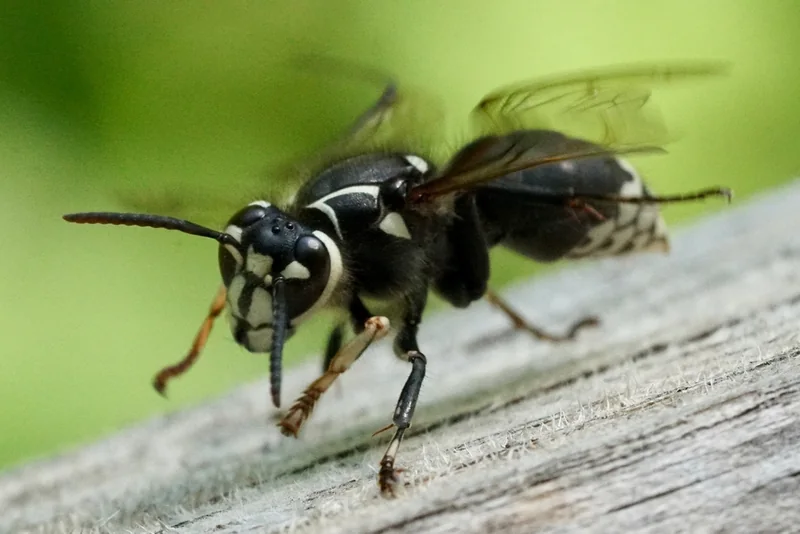
Hornet
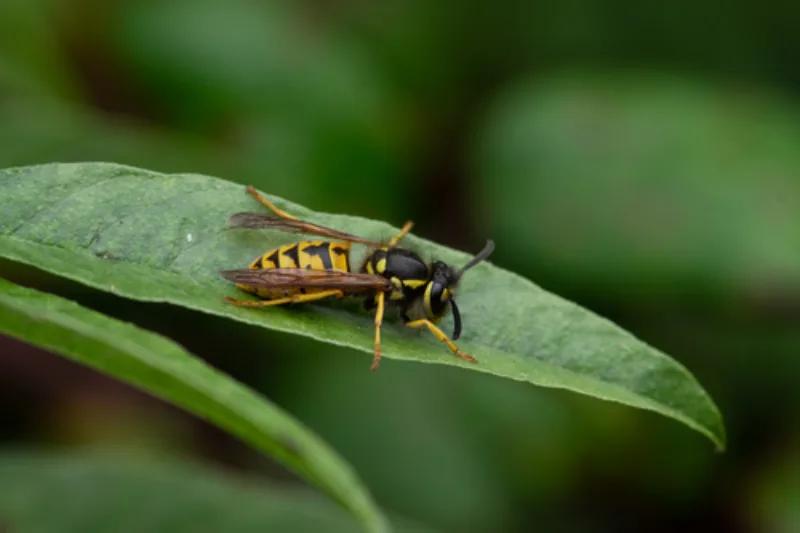
Wasp
Side-by-Side Comparison Table
| Trait | Hornet | Wasp |
|---|---|---|
| Scientific Group | Vespa & Dolichovespula maculata | Vespidae |
| Category | Insect | Insect |
| Typical Size | 18–35 mm | 12–28 mm |
| Danger Level | Medically Significant | Medically Significant |
| Bites or Stings? | Yes | Yes |
| Peak US Months | August, September, October | July, August, September, October |
| Key ID Trait | Notably larger and stouter than typical yellow jackets or paper wasps | Slender, smooth, nearly hairless body with a very narrow pinched waist |
Hornet vs. Wasp: True Size Comparison
Side-by-Side Anatomy Blueprint
Compare body segments, antennae, leg count, and key markings directly before treating or removing either species.
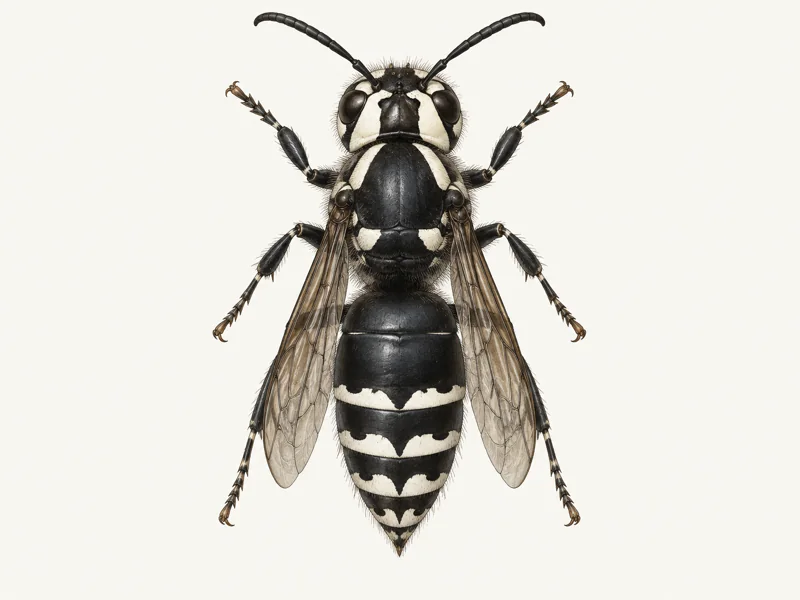
- Ivory-white face: Bold creamy-white face and thorax-side markings distinguish it from yellow jackets.
- Stout black thorax: Heavy-bodied glossy jet-black aerial wasp measuring 15–20 mm.
- Smoky veined wings: Dark-veined translucent wings powering rapid defense around aerial paper nests.
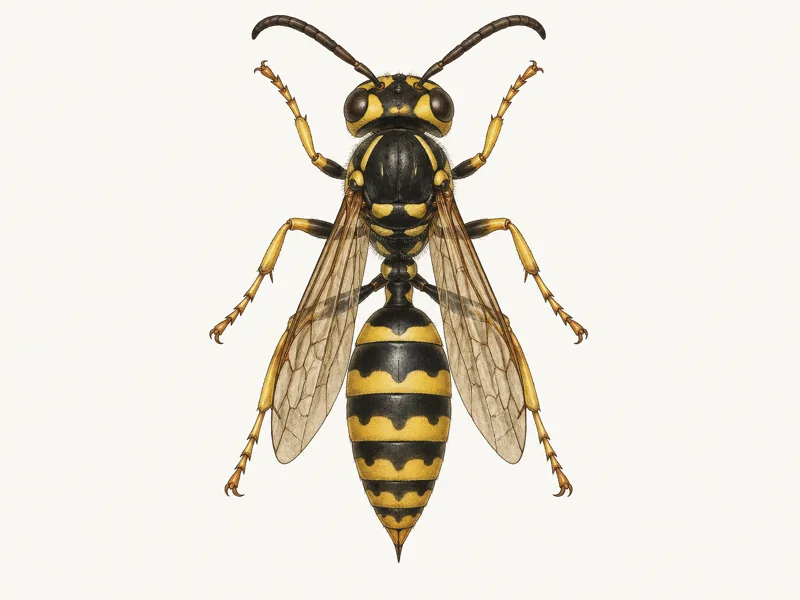
- Curved dark antennae: Segmented dark antennae and strong chewing mandibles for wood pulp nests.
- Smoky folded wings: Two pairs of narrow veined wings that fold lengthwise along the back at rest.
- Pinched waist: Sharp slender constriction separating the smooth hairless thorax from abdomen.
Quick ID verdict: If the insect is big, stout, and noticeably chunky, often 18 mm or longer, it's likely a hornet. If it's slender and smooth with a sharply pinched waist, you're probably looking at a typical wasp.
That three-second check covers most backyard encounters. But the hornet vs wasp question matters beyond curiosity, because nest location, colony size, and defensive behavior all shape how a homeowner should respond.
Are Hornets Wasps? Understanding the Family Connection
Yes. Every hornet is a wasp, but not every wasp is a hornet. Both belong to the family Vespidae, which also includes yellow jackets and paper wasps.
True hornets belong to the genus Vespa. In the US, the most common one is the European hornet (Vespa crabro), which is established across much of the East. The familiar bald-faced hornet (Dolichovespula maculata) isn't a true Vespa at all. It's more closely related to yellow jackets, but its size and stout build earned it the common name.
So the real difference between hornet and wasp comes down to size, build, and nesting habits. Taxonomy alone doesn't separate them.
Hornet vs Wasp Identification: Key Physical Differences
Good hornet vs wasp identification starts at a safe distance. Stay several feet away, and never swat at an insect to get a closer look.
Size, Color, and Body Shape
FeatureHornetsTypical WaspsLength18–35 mm12–28 mmBuildNotably larger and stouterSlender and smoothBody surfaceOften slightly fuzzy thoraxNearly hairlessWaistPresent but less dramaticVery narrow and pinchedColor helps too. European hornets show brown-and-yellow banding with a reddish-brown head. Bald-faced hornets are black with ivory-white face markings. Paper wasps tend toward reddish-brown or yellow-and-black, with long legs that dangle in flight.
Nest Types and Where You'll Find Them
- Bald-faced hornets build enclosed, gray, football-shaped paper nests in trees, shrubs, or under eaves.
- European hornets prefer protected cavities like hollow trees, wall voids, attics, and barns.
- Paper wasps make open, umbrella-shaped combs with exposed cells under porch ceilings, railings, and soffits.
An open comb almost always means paper wasps. A closed gray ball points to hornets.
Behavior, Stings, and Seasonal Activity Across US States
Beyond appearance, the hornet vs wasp comparison comes down to how each insect acts around people and when it's most active during the year.
Defensive Behavior
- Paper wasps are generally less defensive. They usually sting only when their nest is touched or bumped.
- Bald-faced hornets guard their nests vigorously and may respond in numbers to vibration or movement close by.
- European hornets are usually not aggressive away from the nest, but they defend it when disturbed. Unlike most wasps, they also fly at night and are often drawn to porch lights and lit windows.
How Their Stings Compare
Hornets and wasps both have smooth stingers. Unlike honeybees, they can sting more than once. A hornet sting often feels more painful because the insect is larger. For most people, though, the main risk comes from multiple stings during a nest disturbance, not from one sting.
Seasonal Activity and Regional Differences
Most US hornet and wasp colonies follow an annual cycle. A single queen starts a new nest in spring. Worker numbers grow through summer, and colonies usually reach their largest size in late summer and early fall. That's when stings are most common, because foragers are numerous and drawn to sweets, fruit, and outdoor food.
In colder northern states, the first hard frosts end the season. Workers die off, and only mated queens survive the winter in sheltered spots. In warmer southern states, activity can start earlier in spring and continue later into the year. Old nests are rarely reused, so an empty nest found in winter is usually not a threat.
Frequently Asked Questions
What is the main difference between a hornet and a wasp?
The key difference is size and body shape. Hornets are notably larger (18–35 mm), stout, and chunky with a less dramatic waist. Wasps are slender with a sharply pinched waist and typically smaller (12–28 mm). All hornets are wasps, but not all wasps are hornets—both belong to the family Vespidae.
How can I identify a hornet vs wasp by appearance?
Look for body build: hornets are noticeably larger and stouter with a fuzzy thorax, while wasps are smooth and slender. Color clues help too—European hornets show brown-and-yellow banding with a reddish-brown head, whereas paper wasps have dangling legs and reddish-brown or yellow-and-black coloring.
What are the differences in nesting habits between hornets and wasps?
Hornets build enclosed, gray, football-shaped paper nests in trees or under eaves. Paper wasps make open, umbrella-shaped combs with exposed cells under porches. European hornets prefer protected cavities like hollow trees or attics. An open comb almost always signals paper wasps; a closed gray ball indicates hornets.
Are bald-faced hornets true hornets?
No. Bald-faced hornets (Dolichovespula maculata) aren't true Vespa hornets; they're more closely related to yellow jackets. However, their large size and stout build earned them the common name 'hornet.' They're black with distinctive ivory-white face markings and build enclosed, gray paper nests.
Why does it matter if an insect is a hornet or wasp?
Identification matters because nest location, colony size, and defensive behavior differ between species. These factors shape how homeowners should respond—whether removal is necessary, how aggressive the colony may be, and what safety precautions to take when nearby.
What should I do if I find a hornet or wasp nest on my property?
Stay several feet away and avoid swatting. Identify the nest type: open combs indicate paper wasps, while gray enclosed balls suggest hornets. Each species has different colony sizes and defensive behaviors, so professional removal is recommended for safety rather than attempting DIY removal.