Hornets in New York: Species, Season, and Prevention Guide
Quick Answer: Yes, hornets are common in New York. GBIF records show 1,188 verified sightings, and the European hornet (Vespa crabro) is the recorded true hornet. The bald-faced hornet (Dolichovespula maculata) is also widespread, and activity peaks from August through October.
When Hornets Are Most Active in New York
Now (November): Lower Outdoor ActivityVerified New York Counties, Species & US Range
Counties with Verified Observations
- Suffolk
- Saint Lawrence
- Washington
- Orange
- Westchester
- Richmond
- Ulster
- Erie
- Oswego
- Essex
Species Recorded in New York
| Species | Scientific Name | GBIF Records |
|---|---|---|
| European Hornet | Vespa crabro | 1,188 |
How New York Compares to Neighboring States
Note: Wildlife does not follow state or county lines. GBIF totals reflect verified citizen and museum records, so low counts in a neighboring county do not guarantee absence.
How to Identify Hornets
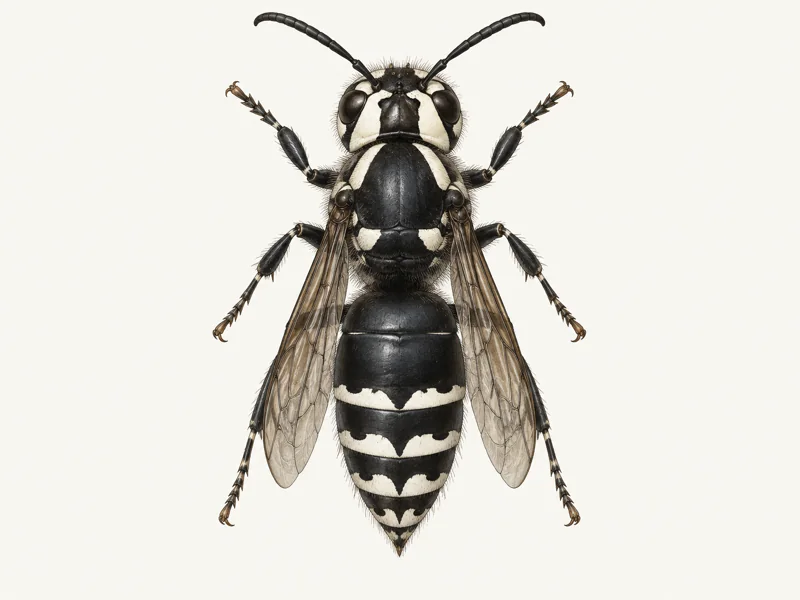
Annotated Anatomy Key (Hornet)
- Ivory-white face: Bold creamy-white face and thorax-side markings distinguish it from yellow jackets.
- Stout black thorax: Heavy-bodied glossy jet-black aerial wasp measuring 15–20 mm.
- Smoky veined wings: Dark-veined translucent wings powering rapid defense around aerial paper nests.
- White rear bands: Crisp ivory-white stripes strictly on the final three jet-black abdominal segments.
Hornets Field Checklist
- Notably larger and stouter than typical yellow jackets or paper wasps
- European hornet has reddish-brown head/thorax with yellow-and-brown striped abdomen
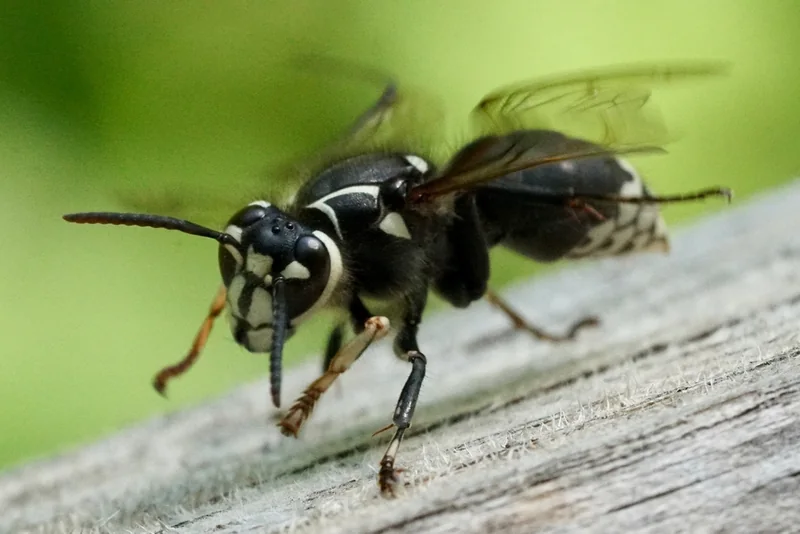
- Bald-faced hornet (an aerial yellow jacket) is stark black with ivory-white face and tail markings
- Constructs large football-shaped gray paper nests in trees, shrubs, or hollow cavities
Side-by-Side Look-Alike Comparisons
Hornets Size at True Relative Scale
Quick Answer: Yes, hornets are common in New York. GBIF records show 1,188 verified sightings, and the European hornet (Vespa crabro) is the recorded true hornet. The bald-faced hornet (Dolichovespula maculata) is also widespread, and activity peaks from August through October.
Where Hornets Live in New York
People often ask, "are there hornets in New York?" The answer is yes, across the state. The top counties for GBIF sightings are Suffolk, Saint Lawrence, Washington, Orange, and Westchester, which covers Long Island, the Hudson Valley, and the North Country.
New York spans USDA zones 3b to 7b. The climate is humid continental inland and humid subtropical near New York City and Long Island. Hornets adapt to both.
Typical nest sites
- European hornets nest in hollow trees, wall voids, attics, sheds, and barns. Their paper nest is often hidden from view.
- Bald-faced hornets build large, gray, football-shaped aerial nests in trees, shrubs, and under eaves.
Colonies start small in spring with a single queen. They can grow to hundreds of workers by late summer.
Basic hornet identification
For New York hornet identification, start with color and size. European hornets are large, about 1 to 1.5 inches, with reddish-brown heads and thoraxes and a yellow-striped abdomen. Bald-faced hornets are black with a white face and white markings near the tip of the abdomen. Bald-faced hornets are technically a type of yellowjacket, but they are commonly called hornets.
When Hornets Are Most Active in New York
New York hornet season builds through summer. GBIF sightings peak in August, September, and October, when colonies reach full size and workers forage widely. Queens emerge in spring, and colonies grow through summer.
Late-season colonies also become more defensive near the nest. Sweet-seeking workers show up at fallen fruit, trash cans, and outdoor meals in early fall. After hard frosts, workers die off. Only newly mated queens survive the winter, sheltering in logs, bark, or buildings, and the old nest is not reused.
Look-Alikes Frequently Mistaken for Hornets
Many New York insects get called hornets. Correct identification matters because control methods differ.
- Wasps (paper wasps): Slimmer, with long dangling legs and open, umbrella-shaped nests.
- Yellow jackets: Smaller, bright yellow and black, often nesting underground or in wall voids.
- Cicada killers: Large, solitary ground-nesting wasps. They rarely sting and dig burrows in sandy soil.
- Honey bees: Fuzzy, golden-brown, and rounder. They are valuable pollinators, so do not treat them as pests. Contact a local beekeeper for swarms.
How to Keep Hornets Out of Your New York Home
For how to prevent hornets in New York, start with non-chemical Integrated Pest Management. Early-season prevention works far better than removing a mature nest.
- Exclusion: Seal gaps in siding, soffits, vents, and rooflines. Screen chimneys and attic openings in spring.
- Sanitation: Use tight-lidded trash cans, clean up fallen fruit, and cover outdoor food and sweet drinks.
- Moisture and habitat: Fix leaks and remove rotting wood or old stumps near the house, which attract nesting queens.
- Early checks: In spring, knock down small, starter nests while only a queen is present, and do so from a safe distance.
If you use any insecticide, choose a product labeled for the pest and site, and follow the EPA label exactly. Avoid spraying near people, pets, or water.
When to call a licensed New York pest professional
- The nest is larger than a softball or sits near a door, deck, or play area.
- Hornets are entering the walls, attic, or chimney.
- The nest is high off the ground or hard to reach.
- Anyone in the household has a known stinging-insect allergy.
- You have been stung repeatedly or hornets act aggressively near the structure.
Safety note: Hornet stings can be medically significant, especially for allergic people. This guide is not medical advice. For a sting emergency or questions, call US Poison Control at 1-800-222-1222, and seek immediate medical care for trouble breathing, swelling of the face or throat, or dizziness.
IPM Prevention Checklist for New York Homes
- Leave high, out-of-the-way tree nests undisturbed—colonies die naturally after hard frost
- Turn off bright exterior lights near doorways in late summer (European hornets fly at night)
- Seal barn, shed, and attic openings in early spring
 EXCLUSION BLUEPRINT
Inspect eaves, screens, door sweeps, foundation cracks, and utility penetrations around New York homes before peak season.
Hornets in New York: Frequently Asked Questions
Are hornets common in New York?
Yes. GBIF lists 1,188 verified sightings, with the most in Suffolk, Saint Lawrence, Washington, Orange, and Westchester counties.
What species of hornet lives in New York?
The European hornet (Vespa crabro) is the recorded true hornet. The bald-faced hornet (Dolichovespula maculata) is also common.
When is hornet season in New York?
Activity peaks from August through October. Colonies are largest then, and workers are most visible and defensive.
Should I remove a hornet nest myself?
Only a small, early-season nest in an easy-to-reach spot is reasonable to handle. Large, high, or wall-hidden nests call for a licensed professional.
Sources & Verification
- Penn State Extension — European Hornet
- Virginia Cooperative Extension — Hornets and Wasps
- GBIF Global Biodiversity Occurrence Records
Data refreshed · Editorial & GBIF Methodology