Cicada Killer vs Hornet: How to Tell Them Apart and Stay Safe in Your Yard
Quick ID Verdict: A huge wasp buzzing over the lawn in July is enough to make anyone freeze. Here's the quick verdict: if it's massive (up to 2 inches), has rusty amber wings, and patrols bare soil near small burrows, it's a cicada killer. If it's stout, flies to a gray paper nest in a tree, shrub, or wall void, and defends it in numbers, it's a hornet.
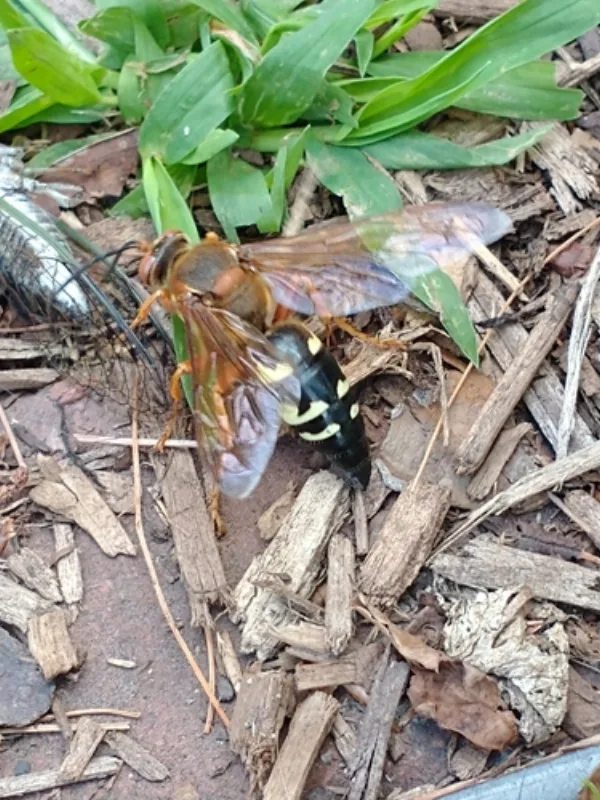
Cicada Killer
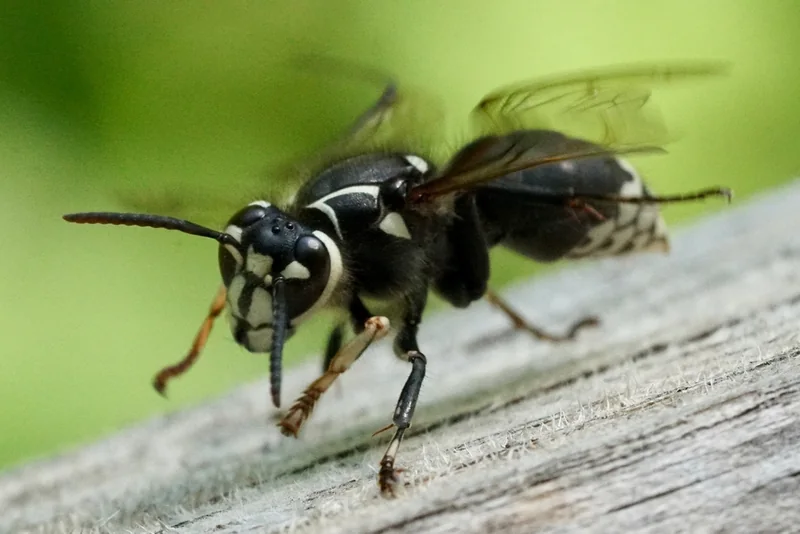
Hornet
Side-by-Side Comparison Table
| Trait | Cicada Killer | Hornet |
|---|---|---|
| Scientific Group | Sphecius speciosus | Vespa & Dolichovespula maculata |
| Category | Insect | Insect |
| Typical Size | 30–50 mm | 18–35 mm |
| Danger Level | Nuisance | Medically Significant |
| Bites or Stings? | Yes | Yes |
| Peak US Months | July, August | August, September, October |
| Key ID Trait | Massive solitary wasp (up to 2 inches) with rusty amber wings and black-and-yellow striped abdomen | Notably larger and stouter than typical yellow jackets or paper wasps |
Cicada Killer vs. Hornet: True Size Comparison
Side-by-Side Anatomy Blueprint
Compare body segments, antennae, leg count, and key markings directly before treating or removing either species.
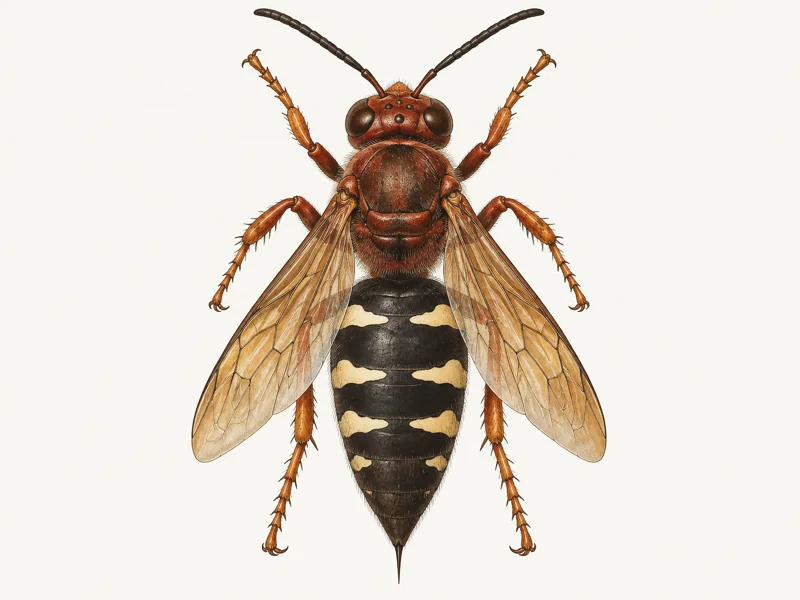
- Russet head & thorax: Massive solitary digger wasp (up to 40 mm) with rusty-red head and thorax.
- Large amber wings: Long russet-tinted veined wings strong enough to carry heavy paralyzed cicadas.
- Spiny digging legs: Six powerful amber-red spiny legs built for excavating deep sandy lawn burrows.
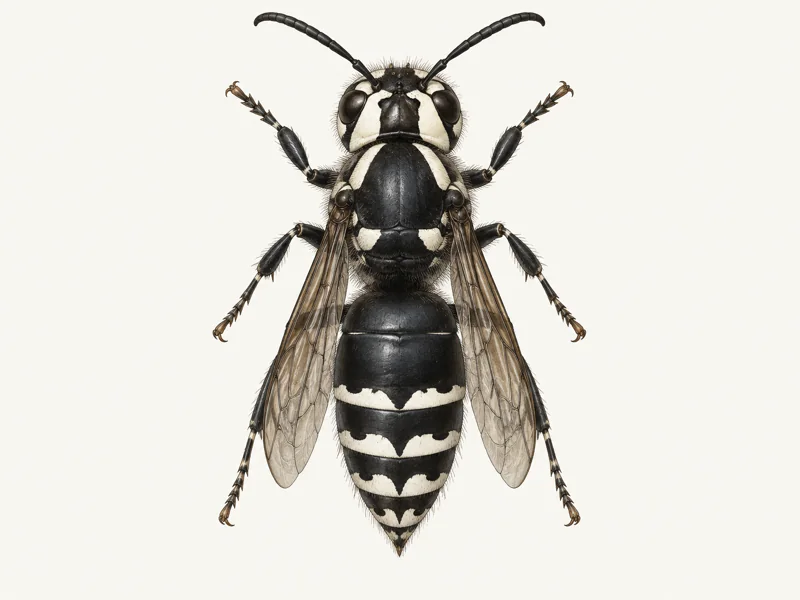
- Ivory-white face: Bold creamy-white face and thorax-side markings distinguish it from yellow jackets.
- Stout black thorax: Heavy-bodied glossy jet-black aerial wasp measuring 15–20 mm.
- Smoky veined wings: Dark-veined translucent wings powering rapid defense around aerial paper nests.
That difference matters. In the cicada killer vs hornet matchup, one is mostly a nuisance and the other is medically significant.
Cicada Killer or Hornet? Key Identification Differences
Most cicada killer vs hornet identification comes down to three clues: overall size, wing color, and where the insect goes when it lands. Behavior often gives the answer before markings do.
Size, Color, and Body Markings
FeatureCicada Killer (Sphecius speciosus)Hornets (Vespa spp. & Dolichovespula maculata)Length30–50 mm (up to 2 in)18–35 mmWingsRusty amber, translucentSmoky or brownishBodyBlack-to-reddish with yellow abdominal stripesNotably larger and stouter than yellow jackets or paper waspsSocial structureSolitaryColony-livingThe bald-faced hornet (D. maculata) is black with ivory-white face markings. The European hornet (Vespa crabro) is brown and yellow with a reddish head. Neither shows the cicada killer's amber wings.
Nesting Habits and Where You'll Find Them
Cicada killers dig burrows in well-drained, sandy, or sparse soil. Look for pencil-wide holes with a small fan of loose dirt beside them, often along sidewalks, garden beds, and thin turf.
Hornets build paper nests. Bald-faced hornets hang football-shaped nests from branches, shrubs, and eaves, while European hornets prefer hollow trees, sheds, and wall voids.
Range and Seasonal Activity Across the US
The eastern cicada killer is found across much of the eastern and central US, generally east of the Rockies. Bald-faced hornets range across most of North America, and European hornets are established mainly in the eastern half of the country.
Timing is another useful clue:
- Cicada killers: Adults emerge in early to midsummer, peak in July and August alongside cicadas, and are gone by early fall.
- Hornets: Queens start nests in spring. Colonies grow all summer and peak in late summer and early fall, then die off after hard frost. Only mated queens overwinter.
So a giant wasp in May is unlikely to be a cicada killer, while a busy nest in September almost certainly belongs to hornets.
Sting Risk and Aggression Compared
The biggest difference between cicada killer and hornet behavior is how each reacts to people. Cicada killers are rated a nuisance. Males are territorial and will dive-bomb anyone walking through, but they can't sting. Females can sting, yet they rarely do unless grabbed or stepped on barefoot.
Hornets are medically significant. They defend their nests as a group, and disturbing one with a mower, trimmer, or ladder can trigger multiple stings. Unlike honey bees, they can sting more than once.
So which one is worse for homeowners? Hornets, clearly. Cicada killers look intimidating but pose little real threat, while a hornet nest near a doorway or play area deserves real caution.
If someone is stung and shows swelling beyond the site, hives, or trouble breathing, call 911. For other sting concerns, contact US Poison Control at 1-800-222-1222 and follow up with a doctor.
Safe IPM Control Strategies for Homeowners
Integrated Pest Management starts with changing conditions, not spraying. The right approach depends on whether it's a cicada killer or hornet.
For cicada killers:
- Thicken thin turf by overseeding and fertilizing: they avoid dense lawns.
- Water bare areas regularly, since moist soil discourages digging.
- Cover exposed sandy patches with mulch, ground cover, or landscape fabric.
- Consider waiting it out. The season is short, and they also help control cicadas.
For hornets:
- Seal gaps in siding, soffits, vents, and sheds early in spring.
- Keep trash and recycling bins tightly lidded, and clean up fallen fruit.
- Reduce outdoor lighting near doors, since European hornets fly at night.
- Keep children and pets away from any active nest.
If a pesticide becomes necessary, use only a product labeled for the target pest and follow the EPA product label exactly. The label is the law.
When to Call a Pest Professional
Call a licensed pest professional when a hornet nest sits near doorways, play areas, or inside a wall void. The same applies if it's high off the ground or if anyone in the household is allergic to stings.
Never seal a hornet entry hole on a wall before the colony is removed. Trapped hornets can chew through drywall into living spaces. Cicada killers rarely need a pro, unless burrows are so numerous that cultural fixes haven't worked after a full season.
Frequently Asked Questions
What's the main difference between a cicada killer and a hornet?
Cicada killers are solitary wasps up to 2 inches with rusty amber wings that burrow in soil near cicadas. Hornets are colony-living, build paper nests, and are notably stouter with smoky or brownish wings. Cicada killers are mostly harmless; hornets pose real medical risk.
How can I identify a cicada killer vs hornet by their appearance?
Cicada killers are massive (up to 2 inches) with distinctive rusty amber, translucent wings and black bodies with yellow stripes. Hornets are smaller (18–35 mm), stouter, with smoky or brownish wings. Bald-faced hornets have black bodies with white face markings.
Where do cicada killers and hornets build their nests?
Cicada killers dig pencil-wide burrows in sandy or sparse soil along sidewalks and gardens. Hornets build gray paper nests in trees, shrubs, eaves, or wall voids. This nesting behavior is a key identification clue when spotting these insects.
Are cicada killers or hornets more dangerous to humans?
Hornets are medically significant and sting repeatedly to defend colonies, causing real injury risk. Cicada killers rarely sting unless grabbed or stepped on, though males dive-bomb. For serious sting reactions (swelling, hives, breathing trouble), call 911.
When are cicada killers and hornets most active?
Cicada killers emerge in early summer, peak in July and August, and disappear by early fall. Hornets build nests in spring, peak in late summer and fall. A giant wasp in May is likely a hornet, not a cicada killer.
What's the best way to control cicada killers on my property?
Thicken thin turf by overseeding, water bare soil regularly, and cover sandy patches with mulch or landscape fabric. Cicada killers avoid dense lawns and moist soil. Consider waiting out the short season, as they help control cicadas naturally.