Hornet vs Paper Wasp: How to Tell Them Apart and Protect Your Home
Quick ID Verdict: A large wasp hovering near the porch light raises a fair question: hornet or paper wasp? The quick verdict: hornets look bulky and thick-bodied, while paper wasps look long, slender, and fly with their hind legs dangling below them. Check the nest too. A sealed gray paper ball usually means hornets, while an open, umbrella-shaped comb with visible cells points to paper wasps. This guide covers hornet vs paper wasp identification, sting risk, US range, and safe Integrated Pest Management (IPM) steps.
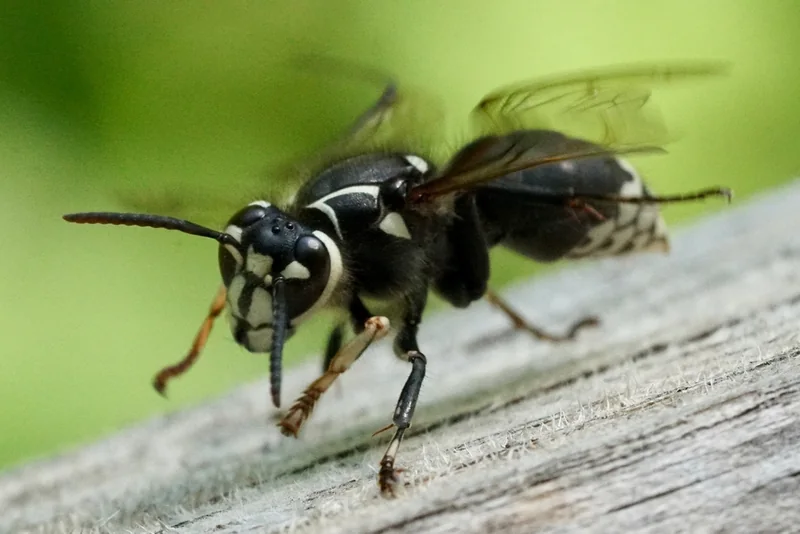
Hornet
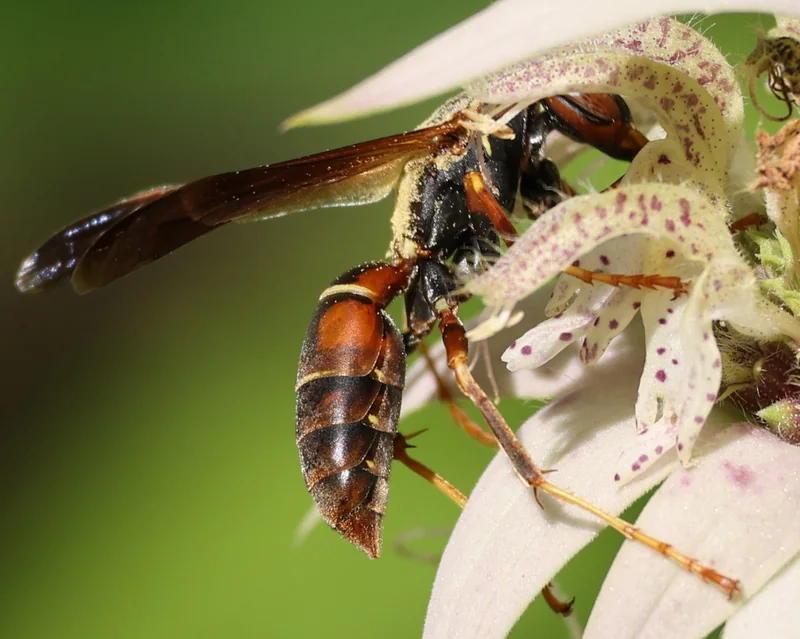
Paper Wasp
Side-by-Side Comparison Table
| Trait | Hornet | Paper Wasp |
|---|---|---|
| Scientific Group | Vespa & Dolichovespula maculata | Polistes |
| Category | Insect | Insect |
| Typical Size | 18–35 mm | 16–25 mm |
| Danger Level | Medically Significant | Medically Significant |
| Bites or Stings? | Yes | Yes |
| Peak US Months | August, September, October | July, August, September, October |
| Key ID Trait | Notably larger and stouter than typical yellow jackets or paper wasps | Long slender brown, reddish, or yellow-and-black wasp with long hind legs dangling in flight |
Hornet vs. Paper Wasp: True Size Comparison
Side-by-Side Anatomy Blueprint
Compare body segments, antennae, leg count, and key markings directly before treating or removing either species.
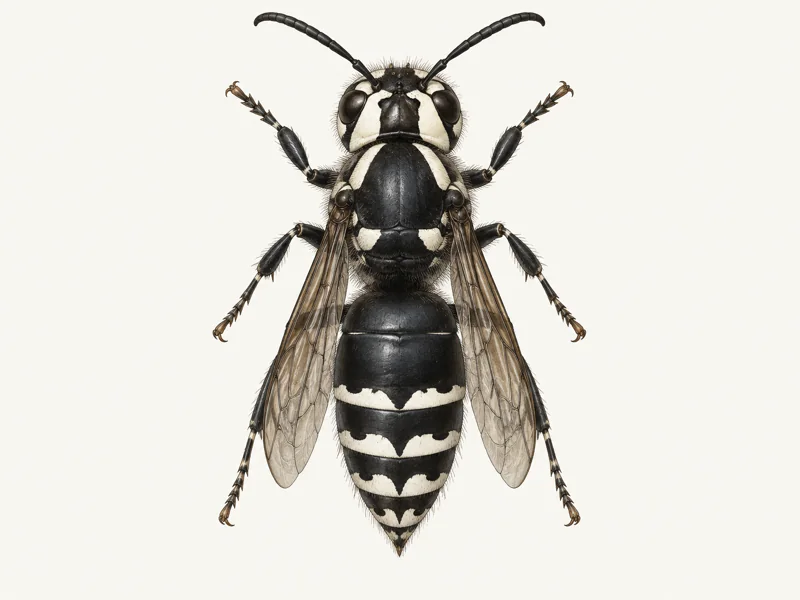
- Ivory-white face: Bold creamy-white face and thorax-side markings distinguish it from yellow jackets.
- Stout black thorax: Heavy-bodied glossy jet-black aerial wasp measuring 15–20 mm.
- Smoky veined wings: Dark-veined translucent wings powering rapid defense around aerial paper nests.
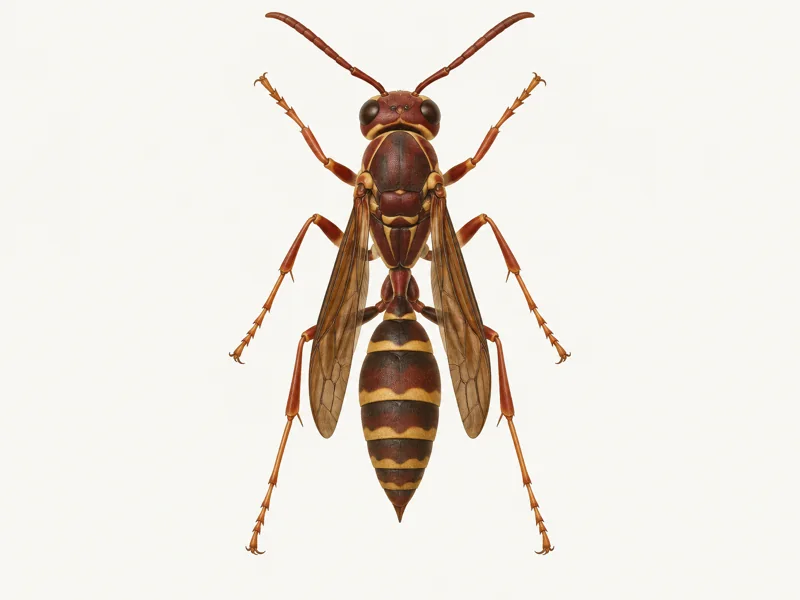
- Mahogany head & antennae: Slender reddish-brown head with curved yellow-tipped antennae.
- Narrow pinched waist: Slim spindle-shaped waist connecting dark thorax to tapered abdomen.
- Long dangling legs: Extra-long reddish-brown hind legs trail conspicuously downward in flight.
Key Differences Between Hornets and Paper Wasps at a Glance
The difference between hornet and paper wasp species comes down to build, flight posture, and nest design. Both are social wasps, and both have stings that are considered medically significant. So identification matters before anyone gets close.
FeatureHornetsPaper WaspsGenusVespa and Dolichovespula maculataPolistesLength18–35 mm16–25 mmBody shapeStout, heavy-bodiedLong and slenderFlightLegs tuckedLong hind legs danglingNestEnclosed paper envelopeOpen, exposed comb
Body Size, Color, and Markings
Hornets are notably larger and stouter than typical yellow jackets or paper wasps. The bald-faced hornet (Dolichovespula maculata) is black with ivory-white markings on the face and abdomen tip. The European hornet (Vespa crabro) is brown and yellow and noticeably bulky.
Paper wasps (Polistes) are long and slender, often brown, reddish, or yellow-and-black. Their narrow waist is easy to see, and the dangling hind legs in flight are the giveaway.
Nest Shape and Location Clues
Hornet nests are football- or teardrop-shaped, wrapped in gray papery layers with a single entrance hole. Bald-faced hornets often build high in trees, shrubs, or under eaves. European hornets prefer hollow trees, wall voids, and attics.
Paper wasp nests look like an upside-down umbrella. The six-sided cells are open and visible, hanging from a single stalk under eaves, deck railings, grill lids, or shutters.
Behavior, Aggression, and Sting Risk
Paper wasps are generally less defensive. They'll usually ignore people unless the nest is bumped or squeezed, which happens often because their nests sit at hand height around homes.
Hornets defend their nests more aggressively, and bald-faced hornets in particular will sting repeatedly when disturbed. A large colony can hold hundreds of workers by late summer. European hornets also fly at night and are drawn to lit windows.
- Both can sting more than once, unlike honey bees, they don't lose their stinger.
- Both are medically significant, especially for people with venom allergies.
- Multiple stings raise the risk regardless of species.
For any serious reaction (trouble breathing, facial swelling, dizziness, or many stings), call 911. For guidance on stings, contact US Poison Control at 1-800-222-1222 and follow up with a doctor. Home remedies aren't a substitute for medical care.
Where They Live in the US and When They're Most Active
Paper wasps occur in all lower 48 states, with several Polistes species common in the South, Midwest, and along the coasts. The bald-faced hornet is found across most of the US and southern Canada. The European hornet, introduced in the 1800s, is established mainly in the eastern half of the country.
The northern giant hornet (Vespa mandarinia) was detected in Washington State, but officials there declared it eradicated in late 2024. Suspected sightings should still be reported to the state department of agriculture.
Seasonally, mated queens emerge in spring to start nests. Colonies grow through summer and peak in late summer and early fall, when stings are most common. Hard frosts kill workers, and only new queens overwinter. Old nests are not reused the next year.
Safe Integrated Pest Management for Hornets and Paper Wasps
IPM starts with prevention, not spray. A few non-chemical steps cut down on nesting sites and foraging pressure:
- Exclusion: Seal gaps around siding, soffits, vents, and utility lines. Repair torn screens.
- Early checks: In spring, inspect eaves, decks, and play sets for small starter nests.
- Sanitation: Keep trash cans lidded, clean up fallen fruit, and cover sweet drinks outdoors.
- Moisture control: Fix leaks and rotting wood, which European hornets use for nest material and shelter.
- Lighting: Use yellow or warm-toned bulbs to draw fewer night-flying hornets.
If a nest isn't near doors, walkways, or play areas, leaving it alone is often reasonable. Both groups prey on caterpillars and other garden pests. When a product is needed, choose one labeled for the specific pest and site, and always follow the EPA product label exactly.
When to DIY and When to Call a Professional
A small, early-season paper wasp nest within easy reach can sometimes be handled by a confident homeowner. Treat at dusk, wear protective clothing, and use only label-approved products.
Call a licensed pest professional when:
- The nest is a hornet nest of any size.
- It's inside walls, attics, or high off the ground.
- Anyone in the home has a known sting allergy.
- The colony is large or late in the season.
Never seal an entrance to an active wall nest, since trapped hornets can chew through drywall into living spaces.
Frequently Asked Questions
What's the main difference between a hornet and a paper wasp?
Hornets are bulky and thick-bodied with legs tucked during flight, while paper wasps are long and slender with hind legs dangling below them. Hornet nests are enclosed gray paper balls; paper wasp nests are open, umbrella-shaped combs with visible cells.
How can I identify a paper wasp nest?
Paper wasp nests resemble an upside-down umbrella with open, six-sided cells visible and hanging from a single stalk. They're commonly found under eaves, deck railings, grill lids, or shutters at hand height around homes.
Are hornets or paper wasps more aggressive?
Hornets are more defensive and aggressive, especially bald-faced hornets, which sting repeatedly when disturbed. Paper wasps are generally less aggressive and typically ignore people unless their nest is bumped or directly threatened.
Can hornets and paper wasps sting multiple times?
Yes, both hornets and paper wasps can sting multiple times. Unlike honeybees, they don't lose their stinger after stinging, allowing them to attack repeatedly if threatened or defending their colony.
When should I call a professional for hornet or paper wasp removal?
Call a licensed pest professional for any hornet nest, nests in walls or attics, nests high off the ground, if someone has a sting allergy, or for large late-season colonies. Only confident homeowners can handle small, early-season paper wasp nests.
What's the best way to prevent hornets and paper wasps from nesting near my home?
Use IPM prevention: seal gaps around siding and vents, inspect eaves in spring for starter nests, keep trash cans lidded, clean up fallen fruit, fix moisture leaks, and use yellow or warm-toned outdoor bulbs to deter night-flying hornets.