Hornet vs Yellow Jacket: How to Tell Them Apart and Protect Your Home
Quick ID Verdict: A buzzing wasp near the deck or a gray paper nest under the eaves raises one question fast: is it a hornet or yellow jacket? Quick ID verdict: if the wasp is big and stout, about 18–35 mm long, it's likely a hornet. If it's compact, shiny, and banded in vivid yellow and jet black at roughly 10–16 mm, it's almost certainly a yellow jacket.
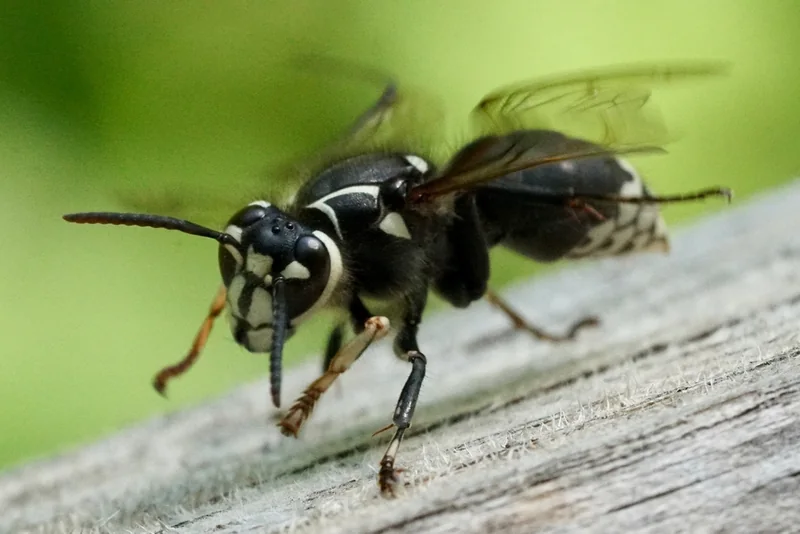
Hornet
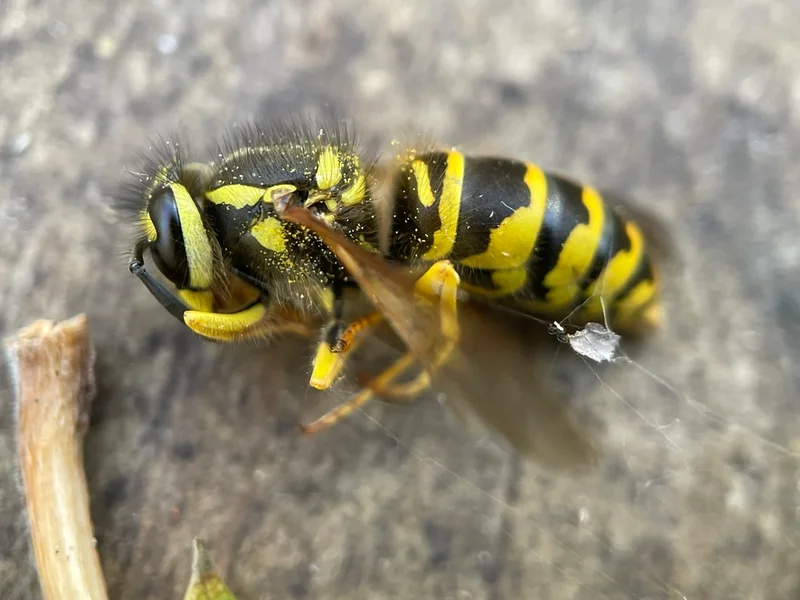
Yellow Jacket
Side-by-Side Comparison Table
| Trait | Hornet | Yellow Jacket |
|---|---|---|
| Scientific Group | Vespa & Dolichovespula maculata | Vespula |
| Category | Insect | Insect |
| Typical Size | 18–35 mm | 10–16 mm |
| Danger Level | Medically Significant | Medically Significant |
| Bites or Stings? | Yes | Yes |
| Peak US Months | August, September, October | August, September, October |
| Key ID Trait | Notably larger and stouter than typical yellow jackets or paper wasps | Compact, shiny wasp with vivid bright-yellow and jet-black abdominal bands |
Hornet vs. Yellow Jacket: True Size Comparison
Side-by-Side Anatomy Blueprint
Compare body segments, antennae, leg count, and key markings directly before treating or removing either species.
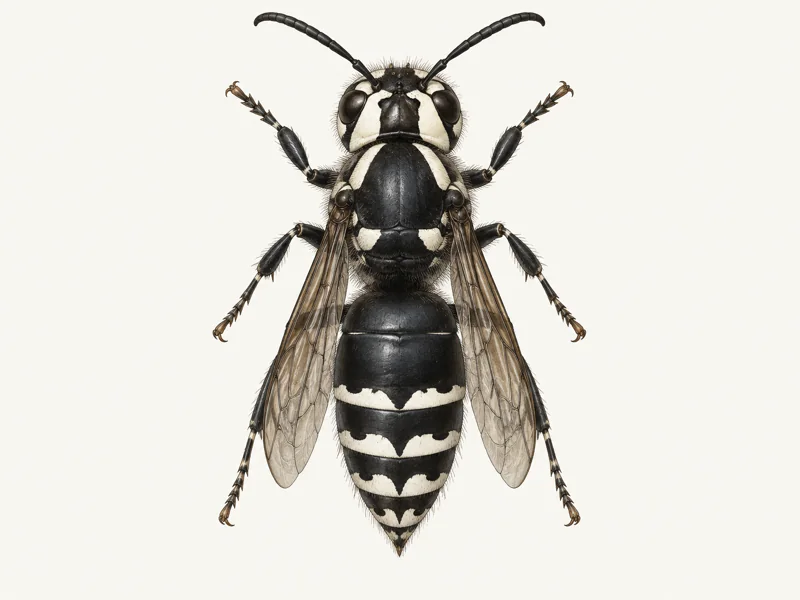
- Ivory-white face: Bold creamy-white face and thorax-side markings distinguish it from yellow jackets.
- Stout black thorax: Heavy-bodied glossy jet-black aerial wasp measuring 15–20 mm.
- Smoky veined wings: Dark-veined translucent wings powering rapid defense around aerial paper nests.
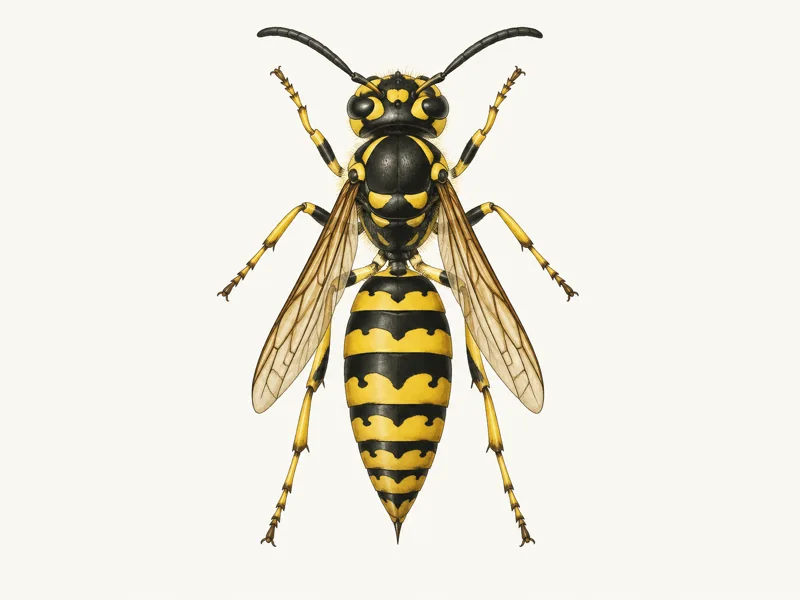
- Smooth hairless body: Compact shiny black-and-yellow thorax—lacks the fuzzy hair coat of honey bees and bumble bees.
- Folded wings: Two pairs of smoky translucent wings that fold lengthwise along the sides at rest.
- Pinched waist: Extremely narrow constriction separating thorax and abdomen; legs tuck tightly in flight.
Both insects are medically significant stingers. This guide covers hornet vs yellow jacket identification, behavior, seasonal activity, and safe control.
Hornet or Yellow Jacket? Key Identification Differences
The difference between hornet and yellow jacket species comes down to three things: size, coloring, and where the colony builds. Get a look at any two of these and the ID is usually settled.
Size, Color, and Body Shape
- Hornets (Vespa and Dolichovespula maculata): 18–35 mm long. They're notably larger and stouter than typical yellow jackets or paper wasps. The European hornet (Vespa crabro) is brown with dull yellow markings. The bald-faced hornet (D. maculata) is black with ivory-white face and body markings.
- Yellow jackets (Vespula): 10–16 mm long. They're compact and shiny, with vivid bright-yellow and jet-black abdominal bands. They look sleek and move in quick, jerky side-to-side flight.
A simple rule: if it looks bulky and isn't bright yellow, think hornet.
Nest Location and Appearance
Yellow jackets usually nest underground in old rodent burrows, or inside wall voids, attics, and crawl spaces. Often the only visible sign is a steady stream of wasps flying in and out of a small hole in the lawn or siding.
Bald-faced hornets build exposed, football-shaped gray paper nests in trees, shrubs, and under eaves. These can reach basketball size by late summer. European hornets prefer sheltered cavities such as hollow trees, barns, and wall spaces.
Behavior, Aggression, and Sting Risk
Both groups are classified as medically significant. Both can sting repeatedly, because unlike honey bees they don't lose their stingers.
Yellow jackets cause more stings overall. They're scavengers that crash picnics, trash cans, and soda cans, especially in late summer when their colonies are largest and food is scarce. Lawn mowers and string trimmers passing over a ground nest often trigger mass defensive attacks.
Hornets tend to ignore people away from the nest. Near the colony, though, bald-faced hornets defend aggressively. European hornets also fly at night and are drawn to porch lights.
Anyone who has trouble breathing, swelling of the face or throat, or many stings needs emergency care right away (call 911). For other sting concerns, contact US Poison Control at 1-800-222-1222 and a doctor. Don't rely on home remedies for venom reactions.
Where They Live in the US and When They're Most Active
Yellow jackets live in all 50 states. The Eastern yellow jacket, German yellow jacket, and Western yellow jacket are the most common species around homes. The bald-faced hornet ranges across most of the continental US. The European hornet is established mainly east of the Mississippi.
Two invasive Vespa species have drawn federal attention. The northern giant hornet was found in Washington State and was declared eradicated in late 2024. The yellow-legged hornet was confirmed near Savannah, Georgia, in 2023. Anyone who suspects either should report it to their state department of agriculture.
Seasonal pattern:
- Spring: A lone queen starts a small nest.
- Summer: Worker numbers climb steadily.
- Late summer to fall: Colonies peak and sting risk is highest.
- First hard freeze: Workers die, and only new queens overwinter.
Safe Integrated Pest Management for Hornets and Yellow Jackets
Integrated Pest Management (IPM) starts with prevention, not spray cans. These non-chemical steps make a property far less attractive to either wasp:
- Exclusion: Seal gaps in siding, soffits, vents, and utility openings before spring queens move in. Screen attic and crawl space vents.
- Sanitation: Keep tight lids on trash and recycling bins. Rinse sugary containers, pick up fallen fruit, and don't leave pet food outdoors.
- Moisture control: Fix leaky spigots and drainage problems. Fill abandoned rodent burrows that yellow jackets might reuse.
- Early inspection: Check eaves, sheds, and play sets in spring, when nests are golf-ball sized and easiest to deal with.
If treatment becomes necessary, always read and follow the EPA product label exactly. The label is the law. Never seal a wall-void nest entrance from outside, because trapped yellow jackets may chew through drywall into the living space.
When to Call a Pest Control Professional
A licensed professional is the safer choice when:
- The nest is underground, inside a wall, or out of easy reach.
- The colony is large (mid-summer or later).
- Anyone in the household has a known sting allergy.
- The insect might be an invasive giant or yellow-legged hornet.
Professionals have protective gear and the right products to remove a colony safely. The extra cost is usually well worth avoiding a trip to the ER.
Frequently Asked Questions
What's the main difference between a hornet and yellow jacket?
Hornets are larger (18–35 mm), bulky, and duller-colored with brown or black bodies. Yellow jackets are compact (10–16 mm), shiny, and brightly banded in vivid yellow and jet black. Hornets build exposed gray paper nests; yellow jackets nest underground or in wall cavities.
How can I identify a yellow jacket by its appearance?
Yellow jackets are small (10–16 mm), shiny insects with bright yellow and jet-black abdominal bands. They move in quick, jerky side-to-side flights and often appear near food sources like picnics, trash, and soda cans, especially in late summer.
Why are yellow jackets more aggressive than hornets in populated areas?
Yellow jackets are scavengers attracted to human food, trash, and outdoor activities. By late summer, their large colonies combine hunger with aggression. Hornets typically ignore people away from nests, making yellow jackets responsible for more stings overall.
Can I remove a yellow jacket nest myself safely?
It's generally unsafe to remove yellow jacket nests yourself, especially if underground or in walls. A licensed pest control professional is safer because they have protective gear and proper products. Never seal wall-void entrances from outside, as trapped wasps may chew through drywall into living spaces.
What should I do if I get stung by a hornet or yellow jacket multiple times?
Seek emergency care (call 911) if you experience difficulty breathing, swelling of face or throat, or receive many stings. For other sting concerns, contact US Poison Control at 1-800-222-1222 and a doctor. Avoid relying on home remedies for venom reactions.
How can I prevent hornets and yellow jackets from nesting on my property?
Implement Integrated Pest Management by sealing gaps in siding and vents, keeping tight lids on trash, rinsing sugary containers, removing fallen fruit, fixing leaky spigots, and filling abandoned rodent burrows. Early spring inspections help detect small nests before they grow.