Fire Ants in North Carolina: Identification, Season, and Prevention
Quick Answer: Yes, fire ants in North Carolina are common. The red imported fire ant (Solenopsis invicta) has 1,285 verified GBIF sightings statewide, with activity peaking in March, April, September, and October. Homeowners in the coastal plain and piedmont see them most often in lawns, pastures, and along sidewalks.
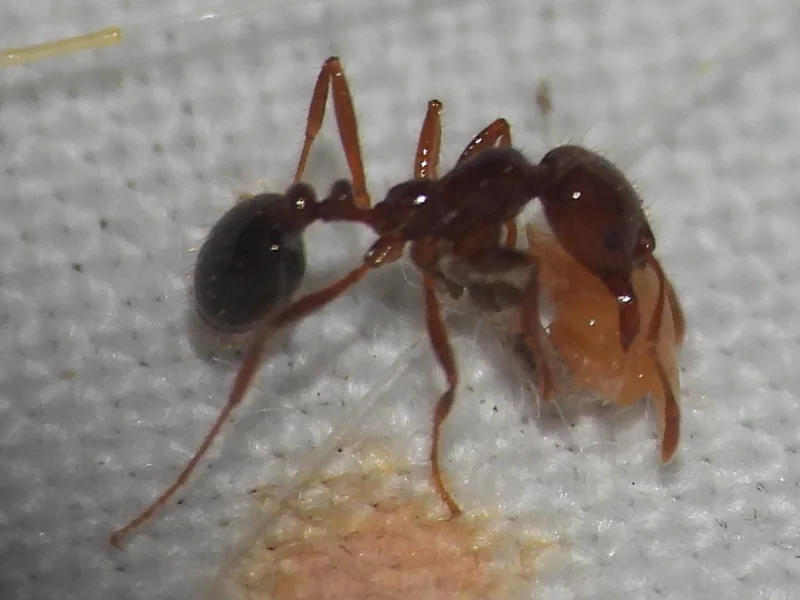
When Fire Ants Are Most Active in North Carolina
Now (November): Moderate ActivityVerified North Carolina Counties, Species & US Range
Counties with Verified Observations
- Orange
- Wake
- Dare
- Cumberland
- Brunswick
- Guilford
- Durham
- Beaufort
- Lenoir
- Harnett
Species Recorded in North Carolina
| Species | Scientific Name | GBIF Records |
|---|---|---|
| Red imported fire ant | Solenopsis invicta | 1,285 |
How North Carolina Compares to Neighboring States
Note: Wildlife does not follow state or county lines. GBIF totals reflect verified citizen and museum records, so low counts in a neighboring county do not guarantee absence.
How to Identify Fire Ants
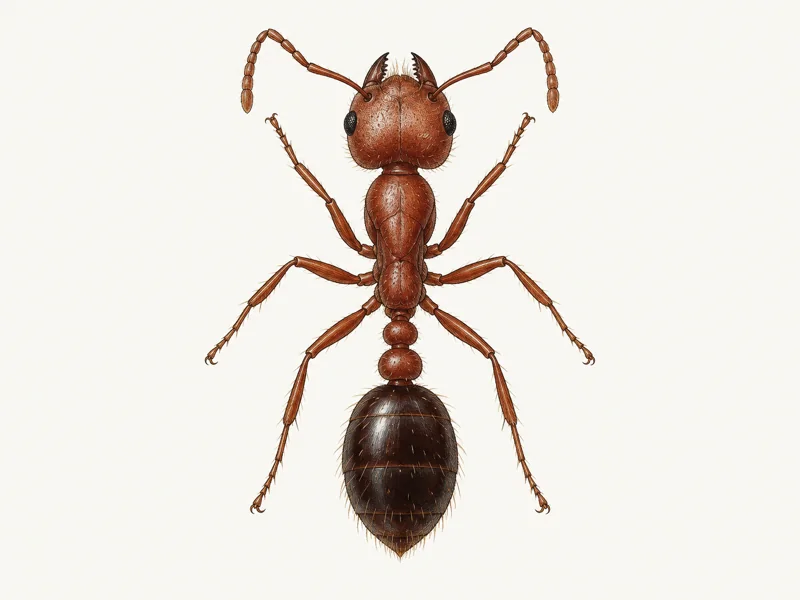
Annotated Anatomy Key (Fire Ant)
- Elbowed antennae: Sharply bent (elbowed) antennae ending in a 2-segmented club—key difference from termites.
- Copper-red thorax: Reddish-brown head and thorax contrasting against the darker abdomen; polymorphic worker sizes.
- Two waist nodes: Two distinct small bead-like segments (petiole + postpetiole) pinching the narrow waist.
- Dark glossy abdomen: Shiny dark brown-black gaster equipped with a painful venomous stinger at the rear tip.
Fire Ants Field Checklist
- Reddish-brown head and thorax with a darker shiny brown-black abdomen
- Workers vary noticeably in size within the same mound (polymorphic)
- Two distinct nodes (petiole segments) between thorax and abdomen
- Builds loose, dome-shaped dirt mounds without a visible central entry hole
Side-by-Side Look-Alike Comparisons
Fire Ants Size at True Relative Scale
Where Fire Ants Live in North Carolina
Anyone asking "are there fire ants in North Carolina?" can look at the occurrence records. GBIF data show the red imported fire ant is well established, and the highest numbers of verified sightings come from these counties:
- Orange County, in the central piedmont
- Wake County, including the Raleigh metro area
- Dare County, on the Outer Banks
- Cumberland County, in the Fayetteville area
- Brunswick County, on the southern coast
North Carolina has a humid subtropical climate across the coastal plain and piedmont, which suits this warmth-loving ant. The cooler Blue Ridge mountains are less favorable, so colonies there tend to be fewer and more scattered. Across USDA zones 6a through 8b, fire ants favor sunny, open ground such as lawns, roadsides, ball fields, and pastures.
Colonies build loose, fluffy dirt mounds with no visible central entrance. Workers come and go through underground tunnels. Mounds often appear after heavy rain, when colonies push soil upward to stay above saturated ground.
When Fire Ants Are Most Active in North Carolina
The North Carolina fire ant season has two clear peaks in the GBIF records: spring (March and April) and fall (September and October). Moderate temperatures in these months bring workers to the surface to forage and rebuild mounds.
During hot midsummer stretches, colonies often move deeper in the soil during the day and forage in the cooler morning and evening. In winter they stay underground but survive. Spring and fall are also the best times for homeowners to monitor and treat, because the ants are actively feeding.
Why Fire Ants Matter for Safety
Fire ants are medically significant. When disturbed, they swarm and sting repeatedly, leaving burning welts that often form white pustules. Some people have severe allergic reactions. This guide does not offer medical advice. If someone is stung and has trouble breathing, swelling of the face or throat, or dizziness, call 911. For other sting questions, contact US Poison Control at 1-800-222-1222 or see a doctor.
Look-Alikes Frequently Mistaken for Fire Ants
Good North Carolina fire ant identification starts with the basics. Fire ant workers are reddish-brown with a darker abdomen and vary in size within one colony, from about 1/8 to 1/4 inch. Their mounds sit in open, sunny ground. Three local ants are often confused with them:
- Carpenter ants: Much larger, usually black or black and red, and uniform in size. They nest in damp or damaged wood and leave piles of sawdust-like frass instead of dirt mounds.
- Sugar ants (odorous house ants): Small, dark brown to black, and they give off a rotten-coconut smell when crushed. They trail indoors toward sweets and rarely sting.
- Pavement ants: Small and dark brown to black with fine grooves on the head and thorax. They push small soil piles out of cracks in driveways and sidewalks, not fluffy mounds in lawns.
If the ants are aggressive, vary in size, and pour out of a loose dirt mound when disturbed, fire ants are the likely cause.
How to Keep Fire Ants Out of Your North Carolina Home
Learning how to prevent fire ants in North Carolina begins with Integrated Pest Management (IPM). University cooperative extension guidance recommends non-chemical steps first, followed by targeted treatments only when needed.
Non-Chemical Prevention
- Seal entry points: Caulk gaps around foundations, utility lines, and door thresholds.
- Control moisture: Fix leaky spigots and keep gutters draining away from the house.
- Keep sanitation tight: Store pet food in sealed containers and clean up outdoor food spills.
- Create a buffer: Keep mulch, firewood, and debris away from the foundation.
- Monitor regularly: Walk the yard in spring and fall to spot new mounds early.
Targeted Treatments
Extension IPM programs often describe a two-step approach. First, broadcast a fire ant bait across the lawn when ants are foraging, then treat individual problem mounds near play areas or walkways. Baits work best on dry ground with temperatures in the 70s to 80s °F. Always read and follow the EPA product label, and keep children and pets away from treated areas as directed.
When to Call a Licensed North Carolina Pest Professional
- Mounds keep returning after two or more treatment cycles.
- Ants are nesting inside walls, electrical boxes, or HVAC units.
- Someone in the home has a known sting allergy.
- Colonies cover a large property, pasture, or commercial site.
IPM Prevention Checklist for North Carolina Homes
- Seal foundation gaps and utility conduits
- Inspect potted plants and mulch before bringing onto property
- Avoid stepping or kneeling near loose sandy lawn mounds
 EXCLUSION BLUEPRINT
Inspect eaves, screens, door sweeps, foundation cracks, and utility penetrations around North Carolina homes before peak season.
Fire Ants in North Carolina: Frequently Asked Questions
Are there fire ants in North Carolina?
Yes. The red imported fire ant is common in North Carolina, with 1,285 verified GBIF sightings concentrated in Orange, Wake, Dare, Cumberland, and Brunswick counties.
When is fire ant season in North Carolina?
Activity peaks in March, April, September, and October. These are also the best months to monitor lawns and apply baits.
Do fire ants live in the North Carolina mountains?
They are less common in the cooler Blue Ridge region. Most activity is in the warmer coastal plain and piedmont.
What should I do if I'm stung by fire ants?
Move away from the mound and brush ants off. For severe reactions call 911; for other concerns, contact Poison Control at 1-800-222-1222 or see a doctor.
Sources & Verification
- Texas A&M AgriLife — Imported Fire Ants
- UF/IFAS Extension — Red Imported Fire Ant
- USDA APHIS Imported Fire Ant Quarantine
Data refreshed · Editorial & GBIF Methodology