Chiggers in South Carolina: Status, Look-Alikes, and Prevention
Quick Answer: Breeding populations of chiggers (Trombiculidae) do not occur in South Carolina, according to the verified occurrence data for this guide. Itchy, red bites that residents blame on chiggers usually come from ticks, fleas, bed bugs, or clover mites. Rare accidental hitchhikers on travelers or outdoor gear are possible, but they do not establish local populations.
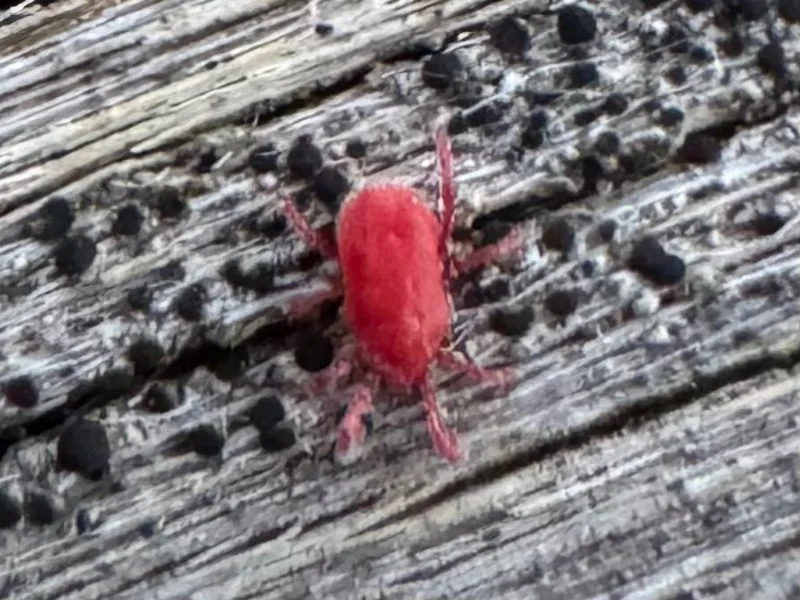
When Chiggers Are Most Active in South Carolina
November: Rare / AbsentChiggers Range in South Carolina vs. Neighboring States
How South Carolina Compares to Neighboring States
Note: Wildlife does not follow state or county lines. GBIF totals reflect verified citizen and museum records, so low counts in a neighboring county do not guarantee absence.
How to Identify Chiggers
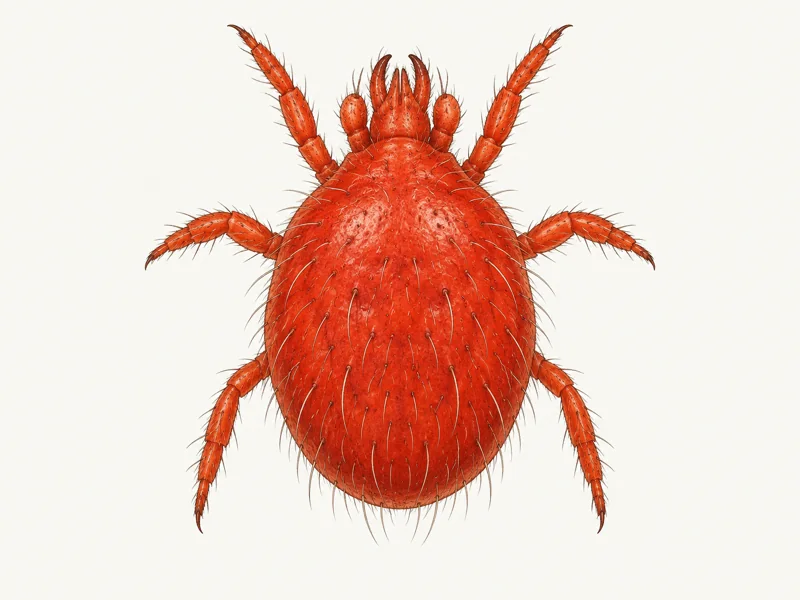
Annotated Anatomy Key (Chigger)
- Microscopic mouthparts: Tiny chelicerae inject digestive saliva into skin pores—chiggers do NOT burrow inside.
- Scarlet bristled body: Microscopic (<0.4 mm) bright crimson-red oval larva dusted in fine sensory setae.
- Six larval legs: Biting parasitic chigger larvae have STRICTLY 6 legs (adults are harmless 8-legged mites).
- Tall-grass hitchhiker: Waits on humid brush and tall grass tips; attaches near tight sock and waist bands.
Chiggers Field Checklist
- Microscopic bright-red six-legged mite larvae barely visible to the naked eye
- Do NOT burrow into skin; inject salivary enzymes that cause intensely itchy red welts
- Welts cluster under tight clothing bands (socks, waistbands, bra straps)
- Adults are harmless predatory soil mites
Side-by-Side Look-Alike Comparisons
Chiggers Size at True Relative Scale
Where Chiggers Live in South Carolina
For readers asking whether there are chiggers in South Carolina, the answer in this guide is that the family is not established in the state. No reproducing colonies live in the Upstate, Midlands, or Lowcountry. Chigger larvae are tiny and feed on animals, so a stray one could in theory arrive on a pet or on gear after travel, but it would not start a lasting population.
The state's humid subtropical climate (USDA zones 7a to 9a), with hot, muggy summers and mild coastal winters, is familiar territory for many biting and nuisance arthropods. That climate explains why so many outdoor itches get blamed on chiggers. Biology for the family comes from GBIF occurrence records and general guidance from US university cooperative extension IPM programs, which describe chigger larvae as microscopic and easily confused with other pests.
- Chiggers are the larval stage of a mite, not an insect.
- Larvae are far smaller than a pinhead, so bites are often the only clue.
- Danger level for the family is a nuisance, not a medical emergency.
When Chiggers Are Most Active in South Carolina
Because chiggers are not established here, there is no true South Carolina chigger season. Itchy bites that show up in warm weather are almost always from other pests that are active locally. Ticks, fleas, and clover mites each follow their own seasonal patterns tied to temperature and moisture.
- Ticks: Active across warm months and can appear on mild winter days along the coast.
- Fleas: Thrive in warm, humid weather, especially around pets and shaded yards.
- Clover mites: Often noticed in spring and fall, when they gather on sunny walls and enter homes.
- Bed bugs: Year-round indoors, since they depend on people rather than weather.
Look-Alikes Frequently Mistaken for Chiggers
Careful South Carolina chigger identification starts with the bite pattern and where the bites happened. Compare the clues below before assuming chiggers are the cause.
Ticks
Ticks are larger, attach for hours or days, and are often found on the scalp, behind the knees, or in the groin. Check your body after time outdoors and remove attached ticks carefully with fine-tipped tweezers. Contact a doctor if you develop a rash, fever, or illness after a tick bite.
Fleas
Flea bites cluster on ankles and lower legs, usually in homes with pets. Look for small dark insects jumping on pets or pale socks. Treat the pet through a veterinarian and vacuum often.
Bed Bugs
Bed bugs cause itchy welts, often in lines or groups, on skin exposed during sleep. Look for dark spotting on mattress seams, shed skins, and live bugs near the bed frame. Bites alone cannot confirm an infestation.
Clover Mites
Clover mites are tiny reddish arthropods that swarm on walls, windowsills, and patios. They do not bite people, but crushing them leaves a red stain that is easy to mistake for a pest problem. Lush, fertilized turf next to foundations often supports them.
How to Keep Chiggers Out of Your South Carolina Home
Anyone wondering how to prevent chiggers in South Carolina is best served by preventing the pests that actually live here. Start with non-chemical steps.
- Mow regularly and trim brush and tall grass at yard edges.
- Keep a 2 to 3 foot bare or mulched strip between lawn and foundation to discourage clover mites.
- Seal gaps around windows, doors, and utility penetrations.
- Reduce moisture by fixing leaks and improving drainage.
- Wash and dry clothes on high heat after hiking, and shower soon after time outdoors.
- Keep pets on veterinarian-approved flea and tick prevention and wash their bedding weekly.
- Vacuum floors, baseboards, and furniture, then empty the bag outdoors.
If you use a repellent or any pesticide product, follow the EPA-registered label exactly, including directions for use on skin, clothing, lawns, or indoor surfaces.
When to Call a Licensed South Carolina Pest Professional
- You find live bed bugs, shed skins, or bloodspots on bedding.
- Fleas persist after treating pets and cleaning the home.
- Ticks are repeatedly found in your yard.
- Clover mites keep entering the home despite exclusion work.
- You cannot identify the pest causing bites.
For severe swelling, trouble breathing, or an allergic reaction, seek medical care right away. You can also call US Poison Control at 1-800-222-1222.
IPM Prevention Checklist for South Carolina Homes
- Wear long pants tucked into socks when walking through tall brush or overgrown fields
- Shower with warm soapy water immediately after outdoor exposure to wash off crawling larvae
- Wash outdoor clothes in hot water and apply EPA-registered repellents per label
 EXCLUSION BLUEPRINT
Inspect eaves, screens, door sweeps, foundation cracks, and utility penetrations around South Carolina homes before peak season.
Chiggers in South Carolina: Frequently Asked Questions
Are there chiggers in South Carolina?
Breeding populations are not established in South Carolina. Rare accidental hitchhikers are possible, but they do not form local colonies.
What is causing itchy bites if it is not chiggers?
Ticks, fleas, and bed bugs are the usual culprits. Clover mites are often blamed but do not bite people.
Is there a South Carolina chigger season?
No, since chiggers are not established here. Local look-alikes such as ticks and fleas are most active in warm, humid months.
Should I treat my yard for chiggers?
Not for chiggers specifically. Focus on mowing, trimming, and moisture control, and use any product only as directed on its EPA label.
Sources & Verification
- Texas A&M AgriLife Extension — Chiggers
- University of Missouri Extension — Chiggers
- GBIF Global Biodiversity Occurrence Records
Data refreshed · Editorial & GBIF Methodology