Chiggers in North Carolina: Where They Live, When They Bite, and How to Avoid Them
Quick Answer: Chiggers in North Carolina are common. GBIF records document 235 verified sightings statewide, with activity peaking in July. They are a nuisance rather than a danger, but their itchy bites can disrupt summer yard time. Most problems are solved by managing vegetation and changing outdoor habits.
When Chiggers Are Most Active in North Carolina
Now (November): Lower Outdoor ActivityVerified North Carolina Counties, Species & US Range
Counties with Verified Observations
- Rutherford
- Durham
- Swain
- Orange
- Haywood
- McDowell
Species Recorded in North Carolina
| Species | Scientific Name | GBIF Records |
|---|---|---|
| Euschoengastia rubra | Euschoengastia rubra | 90 |
| Eutrombicula cinnabaris | Eutrombicula cinnabaris | 85 |
| Leptotrombidium peromysci | Leptotrombidium peromysci | 33 |
How North Carolina Compares to Neighboring States
Note: Wildlife does not follow state or county lines. GBIF totals reflect verified citizen and museum records, so low counts in a neighboring county do not guarantee absence.
How to Identify Chiggers
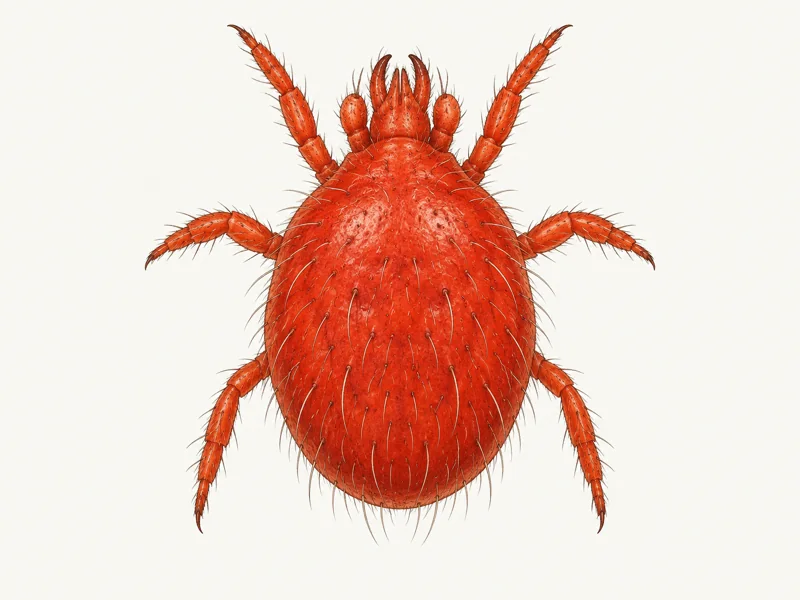
Annotated Anatomy Key (Chigger)
- Microscopic mouthparts: Tiny chelicerae inject digestive saliva into skin pores—chiggers do NOT burrow inside.
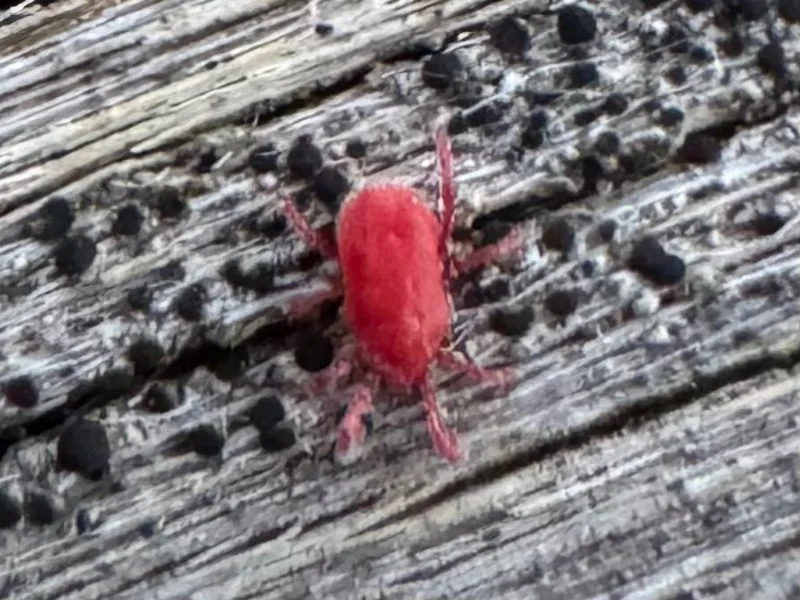
- Scarlet bristled body: Microscopic (<0.4 mm) bright crimson-red oval larva dusted in fine sensory setae.
- Six larval legs: Biting parasitic chigger larvae have STRICTLY 6 legs (adults are harmless 8-legged mites).
- Tall-grass hitchhiker: Waits on humid brush and tall grass tips; attaches near tight sock and waist bands.
Chiggers Field Checklist
- Microscopic bright-red six-legged mite larvae barely visible to the naked eye
- Do NOT burrow into skin; inject salivary enzymes that cause intensely itchy red welts
- Welts cluster under tight clothing bands (socks, waistbands, bra straps)
- Adults are harmless predatory soil mites
Side-by-Side Look-Alike Comparisons
Chiggers Size at True Relative Scale
Where Chiggers Live in North Carolina
Chiggers are the larval stage of mites in the family Trombiculidae. Only the tiny larvae bite, and they live in grassy, weedy, and brushy ground cover rather than on trees or in homes. They are found across the humid subtropical coastal plain and piedmont as well as the cooler Blue Ridge foothills and mountains.
GBIF sightings are most numerous in Rutherford, Durham, Swain, Orange, and Haywood counties. Recorded species include Euschoengastia rubra, Eutrombicula cinnabaris, and Leptotrombidium peromysci. Many of these mites feed on small mammals, birds, and reptiles, so wildlife-rich edges are common hot spots.
Typical Habitat
- Tall grass and overgrown field edges
- Woodland margins and brushy thickets
- Damp, shaded areas with leaf litter
- Streamsides, trails, and neglected corners of lawns
When Chiggers Are Most Active in North Carolina
North Carolina chigger season centers on warm weather, and July is the peak month in the verified records. Activity generally builds through late spring, stays high through summer, and tapers into early fall as nights cool. Mountain areas may start later and end earlier than the warmer piedmont and coastal plain.
Larvae are most active in warm, humid conditions and tend to slow down when temperatures drop. Hot, dry midday sun pushes them toward shaded, moist vegetation.
Look-Alikes Frequently Mistaken for Chiggers
Chigger identification is difficult because the larvae are under 1/150 inch and nearly invisible. Most people identify them by the pattern of bites instead: intensely itchy red welts, often clustered around ankles, waistbands, sock lines, and skin folds. Itching usually appears several hours after exposure. Chiggers do not burrow into skin or suck blood, despite popular belief.
Other North Carolina pests are often blamed for similar bites:
- Ticks: Larger, attach and remain for days, and are visible to the naked eye. Because ticks can carry disease, any tick bite deserves attention from a doctor if symptoms follow.
- Fleas: Bite mostly around ankles and lower legs, usually indoors or where pets rest. Bites are often in small groups, and fleas may be seen jumping on pets or carpet.
- Bed bugs: Bite exposed skin during sleep, often in lines or clusters, and leave telltale spotting or shed skins on bedding and mattress seams.
If bites appear only after yard work or hiking, chiggers are the likelier cause. If bites continue indoors with no outdoor exposure, look for fleas or bed bugs. For persistent, severe, or infected-looking bites, see a doctor.
How to Keep Chiggers Out of Your North Carolina Home
Learning how to prevent chiggers in North Carolina starts outdoors, because they do not infest houses or reproduce indoors. Non-chemical steps come first.
Yard Management
- Mow lawns regularly and trim tall weeds along fences, sheds, and borders.
- Cut back brush and thin shaded, damp vegetation to let sunlight and air in.
- Fix irrigation leaks and drainage problems that keep soil moist.
- Reduce wildlife attractants such as unsecured feed, brush piles, and fallen fruit.
Personal Protection
- Wear long pants tucked into socks and closed shoes in brushy areas.
- Stay on cleared trails and avoid sitting directly in tall grass.
- Use a skin repellent registered with the EPA, and follow the label directions exactly.
- Shower with soap soon after outdoor exposure and wash clothes in hot water.
When to Call a Licensed North Carolina Pest Professional
Contact a licensed professional if you get repeated bites in your yard despite mowing and vegetation control, or if a large, heavily vegetated property is hard to manage. Also call if you cannot tell whether fleas, bed bugs, or ticks are involved, or if bites occur indoors. Any chemical treatment should follow the EPA-approved product label.
If a bite looks infected, spreads, or causes fever or a severe reaction, see a doctor. For questions about a possible poisoning or product exposure, call US Poison Control at 1-800-222-1222.
IPM Prevention Checklist for North Carolina Homes
- Wear long pants tucked into socks when walking through tall brush or overgrown fields
- Shower with warm soapy water immediately after outdoor exposure to wash off crawling larvae
- Wash outdoor clothes in hot water and apply EPA-registered repellents per label
 EXCLUSION BLUEPRINT
Inspect eaves, screens, door sweeps, foundation cracks, and utility penetrations around North Carolina homes before peak season.
Chiggers in North Carolina: Frequently Asked Questions
Are there chiggers in North Carolina?
Yes. They are common statewide, with 235 verified GBIF sightings and the highest counts in Rutherford, Durham, Swain, Orange, and Haywood counties.
What month are chiggers worst in North Carolina?
July is the peak month in recorded sightings. Activity is generally high through the warm, humid summer and declines as fall temperatures cool.
Can chiggers live inside my house?
No. Chiggers live in outdoor vegetation and do not infest homes. Bites noticed indoors usually come from outdoor exposure earlier or from fleas or bed bugs.
Are chiggers dangerous?
In North Carolina, chiggers are considered a nuisance. Their bites cause itching and irritation, but see a doctor if bites become infected or symptoms seem severe.
Sources & Verification
- Texas A&M AgriLife Extension — Chiggers
- University of Missouri Extension — Chiggers
- GBIF Global Biodiversity Occurrence Records
Data refreshed · Editorial & GBIF Methodology