Chigger vs Clover Mite: How to Tell These Tiny Red Pests Apart
Quick ID Verdict: If the red speck is crawling across a sunny windowsill or siding and has a long front pair of legs that look like antennae, it's a clover mite. If it's almost too small to see, and the real clue is a cluster of itchy red welts around sock lines or waistbands after time outdoors, chiggers are the likely culprit.
Chigger
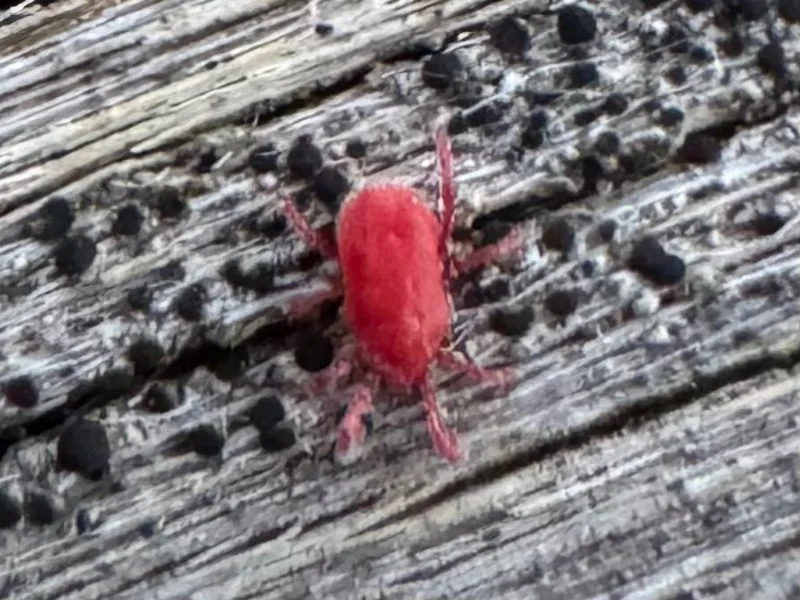
Clover Mite
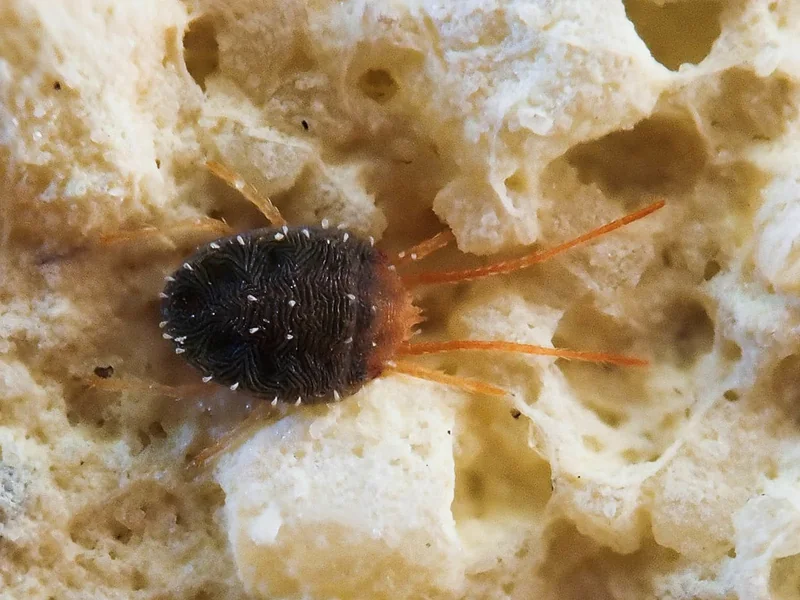
Side-by-Side Comparison Table
| Trait | Chigger | Clover Mite |
|---|---|---|
| Scientific Group | Trombiculidae | Bryobia praetiosa |
| Category | Arachnid | Arachnid |
| Typical Size | 0.2–0.5 mm | 0.6–0.8 mm |
| Danger Level | Nuisance | Nuisance |
| Bites or Stings? | Yes | No |
| Peak US Months | March, April, May, October | March, April, May |
| Key ID Trait | Microscopic bright-red six-legged mite larvae barely visible to the naked eye | Pinhead-sized brick-red to reddish-brown oval mite with an extra-long front pair of legs resembling antennae |
Chigger vs. Clover Mite: True Size Comparison
Side-by-Side Anatomy Blueprint
Compare body segments, antennae, leg count, and key markings directly before treating or removing either species.
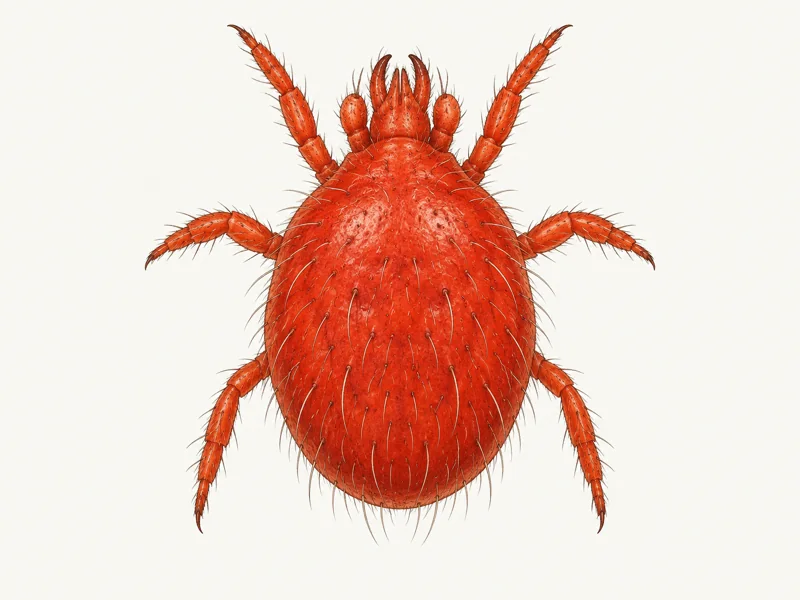
- Microscopic mouthparts: Tiny chelicerae inject digestive saliva into skin pores—chiggers do NOT burrow inside.
- Scarlet bristled body: Microscopic (<0.4 mm) bright crimson-red oval larva dusted in fine sensory setae.
- Six larval legs: Biting parasitic chigger larvae have STRICTLY 6 legs (adults are harmless 8-legged mites).
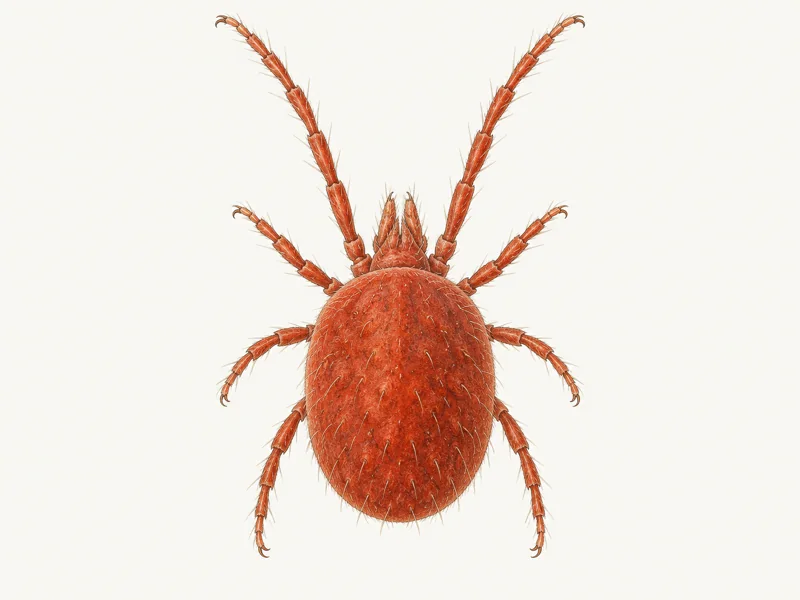
- Extra-long front legs: First leg pair extends far forward like antennae—the unmistakable hallmark of clover mites.
- Tiny mouthparts: Microscopic plant-feeding mouthparts at the front rim; completely wingless and harmless to humans.
- Eight jointed legs: Adult clover mites have 8 slender legs (no true antennae) and leave red smudges if crushed.
Quick ID verdict: If the red speck is crawling across a sunny windowsill or siding and has a long front pair of legs that look like antennae, it's a clover mite. If it's almost too small to see, and the real clue is a cluster of itchy red welts around sock lines or waistbands after time outdoors, chiggers are the likely culprit.
Both pests are tiny, red, and easy to confuse, which is why the chigger vs clover mite question comes up so often. The good news is that neither one is dangerous. They are nuisance pests, but they bother homeowners in very different ways.
Chigger or Clover Mite? Key Identification Differences
The fastest way to decide between a chigger or clover mite is to look at where the pest is found and what it's doing. Physical traits help as well, although chiggers are so small that most people never get a clear look at one.
Size, Color, and Leg Clues to Look For
The physical difference between chigger and clover mite comes down to size, color, and legs:
TraitChiggers (Trombiculidae)Clover Mites (Bryobia praetiosa)Size0.2–0.5 mm0.6–0.8 mmColorBright redBrick-red to reddish-brownShapeTiny, rounded larvaeOval, pinhead-sized bodyLegsSix (larval stage)Eight, with an extra-long front pair resembling antennaeVisibilityBarely visible to the naked eyeEasy to spot on light surfacesFor confident chigger vs clover mite identification, a hand lens helps. Those extended front legs are the clover mite's signature trait. A chigger larva, by contrast, usually looks like a moving red dot, if it can be seen at all.
Bites vs Stains: How Each Pest Affects Your Household
Only the larval stage of a chigger bites people. The larvae attach to skin, often where clothing fits tightly, and feed briefly. The itchy red bumps typically show up hours later, long after the chigger is gone. For persistent reactions, signs of infection, or any concern about a bite, a doctor is the right call.
Clover mites don't bite people or pets. Their impact is cosmetic. When crushed, they leave reddish stains on curtains, carpets, walls, and window sills, and those stains can be stubborn on light fabrics.
Where and When You'll Find Each Mite
Location and timing often settle the identification before anyone reaches for a magnifier. These two mites prefer very different settings and peak at different points in the year.
US Regions and Preferred Habitats
Chiggers are most common across the southern and eastern United States, along with much of the Midwest. They're found in:
- Tall grass and unmowed field edges
- Brushy, overgrown areas and woodland borders
- Damp, shaded spots near streams or low ground
Clover mites occur widely across the US and favor well-fertilized lawns, clover, and the plant growth right next to foundations. They're drawn to sunny exposures, which explains why south- and west-facing walls often host the largest crowds. From there, they slip through gaps around windows and doors.
Seasonal Activity Patterns
Chigger activity typically builds in late spring and peaks through summer, tapering off once cooler fall weather arrives. In the Deep South the season can run longer.
Clover mites follow a different schedule. They tend to be most noticeable in early spring and again in fall, when mild, sunny days push them onto warm siding and indoors. They usually slow down during the hottest stretch of summer. So a red mite swarming a window in March is almost certainly a clover mite, not a chigger.
Safe IPM Strategies for Controlling Chiggers and Clover Mites
Integrated Pest Management (IPM) starts with habitat changes, exclusion, and sanitation. Chemical products come last, and only when non-chemical steps fall short.
For chiggers:
- Keep lawns mowed and trim tall grass, weeds, and brush along property edges.
- Clear overgrown vegetation and improve drainage in damp, shaded areas.
- Wear long pants tucked into socks when walking through brushy areas.
- Wash outdoor clothing in hot water after time in chigger habitat, and shower promptly.
For clover mites:
- Create an 18–24 inch plant-free strip along the foundation using gravel or mulch-free soil.
- Seal cracks and gaps around windows, doors, and siding with caulk or weatherstripping.
- Vacuum indoor mites rather than wiping or crushing them to avoid red stains.
- Avoid overfertilizing lawns near the house, since lush growth supports larger populations.
If an infestation persists, a licensed pest professional can assess the property. Any pesticide or repellent should be used strictly according to its EPA-registered product label, which is the legal and safety standard for application.
Which one is worse for homeowners? It depends on the problem. Chiggers are worse for comfort, since their bites can mean days of itching after yard work or a hike. Clover mites are worse for the house itself, invading in large numbers and staining surfaces. Neither is medically significant, and both respond well to consistent IPM.
Frequently Asked Questions
What's the main difference between a chigger and a clover mite?
Chiggers are barely visible larvae (0.2–0.5 mm) with six legs that bite and cause itchy welts around tight clothing. Clover mites are slightly larger (0.6–0.8 mm) with eight legs, including two extra-long front legs resembling antennae, and they don't bite—they leave red stains when crushed.
How can I identify a clover mite vs chigger by appearance?
Look for the clover mite's distinctive long front legs resembling antennae and brick-red oval body, visible on light surfaces. Chiggers appear as barely visible red dots. If you see a mite crawling on a sunny windowsill with extended front legs, it's definitely a clover mite.
When are chiggers most active, and when do clover mites appear?
Chiggers peak in summer after spring warmth arrives and fade in fall. Clover mites are most noticeable in early spring and fall during mild weather, often invading homes in March or September. Finding red mites on windows in early spring strongly suggests clover mites.
Do clover mites bite like chiggers do?
No. Clover mites don't bite people or pets. Their main nuisance is cosmetic—they leave stubborn reddish stains on curtains, carpets, walls, and windowsills when crushed. Only chigger larvae bite, causing itchy welts hours after exposure.
What's the best way to prevent chigger bites when outdoors?
Wear long pants tucked into socks when walking through brushy or grassy areas where chiggers hide. After outdoor time, shower promptly and wash clothes in hot water. Keep your lawn mowed and clear overgrown vegetation around your property to reduce chigger habitat.
How do I keep clover mites out of my house?
Create an 18–24 inch plant-free strip along foundations using gravel. Seal cracks around windows and doors with caulk or weatherstripping. Vacuum indoor mites rather than crushing them to avoid stains. Avoid overfertilizing lawns near the house, which supports larger populations.