Wolf Spiders in Arizona: Identification, Season, and Prevention
Quick Answer: Yes, wolf spiders in Arizona are common, with 1,923 verified GBIF sightings concentrated in Pima, Maricopa, Coconino, Santa Cruz, and Cochise counties. They are considered a nuisance rather than a medical threat, and activity peaks from May through August. Most homeowners only need simple exclusion and moisture control to keep them outdoors.
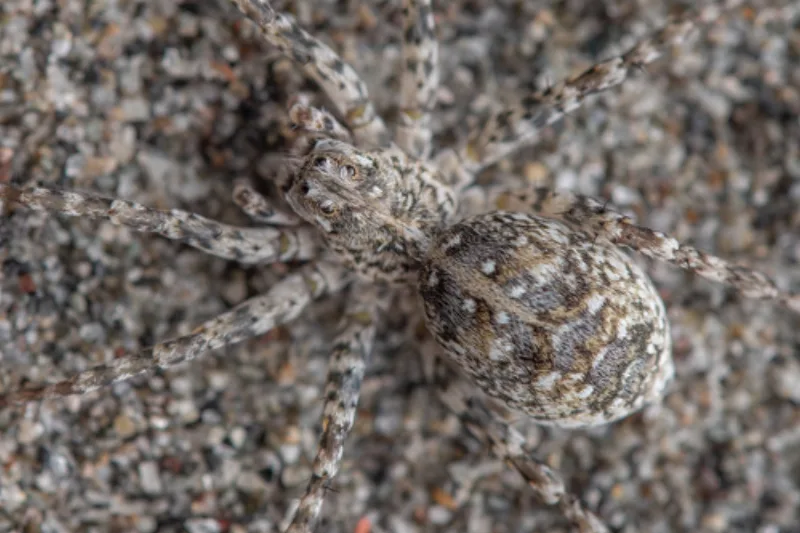
When Wolf Spiders Are Most Active in Arizona
Now (November): Lower Outdoor ActivityVerified Arizona Counties, Species & US Range
Counties with Verified Observations
- Pima
- Maricopa
- Coconino
- Santa Cruz
- Cochise
- Yuma
- Yavapai
- Gila
- Pinal
- Mohave
Species Recorded in Arizona
| Species | Scientific Name | GBIF Records |
|---|---|---|
| Carolina Wolf Spider | Hogna carolinensis | 310 |
| Wolf Spiders | Arctosa littoralis | 303 |
| Rabidosa santrita | Rabidosa santrita | 214 |
How Arizona Compares to Neighboring States
Note: Wildlife does not follow state or county lines. GBIF totals reflect verified citizen and museum records, so low counts in a neighboring county do not guarantee absence.
How to Identify Wolf Spiders
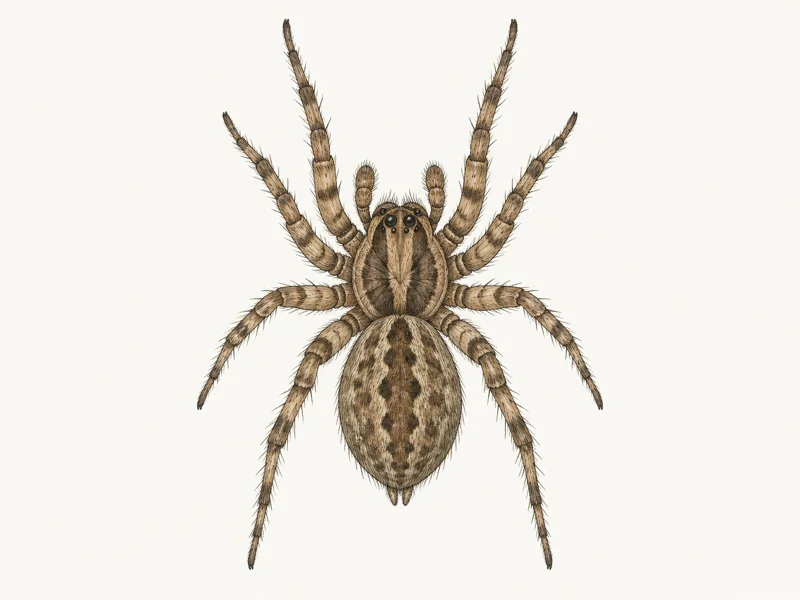
Annotated Anatomy Key (Wolf Spider)
- Large front eyes: Eight eyes in 3 distinct rows (two very large middle eyes reflect flashlight beams at night).
- Striped cephalothorax: Robust front carapace marked with twin dark lengthwise stripes—no recluse violin mark.
- Eight stout hairy legs: Four pairs of strong, spiny, mottled hunting legs built for chasing prey without webs.
- Mottled oval abdomen: Patterned brown-and-tan abdomen; females carry round egg sacs attached to spinnerets.
Wolf Spiders Field Checklist
- Stout, hairy brown-and-gray striped spider with prominent spiny legs
- Two notably large forward-facing eyes above a row of four tiny eyes (reflects flashlight beams at night)
- Hunts actively on the ground without spinning prey-catching webs
- Females uniquely carry round silk egg sacs on their spinnerets and piggyback spiderlings
Wolf Spiders Size at True Relative Scale
Where Wolf Spiders Live in Arizona
If you've ever wondered whether there are wolf spiders in Arizona, the records answer clearly. Wolf spiders (family Lycosidae) turn up across the state, from the southern desert lowlands to the cooler northern highlands. Arizona's range of USDA hardiness zones, 5a through 10a, gives these adaptable hunters plenty of habitat.
GBIF occurrence data shows the most sightings in these counties:
- Pima County: Tucson's desert neighborhoods, washes, and foothills
- Maricopa County: Phoenix-area yards, irrigated lawns, and landscaped gravel beds
- Coconino County: Flagstaff's higher-elevation forests and meadows
- Santa Cruz County: Grasslands and riparian corridors near the border
- Cochise County: Sky island mountain ranges and high desert valleys
Species recorded in Arizona include the Carolina wolf spider (Hogna carolinensis), one of the largest wolf spiders in North America; Arctosa littoralis, a sand-colored species often found near sandy soils and water edges; and Rabidosa santrita. Wolf spiders don't spin webs to catch prey. Instead, they hide in burrows, under rocks, in leaf litter, and beneath landscape debris, then hunt actively at night.
When Wolf Spiders Are Most Active in Arizona
Arizona wolf spider season runs hottest from May through August, according to verified GBIF records. Early summer brings warm nights that support hunting, while the July and August monsoon adds humidity and a surge of insect prey. Heavy rains can also flood burrows, pushing spiders onto patios and into garages.
Homeowners often notice males wandering more widely in late summer as they search for mates. Females carry egg sacs attached to their spinnerets, and after hatching, spiderlings ride on the mother's back for a short time. In Coconino County and other high-elevation areas, activity slows sooner in fall as temperatures drop.
Look-Alikes Frequently Mistaken for Wolf Spiders
Accurate Arizona wolf spider identification starts with a few key traits. Wolf spiders are brown, gray, or tan with striped or mottled patterns, run quickly along the ground, and have a distinctive eye arrangement: two large eyes facing forward above a row of four small eyes. At night, a flashlight often reveals their eyes reflecting back as a green shine.
Tarantulas
Arizona is home to native desert tarantulas, which are sometimes confused with large wolf spiders like Hogna carolinensis. Tarantulas are much hairier and bulkier, with thick legs and a slower, deliberate walk. Male tarantulas often roam during the monsoon, the same window when wolf spiders are active, which adds to the mix-ups.
Other Ground-Dwelling Spiders
Many other spiders in Arizona share brown coloring and ground habits. Those that sit in webs, rather than hunting on open ground, are generally not wolf spiders. When in doubt, a clear photo of the eye pattern is the most reliable way to confirm an identification.
How to Keep Wolf Spiders Out of Your Arizona Home
Knowing how to prevent wolf spiders in Arizona comes down to Integrated Pest Management (IPM). University cooperative extension guidance consistently recommends non-chemical steps first, since wolf spiders wander in by accident and rarely establish indoors.
Exclusion
- Install tight door sweeps and repair worn weatherstripping.
- Seal gaps around pipes, utility lines, and foundation cracks with caulk.
- Keep window and vent screens intact and well fitted.
Sanitation and Habitat Reduction
- Move firewood, rock piles, and debris away from the foundation.
- Keep a clear strip of bare ground or gravel next to exterior walls.
- Reduce clutter in garages and storage areas where spiders hide.
- Switch to yellow or LED bulbs outdoors to attract fewer insects that spiders feed on.
Moisture Control
Fix leaking hose bibs, adjust irrigation so it doesn't soak the foundation, and improve drainage after monsoon storms. Drier perimeters draw fewer insects and fewer spiders. A wolf spider found indoors can simply be trapped under a cup and released outside.
When to Call a Licensed Arizona Pest Professional
If you choose a pesticide, follow the EPA product label exactly; the label is the law. Contact a licensed Arizona pest professional if you notice:
- Spiders appearing indoors repeatedly despite sealing and cleanup
- Large numbers of insects that are feeding a spider population
- Uncertainty about whether a spider is a wolf spider or another species
- Concerns about using treatments safely around children or pets
IPM Prevention Checklist for Arizona Homes
- Install tight door sweeps and seal foundation gaps
- Keep firewood and thick mulch pulled back from siding
 EXCLUSION BLUEPRINT
Inspect eaves, screens, door sweeps, foundation cracks, and utility penetrations around Arizona homes before peak season.
Wolf Spiders in Arizona: Frequently Asked Questions
Are wolf spiders in Arizona dangerous?
No. Wolf spiders are classified as a nuisance, and bites are uncommon and usually happen only when one is handled or trapped. If you have concerns about any bite, call US Poison Control at 1-800-222-1222 or contact a doctor.
What is the largest wolf spider in Arizona?
The Carolina wolf spider (Hogna carolinensis) is among the largest wolf spiders recorded in the state. Its size sometimes leads people to mistake it for a small tarantula.
Why do I see more wolf spiders during monsoon season?
Monsoon rains flood burrows and boost insect prey, pushing wolf spiders into the open. This overlaps with their peak activity from May through August.
Do wolf spiders live in northern Arizona?
Yes. Coconino County ranks among the top counties for verified GBIF sightings, showing that wolf spiders thrive in the cooler northern highlands as well as the southern deserts.
Sources & Verification
Data refreshed · Editorial & GBIF Methodology