Wolf Spiders in North Carolina: Identification, Season and Prevention
Quick Answer: Yes, there are wolf spiders in North Carolina, and they are common across the state, with 3,684 verified GBIF sightings on record. These large, fast-running hunters are considered a nuisance rather than a danger, and they wander indoors most often in late summer and fall. Simple exclusion and moisture control will keep most of them outside.
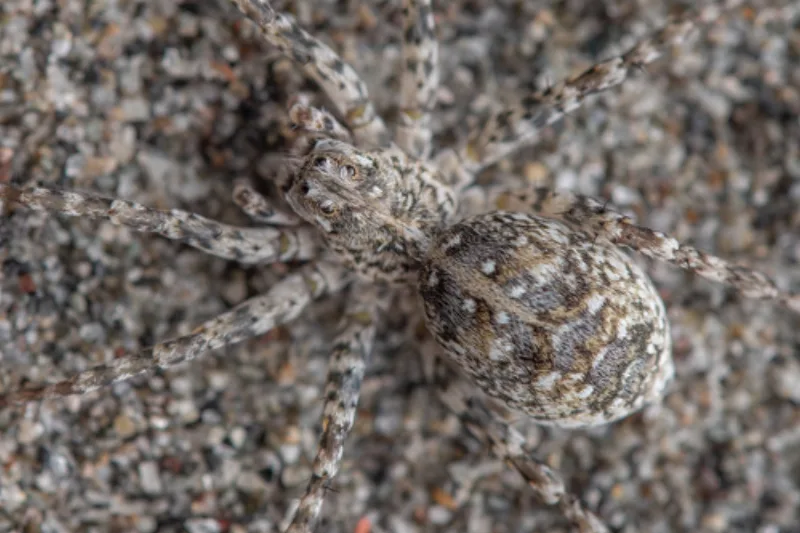
When Wolf Spiders Are Most Active in North Carolina
Now (November): Moderate ActivityVerified North Carolina Counties, Species & US Range
Counties with Verified Observations
- Richmond
- Orange
- Durham
- Cumberland
- Buncombe
- Iredell
- Wake
- Union
- Henry
- Randolph
Species Recorded in North Carolina
| Species | Scientific Name | GBIF Records |
|---|---|---|
| Rabid Wolf Spider | Rabidosa rabida | 1,063 |
| Tigrosa annexa | Tigrosa annexa | 800 |
| Georgia Wolf Spider | Tigrosa georgicola | 568 |
How North Carolina Compares to Neighboring States
Note: Wildlife does not follow state or county lines. GBIF totals reflect verified citizen and museum records, so low counts in a neighboring county do not guarantee absence.
How to Identify Wolf Spiders
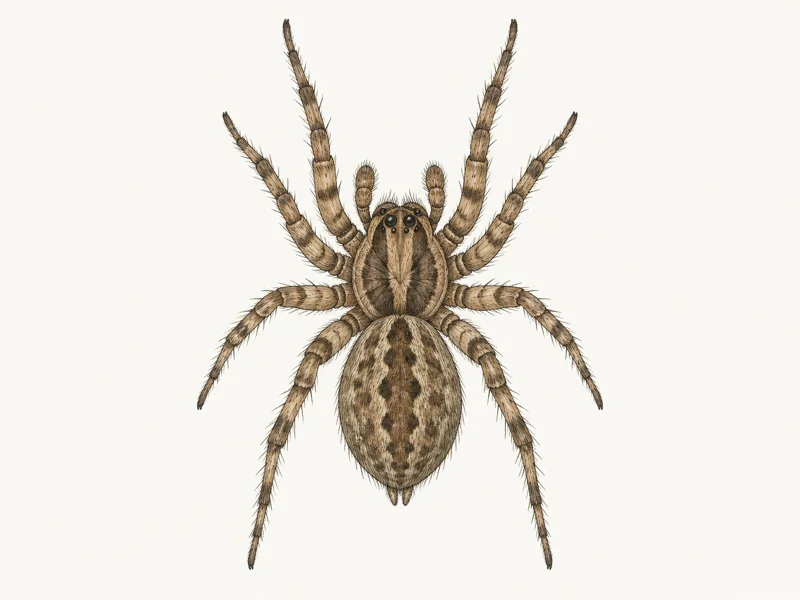
Annotated Anatomy Key (Wolf Spider)
- Large front eyes: Eight eyes in 3 distinct rows (two very large middle eyes reflect flashlight beams at night).
- Striped cephalothorax: Robust front carapace marked with twin dark lengthwise stripes—no recluse violin mark.
- Eight stout hairy legs: Four pairs of strong, spiny, mottled hunting legs built for chasing prey without webs.
- Mottled oval abdomen: Patterned brown-and-tan abdomen; females carry round egg sacs attached to spinnerets.
Wolf Spiders Field Checklist
- Stout, hairy brown-and-gray striped spider with prominent spiny legs
- Two notably large forward-facing eyes above a row of four tiny eyes (reflects flashlight beams at night)
- Hunts actively on the ground without spinning prey-catching webs
- Females uniquely carry round silk egg sacs on their spinnerets and piggyback spiderlings
Wolf Spiders Size at True Relative Scale
Where Wolf Spiders Live in North Carolina
Wolf spiders (family Lycosidae) do well across North Carolina's humid subtropical coastal plain and piedmont, and they also live in the cooler Blue Ridge mountains. The state spans USDA hardiness zones 6a through 8b, so habitat ranges from sandhills and pine forest to mountain leaf litter. Verified GBIF records cluster most heavily in Richmond, Orange, Durham, Cumberland and Buncombe counties.
Unlike web-building spiders, wolf spiders hunt on the ground. They hide under logs, rocks, mulch, firewood piles and dense groundcover, and some species dig burrows in soil. Recorded North Carolina species include:
- Rabid Wolf Spider (Rabidosa rabida): a striped species often found in tall grass and low vegetation. Despite the name, it carries no disease.
- Tigrosa annexa: a mottled brown wanderer of woodland floors and yards.
- Georgia Wolf Spider (Tigrosa georgicola): a large, dark brown species of forest edges and leaf litter.
North Carolina Wolf Spider Identification
Most wolf spiders are brown, gray or tan with stripes or mottled markings that blend into soil and leaves. Look for these traits:
- Eight eyes in three rows, with two large, forward-facing eyes in the middle row
- Sturdy, hairy bodies and long legs built for running
- No catching web; they chase or ambush prey
- Females carry an egg sac attached to their spinnerets, and later carry spiderlings on their backs
A flashlight held at eye level at night will often reveal their eyeshine, which looks like tiny green sparkles in the grass.
When Wolf Spiders Are Most Active in North Carolina
North Carolina wolf spider season runs from spring through fall. GBIF sightings peak in May, August, September and October. The spring peak follows warming soil and renewed hunting. The late-season peaks match mating activity, when males roam widely looking for females.
That fall wandering is why homeowners notice more wolf spiders indoors from late summer into October. Cooling nights and heavy rain can also push them toward garages, basements and crawl spaces. They are mostly nocturnal, so they are usually spotted at night or early morning.
Look-Alikes Frequently Mistaken for Wolf Spiders
Several other North Carolina spiders get confused with wolf spiders. Checking the eye arrangement and behavior usually settles the question.
- Nursery web and fishing spiders: Similar size and color, but their eyes sit in two even rows. Fishing spiders are often found near water, docks and damp basements, and females carry egg sacs in their jaws rather than on their spinnerets.
- Grass spiders (funnel weavers): Brown and striped, but they build flat sheet webs with a funnel retreat in lawns and shrubs.
- Brown recluse: Smaller and more delicate, with six eyes and a violin-shaped mark. Established populations are uncommon in North Carolina, and many reported recluses turn out to be wolf spiders or other harmless species.
- Jumping spiders: Also hairy hunters, but much smaller and compact, with very large front eyes and a stop-and-hop movement.
If identification is uncertain, a clear photo can be submitted to a North Carolina Cooperative Extension county office for help.
How to Keep Wolf Spiders Out of Your North Carolina Home
Learning how to prevent wolf spiders in North Carolina starts with Integrated Pest Management (IPM). University extension IPM guidance consistently ranks exclusion, habitat reduction and moisture control above pesticides for wandering spiders.
Exclusion
- Install tight door sweeps and replace worn weatherstripping.
- Seal gaps around pipes, cables, vents and foundation cracks with caulk or foam.
- Repair torn window and crawl space vent screens.
Habitat and Moisture Control
- Pull mulch, leaf litter and groundcover back 12 to 18 inches from the foundation.
- Store firewood, lumber and stones away from the house and off the ground.
- Use dehumidifiers in basements and crawl spaces, and fix leaks.
- Switch exterior lights to yellow or LED bulbs, which attract fewer insects that spiders hunt.
Indoor Management
Place sticky traps along baseboards and in garages to catch wanderers. Vacuum spiders, egg sacs and debris, then empty the canister outside. A single indoor wolf spider can simply be scooped into a cup and released outdoors.
Chemical treatments are rarely needed. If used, choose products labeled for spiders and follow the EPA product label exactly, focusing on exterior perimeters rather than broadcast indoor spraying.
When to Call a Licensed Pest Professional
- Spiders appear indoors daily despite sealing and cleanup.
- Large numbers of other insects suggest a broader pest problem feeding spiders.
- Crawl space moisture or structural gaps are beyond DIY repair.
- You cannot confidently rule out a medically significant look-alike.
Look for a professional licensed through the North Carolina Department of Agriculture and Consumer Services.
IPM Prevention Checklist for North Carolina Homes
- Install tight door sweeps and seal foundation gaps
- Keep firewood and thick mulch pulled back from siding
 EXCLUSION BLUEPRINT
Inspect eaves, screens, door sweeps, foundation cracks, and utility penetrations around North Carolina homes before peak season.
Wolf Spiders in North Carolina: Frequently Asked Questions
Are wolf spiders in North Carolina dangerous?
No. They are rated a nuisance and bite only when handled or trapped. If a bite causes concerning symptoms, call US Poison Control at 1-800-222-1222 or see a doctor.
Which North Carolina counties report the most wolf spiders?
Verified GBIF records are highest in Richmond, Orange, Durham, Cumberland and Buncombe counties, though wolf spiders occur statewide.
Why do I see more wolf spiders in the fall?
Activity peaks in August, September and October as males roam to find mates and cooler weather nudges spiders toward sheltered buildings.
Is the rabid wolf spider rabid?
No. Rabidosa rabida is named for its quick, energetic movement. It does not carry rabies or any other disease.
Sources & Verification
Data refreshed · Editorial & GBIF Methodology