Tarantula vs Wolf Spider: How to Tell Them Apart and Protect Your Home
Quick ID Verdict: A big, hairy spider crossing the garage floor at dusk gets anyone's attention. Here's the quick verdict on tarantula vs wolf spider: if the body is heavy and the legs span the size of a palm (50–130 mm), it's almost certainly a tarantula. If it's smaller (10–35 mm), fast, and striped brown and gray with spiny legs, it's a wolf spider.
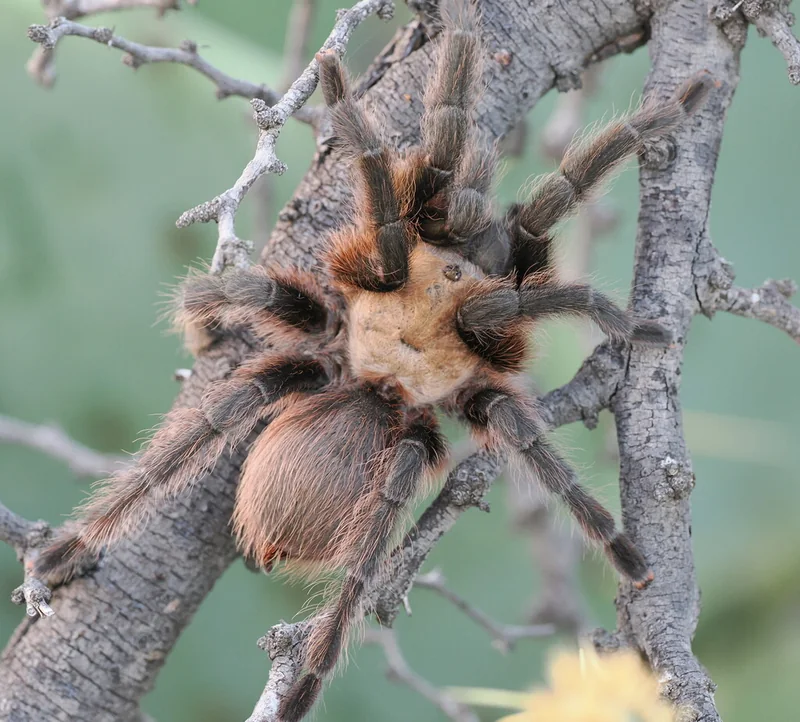
Tarantula
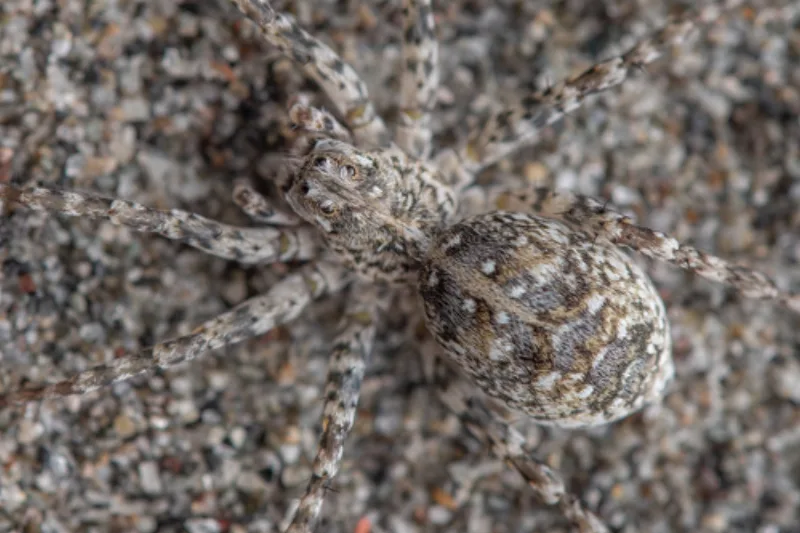
Wolf Spider
Side-by-Side Comparison Table
| Trait | Tarantula | Wolf Spider |
|---|---|---|
| Scientific Group | Theraphosidae | Lycosidae |
| Category | Spider | Spider |
| Typical Size | 50–130 mm | 10–35 mm |
| Danger Level | Nuisance | Nuisance |
| Bites or Stings? | Yes | Yes |
| Peak US Months | July, August, September, October | May, June, July, August |
| Key ID Trait | Large, heavy-bodied hairy spider with thick legs | Stout, hairy brown-and-gray striped spider with prominent spiny legs |
Tarantula vs. Wolf Spider: True Size Comparison
Side-by-Side Anatomy Blueprint
Compare body segments, antennae, leg count, and key markings directly before treating or removing either species.
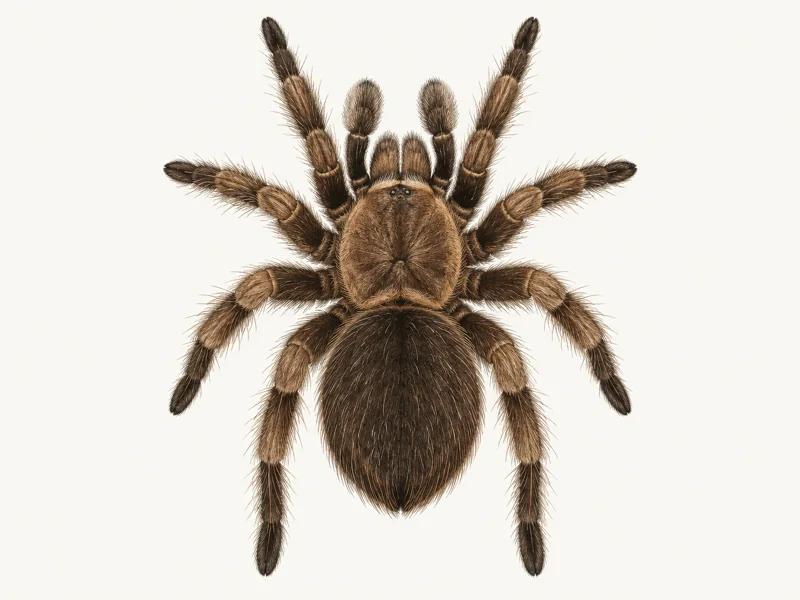
- Furry pedipalps: Pair of thick leg-like front sensory feelers framing downward-striking fangs.
- Velvet carapace: Broad warm cocoa-brown cephalothorax with a tiny central eye tubercle.
- Eight thick legs: Four pairs of stout, densely hairy cocoa-brown legs built for ground hunting.
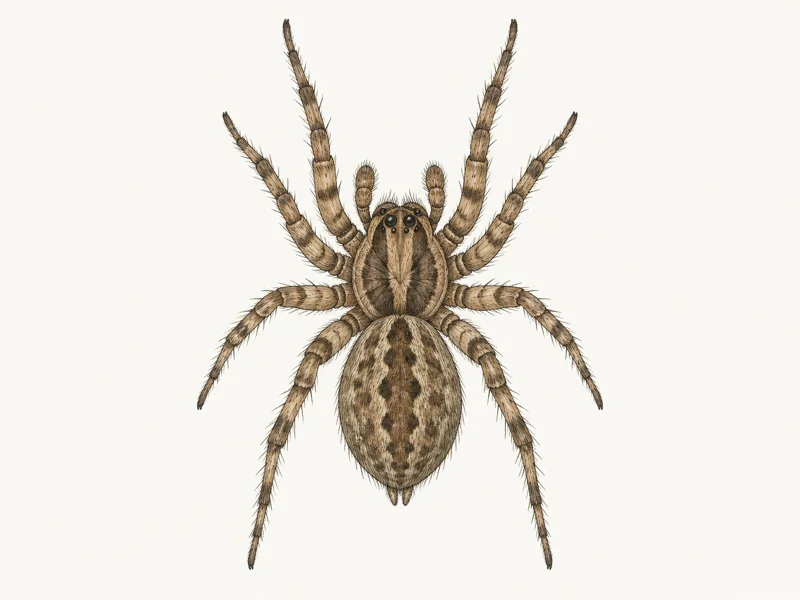
- Large front eyes: Eight eyes in 3 distinct rows (two very large middle eyes reflect flashlight beams at night).
- Striped cephalothorax: Robust front carapace marked with twin dark lengthwise stripes—no recluse violin mark.
- Eight stout hairy legs: Four pairs of strong, spiny, mottled hunting legs built for chasing prey without webs.
Both are classified as nuisance pests, not public health threats. Still, knowing which one is in the yard changes how homeowners should respond.
Key Differences Between a Tarantula and a Wolf Spider
The difference between tarantula and wolf spider starts with family. Tarantulas belong to Theraphosidae, an ancient group of heavy-bodied spiders. Wolf spiders belong to Lycosidae, a family of agile ground hunters found across North America.
Size, Hair, and Body Shape
Size is the fastest clue for tarantula vs wolf spider identification:
- Tarantulas: 50–130 mm, large and heavy-bodied, covered in dense hair, with thick, sturdy legs. They move slowly and deliberately.
- Wolf spiders: 10–35 mm, stout and hairy, with brown-and-gray stripes running down the back and prominent spiny legs. They sprint in short bursts.
A large female wolf spider can look intimidating, but she'll never approach true tarantula bulk. Tarantulas also tend to look uniformly fuzzy, while wolf spiders show distinct striped patterns.
Eye Arrangement and Other Telltale Features
If there's still doubt, look at the eyes from a safe distance. Wolf spiders have three rows of eyes, with two large forward-facing eyes that reflect a flashlight beam at night. That greenish "eyeshine" in the lawn is a classic wolf spider sign.
Tarantulas have eight tiny eyes clustered together on a small mound near the front of the head. Other clues:
- Female wolf spiders carry egg sacs on their spinnerets and later carry spiderlings on their backs.
- Tarantula fangs strike downward, while wolf spider fangs pinch sideways.
Where Each Spider Lives in the US and When They're Active
Wolf spiders live in every US state, from Florida lawns to Alaskan tundra. They hunt on the ground at night and are most active spring through fall, though they'll move toward warm structures as temperatures drop.
Native tarantulas are regional. They're found mainly in the Southwest and south-central states, including Texas, Arizona, New Mexico, Oklahoma, southern California, Arkansas, and parts of Missouri and Colorado. Mature males wander openly in late summer and fall searching for mates, which is when most homeowners spot them crossing roads and driveways.
So if someone in Ohio or Maine is asking "tarantula or wolf spider?", the answer is almost always wolf spider.
Are Tarantulas or Wolf Spiders Dangerous to People and Pets?
Both spiders are rated as nuisance pests. Neither is aggressive, and bites usually happen only when the spider is handled or pressed against skin.
Tarantulas have an extra defense: many US species flick barbed hairs from the abdomen when threatened, which can irritate skin and eyes. Curious dogs that nose at a tarantula sometimes end up pawing at their faces.
Anyone with a bite that causes significant swelling, spreading pain, or an allergic reaction should contact US Poison Control at 1-800-222-1222 and see a doctor. For pets, call a veterinarian. Don't rely on home remedies.
Which one is worse for homeowners? Wolf spiders, simply because they're everywhere and come indoors more often. Tarantulas are seasonal, regional visitors that rarely stay.
Why They Wander Indoors and Signs of Activity
Neither spider wants to live in a house. They wander in by accident while hunting insects, seeking shelter from heat or cold, or, in the case of male tarantulas, searching for mates.
Common signs of activity include:
- Spiders running along baseboards, especially in garages and basements
- Eyeshine in grass or mulch when using a flashlight at night
- Tarantulas near doorways or patios after fall rains
- Abundant crickets and other insects, which serve as spider food
Note that neither spider builds catch webs. Lots of cobwebs point to a different species altogether.
Safe IPM Steps to Keep Spiders Out of Your Home
Integrated Pest Management focuses on making the home less inviting before reaching for chemicals. Start with exclusion and sanitation:
- Seal entry points: Install door sweeps, repair torn screens, and caulk gaps around pipes and foundation cracks.
- Reduce clutter: Clear boxes, firewood, and debris from garages and basements.
- Control moisture: Run a dehumidifier in damp areas and fix leaks, since humidity attracts the insects spiders eat.
- Adjust lighting: Switch to yellow or LED bulbs that draw fewer night-flying insects.
- Create a buffer: Keep mulch, leaf litter, and dense vegetation 12–18 inches from the foundation.
A single spider indoors can be scooped into a jar and released outside. If a perimeter treatment becomes necessary, always follow the EPA product label exactly, or hire a licensed pest professional.
Frequently Asked Questions
What's the main difference between a tarantula and a wolf spider?
The key difference is size and body shape. Tarantulas are large and heavy-bodied (50–130 mm) with dense, uniform fuzzy hair, while wolf spiders are smaller (10–35 mm) with brown-and-gray stripes and fast, jerky movements. Wolf spiders also have distinctive forward-facing eyes that reflect light.
How can I identify a wolf spider vs tarantula by their eyes?
Wolf spiders have three rows of eyes with two large forward-facing eyes that glow greenish when hit with a flashlight at night. Tarantulas have eight tiny eyes clustered together on a small mound near the front of the head, making them difficult to see without magnification.
Are tarantulas or wolf spiders found in all US states?
Wolf spiders live in every US state and are common nationwide. Native tarantulas are regional, found mainly in the Southwest and south-central states like Texas, Arizona, New Mexico, and southern California. If you're in Ohio or Maine, it's almost certainly a wolf spider.
Can tarantulas and wolf spiders bite, and how dangerous are they?
Both rarely bite unless handled or pressed against skin. Neither is aggressive or a public health threat. Tarantulas can flick irritating barbed hairs when threatened, which may affect skin or eyes. Seek medical attention for severe swelling, spreading pain, or allergic reactions by calling Poison Control at 1-800-222-1222.
Why do tarantulas and wolf spiders come inside homes?
These spiders don't want to live indoors; they wander in accidentally while hunting insects, seeking shelter from extreme temperatures, or searching for mates. Neither builds catch webs, and their presence usually signals abundant crickets or other insects that serve as food.
What's the best way to keep tarantulas and wolf spiders out of my house?
Use Integrated Pest Management: seal door gaps and foundation cracks, reduce clutter in garages and basements, control moisture with dehumidifiers, switch to yellow LED bulbs to reduce insects, and keep vegetation 12–18 inches from your foundation. A single spider indoors can be released outside safely in a jar.