Hobo Spider vs Wolf Spider: How to Tell Them Apart in Your Home
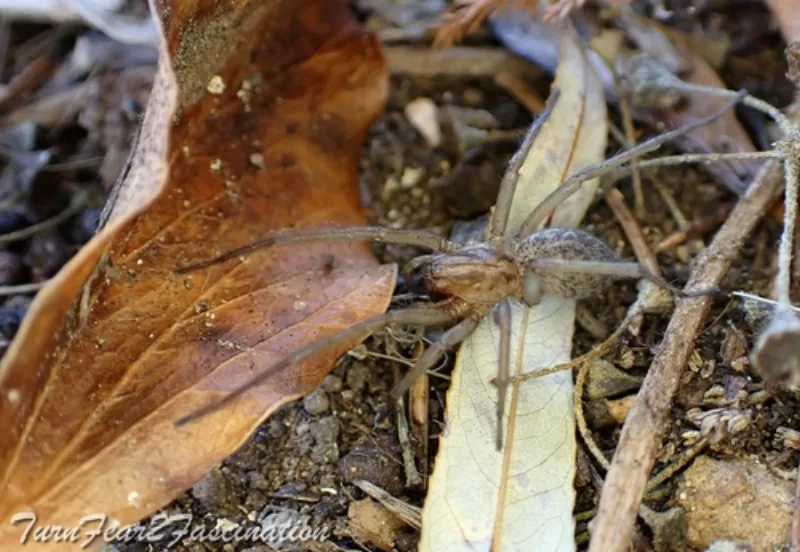
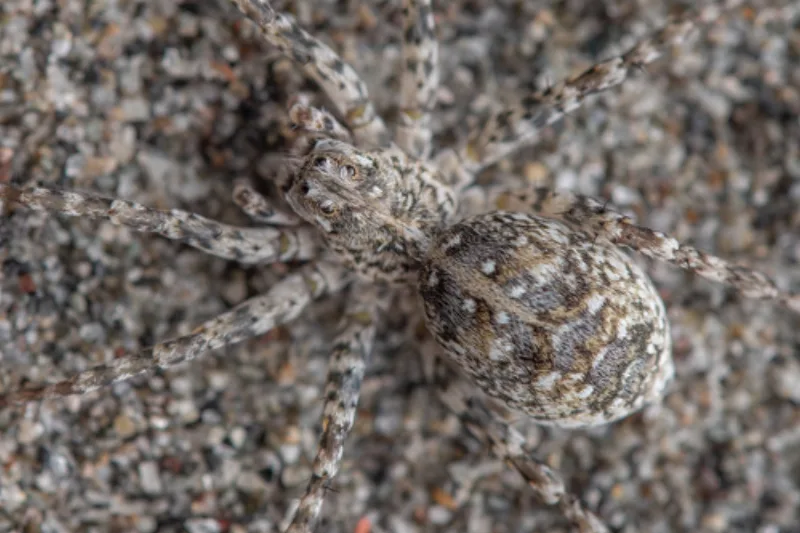
Quick ID Verdict: A fast brown spider streaks across the basement floor, and the first question is usually what was that? In the hobo spider vs wolf spider debate, the quick answer comes down to build and behavior. A slender, long-legged spider with faint chevrons that runs from a funnel web is likely a hobo. A stout, hairy, striped spider with spiny legs that roams without a web is almost certainly a wolf spider.
Hobo Spider
Wolf Spider
Side-by-Side Comparison Table
| Trait | Hobo Spider | Wolf Spider |
|---|---|---|
| Scientific Group | Eratigena agrestis | Lycosidae |
| Category | Spider | Spider |
| Typical Size | 10–18 mm | 10–35 mm |
| Danger Level | Nuisance | Nuisance |
| Bites or Stings? | Yes | Yes |
| Peak US Months | August, September | May, June, July, August |
| Key ID Trait | Fast-running brown funnel-web spider with faint chevron markings on the abdomen | Stout, hairy brown-and-gray striped spider with prominent spiny legs |
Hobo Spider vs. Wolf Spider: True Size Comparison
Side-by-Side Anatomy Blueprint
Compare body segments, antennae, leg count, and key markings directly before treating or removing either species.
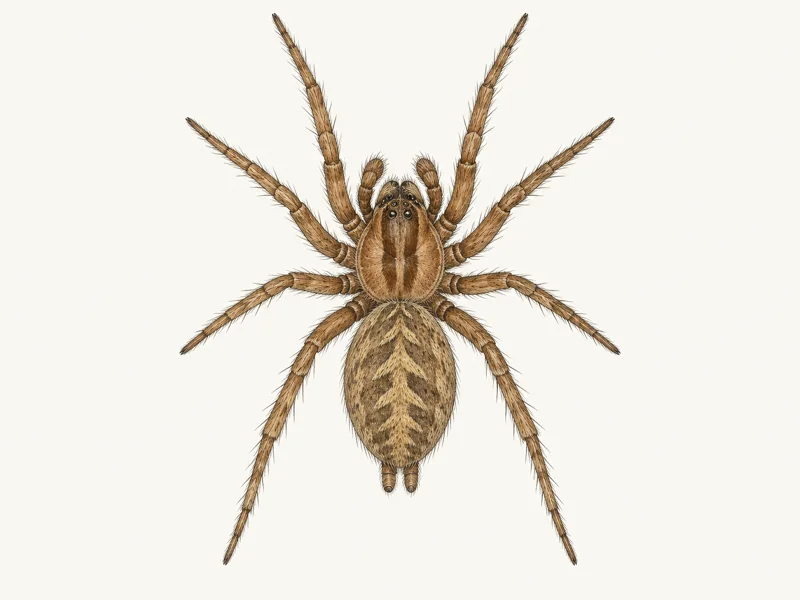
- Eight clustered eyes: Eight small eyes in two rows above prominent hairy front pedipalps.
- Twin dusky stripes: Warm amber cephalothorax with two faint lengthwise stripes—never a crisp violin.
- Unbanded hairy legs: Eight solid tan-brown legs covered in fine hairs and spines—no dark rings.
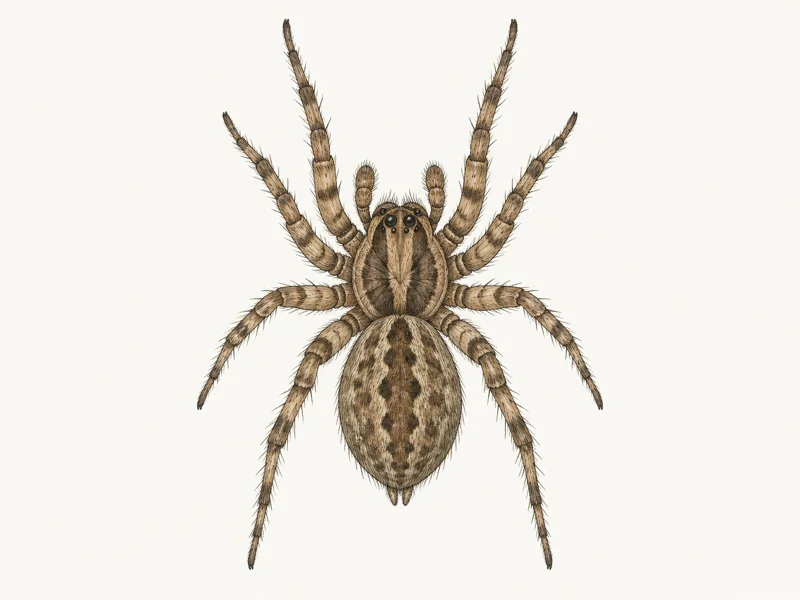
- Large front eyes: Eight eyes in 3 distinct rows (two very large middle eyes reflect flashlight beams at night).
- Striped cephalothorax: Robust front carapace marked with twin dark lengthwise stripes—no recluse violin mark.
- Eight stout hairy legs: Four pairs of strong, spiny, mottled hunting legs built for chasing prey without webs.
Key Physical Differences Between Hobo Spiders and Wolf Spiders
Both spiders are brown and quick, which is why people often mix them up. Size is the first clue. Hobo spiders (Eratigena agrestis) measure about 10–18 mm in body length, while wolf spiders (family Lycosidae) range from 10 mm up to a hefty 35 mm.
A spider at the large end of that range is almost never a hobo. Body shape also helps:
- Hobo spider: Leaner build, long legs, and a fairly smooth look.
- Wolf spider: Stout, hairy, and robust, like a small furry tank.
Eye Arrangement, Body Markings, and Leg Features
For reliable hobo spider vs wolf spider identification, check the eyes if the spider holds still. Wolf spiders have a distinctive three-row pattern: four small eyes along the bottom, two very large eyes in the middle, and two medium eyes on top. Hobo spiders have eight smaller eyes in two fairly even rows.
Markings and legs seal the ID:
- Hobo spider: Faint chevron (herringbone) markings on the abdomen and plain legs.
- Wolf spider: Brown-and-gray stripes, often running lengthwise on the body, with prominent spiny legs.
One handy field trick is to shine a flashlight at night. A wolf spider's large eyes reflect a green glint, known as eyeshine.
Webs, Hunting Behavior, and Where You'll Find Them
Behavior is the clearest difference between hobo spider and wolf spider. Hobo spiders are funnel-web builders. They spin flat, sheet-like webs that narrow into a tube, then wait inside and dash out when an insect lands.
Wolf spiders don't build capture webs at all. They hunt on foot, chasing prey across soil, leaf litter, and floors. Females carry their egg sacs attached to their spinnerets, and the spiderlings ride on her back after hatching. It's a striking sight.
Common hiding spots include:
- Hobo spiders: Window wells, woodpiles, basement corners, crawl spaces, and gaps along foundations.
- Wolf spiders: Garages, ground-level doorways, gardens, mulch, and under stones or boards.
Geographic Range and Seasonal Activity in the US
Location narrows the ID fast. In the US, hobo spiders live mainly in the Pacific Northwest and Intermountain West, including Washington, Oregon, Idaho, Montana, Utah, Wyoming, and parts of Colorado. Someone in Florida or Ohio wondering whether it's a hobo spider or wolf spider can lean strongly toward wolf spider.
Wolf spiders, by contrast, occur in all 50 states, from deserts to suburban lawns.
Seasonally, both become more noticeable indoors in late summer and fall. Male hobo spiders wander in search of mates from roughly July through October. Wolf spiders hunt from spring through fall and often slip inside as nights cool.
Are Hobo Spider or Wolf Spider Bites Dangerous?
Both species are considered nuisance spiders, not medically significant ones. Hobo spiders were once blamed for serious skin wounds, but later research has not supported that reputation. Wolf spider bites can hurt because of their size, yet they're generally comparable to a bee sting in effect.
Neither spider is aggressive. Bites usually happen when one is pressed against skin, such as inside a shoe or bedding.
Anyone with severe pain, spreading redness, trouble breathing, or other worrying symptoms after a bite should call US Poison Control at 1-800-222-1222 and see a doctor. Avoid home remedies for suspected venom reactions.
So which one is worse for homeowners? In practical terms, hobo spiders can be more of a nuisance because they settle in, build webs, and reproduce in basements. Wolf spiders tend to be accidental visitors that wander in and out.
Safe IPM Strategies to Control Both Spiders
Integrated Pest Management (IPM) works well for both spiders, and it starts without chemicals. The goal is to remove entry points, shelter, and the insects they eat.
- Exclusion: Seal foundation cracks, install door sweeps, and repair torn window screens.
- Sanitation: Clear clutter in basements and garages, and store items in sealed plastic bins instead of cardboard.
- Moisture control: Run a dehumidifier in damp basements and fix leaks, since moisture attracts the insects spiders hunt.
- Yard work: Move woodpiles, mulch, and debris away from the foundation.
- Monitoring: Place sticky traps along walls and behind furniture to track activity.
A vacuum is one of the simplest tools for removing hobo webs, egg sacs, and wandering spiders. If a pesticide is ever used, always follow the EPA product label exactly.
When to Call a Pest Professional
It's time to call a licensed pest professional when spiders keep appearing even though IPM steps, when sticky traps fill up quickly, or when funnel webs keep spreading through a basement. A professional can confirm the species, find hidden entry points, and recommend targeted, label-compliant treatment if it's needed.
Frequently Asked Questions
How do you tell the difference between a hobo spider and wolf spider?
The key differences lie in body shape, size, and behavior. Hobo spiders are lean with long legs and faint chevron markings, measuring 10–18 mm. Wolf spiders are stout, hairy, and larger (10–35 mm), with spiny legs and prominent stripes. Hobo spiders build funnel webs; wolf spiders hunt on foot without webs.
What are the eye differences between hobo spiders and wolf spiders?
Wolf spiders have a distinctive three-row eye pattern: four small eyes on bottom, two large eyes in the middle, and two medium eyes on top. Their large eyes reflect green eyeshine under flashlight. Hobo spiders have eight smaller eyes arranged in two fairly even rows without notable eyeshine.
Where do hobo spiders and wolf spiders typically live in the US?
Hobo spiders are found mainly in the Pacific Northwest and Intermountain West (Washington, Oregon, Idaho, Montana, Utah, Wyoming, and parts of Colorado). Wolf spiders occur in all 50 states and adapt to diverse habitats from deserts to suburban lawns, making them far more widespread.
Are hobo spider and wolf spider bites dangerous?
Both are considered nuisance spiders, not medically significant. Hobo spider bites were once blamed for serious wounds, but research doesn't support this. Wolf spider bites resemble bee stings. Neither spider is aggressive; bites occur mainly when pressed against skin. Call Poison Control (1-800-222-1222) if severe symptoms develop.
How can I control hobo spiders and wolf spiders at home?
Use Integrated Pest Management (IPM) without chemicals first: seal foundation cracks, repair screens, reduce clutter, control moisture with dehumidifiers, and move debris away from foundations. A vacuum removes webs and spiders easily. Sticky traps monitor activity. Call a pest professional if spiders persist despite these steps.
Why do hobo spiders and wolf spiders enter homes in fall?
Both spiders become more noticeable indoors in late summer and fall. Male hobo spiders wander seeking mates from July through October. Wolf spiders hunt actively through fall and slip inside as temperatures cool. This seasonal shift makes autumn the peak period for indoor spider encounters in homes.