Orb Weaver vs Wolf Spider: How to Tell Them Apart Fast
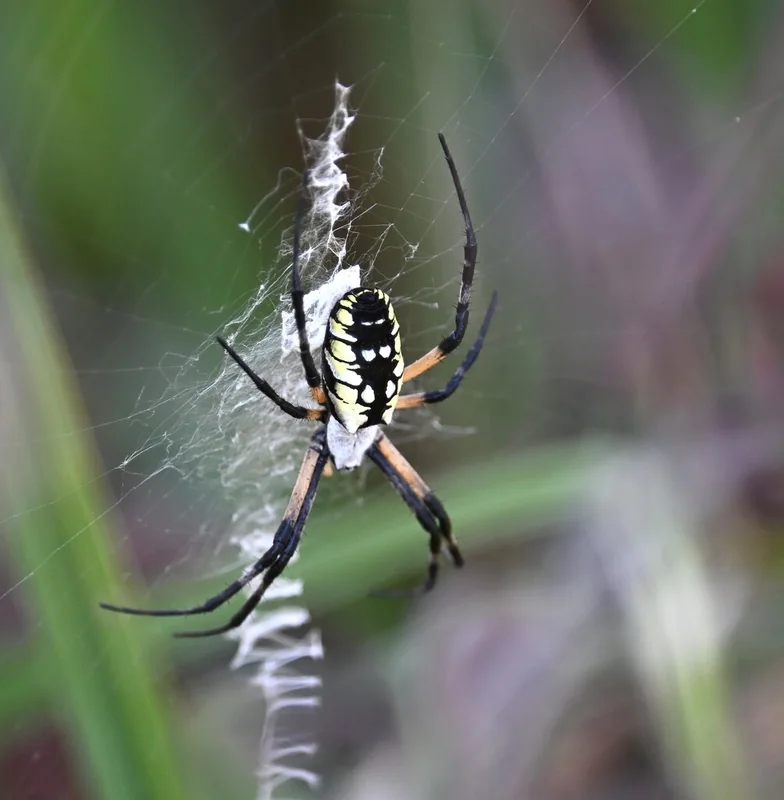
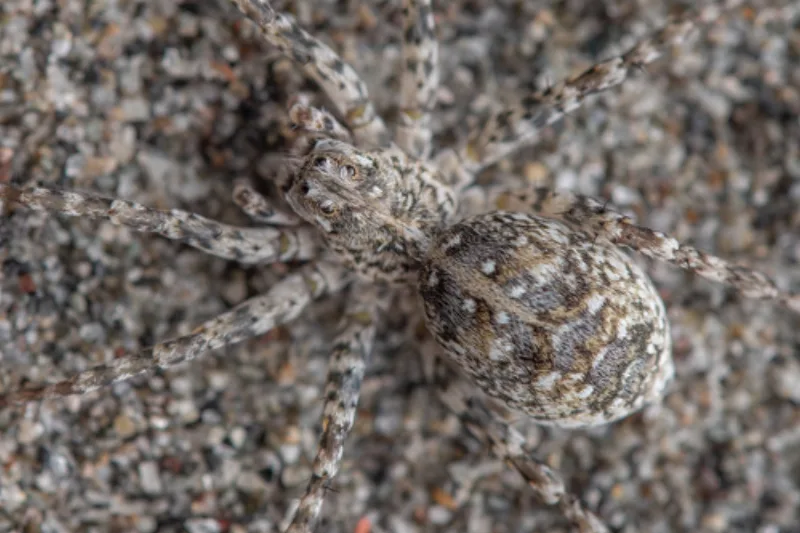
Quick ID Verdict: If the spider is sitting in a large, wheel-shaped web and has a round, often brightly colored abdomen, it is an orb weaver. If it is a stout, hairy, brown-and-gray striped spider running across the floor or ground with no web, it is a wolf spider. Neither is medically significant, and both eat insects that homeowners would rather not have around.
Orb Weaver
Wolf Spider
Side-by-Side Comparison Table
| Trait | Orb Weaver | Wolf Spider |
|---|---|---|
| Scientific Group | Araneidae | Lycosidae |
| Category | Spider | Spider |
| Typical Size | 8–28 mm | 10–35 mm |
| Danger Level | None | Nuisance |
| Bites or Stings? | No | Yes |
| Peak US Months | August, September, October | May, June, July, August |
| Key ID Trait | Large rounded or brightly patterned abdomen (often yellow, orange, brown, or black) | Stout, hairy brown-and-gray striped spider with prominent spiny legs |
Orb Weaver vs. Wolf Spider: True Size Comparison
Side-by-Side Anatomy Blueprint
Compare body segments, antennae, leg count, and key markings directly before treating or removing either species.
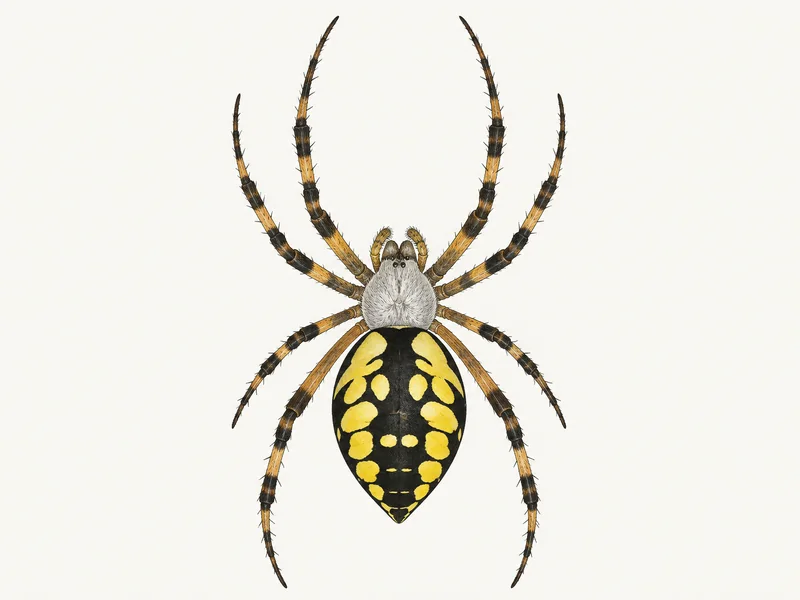
- Silvery fuzzy carapace: Front cephalothorax coated in short silvery-white reflective hairs.
- Banded long legs: Eight long slender dark-brown and ochre-banded legs built for wheel webs.
- Pointed oval abdomen: Large dramatic rear body often paired with a zigzag silk stabilimentum in gardens.
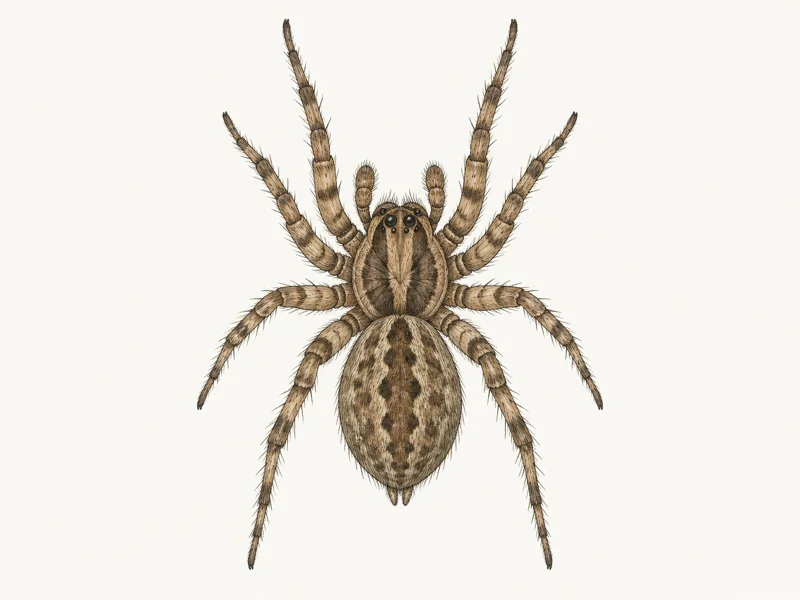
- Large front eyes: Eight eyes in 3 distinct rows (two very large middle eyes reflect flashlight beams at night).
- Striped cephalothorax: Robust front carapace marked with twin dark lengthwise stripes—no recluse violin mark.
- Eight stout hairy legs: Four pairs of strong, spiny, mottled hunting legs built for chasing prey without webs.
Key Visual & Physical Differences
The main difference between an orb weaver and a wolf spider is body shape. Orb weavers (family Araneidae) put most of their visual bulk in a large, rounded abdomen. Wolf spiders (family Lycosidae) look built for running, with a sturdy body and thick legs.
Orb Weaver Spiders (Araneidae)
- Size: 8–28 mm in body length
- Abdomen: Large, rounded, and often brightly patterned in yellow, orange, brown, or black
- Legs: Usually banded and held close to the body or gripping web lines
- Where seen: Hanging head-down in the center of a web, or hiding at its edge
Wolf Spiders (Lycosidae)
- Size: 10–35 mm in body length
- Body: Stout and hairy, with brown-and-gray stripes that work as camouflage
- Legs: Prominent and spiny, built for chasing prey on the ground
- Eyes: A row of two large forward-facing eyes that reflect light. A flashlight at night often reveals green "eyeshine."
For quick orb weaver vs wolf spider identification, look at color and posture. Bright patterns and a round, bulbous abdomen point to an orb weaver. Muted stripes, a hairy body, and a low, ready-to-run stance point to a wolf spider.
Behavior, Habitat & Danger Comparison
These two families hunt in completely different ways, which is often the easiest clue. Orb weavers trap prey in silk. Wolf spiders chase it down.
Hunting and Webs
Orb weavers spin the classic spiral web, often rebuilding it each evening between shrubs, porch lights, fences, and eaves. They mostly stay put and wait for flying insects to hit the web. Wolf spiders do not build capture webs at all. They roam at night, ambushing crickets, beetles, and other ground insects.
Habitat
- Orb weavers: Gardens, tall grass, porches, and doorways, especially near outdoor lights that attract moths
- Wolf spiders: Leaf litter, mulch, lawns, woodpiles, and under stones. They sometimes wander into garages, basements, and ground-floor rooms.
Female wolf spiders carry their egg sacs attached to their spinnerets, and the newly hatched spiderlings ride on her back for a short time. That behavior is unique to the family and makes identification easy if seen.
Danger Level
Orb weavers are rated as no danger to people. They are reluctant to bite and usually drop from the web or freeze when disturbed. Wolf spiders are considered a nuisance. They may bite if handled or trapped against skin, and the bite can cause local pain and redness similar to a bee sting.
Anyone who has a strong reaction, symptoms that spread, or concern about a bite should call US Poison Control at 1-800-222-1222 or contact a doctor. Avoid home venom remedies, and keep the spider, or a clear photo, for identification if it can be done safely.
Which One Is Worse for Homeowners?
Wolf spiders are usually the bigger annoyance indoors because they wander inside and startle people. Orb weavers rarely enter homes, but their webs across walkways and doors can be a hassle. Both are beneficial predators, so outdoor populations are best left alone when possible.
Non-Chemical IPM Steps First
- Exclusion: Seal gaps around doors, windows, utility lines, and foundation cracks. Install tight door sweeps to stop wandering wolf spiders.
- Sanitation: Clear clutter in garages and basements. Move woodpiles, stones, and debris away from the foundation.
- Moisture control: Use dehumidifiers in damp basements and fix leaks. Damp areas draw the insects that spiders feed on.
- Lighting: Switch to yellow or LED "bug" bulbs to attract fewer insects, which means fewer orb weaver webs near entryways.
- Physical removal: Knock down webs with a broom. Capture indoor spiders with a cup and card and release them outside.
When to Consider Products
Chemical control is seldom needed for either spider. If a persistent problem continues after exclusion and cleanup, choose a product labeled for spiders and follow the EPA product label exactly, including application sites and safety precautions. Sticky traps along baseboards can also monitor wolf spider activity without sprays.
Frequently Asked Questions
Is a wolf spider bite dangerous?
Wolf spiders are rated as a nuisance, not a medical threat. Bites usually cause short-lived local pain. For any severe or worsening reaction, call Poison Control at 1-800-222-1222 or see a doctor.
Do orb weavers come inside houses?
Rarely. Orb weavers prefer outdoor spots where flying insects pass, such as gardens, porches, and lights. Indoor sightings are usually accidental.
How can I tell if a spider is an orb weaver or a wolf spider without a web nearby?
Check the body. A round, brightly patterned abdomen suggests an orb weaver. A hairy, striped brown-and-gray body with spiny legs suggests a wolf spider.
Which spider is larger?
Wolf spiders range from 10 to 35 mm, and orb weavers range from 8 to 28 mm. Large wolf spiders tend to look bulkier because of their thick legs and sturdy build.