Jumping Spider vs Wolf Spider: How to Tell Them Apart in Your Home
Quick ID Verdict: A fuzzy spider on the windowsill and a hairy one sprinting across the garage floor might look like the same problem, but they're very different animals. Here's the 3-second verdict: if it's small, compact, and turns to stare at you with two huge front eyes, it's a jumping spider: if it's larger, striped brown-and-gray, and runs fast along the floor, it's a wolf spider. This jumping spider vs wolf spider guide covers identification, behavior, risk, and safe control so homeowners can respond calmly and correctly.
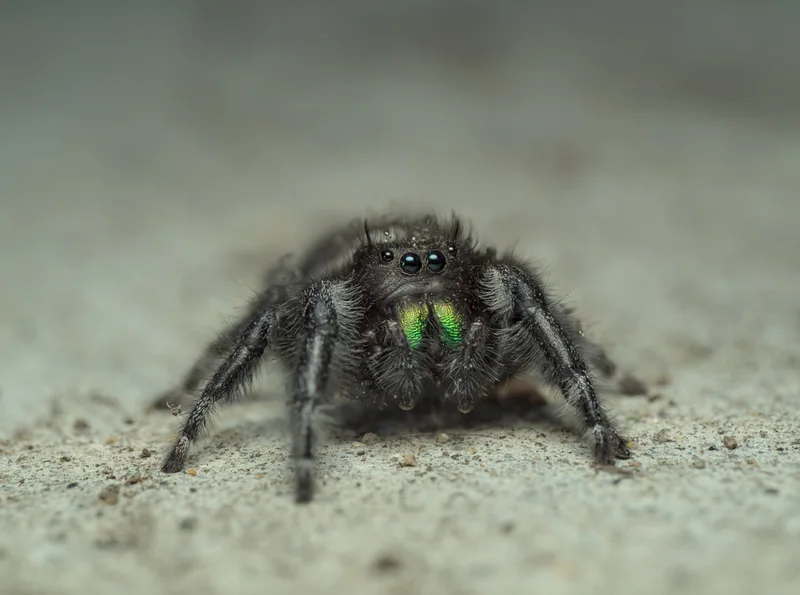
Jumping Spider
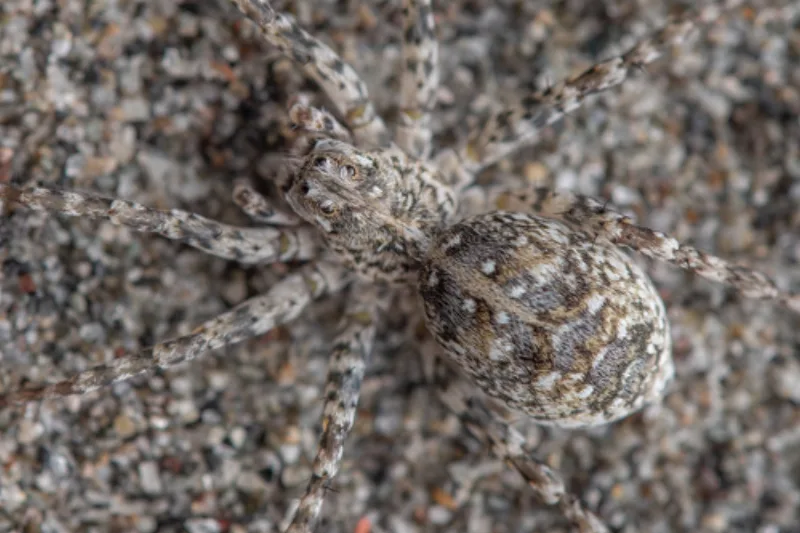
Wolf Spider
Side-by-Side Comparison Table
| Trait | Jumping Spider | Wolf Spider |
|---|---|---|
| Scientific Group | Salticidae | Lycosidae |
| Category | Spider | Spider |
| Typical Size | 4–18 mm | 10–35 mm |
| Danger Level | None | Nuisance |
| Bites or Stings? | No | Yes |
| Peak US Months | May, June, July, September | May, June, July, August |
| Key ID Trait | Compact, fuzzy spider with short sturdy legs and iridescent green or blue fangs (chelicerae) in many species | Stout, hairy brown-and-gray striped spider with prominent spiny legs |
Jumping Spider vs. Wolf Spider: True Size Comparison
Side-by-Side Anatomy Blueprint
Compare body segments, antennae, leg count, and key markings directly before treating or removing either species.
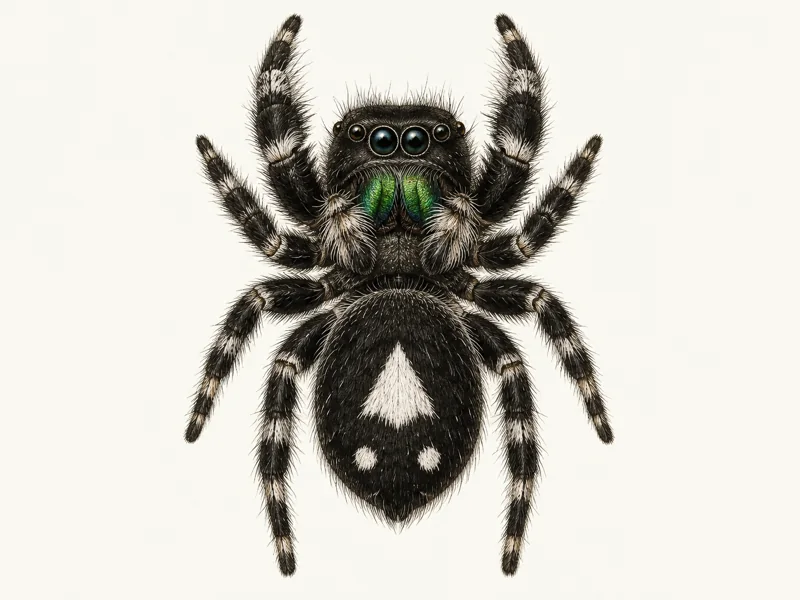
- Green chelicerae: Iridescent emerald-green jaws beneath huge forward-facing binocular eyes.
- Square furry carapace: Broad, stocky black cephalothorax built to support sharp hunting vision.
- Stocky banded legs: Eight sturdy fuzzy black-and-white legs (thick front pair grasps prey).
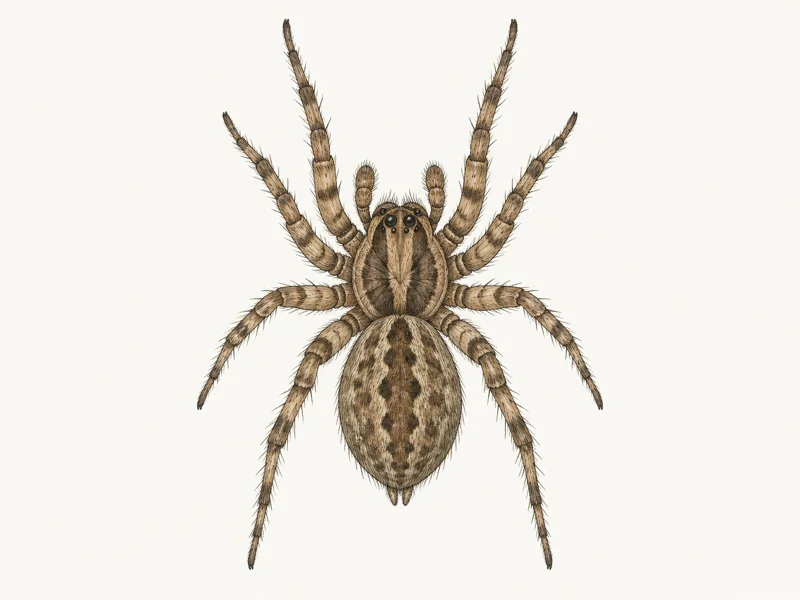
- Large front eyes: Eight eyes in 3 distinct rows (two very large middle eyes reflect flashlight beams at night).
- Striped cephalothorax: Robust front carapace marked with twin dark lengthwise stripes—no recluse violin mark.
- Eight stout hairy legs: Four pairs of strong, spiny, mottled hunting legs built for chasing prey without webs.
Key Differences Between Jumping Spiders and Wolf Spiders at a Glance
Jumping spiders belong to the family Salticidae, while wolf spiders belong to Lycosidae. Both are active hunters that don't rely on webs to catch prey, which is why they're often confused. But the difference between jumping spider and wolf spider becomes obvious once someone knows where to look.
TraitJumping Spider (Salticidae)Wolf Spider (Lycosidae)Body length4-18 mm10-35 mmBuildCompact, fuzzy, short sturdy legsStout, hairy, prominent spiny legsColorOften black, gray, or patterned: many species have iridescent green or blue fangsBrown-and-gray with stripesDanger levelNoneNuisance
Eye Arrangement: The Fastest Identification Clue
The eyes settle most jumping spider vs wolf spider identification questions. A jumping spider has two very large, forward-facing eyes in the center of its "face," giving it an almost cartoonish look. It will often swivel its body to track movement, which feels a little unnerving the first time.
A wolf spider's eyes sit in three rows: four small eyes along the bottom, two large eyes in the middle, and two more on top of the head. Shine a flashlight across the lawn at night and wolf spiders' eyes reflect back as tiny green sparkles. Jumping spiders don't produce that eyeshine effect.
Size, Body Shape, Color, and Movement
- Size: Jumping spiders stay small, topping out around 18 mm. Wolf spiders range from 10 mm up to 35 mm, so the bigger specimens are almost always wolf spiders.
- Shape: Jumping spiders look boxy and fuzzy with short, thick legs. Wolf spiders look long-legged and robust, with visible spines on the legs.
- Color: Look for iridescent green or blue fangs (chelicerae) on many jumping spiders. Wolf spiders wear camouflage stripes of brown and gray.
- Movement: Jumping spiders move in short, jerky hops and can leap many times their body length. Wolf spiders run fast and low, then freeze.
One more giveaway: a female wolf spider carries her round egg sac attached to her spinnerets, and later carries spiderlings on her back.
Hunting Behavior, Habitat, and Seasonal Activity in the US
Both families are found across the United States, from backyard gardens to desert scrub. Their daily routines, though, are close to opposites.
Jumping spiders hunt by sight during the day. They stalk flies, gnats, and small insects, then pounce, using a silk safety line in case they miss. Indoors, they're typically seen on sunny windowsills, walls, and screens, and outdoors on fences, siding, and plants.
Wolf spiders are mostly nocturnal ground hunters. Many live in burrows or under leaf litter, mulch, firewood, and stones. They chase down crickets, beetles, and other ground insects.
Seasonally, both are most active from spring through fall. Homeowners tend to notice wolf spiders indoors in late summer and fall, when cooling nights push them toward foundations, garages, and basements. Jumping spiders may appear indoors any time of year, especially near bright windows.
Are Jumping Spiders or Wolf Spiders Dangerous to People and Pets?
Neither spider is considered medically significant in the US. Jumping spiders are rated harmless: they're shy, curious, and very rarely bite. Wolf spiders are a nuisance rather than a true threat, but they may bite if they're pressed against skin or handled.
So, is a jumping spider or wolf spider worse for homeowners? The wolf spider, mainly because of its size, speed, and tendency to wander indoors in fall. A large wolf spider in a basement is startling, and the occasional defensive bite is possible.
Pets usually notice them first. Dogs and cats may chase or swat at wolf spiders, so watch for signs of discomfort afterward.
If a person or pet has a bite with worsening symptoms, an allergic reaction, or any uncertainty about the spider involved, contact US Poison Control at 1-800-222-1222, a doctor, or a veterinarian. Don't rely on home remedies.
Safe Integrated Pest Management for Both Spiders
Both spiders eat insects, so seeing them often means there's prey nearby. Integrated Pest Management (IPM) focuses on removing what attracts them before reaching for chemicals.
- Exclusion: Seal cracks around foundations, doors, and utility lines. Install door sweeps and repair torn window screens.
- Sanitation: Reduce clutter in basements and garages. Store boxes off the floor in sealed plastic bins.
- Moisture control: Fix leaks and run a dehumidifier in damp basements, since moisture draws the insects spiders feed on.
- Yard habitat: Keep mulch, firewood, and leaf piles away from the foundation.
- Lighting: Switch to yellow or warm LED bulbs outdoors to attract fewer insects.
- Monitoring: Sticky traps along walls show where wolf spiders travel.
A single spider indoors can be caught under a cup and released outside. If a pesticide is ever used, always read and follow the EPA product label exactly.
When to Call a Pest Control Professional
Call a licensed pro if wolf spiders keep showing up even though exclusion and cleanup, or if there's a heavy insect infestation feeding them. A professional can also confirm identification when it's unclear whether the visitor is a jumping spider or wolf spider. Look for a company that uses IPM practices and explains every product it applies.
Frequently Asked Questions
What's the easiest way to tell a jumping spider from a wolf spider?
Look at the eyes. Jumping spiders have two large forward-facing eyes that make them look cartoonish, while wolf spiders have eyes in three rows. Wolf spiders also reflect green sparkles when you shine a flashlight on them at night—jumping spiders don't.
Are jumping spiders or wolf spiders dangerous to humans and pets?
Neither is medically significant. Jumping spiders are harmless and rarely bite; they're shy and curious. Wolf spiders may bite only if pressed against skin or handled. Contact Poison Control (1-800-222-1222) if any bite shows worsening symptoms or allergic reactions.
How large do wolf spiders and jumping spiders grow?
Jumping spiders are small, reaching only 4–18 mm. Wolf spiders are larger, ranging from 10–35 mm, so bigger specimens are almost always wolf spiders. This size difference is a helpful identification clue.
Why do wolf spiders enter homes in the fall?
Wolf spiders are mostly nocturnal ground hunters that live outdoors in burrows or under debris. In late summer and fall, cooling nights push them indoors toward foundations, garages, and basements searching for shelter and insects.
What's the best way to control jumping spiders and wolf spiders without chemicals?
Use Integrated Pest Management: seal foundation cracks, install door sweeps, reduce clutter, fix moisture leaks, keep firewood away from your home, and switch to yellow outdoor bulbs. Remove prey insects, and spiders will naturally leave. Single spiders can be caught under a cup and released.
What do jumping spiders and wolf spiders hunt for food?
Both are active hunters that don't rely on webs. Jumping spiders hunt flies, gnats, and small insects by sight during the day on sunny windowsills and plants. Wolf spiders chase crickets, beetles, and ground insects at night, often from burrows.