Palmetto Bugs in North Carolina: Identification, Season, and Prevention
Quick Answer: "Palmetto bug" is a common nickname for large roaches, and the Florida cockroach (Eurycotis floridana) is the species tied to the name in this brief. In North Carolina it is rare, with only one verified GBIF sighting, recorded in Wake County. Most big roaches found in Carolina homes are American cockroaches or other look-alikes, and none pose a medical danger.
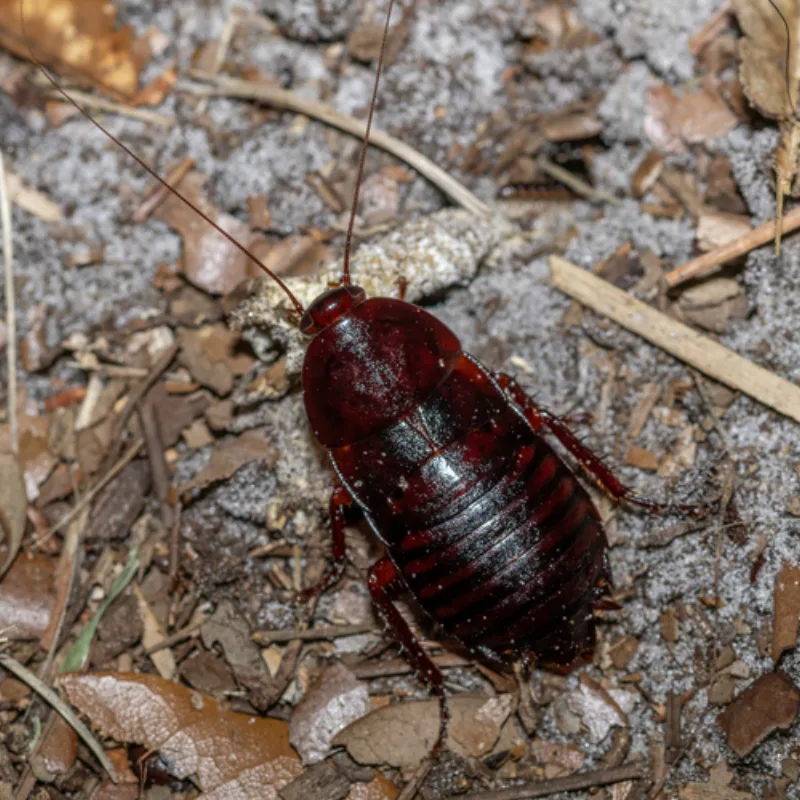
When Palmetto Bugs Are Most Active in North Carolina
Now (November): Lower Outdoor ActivityVerified North Carolina Counties, Species & US Range
Counties with Verified Observations
- Wake
Species Recorded in North Carolina
| Species | Scientific Name | GBIF Records |
|---|---|---|
| Florida cockroach | Eurycotis floridana | 1 |
How North Carolina Compares to Neighboring States
Note: Wildlife does not follow state or county lines. GBIF totals reflect verified citizen and museum records, so low counts in a neighboring county do not guarantee absence.
How to Identify Palmetto Bugs
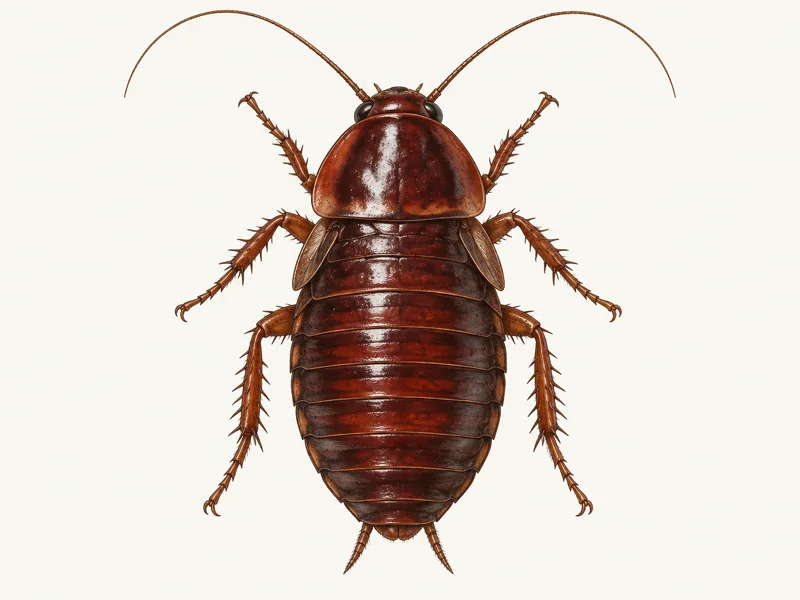
Annotated Anatomy Key (Palmetto Bug)
- Sweeping whip antennae: Long sensitive antennae on a broad, heavy-bodied 30–40 mm outdoor roach.
- Domed mahogany shield: Wide smooth reddish-mahogany thorax—solid glossy dark chestnut without bands.
- Heavy spiny legs: Six thick reddish-brown spiny legs built for mulch, palm fronds, and crawlspaces.
- Wingless broad abdomen: Completely flightless horizontally banded oval body with tiny stubby side pads.
Palmetto Bugs Field Checklist
- Large, broad, shiny dark reddish-brown to black wood cockroach (Florida woods cockroach)
- Short stubby wing pads—cannot fly (unlike flying American or smokybrown roaches often nicknamed palmetto bugs)
- Moves relatively slowly and emits a strong foul defensive liquid when alarmed
- Primarily an outdoor southeastern US native
Side-by-Side Look-Alike Comparisons
Palmetto Bugs Size at True Relative Scale
Quick Answer: "Palmetto bug" is a common nickname for large roaches, and the Florida cockroach (Eurycotis floridana) is the species tied to the name in this brief. In North Carolina it is rare, with only one verified GBIF sighting, recorded in Wake County. Most big roaches found in Carolina homes are American cockroaches or other look-alikes, and none pose a medical danger.
Where Palmetto Bugs Live in North Carolina
Florida cockroaches thrive in warm, humid climates. North Carolina's coastal plain and piedmont are humid subtropical, and the Blue Ridge mountains run cooler, across USDA zones 6a to 8b. That mix makes the state marginal habitat for this species.
So, are there palmetto bugs in North Carolina? Technically yes, but rarely. GBIF holds a single verified record of the Florida cockroach, in Wake County. Residents who see a large roach are far more likely looking at a different species.
Where this roach does occur, it favors:
- Damp mulch, leaf litter, and wood piles
- Crawl spaces, basements, and garages
- Around water heaters, drains, and leaking pipes
- Tree hollows and palm-like landscaping
When Palmetto Bugs Are Most Active in North Carolina
The single GBIF record falls in August, the peak month in the data. That fits the general pattern: large roaches are most active in warm, humid weather, usually from late spring through early fall. One record is too thin to define a true North Carolina palmetto bug season, so treat it as a hint rather than a rule.
Heavy rain or summer heat can push roaches indoors looking for moisture. Cooler weather sends them toward warm, protected spaces such as basements and wall voids.
Look-Alikes Frequently Mistaken for Palmetto Bugs
Accurate North Carolina palmetto bug identification starts with size and color. The Florida cockroach is large, roughly 1.5 to 2 inches long, with a dark reddish-brown to mahogany body. Adults have short, stubby wing pads and cannot fly. When disturbed, it can release a foul-smelling defensive fluid.
Look-alikes present in North Carolina include:
- American cockroaches: The most common "palmetto bug" in the state. They are reddish-brown with a pale yellowish band behind the head, and adults have full wings and can glide or fly short distances.
- Other cockroaches: Smaller species, such as those found in kitchens, are often mistaken for young large roaches.
- Water bugs: This is a loose name for large roaches that live in damp areas, and it is often used interchangeably with palmetto bug.
Winged adults are almost certainly not Florida cockroaches. If you need a firm identification, take a clear photo or save a specimen for your county Cooperative Extension office.
How to Keep Palmetto Bugs Out of Your North Carolina Home
How to prevent palmetto bugs in North Carolina comes down to Integrated Pest Management (IPM): block entry, remove food and water, and reduce outdoor shelter. Start with these non-chemical steps.
Exclusion
- Seal gaps around pipes, utility lines, and foundation cracks.
- Install door sweeps and repair torn window screens.
- Cover crawl space vents with tight mesh.
Moisture and Sanitation
- Fix leaky faucets, pipes, and AC condensation lines.
- Run a dehumidifier in basements and crawl spaces.
- Store food in sealed containers and take out trash regularly.
- Clean up pet food overnight.
Yard Management
- Keep firewood and mulch several inches away from the foundation.
- Clear leaf litter and debris near the house.
- Direct gutters and downspouts away from walls.
If you use baits or insecticides, choose products labeled for roaches and follow the EPA-approved label directions exactly, including placement and safety instructions around children and pets.
When to Call a Licensed North Carolina Pest Professional
- You see roaches repeatedly during the day, which can signal a large infestation.
- You find egg cases, droppings, or live roaches in several rooms.
- Sanitation and exclusion have not reduced sightings after a few weeks.
- You cannot find or reach the moisture source or entry points.
Roaches are a nuisance pest, but they can contaminate food and aggravate allergies or asthma. For health concerns, talk to a doctor. For a suspected poisoning or accidental ingestion of a pest product, contact US Poison Control at 1-800-222-1222.
IPM Prevention Checklist for North Carolina Homes
- Keep pine straw and heavy mulch cleared 12–18 inches from foundations
- Install tight door sweeps and screen soffit/crawlspace vents
 EXCLUSION BLUEPRINT
Inspect eaves, screens, door sweeps, foundation cracks, and utility penetrations around North Carolina homes before peak season.
Palmetto Bugs in North Carolina: Frequently Asked Questions
Are there palmetto bugs in North Carolina?
Rarely. GBIF lists one verified Florida cockroach record, in Wake County. Most large roaches people call palmetto bugs are American cockroaches.
Do palmetto bugs fly?
The Florida cockroach cannot fly because its wing pads are short. American cockroaches have full wings and can glide or fly short distances, which is often why people think palmetto bugs fly.
Are palmetto bugs dangerous?
They are a nuisance pest. They do not sting or bite in any significant way, but they can contaminate food and surfaces and may worsen allergies in some people.
What month are palmetto bugs most active in North Carolina?
The only GBIF record is from August. Large roaches in general are most active in warm, humid months, from late spring through early fall.
Sources & Verification
Data refreshed · Editorial & GBIF Methodology