American Cockroach vs Palmetto Bug: Are They Really Different? A Homeowner's Identification Guide
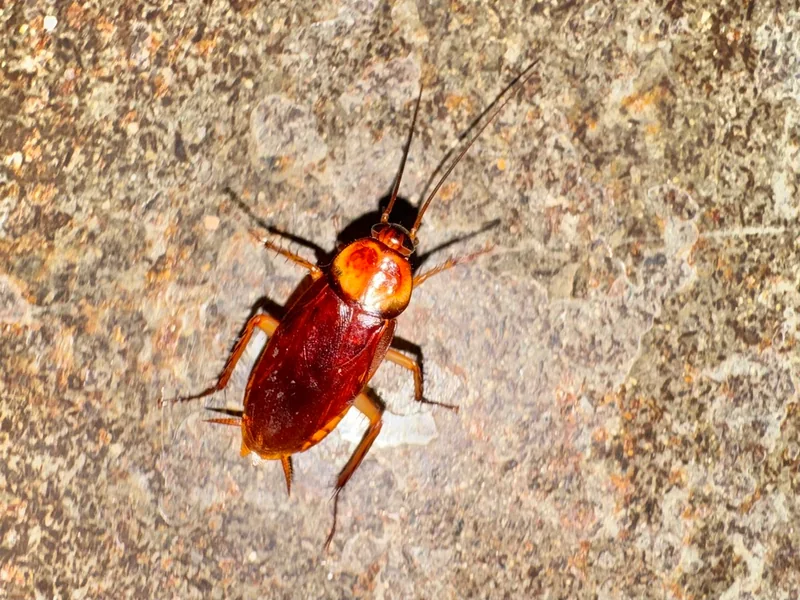
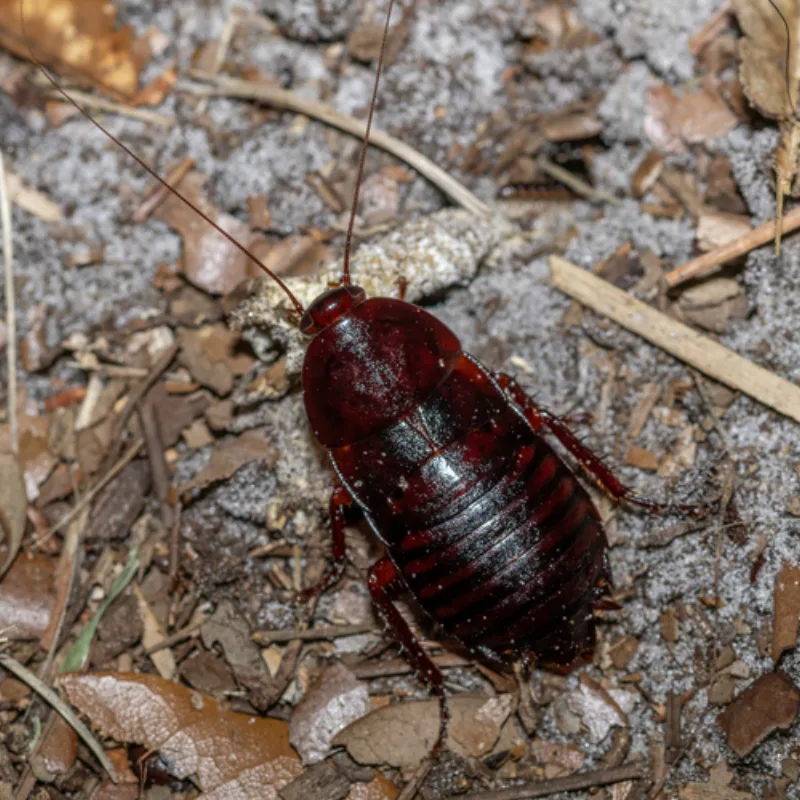
Quick ID Verdict: If the roach is reddish-brown with long wings and a pale yellow figure-8 halo on the shield behind its head, it's an American cockroach. If it's broad, shiny, nearly black, and has only stubby wing pads, it's a true palmetto bug, the Florida woods cockroach.
American Cockroach
Palmetto Bug
Side-by-Side Comparison Table
| Trait | American Cockroach | Palmetto Bug |
|---|---|---|
| Scientific Group | Periplaneta americana | Eurycotis floridana |
| Category | Insect | Insect |
| Typical Size | 35–53 mm | 30–40 mm |
| Danger Level | Nuisance | Nuisance |
| Bites or Stings? | No | No |
| Peak US Months | April, August, September, October | May, September, October, November |
| Key ID Trait | Large reddish-brown cockroach (up to 2 inches) with a pale yellow figure-8 halo around the pronotum | Large, broad, shiny dark reddish-brown to black wood cockroach (Florida woods cockroach) |
American Cockroach vs. Palmetto Bug: True Size Comparison
Side-by-Side Anatomy Blueprint
Compare body segments, antennae, leg count, and key markings directly before treating or removing either species.
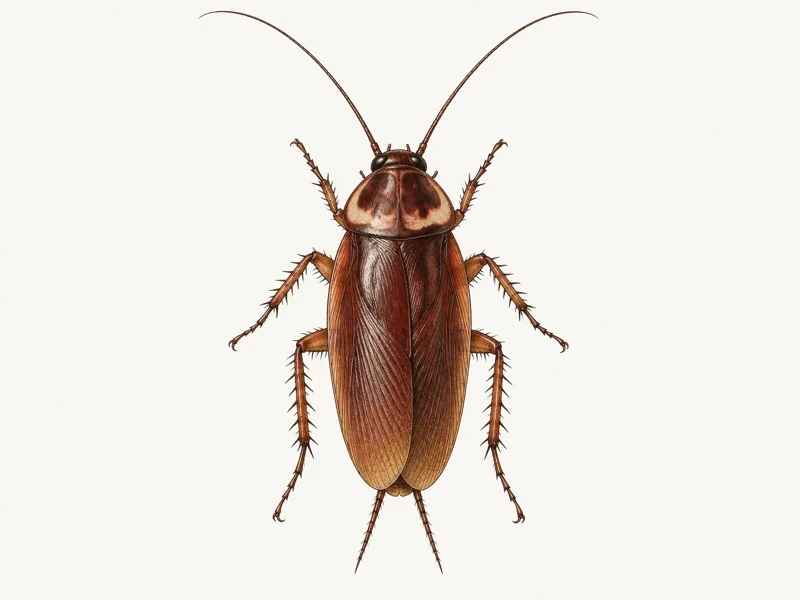
- Long whip antennae: Thread-like filiform antennae sweeping longer than the 35–50 mm reddish-brown body.
- Yellow figure-8 shield: Broad chestnut pronotum behind the head ringed by a distinctive pale yellowish halo.
- Spiny running legs: Six fast-running bristled legs built for rapid sprinting along sewer lines and basements.
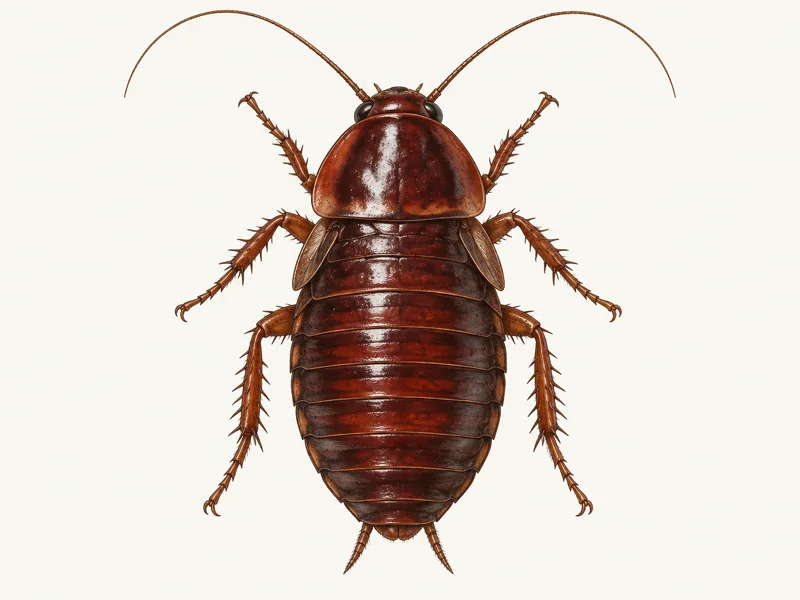
- Sweeping whip antennae: Long sensitive antennae on a broad, heavy-bodied 30–40 mm outdoor roach.
- Domed mahogany shield: Wide smooth reddish-mahogany thorax—solid glossy dark chestnut without bands.
- Heavy spiny legs: Six thick reddish-brown spiny legs built for mulch, palm fronds, and crawlspaces.
Quick ID verdict: If the roach is reddish-brown with long wings and a pale yellow figure-8 halo on the shield behind its head, it's an American cockroach. If it's broad, shiny, nearly black, and has only stubby wing pads, it's a true palmetto bug, the Florida woods cockroach.
That three-second check settles most American cockroach vs palmetto bug debates. Here's the field-guide detail behind it, plus where each species lives and how to keep both outside.
Why the Name "Palmetto Bug" Causes So Much Confusion
"Palmetto bug" is a regional nickname, not a scientific name. Across the Southeast, people use it for almost any large roach, partly because it sounds less embarrassing than admitting a cockroach ran across the kitchen.
The result is that many homeowners searching for the difference between American cockroach and palmetto bug are actually looking at the same insect under two names. Entomologists most often reserve "palmetto bug" for Eurycotis floridana, the Florida woods cockroach. The American cockroach is Periplaneta americana, a separate species with different habits.
American Cockroach vs Palmetto Bug Identification: Key Physical Traits
Both are big, both are brownish, and both move fast. But a calm, close look at the body shape and the pronotum (the plate behind the head) reveals which one it is.
Size, Color, and Markings to Look For
TraitAmerican CockroachPalmetto Bug (Florida Woods Cockroach)Scientific namePeriplaneta americanaEurycotis floridanaLength35–53 mm (up to about 2 in)30–40 mmColorReddish-brownShiny dark reddish-brown to blackBody shapeLong and fairly slenderBroad and stockyKey markingPale yellow figure-8 halo on pronotumNo halo: uniform glossy dark colorWingsFull wings covering the abdomenShort wing pads: does not flyThe wings are the easiest tell in hand. An American cockroach's wings reach past the end of its body, while the Florida woods cockroach looks oddly "wingless."
Look-Alikes Often Called Palmetto Bugs
Several other species get lumped in with the nickname:
- Smokybrown cockroach: uniformly dark mahogany, no yellow halo, strong flier.
- Australian cockroach: similar to the American but with bright yellow streaks along the wing edges.
- Oriental cockroach: dark and short-winged, but smaller and found farther north.
If a specimen doesn't match either column above, it may be one of these.
Where They Live: State Presence and Seasonal Activity
The American cockroach is found throughout the US, though it's most abundant in warm Southern states. Up north, it survives in sewers, steam tunnels, basements, and commercial buildings.
The Florida woods cockroach has a much narrower range. It's concentrated in Florida and along the Gulf Coast into southern Georgia, Alabama, Mississippi, and Louisiana.
Both species peak in late spring through early fall. Heavy rain, heat waves, and sudden cold snaps tend to push them indoors, so sightings often spike after storms.
Behavior Differences Indoors vs Outdoors
Outdoors, the palmetto bug lives in leaf litter, mulch, palm fronds, woodpiles, and tree holes. It's slow-moving and, when disturbed, releases a foul-smelling defensive spray. Indoors, it's usually a lost wanderer that rarely establishes a breeding population.
The American cockroach is more adaptable. It thrives in drains, crawl spaces, and utility areas, and it can glide or fly short distances in warm weather. Indoors, it can reproduce near moisture and food.
Danger Comparison
Both species are rated as nuisance pests. They don't sting, and bites are extremely rare. American cockroaches pass through sewers, so they can track bacteria onto surfaces, and roach droppings can aggravate allergies or asthma in some people. Anyone with a concerning reaction should contact a doctor.
Which One Is Worse for Homeowners?
The American cockroach is generally the bigger problem because it can live and breed indoors. Deciding whether a pest is an American cockroach or palmetto bug matters: a single Florida woods cockroach usually signals an outdoor issue, while repeated American cockroach sightings point to an indoor harborage.
Safe IPM Strategies to Control American Cockroaches and Palmetto Bugs
Integrated Pest Management (IPM) starts with removing what draws roaches in. Non-chemical steps solve most cases:
- Exclusion: Seal gaps around pipes, doors, and vents. Install door sweeps and keep screens intact.
- Moisture control: Fix leaky faucets, run dehumidifiers in damp crawl spaces, and keep gutters flowing away from the foundation.
- Sanitation: Store food in sealed containers, empty pet bowls at night, and take trash out regularly.
- Yard management: Pull mulch and leaf litter 12–18 inches back from the foundation, and stack firewood away from the house. This step matters most for palmetto bugs.
- Drain care: Keep floor drain traps filled with water and use drain covers to block American cockroaches coming up from sewers.
Sticky traps placed along walls help monitor activity and confirm which species is present.
If an infestation persists, gel baits and targeted perimeter treatments can help. Always read and follow the EPA-registered product label exactly, as the label is the law. For heavy or recurring American cockroach problems, a licensed pest professional can find hidden harborage that's easy to miss.
Frequently Asked Questions
What's the main difference between an American cockroach and a palmetto bug?
The key difference is appearance: American cockroaches are reddish-brown with full wings and a pale yellow figure-8 halo on their pronotum, while palmetto bugs (Florida woods cockroaches) are shiny dark brown to black with stubby wing pads and no halo marking.
Why is 'palmetto bug' considered a confusing regional nickname?
"Palmetto bug" isn't a scientific name—it's a regional nickname used across the Southeast for almost any large roach. This confusion causes many homeowners to mistake American cockroaches for palmetto bugs, even though they're separate species with different habits and ranges.
Can American cockroaches fly, and can palmetto bugs?
American cockroaches have full wings and can glide or fly short distances in warm weather. Palmetto bugs have only stubby wing pads and cannot fly, making the wings the easiest identification feature.
Where do American cockroaches and palmetto bugs live in the United States?
American cockroaches are found throughout the US, most abundant in warm Southern states. Palmetto bugs have a narrower range, concentrated in Florida and along the Gulf Coast into southern Georgia, Alabama, Mississippi, and Louisiana.
Which species is worse for homeowners—American cockroach or palmetto bug?
American cockroaches are generally worse because they can live and breed indoors in drains and crawl spaces. Palmetto bugs are usually lost outdoor wanderers that rarely establish indoor populations, making a single sighting typically an outdoor issue.
What are the most effective ways to prevent American cockroaches and palmetto bugs from entering homes?
Use exclusion by sealing gaps around pipes and doors, control moisture by fixing leaks, maintain sanitation with sealed food storage, manage yard clutter by removing mulch and leaf litter 12-18 inches from the foundation, and keep drain traps filled to block sewage entry.