Palmetto Bugs in Arizona: What Residents Are Really Seeing
Quick Answer: True palmetto bugs (Eurycotis floridana, the Florida woods cockroach) are not established in Arizona, and no breeding populations occur in the state. The large roaches Arizona residents call "palmetto bugs" are almost always American cockroaches or other local cockroaches, often nicknamed "water bugs." These insects are a nuisance, not a medical danger, and.
When Palmetto Bugs Are Most Active in Arizona
November: Rare / AbsentPalmetto Bugs Range in Arizona vs. Neighboring States
How Arizona Compares to Neighboring States
Note: Wildlife does not follow state or county lines. GBIF totals reflect verified citizen and museum records, so low counts in a neighboring county do not guarantee absence.
How to Identify Palmetto Bugs
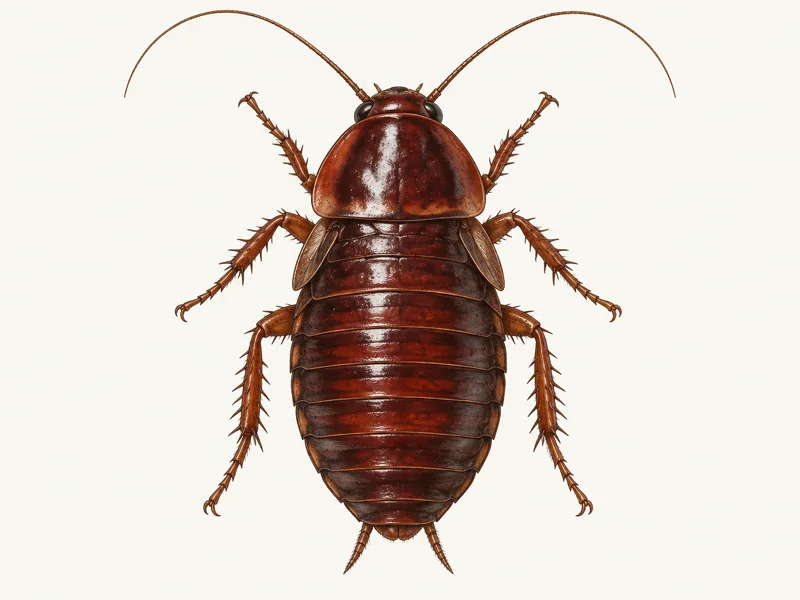
Annotated Anatomy Key (Palmetto Bug)
- Sweeping whip antennae: Long sensitive antennae on a broad, heavy-bodied 30–40 mm outdoor roach.
- Domed mahogany shield: Wide smooth reddish-mahogany thorax—solid glossy dark chestnut without bands.
- Heavy spiny legs: Six thick reddish-brown spiny legs built for mulch, palm fronds, and crawlspaces.
- Wingless broad abdomen: Completely flightless horizontally banded oval body with tiny stubby side pads.
Palmetto Bugs Field Checklist
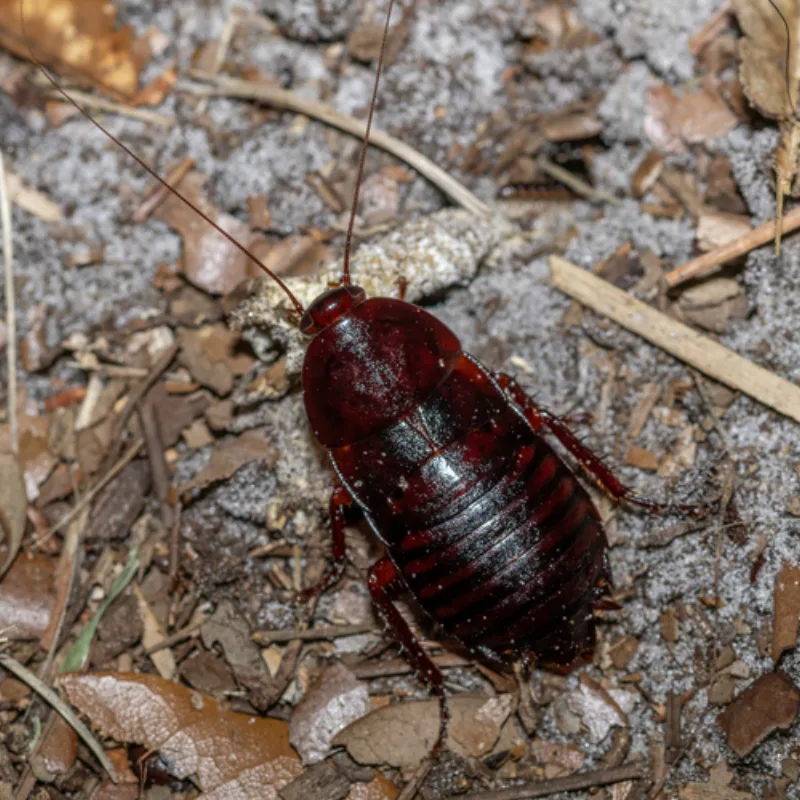
- Large, broad, shiny dark reddish-brown to black wood cockroach (Florida woods cockroach)
- Short stubby wing pads—cannot fly (unlike flying American or smokybrown roaches often nicknamed palmetto bugs)
- Moves relatively slowly and emits a strong foul defensive liquid when alarmed
- Primarily an outdoor southeastern US native
Side-by-Side Look-Alike Comparisons
Palmetto Bugs Size at True Relative Scale
Quick Answer: True palmetto bugs (Eurycotis floridana, the Florida woods cockroach) are not established in Arizona, and no breeding populations occur in the state. The large roaches Arizona residents call "palmetto bugs" are almost always American cockroaches or other local cockroaches, often nicknamed "water bugs." These insects are a nuisance, not a medical danger, and simple exclusion and moisture control go a long way.
Where Palmetto Bugs Live in Arizona
So, are there palmetto bugs in Arizona? Not as a resident species. Eurycotis floridana is native to the humid Southeast, centered on Florida and the Gulf Coast, and GBIF occurrence records do not show an established Arizona population. The dry desert air of the southern lowlands and the cold winters of the northern highlands are poor matches for this moisture-loving roach.
A rare individual could arrive as a hitchhiker in potted plants, moving boxes, or freight from the Southeast. These stray insects do not form lasting colonies here. When residents spot a big, dark roach near a drain or water meter, they are seeing a local species instead.
The American cockroach is the usual culprit. In Phoenix, Tucson, Yuma, and other low-desert cities, it lives in sewer lines, utility vaults, irrigation boxes, and shaded, damp spots around homes. It's far less common in cooler high-elevation towns such as Flagstaff.
When Palmetto Bugs Are Most Active in Arizona
Because true palmetto bugs aren't present, Arizona palmetto bug season really describes the activity pattern of local cockroaches. These roaches are most active during the warm months, especially in the evening and overnight.
- Late spring and early summer: Rising nighttime temperatures bring American cockroaches up from sewers and underground utility lines.
- Monsoon season (roughly July through September): Storms and humidity flood underground harborage and push roaches toward patios, garages, and drains.
- Extreme heat: On the hottest days, roaches may wander indoors looking for cooler, damper spaces.
- Winter: Activity slows sharply outdoors, though roaches can persist in heated sewers and wall voids.
Look-Alikes Frequently Mistaken for Palmetto Bugs
Good Arizona palmetto bug identification starts with knowing which insects actually live here. Three names come up most often.
American Cockroaches
This is the insect most Arizonans mean when they say "palmetto bug." Adults are about 1.5 to 2 inches long, reddish-brown, with a pale yellowish band around the shield behind the head. Both sexes have full wings that cover the abdomen, and they can glide short distances, unlike the short-winged Florida woods cockroach.
Other Cockroaches
Several smaller cockroach species also turn up in Arizona homes. They are usually lighter in color and much smaller than an American cockroach, and they tend to stay hidden near kitchens, bathrooms, and appliances. Any small roach seen in daylight indoors may signal a larger hidden population.
Water Bugs
"Water bug" is a common nickname for large roaches found near drains and damp areas. True aquatic water bugs are a separate group of insects that live in ponds and pools and have grasping front legs and flattened bodies. A roach-shaped insect running across the kitchen floor is a cockroach, not an aquatic water bug.
How to Keep Palmetto Bugs Out of Your Arizona Home
If you're wondering how to prevent palmetto bugs in Arizona, the answer is preventing the local cockroaches that wear the name. University cooperative extension IPM guidance recommends starting with non-chemical steps that remove entry points, food, and moisture.
Exclusion
- Install door sweeps and repair weatherstripping on exterior and garage doors.
- Seal gaps around pipes, conduits, and utility penetrations with caulk or foam.
- Fit fine screens over weep holes and vents, and keep drain covers in place.
- Run water down seldom-used drains so dry traps don't give sewer roaches a path inside.
Sanitation and Moisture Control
- Fix leaky faucets, evaporative cooler lines, and irrigation drips near the foundation.
- Store pet food and pantry goods in sealed containers and clean up crumbs nightly.
- Keep mulch, leaf litter, and stacked materials away from exterior walls.
- Use tight-fitting lids on garbage and recycling bins.
Targeted Treatments
Sticky traps help you monitor where roaches travel. If control products are needed, gel baits and bait stations placed in cracks are generally preferred over broadcast sprays. Always read and follow the EPA product label exactly, and keep products away from children and pets.
When to Call a Licensed Arizona Pest Professional
- You see roaches indoors regularly, especially during the day.
- You find egg cases, droppings, or a musty odor in cabinets or wall voids.
- Roaches keep coming up from drains or sewer lines despite your efforts.
- You manage a multi-unit building, restaurant, or other space where roaches spread easily.
IPM Prevention Checklist for Arizona Homes
- Keep pine straw and heavy mulch cleared 12–18 inches from foundations
- Install tight door sweeps and screen soffit/crawlspace vents
 EXCLUSION BLUEPRINT
Inspect eaves, screens, door sweeps, foundation cracks, and utility penetrations around Arizona homes before peak season.
Palmetto Bugs in Arizona: Frequently Asked Questions
Are there palmetto bugs in Arizona?
No established populations exist. The Florida woods cockroach does not breed in Arizona, and large roaches seen locally are usually American cockroaches.
Do the roaches Arizonans call palmetto bugs bite?
Local cockroaches are a nuisance and rarely bite people. They can contaminate food and surfaces, so good sanitation matters.
Why do I see more big roaches after monsoon storms?
Heavy rain floods sewers and underground harborage, driving American cockroaches to the surface and toward homes.
Can a palmetto bug hitchhike to Arizona?
A rare stray may arrive in plants or shipped goods, but the dry climate prevents it from establishing a lasting population.
Sources & Verification
Data refreshed · Editorial & GBIF Methodology