Kissing Bugs in New York: Are They Here? Look-Alikes and Prevention
Quick Answer: Breeding populations of kissing bugs (Triatominae) do not occur in New York. The insects people report here are almost always look-alikes such as stink bugs, boxelder bugs, or cockroaches. A rare hitchhiker can arrive in luggage, firewood, or pet gear from warmer regions, but that is an accidental event, not an established presence.
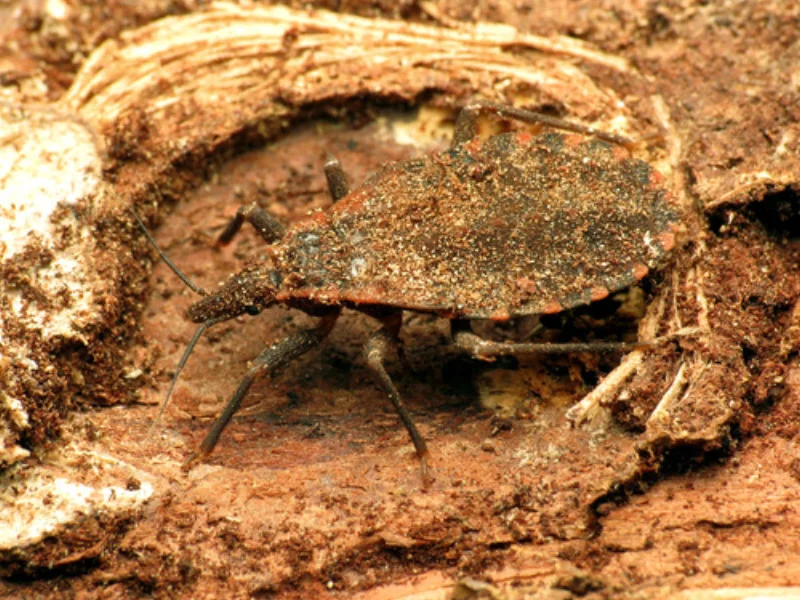
When Kissing Bugs Are Most Active in New York
November: Rare / AbsentKissing Bugs Range in New York vs. Neighboring States
How New York Compares to Neighboring States
Note: Wildlife does not follow state or county lines. GBIF totals reflect verified citizen and museum records, so low counts in a neighboring county do not guarantee absence.
How to Identify Kissing Bugs
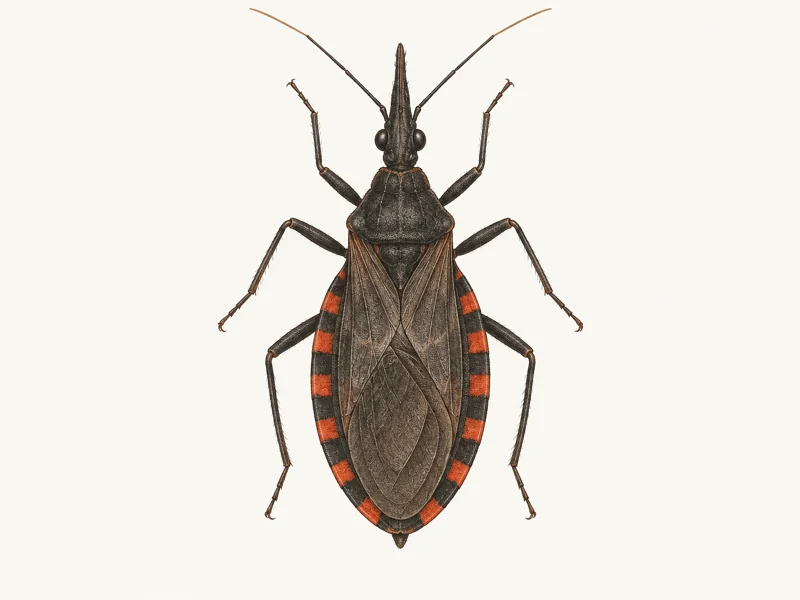
Annotated Anatomy Key (Kissing Bug)
- Cone-shaped head: Narrow, elongated cone-shaped head with a straight 3-segmented beak tucked underneath.
- Overlapping wings: Flat oval dark-brown back covered by overlapping half-leathery, half-membranous wings.
- Six slender legs: Three pairs of thin, relatively uniform dark legs without widened leaf-like pads.
- Striped abdomen rim: Distinct alternating orange-red and black bars framing the outer edge of the abdomen (connexivum).
Kissing Bugs Field Checklist
- Elongated cone-shaped head with a straight, slender 3-segmented beak tucked underneath
- Dark brown to black body with distinct orange, red, or tan stripes along the outer abdomen rim
- Flat oval back with overlapping leathery/membranous wings
- Nocturnal blood-feeder; never crush with bare hands
Side-by-Side Look-Alike Comparisons
Kissing Bugs Size at True Relative Scale
Where Kissing Bugs Live in New York
So, are there kissing bugs in New York? Not as a resident species. Kissing bugs are warm-climate insects, and GBIF occurrence records place them mainly in the southern US, Mexico, and Central and South America. New York's humid continental climate inland, with cold winters in USDA zones 3b to 7b, does not support them. Even the milder humid subtropical areas near New York City and Long Island have no established colonies.
In their native range, kissing bugs shelter in wood rat nests, animal burrows, dog kennels, and cracks near outdoor lighting. Those nesting hosts and warm conditions are largely missing from New York.
Any single specimen found here is best treated as a stray traveler. It should be photographed, safely contained, and confirmed by an expert before anyone assumes the worst.
When Kissing Bugs Are Most Active in New York
There is no true New York kissing bug season, because the insects do not breed here. In the southern states where they are established, adults generally fly to lights during the warm months, and that is when most encounters happen. A traveler could in theory turn up in New York during summer, but this would be a one-off event.
The bugs New Yorkers actually see follow their own calendars:
- Fall: Stink bugs and boxelder bugs move indoors to overwinter.
- Late winter and early spring: Overwintering bugs wake up inside warm walls and wander into living spaces.
- Year-round: Cockroaches stay active indoors, especially in older multi-unit buildings.
Look-Alikes Frequently Mistaken for Kissing Bugs
Careful New York kissing bug identification starts with ruling out common local insects. True kissing bugs are typically about 0.5 to 1 inch long, with a cone-shaped head, a thin neck, and often a banded or striped edge around the abdomen. They also have a straight, slender beak held beneath the head.
Stink Bugs
Brown marmorated stink bugs are shield-shaped with a broad body and light bands on the antennae. They are the most frequent mix-up in New York homes, especially in fall.
Boxelder Bugs
These are black with red-orange markings along the wings. They cluster on sunny walls and enter homes in autumn, but they are plant feeders and do not bite people in any meaningful way.
Cockroaches
Cockroaches have flatter, oval bodies, long whip-like antennae, and a shield behind the head that covers much of the head. They are common in New York apartments and kitchens.
If you are unsure, take a clear photo and contact your local Cornell Cooperative Extension office or a licensed pest professional for identification.
How to Keep Kissing Bugs Out of Your New York Home
How to prevent kissing bugs in New York is really the same as preventing most nuisance pests. Start with non-chemical Integrated Pest Management (IPM): exclusion, sanitation, and moisture control.
- Seal gaps around windows, doors, utility lines, and foundation cracks.
- Repair torn screens and add door sweeps.
- Switch outdoor lights to warm-toned or yellow bulbs, and turn off unneeded lights at night.
- Store firewood away from the house and off the ground.
- Reduce clutter, fix leaks, and dry out damp basements and crawl spaces.
- Inspect luggage, camping gear, and pet bedding after travel to southern states.
If you find a suspect bug, do not crush it. Wear gloves, place it in a sealed container, and take a photo for identification. If a bite or reaction occurs, this guide cannot diagnose it, so contact your doctor. For urgent concerns, call US Poison Control at 1-800-222-1222.
Use insecticides only as a last resort, and always read and follow the EPA-registered product label.
When to Call a Licensed New York Pest Professional
- You find the same unidentified insect repeatedly indoors.
- Dozens of bugs gather inside walls, attics, or window frames.
- You have a specimen that resembles a kissing bug and want confirmation.
- Cockroach activity continues after sanitation and sealing efforts.
IPM Prevention Checklist for New York Homes
- Repair torn window screens and install tight door sweeps
- Keep outdoor pets indoors at night and move wood/rock piles away from the house
- Turn off bright porch lights that attract adult bugs at night
 EXCLUSION BLUEPRINT
Inspect eaves, screens, door sweeps, foundation cracks, and utility penetrations around New York homes before peak season.
Kissing Bugs in New York: Frequently Asked Questions
Are there kissing bugs in New York?
No established populations exist in the state. Occasional accidental arrivals from warmer regions are possible but rare.
What is the most common kissing bug look-alike in New York?
Brown marmorated stink bugs are the most common mix-up, followed by boxelder bugs and cockroaches.
Should I worry about a bug bite in my New York home?
Most household bug encounters in New York involve harmless look-alikes. For any bite or reaction concern, contact a doctor or US Poison Control at 1-800-222-1222.
Do I need pesticides to prevent kissing bugs?
Usually not. Exclusion, sanitation, and lighting changes come first, and any product must be used exactly as the EPA label directs.
Sources & Verification
- Texas A&M Kissing Bug Citizen Science Program
- CDC — Triatomine Bugs (Kissing Bugs)
- GBIF Global Biodiversity Occurrence Records
Data refreshed · Editorial & GBIF Methodology