Kissing Bugs in Georgia: Rare Sightings, Identification, and Prevention
Quick Answer: Kissing bugs are rare in Georgia. GBIF holds just one verified record, a Big Bed Bug (Triatoma sanguisuga) in Emanuel County, with the sighting in June. Most insects mistaken for them are harmless look-alikes, but a real kissing bug deserves careful handling and a proper identification.
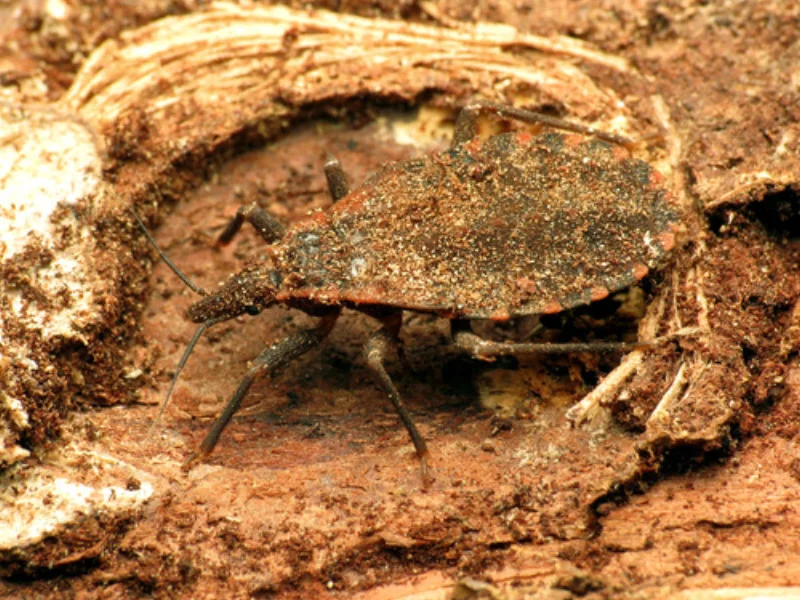
When Kissing Bugs Are Most Active in Georgia
Now (November): Lower Outdoor ActivityVerified Georgia Counties, Species & US Range
Counties with Verified Observations
- Emanuel
Species Recorded in Georgia
| Species | Scientific Name | GBIF Records |
|---|---|---|
| Big Bed Bug | Triatoma sanguisuga | 1 |
How Georgia Compares to Neighboring States
Note: Wildlife does not follow state or county lines. GBIF totals reflect verified citizen and museum records, so low counts in a neighboring county do not guarantee absence.
How to Identify Kissing Bugs
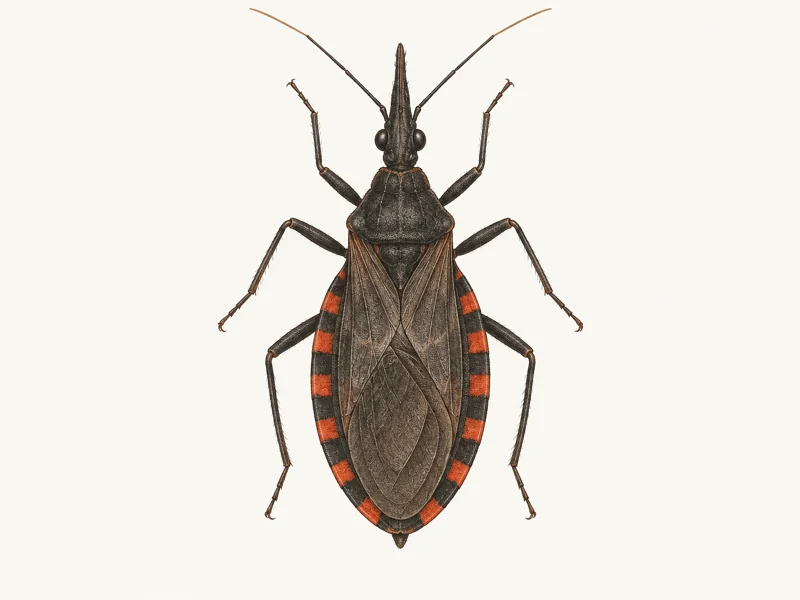
Annotated Anatomy Key (Kissing Bug)
- Cone-shaped head: Narrow, elongated cone-shaped head with a straight 3-segmented beak tucked underneath.
- Overlapping wings: Flat oval dark-brown back covered by overlapping half-leathery, half-membranous wings.
- Six slender legs: Three pairs of thin, relatively uniform dark legs without widened leaf-like pads.
- Striped abdomen rim: Distinct alternating orange-red and black bars framing the outer edge of the abdomen (connexivum).
Kissing Bugs Field Checklist
- Elongated cone-shaped head with a straight, slender 3-segmented beak tucked underneath
- Dark brown to black body with distinct orange, red, or tan stripes along the outer abdomen rim
- Flat oval back with overlapping leathery/membranous wings
- Nocturnal blood-feeder; never crush with bare hands
Side-by-Side Look-Alike Comparisons
Kissing Bugs Size at True Relative Scale
Quick Answer: Kissing bugs are rare in Georgia. GBIF holds just one verified record, a Big Bed Bug (Triatoma sanguisuga) in Emanuel County, with the sighting in June. Most insects mistaken for them are harmless look-alikes, but a real kissing bug deserves careful handling and a proper identification.
Where Kissing Bugs Live in Georgia
Are there kissing bugs in Georgia? Yes, but they are uncommon. The single verified GBIF occurrence is Triatoma sanguisuga in Emanuel County, in the coastal plain region of the state. A single record shows the species can occur here, not that it is established in large numbers.
Kissing bugs (subfamily Triatominae) feed on blood. In the wild they shelter in woodrat nests, animal burrows, hollow trees, and under loose bark or rock piles. Georgia's humid subtropical climate, with long hot summers and mild winters across the piedmont and coastal plain (USDA zones 6b-9a), is suitable for the Big Bed Bug when host animals are nearby.
Homes near wooded edges, kennels, chicken coops, or wildlife nesting sites carry slightly more risk than homes in dense urban areas.
Georgia Kissing Bug Identification
Adult Triatoma sanguisuga are about 3/4 to 1 inch long, dark brown to nearly black, with a cone-shaped head and a long, narrow beak held beneath the body. The edge of the abdomen shows alternating light and dark bands, often orange or reddish.
- Narrow head with thin, bent antennae
- Flattened, oval body with visible banding along the sides
- Slender legs and a straight, three-segmented beak
- Wings folded flat over the back
When Kissing Bugs Are Most Active in Georgia
The only verified Georgia record falls in June, so that month is the documented peak. Adults generally fly in warm months and are drawn to porch lights at night. Georgia kissing bug season, as far as the records show, centers on late spring through summer.
With only one record, no firm seasonal pattern can be drawn. Treat the June timing as a guide rather than a rule, and stay alert any time evenings are warm.
Look-Alikes Frequently Mistaken for Kissing Bugs
Several common Georgia insects resemble kissing bugs at a glance. Check the head shape and beak before assuming the worst.
- Stink bugs: Shield-shaped and broad, with a short, wide head. They are plant feeders and do not bite people.
- Boxelder bugs: Black with red-orange markings on the wings, and smaller than kissing bugs. They are a nuisance but harmless.
- Cockroaches: Flat and oval with long, whip-like antennae and no piercing beak. Their chewing mouthparts differ from a kissing bug's cone-shaped head.
If you are unsure, photograph the insect and contact your local county Extension office through the University of Georgia Cooperative Extension for identification help.
Health Note and Safety
Kissing bugs are medically significant because some species can carry the parasite that causes Chagas disease. The risk in the United States is considered low, and transmission usually requires contaminated feces to enter the bite wound or mucous membranes. This article is not medical advice and does not diagnose any condition.
If you were bitten or have symptoms such as swelling, hives, or trouble breathing, call US Poison Control at 1-800-222-1222 and see a doctor. Do not try home remedies for a bite.
If you find a suspected kissing bug, do not crush it or touch it with bare hands. Use gloves or a container to scoop it up, seal it, and save it for identification.
How to Keep Kissing Bugs Out of Your Georgia Home
How to prevent kissing bugs in Georgia starts with non-chemical Integrated Pest Management. Exclusion, sanitation, and lighting changes do most of the work.
- Seal gaps around doors, windows, vents, and utility lines. Repair torn screens.
- Switch outdoor lights to yellow or LED bulbs, and turn off unneeded lights at night.
- Clear woodpiles, brush, and rock piles away from the foundation.
- Remove rodent and wildlife nests near the house, and keep pet areas and kennels clean.
- Reduce moisture around the foundation with gutters, grading, and dry crawl spaces.
- Vacuum indoor cracks and dispose of the bag outdoors.
If you use any insecticide, follow the EPA-registered product label exactly. Do not apply products in ways the label does not allow.
When to Call a Licensed Georgia Pest Professional
- You find more than one suspected kissing bug indoors.
- Bugs turn up in bedrooms or near sleeping areas.
- You find them near pet kennels, attics, or rodent nests that you cannot safely remove.
- Pets or family members show bite reactions.
A licensed professional can confirm the species, inspect for entry points and hosts, and recommend label-compliant treatment.
IPM Prevention Checklist for Georgia Homes
- Repair torn window screens and install tight door sweeps
- Keep outdoor pets indoors at night and move wood/rock piles away from the house
- Turn off bright porch lights that attract adult bugs at night
 EXCLUSION BLUEPRINT
Inspect eaves, screens, door sweeps, foundation cracks, and utility penetrations around Georgia homes before peak season.
Kissing Bugs in Georgia: Frequently Asked Questions
Are there kissing bugs in Georgia?
Yes, but they are rare. GBIF lists one verified record, a Big Bed Bug (Triatoma sanguisuga) in Emanuel County, in June.
What does a kissing bug look like?
It is dark brown to black, about 3/4 to 1 inch long, with a narrow cone-shaped head, a thin beak, and banded orange or red markings along the abdomen edge.
Are kissing bugs dangerous?
They bite and can carry the parasite behind Chagas disease, though US transmission is low. For bites or reactions, call US Poison Control at 1-800-222-1222 and see a doctor.
How do I keep kissing bugs away from my house?
Seal entry points, use yellow or LED outdoor lighting, clear brush and woodpiles, and remove rodent nests. Follow EPA product labels for any pesticide, and call a licensed pro if bugs appear indoors.
Sources & Verification
- Texas A&M Kissing Bug Citizen Science Program
- CDC — Triatomine Bugs (Kissing Bugs)
- GBIF Global Biodiversity Occurrence Records
Data refreshed · Editorial & GBIF Methodology