Kissing Bugs in Michigan: Facts, Look-Alikes, and Prevention
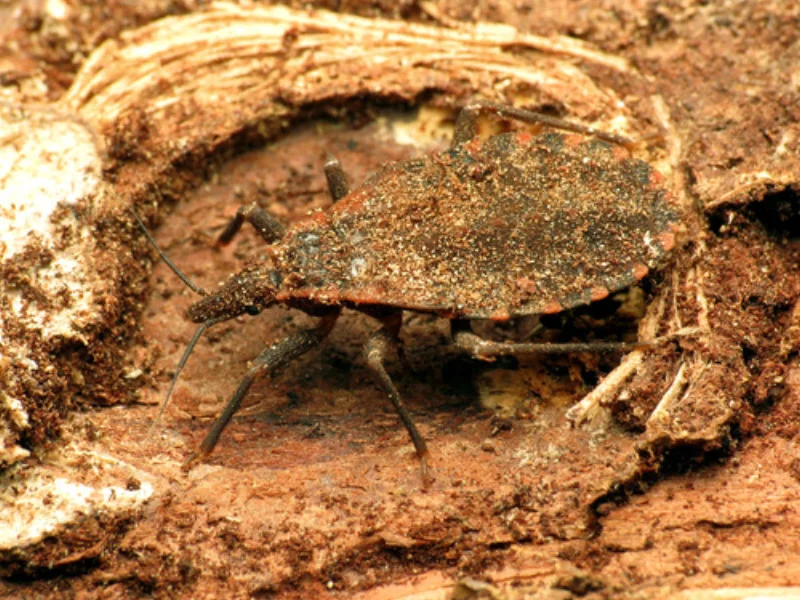
Quick Answer: Kissing bugs (Triatominae) are not established in Michigan, and no breeding populations are known to occur anywhere in the state. Most "kissing bugs" reported by Michigan residents turn out to be harmless native or invasive insects such as stink bugs, boxelder bugs, or cockroaches. A true kissing bug found in Michigan would almost certainly be a rare accidental hitchhiker carried in from a southern state.
When Kissing Bugs Are Most Active in Michigan
November: Rare / AbsentKissing Bugs Range in Michigan vs. Neighboring States
How Michigan Compares to Neighboring States
Note: Wildlife does not follow state or county lines. GBIF totals reflect verified citizen and museum records, so low counts in a neighboring county do not guarantee absence.
How to Identify Kissing Bugs
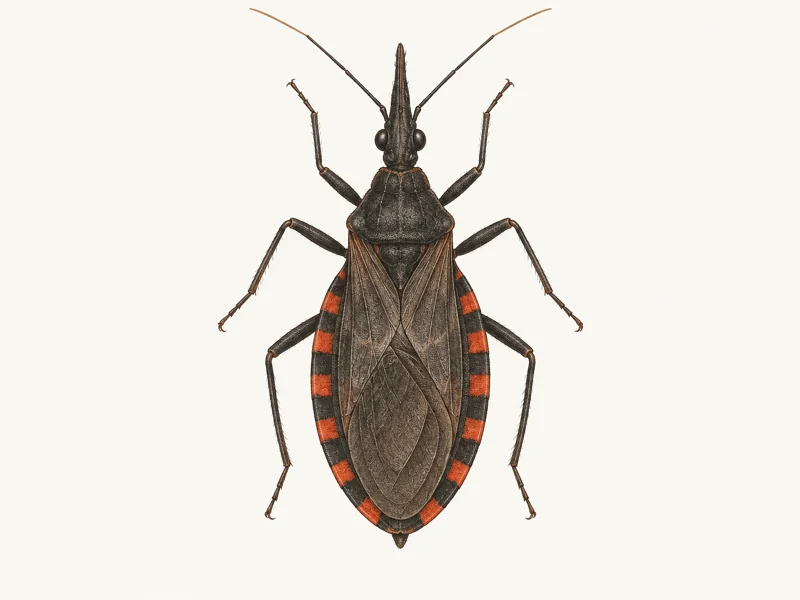
Annotated Anatomy Key (Kissing Bug)
- Cone-shaped head: Narrow, elongated cone-shaped head with a straight 3-segmented beak tucked underneath.
- Overlapping wings: Flat oval dark-brown back covered by overlapping half-leathery, half-membranous wings.
- Six slender legs: Three pairs of thin, relatively uniform dark legs without widened leaf-like pads.
- Striped abdomen rim: Distinct alternating orange-red and black bars framing the outer edge of the abdomen (connexivum).
Kissing Bugs Field Checklist
- Elongated cone-shaped head with a straight, slender 3-segmented beak tucked underneath
- Dark brown to black body with distinct orange, red, or tan stripes along the outer abdomen rim
- Flat oval back with overlapping leathery/membranous wings
- Nocturnal blood-feeder; never crush with bare hands
Side-by-Side Look-Alike Comparisons
Kissing Bugs Size at True Relative Scale
Where Kissing Bugs Live in Michigan
So, are there kissing bugs in Michigan? Based on available occurrence records, including GBIF data, there are no established Triatominae populations in the state. In the United States, kissing bugs are concentrated in southern states, where mild winters and wildlife hosts such as woodrats support their life cycle.
Michigan's humid continental climate, moderated by the Great Lakes with lake-effect winters and USDA hardiness zones 4a through 6b, is a poor fit for these insects. Cold winters limit the survival of species adapted to warmer regions. Any individual found in Michigan most likely arrived in luggage, camping gear, firewood, or household goods moved from a southern state.
If a suspected kissing bug is found, residents can place it in a sealed container or zip-top bag without touching it bare-handed. Many university cooperative extension programs and diagnostic labs offer insect identification services.
When Kissing Bugs Are Most Active in Michigan
Because kissing bugs do not breed in Michigan, there is no true Michigan kissing bug season. In southern states where they are established, adults typically disperse and fly toward lights during warm months, which is when accidental transport is most likely.
What Michigan residents notice in spring and fall is usually look-alike activity. Stink bugs and boxelder bugs gather on sunny walls in autumn as they seek winter shelter, then reappear indoors on warm days in late winter and spring. That seasonal surge is the most common reason people search for kissing bugs in Michigan.
Look-Alikes Frequently Mistaken for Kissing Bugs
Michigan kissing bug identification starts with ruling out common local insects. True kissing bugs have a narrow, cone-shaped head, a long straight beak tucked under the body, and often orange or red banding along the flattened edge of the abdomen. Most Michigan look-alikes lack that elongated cone-shaped head.
Stink Bugs
- Shape: Broad, shield-shaped body with a short, wide head.
- Color: Mottled brown or green; the brown marmorated stink bug has banded antennae and banded abdomen edges, which causes confusion.
- Behavior: Plant feeders that release an odor when disturbed. They do not bite people.
Boxelder Bugs
- Shape: Elongated, about half an inch long, with a small head.
- Color: Black with distinct red-orange lines on the back.
- Behavior: Cluster on south-facing walls near boxelder and maple trees. They feed on seeds and plant sap, not blood.
Cockroaches
- Shape: Flattened, oval body with long, thread-like antennae and spiny legs.
- Color: Brown to reddish-brown, sometimes with darker markings.
- Behavior: Fast-running scavengers found in kitchens, basements, and bathrooms. Their head is hidden under a shield-like plate, unlike the visible cone-shaped head of a kissing bug.
How to Keep Kissing Bugs Out of Your Michigan Home
The best approach to how to prevent kissing bugs in Michigan is the same Integrated Pest Management (IPM) strategy that keeps stink bugs, boxelder bugs, and cockroaches out. Non-chemical steps should always come first.
- Exclusion: Seal gaps around windows, doors, utility lines, and siding with caulk. Repair torn screens and add door sweeps.
- Inspect travel gear: After trips to southern states, check luggage, tents, and outdoor equipment before bringing them indoors.
- Sanitation: Clear clutter, store food in sealed containers, and fix leaks to reduce cockroach habitat.
- Lighting: Use yellow or LED bulbs outdoors, which attract fewer night-flying insects.
- Yard care: Keep woodpiles, leaf litter, and brush away from the foundation.
- Removal: Vacuum stray stink bugs or boxelder bugs indoors and empty the bag outside.
If an insecticide is considered, residents should choose a product registered for the target pest and follow the EPA product label exactly. The label is the law.
When to Call a Licensed Michigan Pest Professional
- A suspected true kissing bug is found indoors, especially near beds or pets.
- Cockroaches are seen repeatedly or during the day, suggesting a larger infestation.
- Stink bugs or boxelder bugs enter in large numbers despite sealing efforts.
- Exterior treatment is needed in areas that are difficult or unsafe to reach.
This guide is for educational purposes and does not provide medical advice. Kissing bugs can carry the parasite that causes Chagas disease. Anyone concerned about a bite or exposure should contact a doctor or US Poison Control at 1-800-222-1222.
IPM Prevention Checklist for Michigan Homes
- Repair torn window screens and install tight door sweeps
- Keep outdoor pets indoors at night and move wood/rock piles away from the house
- Turn off bright porch lights that attract adult bugs at night
 EXCLUSION BLUEPRINT
Inspect eaves, screens, door sweeps, foundation cracks, and utility penetrations around Michigan homes before peak season.
Kissing Bugs in Michigan: Frequently Asked Questions
Are there kissing bugs in Michigan?
No breeding populations of kissing bugs are established in Michigan. Rare individuals may arrive as hitchhikers from southern states, but this is uncommon.
What bug in Michigan looks like a kissing bug?
Boxelder bugs and brown marmorated stink bugs are the most common look-alikes. Cockroaches are also sometimes confused with them, especially when found indoors.
Do boxelder bugs or stink bugs bite people?
Neither insect feeds on blood. They are nuisance pests that feed on plants and may stain surfaces or release odors.
What should someone do if they think they found a kissing bug?
Capture it in a sealed container without bare-hand contact and seek identification through a cooperative extension service or pest professional. For bite or health concerns, contact a doctor or Poison Control at 1-800-222-1222.
Sources & Verification
- Texas A&M Kissing Bug Citizen Science Program
- CDC — Triatomine Bugs (Kissing Bugs)
- GBIF Global Biodiversity Occurrence Records
Data refreshed · Editorial & GBIF Methodology