Kissing Bug vs Stink Bug: How to Tell Them Apart and Protect Your Home
Quick ID Verdict: Two shield-backed insects on a windowsill can look alike at a glance, but one is a smelly nuisance and the other can carry a serious disease. Here's the quick verdict on kissing bug vs stink bug: a kissing bug has a long, narrow, cone-shaped head with a straight, slender beak tucked underneath, while a stink bug has a short, blunt head on a broad, shield-shaped body. If the head looks stretched out like a snout, treat the insect with caution.
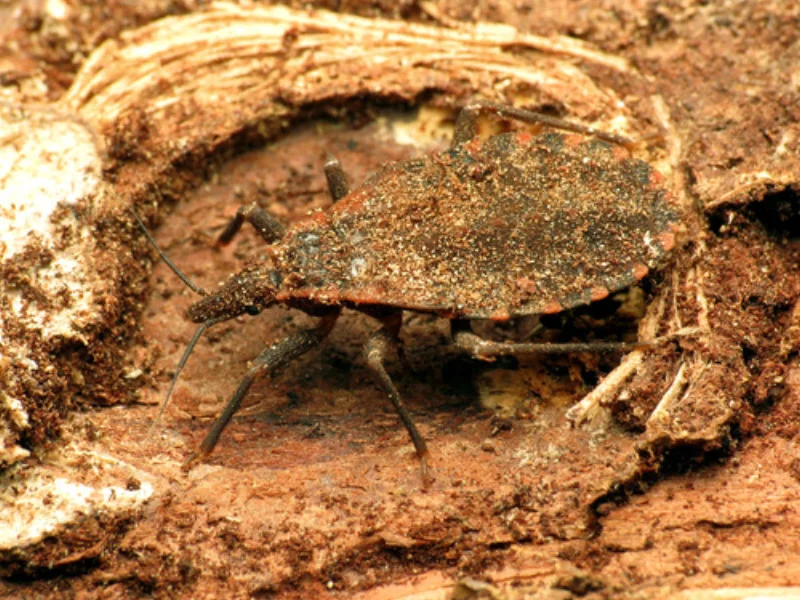
Kissing Bug
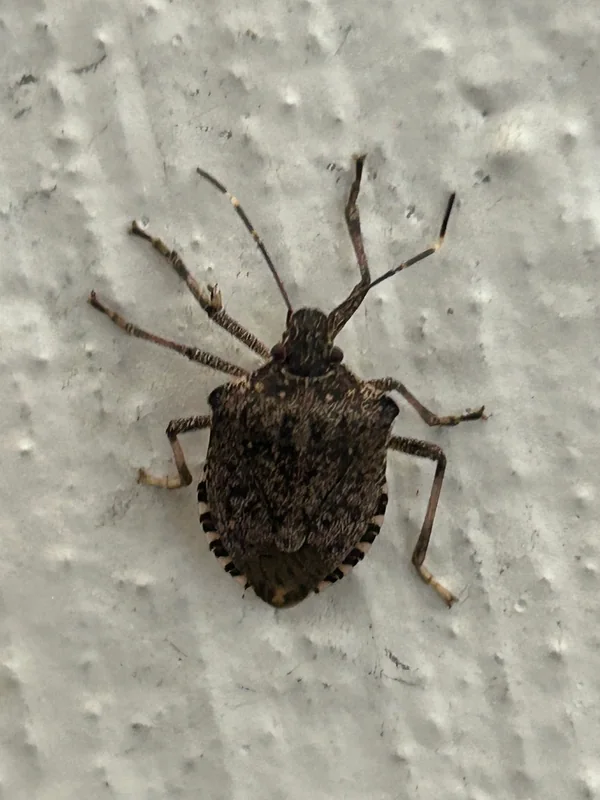
Stink Bug
Side-by-Side Comparison Table
| Trait | Kissing Bug | Stink Bug |
|---|---|---|
| Scientific Group | Triatominae | Halyomorpha halys |
| Category | Insect | Insect |
| Typical Size | 12–28 mm | 12–17 mm |
| Danger Level | Medically Significant | Nuisance |
| Bites or Stings? | Yes | No |
| Peak US Months | June, July | August, September, October |
| Key ID Trait | Elongated cone-shaped head with a straight, slender 3-segmented beak tucked underneath | Broad shield-shaped mottled brown body (brown marmorated stink bug) |
Kissing Bug vs. Stink Bug: True Size Comparison
Side-by-Side Anatomy Blueprint
Compare body segments, antennae, leg count, and key markings directly before treating or removing either species.
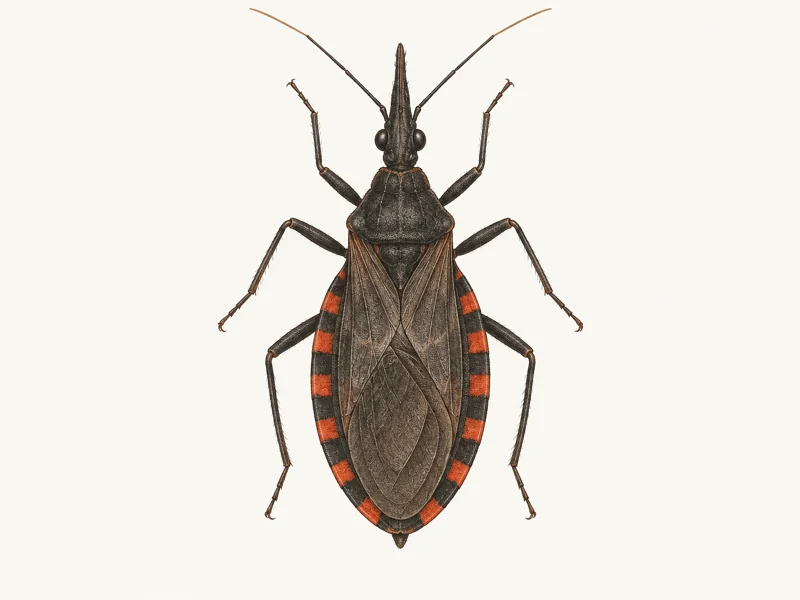
- Cone-shaped head: Narrow, elongated cone-shaped head with a straight 3-segmented beak tucked underneath.
- Overlapping wings: Flat oval dark-brown back covered by overlapping half-leathery, half-membranous wings.
- Six slender legs: Three pairs of thin, relatively uniform dark legs without widened leaf-like pads.
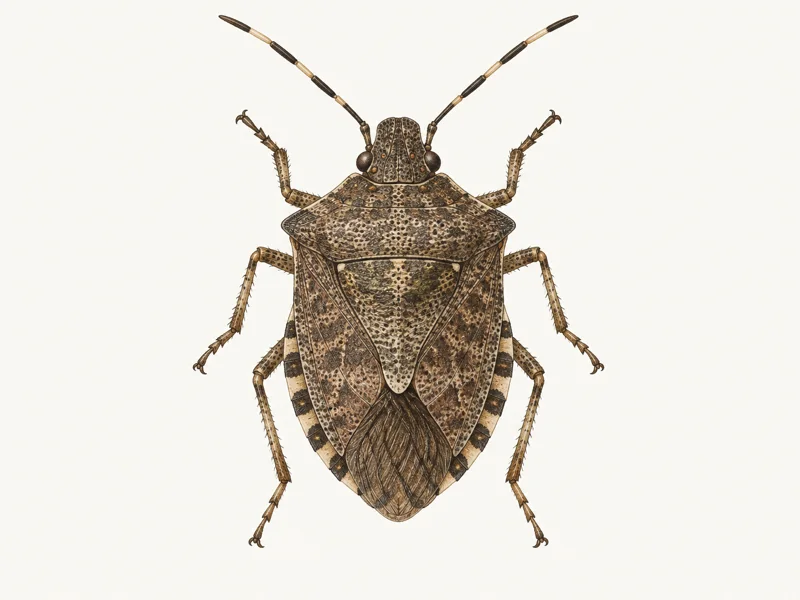
- White-banded antennae: Distinct alternating light-white and dark bands on the last two antennae segments.
- Smooth shield shoulders: Broad angular shield-shaped pronotum with smooth (non-spined) outer shoulder edges.
- Six mottled legs: Three pairs of brown walking legs; emits a sharp cilantro-like defensive odor if crushed.
Why Telling a Kissing Bug From a Stink Bug Matters
The brown marmorated stink bug (Halyomorpha halys) is a nuisance pest. It doesn't bite people, doesn't damage structures, and doesn't transmit disease. Its worst offenses are an unpleasant odor and crowding into homes by the hundreds.
Kissing bugs (subfamily Triatominae) are medically significant. They feed on blood and can carry Trypanosoma cruzi, the parasite that causes Chagas disease. Mistaking one for the other could mean ignoring a real health risk, or spending money on an insect that only needs a vacuum.
Kissing Bug vs Stink Bug Identification: Key Physical Differences
Most people searching for the difference between a kissing bug and a stink bug only need to check two things: the head and the overall body outline. Size and color help confirm the call.
Head Shape, Mouthparts, and Body Outline
This is the most reliable test.
- Kissing bug: An elongated, cone-shaped head that looks almost like a snout. A straight, slender, 3-segmented beak sits tucked underneath. The body is longer and narrower, with a distinct "neck" region behind the head.
- Stink bug: A short, blunt head that blends into a broad, shield-shaped body. From above, the outline looks like a heraldic shield or a small pentagon.
If you can see a noticeably long head extending well past the eyes, you're likely looking at a kissing bug.
Color Patterns and Size Comparison
FeatureKissing BugBrown Marmorated Stink BugLength12–28 mm12–17 mmBody shapeElongated, narrowBroad, shield-shapedColorUsually dark brown or black, often with red, orange, or yellow markings along the body edgeMottled brown, marbled lookAntennaeLong, thin, uniformLight bands on the antennaeOne catch: both insects can show banded edges along the abdomen. Don't rely on color alone. Go back to the head shape whenever you're unsure.
Behavior, Habitat, and Health Risks Compared
Kissing bugs are nocturnal blood feeders. They hide by day in woodrat nests, animal burrows, dog houses, chicken coops, wood piles, and cracks near sleeping areas. At night they're drawn to porch lights and hosts, sometimes biting people near the face while they sleep.
Stink bugs are plant feeders. Outdoors they pierce fruits, vegetables, and ornamentals. Indoors they simply wait out winter in walls, attics, and window frames, emitting their odor when disturbed or crushed.
Health note: If someone may have been bitten by a kissing bug or has a reaction to any insect, call US Poison Control at 1-800-222-1222 and contact a doctor. Don't attempt home treatments.
Where and When You'll Find Each Bug in the US
Kissing bugs are concentrated across the southern half of the country, with the CDC reporting them in roughly 29 states. Texas, Arizona, New Mexico, and much of the Southeast see the most activity. Adults tend to fly and wander most during warm months, especially late spring through summer nights.
The brown marmorated stink bug is an invasive species from East Asia, first detected in Pennsylvania in the late 1990s. It has since been recorded in most of the lower 48 states. Homeowners usually notice it in fall, when it clusters on sunny siding looking for overwintering spots, and again in early spring, when it emerges indoors.
Safe IPM Steps if You Find a Kissing Bug or Stink Bug
Whether it's a kissing bug or stink bug, Integrated Pest Management starts with non-chemical steps.
If You Suspect a Kissing Bug
- Don't crush it or touch it bare-handed. Use gloves or a container.
- Seal it in a jar or zip bag, then freeze it or cover it with rubbing alcohol.
- Contact your local or state health department, or a university extension office, about identification and possible T. cruzi testing.
- Clean the area where it was found with a bleach solution, wearing gloves.
If It's a Stink Bug
- Vacuum them up with a dedicated vacuum or bag, then seal and discard it.
- Drop clusters into soapy water rather than squashing them.
- Skip the bug bombs. They rarely reach insects hidden in walls.
Exclusion and Prevention for Both
- Seal gaps around windows, doors, utility lines, and soffits with caulk or foam.
- Repair torn screens and add door sweeps.
- Switch exterior lights to yellow or LED bulbs and keep them off when not needed.
- Move wood piles, rock piles, and pet bedding away from the house, and keep pets sleeping indoors where possible.
- Clear rodent nests and reduce clutter and excess moisture around foundations.
If an infestation persists, a licensed pest professional can help. Any pesticide used, indoors or out, should be applied strictly according to its EPA product label.
Which One Is Worse for Homeowners?
Stink bugs win on sheer annoyance, since they can show up in large numbers and smell bad. But kissing bugs are the more serious concern because of their link to Chagas disease. A single confirmed kissing bug indoors deserves careful handling, a call to health officials, and prompt exclusion work.
Frequently Asked Questions
What's the main difference between a kissing bug and a stink bug?
The key difference is head shape: kissing bugs have a long, cone-shaped head with a pointed snout, while stink bugs have a short, blunt head on a broad, shield-shaped body. Kissing bugs also have an elongated body, whereas stink bugs look more like a heraldic shield.
Can kissing bugs transmit disease?
Yes. Kissing bugs can carry Trypanosoma cruzi, the parasite that causes Chagas disease. This is why proper identification and careful handling are critical. Stink bugs pose no disease risk.
How should I safely handle a kissing bug if I find one?
Don't crush or touch it bare-handed. Use gloves or a container to seal it in a jar or zip bag. Freeze it or cover with rubbing alcohol. Contact your local health department or university extension for identification and testing, then clean the area with bleach solution.
What states are kissing bugs found in?
Kissing bugs are concentrated in roughly 29 U.S. states, primarily across the southern half of the country. Texas, Arizona, New Mexico, and much of the Southeast see the most activity, especially during warm months from late spring through summer.
Why do kissing bugs bite near the face?
Kissing bugs are nocturnal blood feeders attracted to warmth and breath. They often bite people near the face, eyes, and lips while they sleep. They hide during the day in burrows, woodpiles, animal nests, and cracks near sleeping areas.
What should I do if I think I've been bitten by a kissing bug?
Contact US Poison Control immediately at 1-800-222-1222 and see a doctor. Don't attempt home treatment. It's important to get professional medical evaluation to rule out Chagas disease exposure.