Boxelder Bug vs Kissing Bug: How to Tell Them Apart and Protect Your Home
Quick ID Verdict: A black bug with red-orange markings crawling across a windowsill can stop any homeowner cold. Is it a harmless boxelder bug or a kissing bug linked to Chagas disease? Here's the 3-second verdict: a boxelder bug has a flattened oval body with three crisp red-orange stripes behind the head, while a kissing bug has an elongated, cone-shaped head with a slender, straight beak tucked underneath. If the head looks long and narrow like a cone, treat the bug as a possible kissing bug and handle it with care.
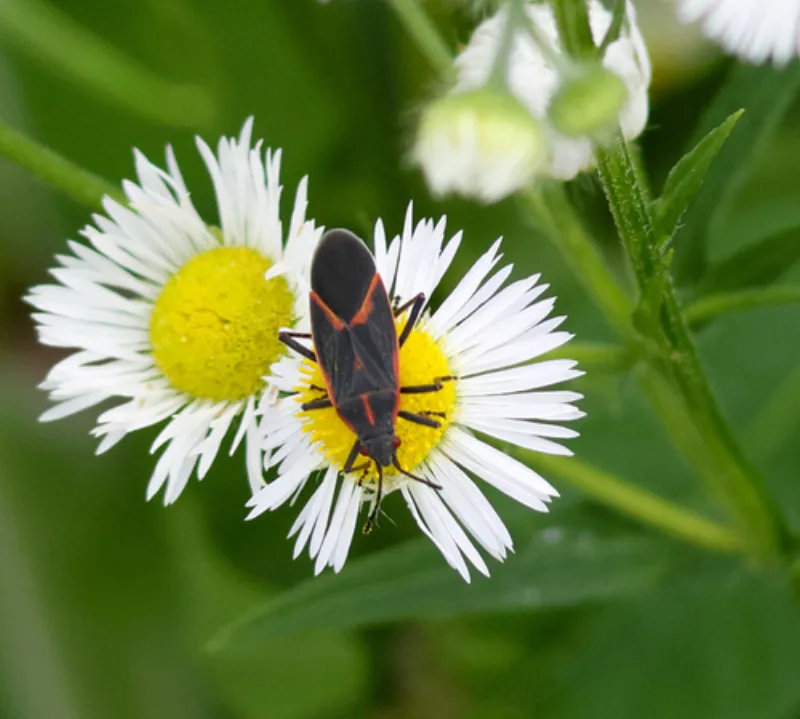
Boxelder Bug
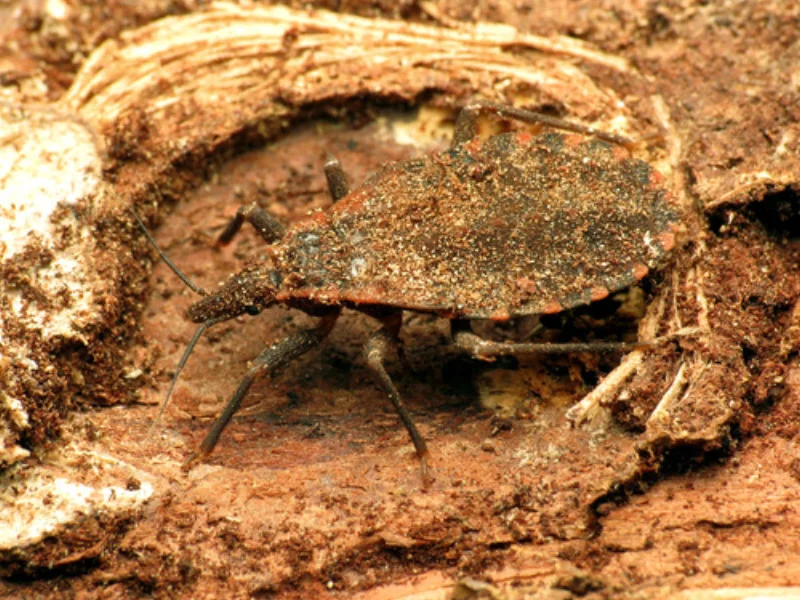
Kissing Bug
Side-by-Side Comparison Table
| Trait | Boxelder Bug | Kissing Bug |
|---|---|---|
| Scientific Group | Boisea trivittata | Triatominae |
| Category | Insect | Insect |
| Typical Size | 11–14 mm | 12–28 mm |
| Danger Level | Nuisance | Medically Significant |
| Bites or Stings? | No | Yes |
| Peak US Months | April, September, October | June, July |
| Key ID Trait | Flattened oval black body accented with three crisp red-orange stripes behind the head and red wing margins | Elongated cone-shaped head with a straight, slender 3-segmented beak tucked underneath |
Boxelder Bug vs. Kissing Bug: True Size Comparison
Side-by-Side Anatomy Blueprint
Compare body segments, antennae, leg count, and key markings directly before treating or removing either species.
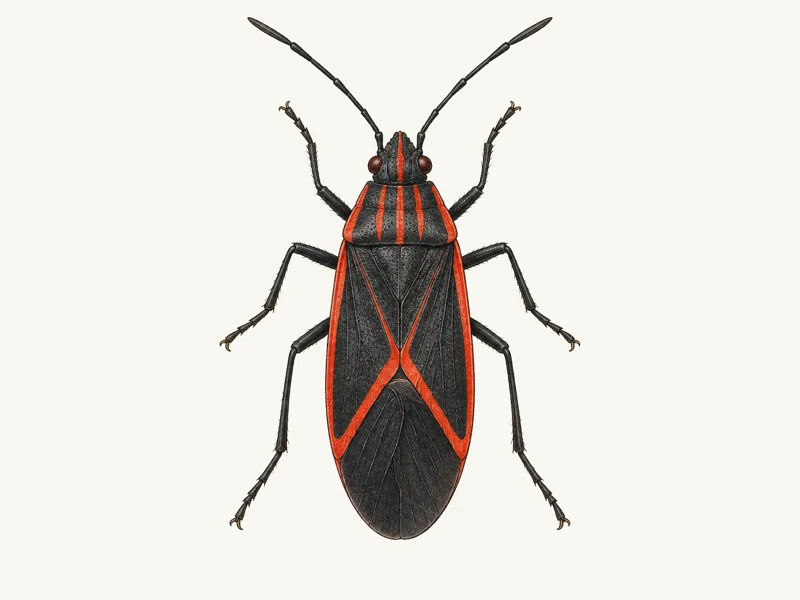
- Slender black antennae: Four-segmented charcoal antennae projecting from a narrow black head.
- Three red shield stripes: Crisp vermilion-red center and side stripes across the dark pronotum.
- Six black legs: Three pairs of slender dark legs; harmless nuisance that clusters on sunny walls.
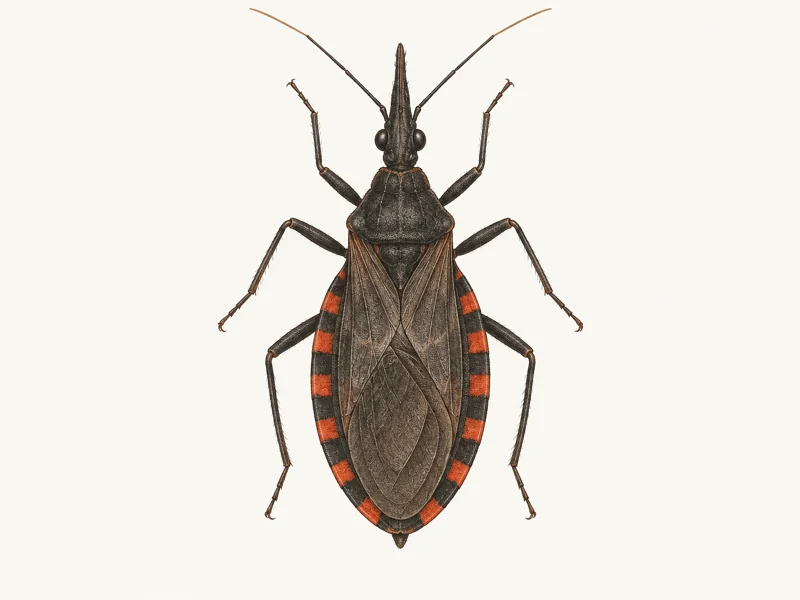
- Cone-shaped head: Narrow, elongated cone-shaped head with a straight 3-segmented beak tucked underneath.
- Overlapping wings: Flat oval dark-brown back covered by overlapping half-leathery, half-membranous wings.
- Six slender legs: Three pairs of thin, relatively uniform dark legs without widened leaf-like pads.
Why Homeowners Confuse Boxelder Bugs and Kissing Bugs
Both insects are true bugs, and both are dark-bodied with red or orange accents. At a glance, and especially in poor light, that color combination is enough to cause alarm.
Size adds to the mix-up. Boxelder bugs measure 11-14 mm, and smaller kissing bugs start at about 12 mm, so the two can look nearly identical in a quick photo. Kissing bugs also often have orange or red bands along the outer edges of the abdomen, which can resemble the red trim on a boxelder bug's wings.
That's why so many people search "boxelder bug or kissing bug" after finding one indoors. The good news is that a closer look at the head usually settles it.
Key Differences in Appearance and Identification
Reliable boxelder bug vs kissing bug identification comes down to three features: head shape, marking pattern, and overall size. Color alone isn't enough.
Head Shape, Markings, and Size Compared
FeatureBoxelder Bug (Boisea trivittata)Kissing Bug (Triatominae)Size11-14 mm12-28 mmBody shapeFlattened ovalLarger, more elongatedHeadSmall, shortElongated and cone-shapedMouthpartsNot prominent from aboveStraight, slender 3-segmented beak tucked underneathKey markingsThree red-orange stripes behind the head, red wing marginsOften red/orange bands along abdomen edgesDanger levelNuisanceMedically significantThe head is the giveaway. A kissing bug's head stretches forward like a narrow cone, almost snout-like, while a boxelder bug's head is compact. Anything longer than about 14 mm also points away from boxelder bugs.
Where Each Bug Lives and When It's Most Active
Boxelder bugs are found across much of the US and feed mainly on the seeds of female boxelder trees, along with maples and ash. They're most noticeable in fall, when large groups bask on sunny south- and west-facing walls before squeezing into cracks to overwinter. On warm winter days, a few may wander indoors.
Kissing bugs are concentrated in the southern US, with Texas, Arizona, New Mexico, and California among the states reporting them most often. They're nocturnal blood feeders that hide near hosts: packrat nests, dog kennels, chicken coops, woodpiles, and crawl spaces. Activity typically peaks in warmer months, and adults are attracted to porch lights at night.
Health Risks: Nuisance Pest or Chagas Disease Carrier
This is the most important difference between boxelder bug and kissing bug encounters. Boxelder bugs are a nuisance only. They don't bite people in any meaningful way, don't damage structures, and don't spread disease, though crushed bugs can stain fabrics and walls.
Kissing bugs are medically significant. Some carry Trypanosoma cruzi, the parasite that causes Chagas disease. Transmission doesn't happen through the bite itself: the parasite is in the bug's feces, which can enter the body through the bite wound or mucous membranes. Not every kissing bug is infected, and risk in the US is considered low, but any suspected exposure deserves professional medical attention.
If someone has a bite reaction or concern after contact, call US Poison Control at 1-800-222-1222 and see a doctor. Don't rely on home remedies.
Safe IPM Steps for Managing Each Bug
Integrated Pest Management puts exclusion, sanitation, and habitat changes ahead of chemicals for both species.
For boxelder bugs:
- Seal gaps around windows, siding, soffits, and utility lines before fall.
- Repair torn screens and add door sweeps.
- Vacuum indoor bugs rather than crushing them, to avoid stains.
- Rake up boxelder seeds and consider the location of female boxelder trees near the home.
For kissing bugs:
- Seal cracks in foundations, walls, and around doors.
- Move woodpiles, rock piles, and brush away from the house.
- Keep pets indoors at night and clean pet bedding regularly.
- Switch to yellow or LED porch lights and keep them off when not needed.
If a pesticide is used, follow the EPA product label exactly. The label is the law.
What to Do If You Find a Suspected Kissing Bug
Don't crush it or touch it with bare hands. Wear gloves or use a sealed container or plastic bag to capture it, then freeze it or place it in rubbing alcohol. Clean the surface it touched with a bleach solution.
Contact the local health department or county extension office for identification. Texas A&M's Kissing Bug Citizen Science program also accepts specimens. Anyone who may have been bitten should call Poison Control at 1-800-222-1222 and speak with a doctor about testing.
Frequently Asked Questions
What's the difference between a boxelder bug and a kissing bug?
The key difference is head shape: boxelder bugs have small, compact heads with three red-orange stripes behind them, while kissing bugs have elongated, cone-shaped heads with a slender beak underneath. Kissing bugs are also larger (12-28 mm) and can carry Chagas disease, whereas boxelder bugs are harmless nuisances.
How can I identify a kissing bug by its appearance?
Look for an elongated, cone-shaped head that stretches forward like a narrow snout, a slender three-segmented beak tucked underneath, and an overall length exceeding 14 mm. Kissing bugs often have red or orange bands along the abdomen edges and are more elongated than boxelder bugs.
Are boxelder bugs dangerous or do they carry disease?
Boxelder bugs are completely harmless. They don't bite meaningfully, don't damage structures, and don't spread disease. Their only nuisance is that crushed bugs can stain fabrics and walls. Unlike kissing bugs, they pose no health risk to humans.
Can kissing bugs transmit Chagas disease through their bite?
Chagas disease transmission doesn't occur through the bite itself. The parasite (Trypanosoma cruzi) lives in the bug's feces, which can enter your body through the bite wound or mucous membranes. Not all kissing bugs carry the parasite, and US risk is considered low, but any suspected exposure requires professional medical attention.
What should I do if I find a suspected kissing bug in my home?
Don't crush it or touch it with bare hands. Wear gloves and capture it in a sealed container or plastic bag. Freeze it or place it in rubbing alcohol. Clean the surface with bleach solution, then contact your local health department or Texas A&M's Kissing Bug Citizen Science program for identification and testing guidance.
Where are kissing bugs found and when are they most active?
Kissing bugs are concentrated in the southern US, particularly Texas, Arizona, New Mexico, and California. They're nocturnal blood feeders that hide near animal hosts like packrat nests and woodpiles. Activity peaks in warmer months, and they're attracted to porch lights at night.