Kissing Bugs in Maryland: Identification, Season, and Prevention
Quick Answer: Yes, kissing bugs are present in Maryland. GBIF records show 102 verified sightings, and the species recorded are the Big Bed Bug (Triatoma sanguisuga) and an assassin bug, Triatoma rubrofasciata. Sightings peak in July, and most problems start with a single bug wandering indoors at night.
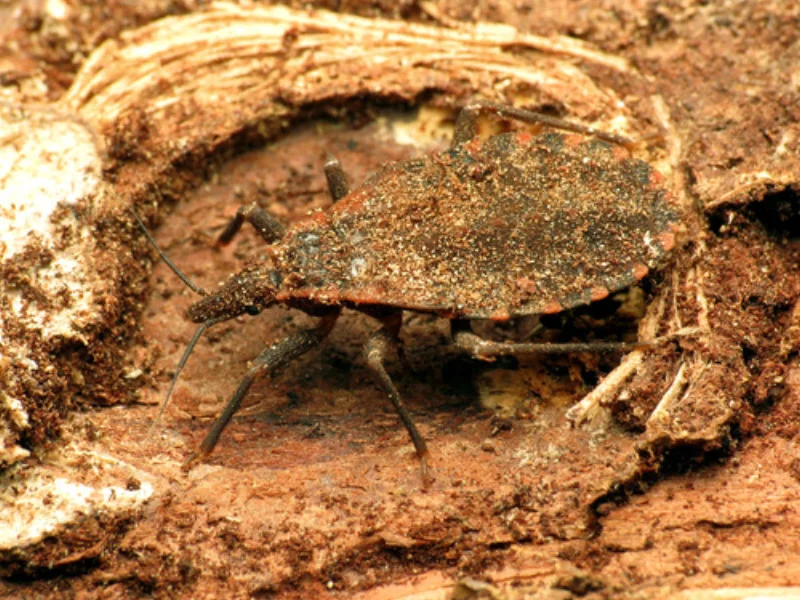
When Kissing Bugs Are Most Active in Maryland
Now (November): Lower Outdoor ActivityVerified Maryland Counties, Species & US Range
Counties with Verified Observations
- Calvert
- Montgomery
- Prince George's
- Anne Arundel
- Saint Mary's
- Allegany
- Worcester
- Queen Anne's
- Washington
- Cecil
Species Recorded in Maryland
| Species | Scientific Name | GBIF Records |
|---|---|---|
| Big Bed Bug | Triatoma sanguisuga | 101 |
| Assassin bug | Triatoma rubrofasciata | 1 |
How Maryland Compares to Neighboring States
Note: Wildlife does not follow state or county lines. GBIF totals reflect verified citizen and museum records, so low counts in a neighboring county do not guarantee absence.
How to Identify Kissing Bugs
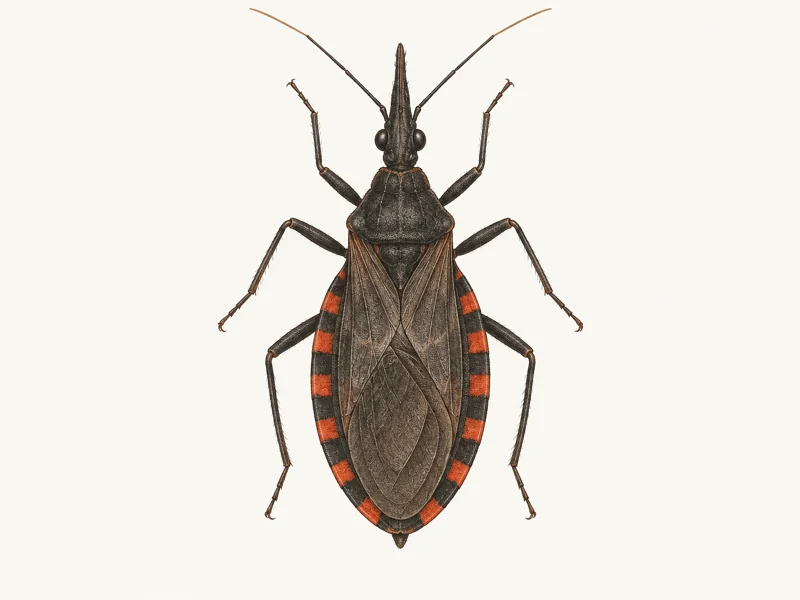
Annotated Anatomy Key (Kissing Bug)
- Cone-shaped head: Narrow, elongated cone-shaped head with a straight 3-segmented beak tucked underneath.
- Overlapping wings: Flat oval dark-brown back covered by overlapping half-leathery, half-membranous wings.
- Six slender legs: Three pairs of thin, relatively uniform dark legs without widened leaf-like pads.
- Striped abdomen rim: Distinct alternating orange-red and black bars framing the outer edge of the abdomen (connexivum).
Kissing Bugs Field Checklist
- Elongated cone-shaped head with a straight, slender 3-segmented beak tucked underneath
- Dark brown to black body with distinct orange, red, or tan stripes along the outer abdomen rim
- Flat oval back with overlapping leathery/membranous wings
- Nocturnal blood-feeder; never crush with bare hands
Side-by-Side Look-Alike Comparisons
Kissing Bugs Size at True Relative Scale
Quick Answer: Yes, kissing bugs are present in Maryland. GBIF records show 102 verified sightings, and the species recorded are the Big Bed Bug (Triatoma sanguisuga) and an assassin bug, Triatoma rubrofasciata. Sightings peak in July, and most problems start with a single bug wandering indoors at night.
Where Kissing Bugs Live in Maryland
Kissing bugs (subfamily Triatominae) are blood-feeding insects that normally live outdoors in nests of wildlife such as woodrats, raccoons, opossums, and birds. They also shelter in wood piles, under loose bark, in leaf litter, and in dog kennels or chicken coops.
GBIF occurrence records are concentrated in these Maryland counties:
- Calvert
- Montgomery
- Prince George's
- Anne Arundel
- Saint Mary's
The state spans the humid subtropical Chesapeake Bay region and the cooler Appalachian highlands in the west (USDA zones 5b to 8a). Most records come from the warmer central and southern parts of the state. Many records also reflect where people photograph and report insects, so absence from a county does not prove the bugs are missing.
When Kissing Bugs Are Most Active in Maryland
The Maryland kissing bug season centers on summer, with July the peak month in GBIF records. Adults fly at dusk and after dark, and they are drawn to porch lights and lit windows.
Because of this, adults most often enter homes through gaps, open doors, or damaged screens on warm evenings. Sightings drop as nights cool in autumn. Expect little to no activity in winter, though bugs sheltering in a protected spot may be found indoors occasionally.
Maryland Kissing Bug Identification
Adult kissing bugs are about 0.5 to 1 inch long, with a flat, dark brown to black body. Key features include:
- A narrow, cone-shaped head with a long, thin beak folded under it
- Slender antennae and a body that looks somewhat elongated
- Orange, red, or tan markings along the edge of the abdomen (common on T. sanguisuga)
- Wings folded flat over the back
If you are unsure, photograph the bug or place it in a sealed container and compare it with images from a university extension service. Avoid touching it with bare hands.
Look-Alikes Frequently Mistaken for Kissing Bugs
Several common Maryland insects get mistaken for kissing bugs. Knowing the differences prevents needless worry.
- Stink bugs: Shield-shaped, with a broad body and a short, wide head. Kissing bugs are more elongated with a cone-shaped head.
- Boxelder bugs: Black with red-orange lines on the back and a short beak. They feed on plants, not blood.
- Cockroaches: Flattened and shiny with long, whip-like antennae and chewing mouthparts, and no piercing beak.
How to Keep Kissing Bugs Out of Your Maryland Home
Prevention relies on non-chemical Integrated Pest Management (IPM). These steps match general guidance from university cooperative extension programs.
- Exclusion: Seal cracks around doors, windows, siding, and utility lines. Repair torn screens and add door sweeps.
- Lighting: Turn off unneeded outdoor lights at night, or switch to yellow LED bulbs. Move lights away from entrances.
- Sanitation: Stack firewood away from the house and off the ground. Clear leaf litter, brush, and debris near the foundation.
- Wildlife and pets: Remove nesting sites for rodents, opossums, and raccoons. Clean and seal kennels and coops.
- Moisture and clutter: Fix leaks and reduce clutter in crawl spaces, attics, and basements.
If a bug gets inside, wear gloves, trap it in a container, and bring it to a professional or extension office for identification. Do not crush it.
When to Call a Licensed Maryland Pest Professional
- You find more than one kissing bug indoors, or repeated sightings over several weeks
- Bugs appear in bedrooms or near sleeping areas
- You suspect wildlife nesting in an attic, wall, or crawl space
- You cannot find or seal entry points yourself
Any pesticide use must follow the EPA-registered product label exactly. A licensed professional can apply treatments safely and legally.
Health note: This guide is not medical advice. Kissing bugs can carry the parasite that causes Chagas disease, although transmission in the United States is rare. If you are bitten or have an allergic-type reaction, call US Poison Control at 1-800-222-1222 and contact a doctor.
IPM Prevention Checklist for Maryland Homes
- Repair torn window screens and install tight door sweeps
- Keep outdoor pets indoors at night and move wood/rock piles away from the house
- Turn off bright porch lights that attract adult bugs at night
 EXCLUSION BLUEPRINT
Inspect eaves, screens, door sweeps, foundation cracks, and utility penetrations around Maryland homes before peak season.
Kissing Bugs in Maryland: Frequently Asked Questions
Are there kissing bugs in Maryland?
Yes. GBIF lists 102 verified sightings, with Triatoma sanguisuga and Triatoma rubrofasciata recorded. Calvert, Montgomery, Prince George's, Anne Arundel, and Saint Mary's counties have the most records.
When is kissing bug season in Maryland?
Activity peaks in July and is mainly a warm-weather event. Adults fly at night and are attracted to lights.
Are kissing bugs dangerous?
They bite and feed on blood, and some carry the Chagas parasite, though U.S. transmission is uncommon. Do not handle them barehanded. For a bite or reaction, call US Poison Control at 1-800-222-1222 and see a doctor.
What is the best way to prevent kissing bugs?
Seal entry points, reduce night lighting, and clear wood piles and debris near the house. Remove wildlife nesting sites, and call a licensed Maryland pest professional if bugs keep appearing indoors.
Sources & Verification
- Texas A&M Kissing Bug Citizen Science Program
- CDC — Triatomine Bugs (Kissing Bugs)
- GBIF Global Biodiversity Occurrence Records
Data refreshed · Editorial & GBIF Methodology