Kissing Bugs in Kansas: Where They Live, When They Appear, and How to Stop Them
Quick Answer: Yes, kissing bugs (Triatominae) are present in Kansas. GBIF holds 64 verified sightings, and the recorded species is the Big Bed Bug (Triatoma sanguisuga). Activity peaks in July and August, so that is when homeowners should stay most alert.
When Kissing Bugs Are Most Active in Kansas
Now (November): Lower Outdoor ActivityVerified Kansas Counties, Species & US Range
Counties with Verified Observations
- Leavenworth
- Sedgwick
- Brown
- Dickinson
- Douglas
- Shawnee
- Sumner
- Jefferson
- Saline
- Butler
Species Recorded in Kansas
| Species | Scientific Name | GBIF Records |
|---|---|---|
| Big Bed Bug | Triatoma sanguisuga | 63 |
How Kansas Compares to Neighboring States
Note: Wildlife does not follow state or county lines. GBIF totals reflect verified citizen and museum records, so low counts in a neighboring county do not guarantee absence.
How to Identify Kissing Bugs
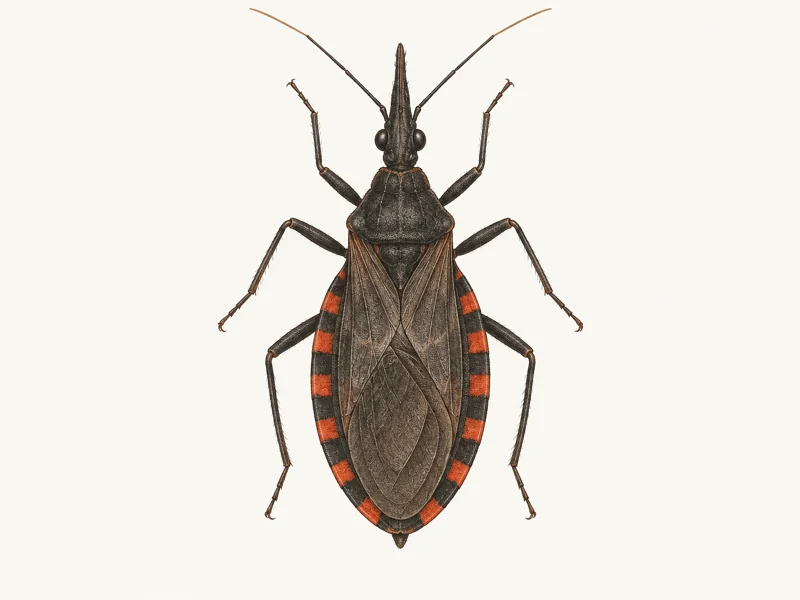
Annotated Anatomy Key (Kissing Bug)
- Cone-shaped head: Narrow, elongated cone-shaped head with a straight 3-segmented beak tucked underneath.
- Overlapping wings: Flat oval dark-brown back covered by overlapping half-leathery, half-membranous wings.
- Six slender legs: Three pairs of thin, relatively uniform dark legs without widened leaf-like pads.
- Striped abdomen rim: Distinct alternating orange-red and black bars framing the outer edge of the abdomen (connexivum).
Kissing Bugs Field Checklist
- Elongated cone-shaped head with a straight, slender 3-segmented beak tucked underneath
- Dark brown to black body with distinct orange, red, or tan stripes along the outer abdomen rim
- Flat oval back with overlapping leathery/membranous wings
- Nocturnal blood-feeder; never crush with bare hands
Side-by-Side Look-Alike Comparisons
Kissing Bugs Size at True Relative Scale
Quick Answer: Yes, kissing bugs (Triatominae) are present in Kansas. GBIF holds 64 verified sightings, and the recorded species is the Big Bed Bug (Triatoma sanguisuga). Activity peaks in July and August, so that is when homeowners should stay most alert.
Where Kissing Bugs Live in Kansas
Kansas spans humid continental climate in the east and semi-arid steppe in the west (USDA zones 5b-7a). The verified records cluster in the eastern part of the state. The top counties are Leavenworth, Sedgwick, Brown, Dickinson, and Douglas.
Outdoors, these insects hide in places where animals rest. Typical spots include:
- Wood piles and stacked lumber
- Rock piles and debris heaps
- Animal burrows and woodrat or other rodent nests
- Dog kennels, chicken coops, and barns
- Gaps under porches and sheds
They feed on blood from mammals, birds, and reptiles. Because of that, they tend to stay close to wildlife and pets.
When Kissing Bugs Are Most Active in Kansas
Kansas kissing bug season centers on July and August in the GBIF records. Adults fly at night in warm weather and are drawn to porch lights and bright windows. That is how most of them end up near, or inside, homes.
Sightings outside summer are less common but possible, especially indoors where temperatures stay mild. A single bug found in a house in late summer usually means it wandered in from outdoors rather than signaling an infestation.
Kansas Kissing Bug Identification
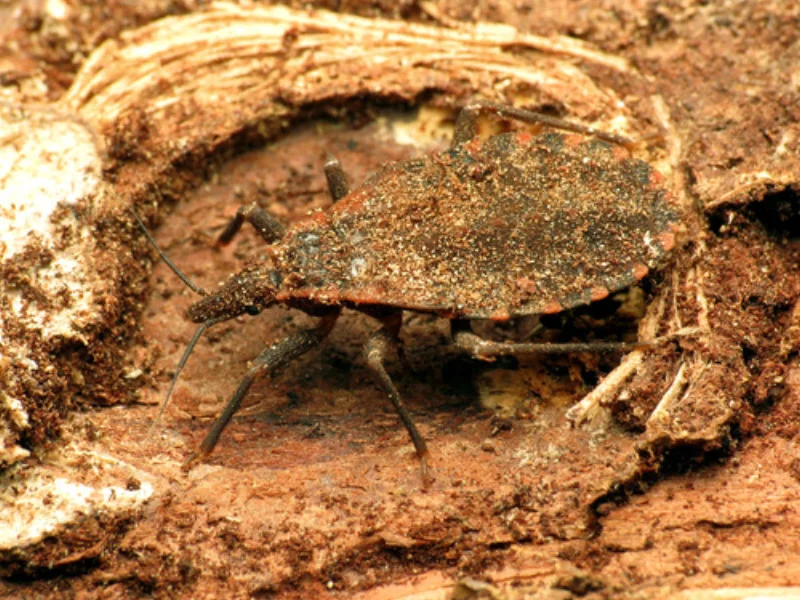
The Big Bed Bug is a large, flattened, dark brown to blackish insect, roughly three-quarters to one inch long. Look for these features:
- A narrow, cone-shaped head with a long, straight beak held under the body
- Reddish-orange or tan markings along the edge of the abdomen
- Six legs and slender antennae
- Wings folded flat over the back
If you find one, do not squash or handle it with bare hands. Place a jar or container over it, slide paper underneath, and seal it. Freeze or submerge it in rubbing alcohol, then show it to a local extension office or pest professional for confirmation.
Look-Alikes Frequently Mistaken for Kissing Bugs
Several common Kansas insects resemble kissing bugs at a glance. Most are harmless to people.
- Stink bugs: Shield-shaped and broad, with a short triangular head. Kissing bugs are longer and narrower with a cone-shaped head.
- Boxelder bugs: Black with red-orange lines on the wings. They cluster on sunny walls and box elder trees, and they are much smaller.
- Cockroaches: Flat and brown, but with long antennae, a shield-like plate behind the head, and a fast, scurrying movement. They lack the piercing beak.
How to Keep Kissing Bugs Out of Your Kansas Home
Preventing kissing bugs in Kansas starts with non-chemical Integrated Pest Management (IPM). General entomology guidance from university extension programs emphasizes exclusion, sanitation, and reducing outdoor attractants.
Exclusion
- Seal gaps around doors, windows, siding, and utility lines.
- Repair torn window screens and add door sweeps.
- Caulk cracks in the foundation and around the attic and crawl space vents.
Lighting and Sanitation
- Switch outdoor lights to yellow or LED bulbs, and turn off unneeded lights at night.
- Close blinds near bright windows during July and August.
- Move wood piles, rock piles, and debris away from the house.
- Clean pet bedding and kennels regularly, and keep animal housing tidy.
Wildlife and Moisture
- Remove rodent and bird nests near the foundation, attic, or crawl space.
- Fix leaks and reduce damp areas that attract rodents and other pests.
If you use any insecticide, choose a product labeled for the site and pest, and follow the EPA label exactly. Labels are the legal directions for use.
When to Call a Licensed Kansas Pest Professional
- You find more than one kissing bug indoors, or you find them repeatedly.
- You find bugs in bedrooms, near sleeping areas, or in pet spaces.
- You suspect a rodent or bird nest in the walls, attic, or crawl space.
- You cannot identify the insect and need confirmation.
Health note: This article is not medical advice. Kissing bugs can bite, and some people have allergic reactions. If someone is bitten and has concerning symptoms, call US Poison Control at 1-800-222-1222 and contact a doctor. Do not attempt home remedies.
IPM Prevention Checklist for Kansas Homes
- Repair torn window screens and install tight door sweeps
- Keep outdoor pets indoors at night and move wood/rock piles away from the house
- Turn off bright porch lights that attract adult bugs at night
 EXCLUSION BLUEPRINT
Inspect eaves, screens, door sweeps, foundation cracks, and utility penetrations around Kansas homes before peak season.
Kissing Bugs in Kansas: Frequently Asked Questions
Are there kissing bugs in Kansas?
Yes. GBIF lists 64 verified sightings, with the Big Bed Bug (Triatoma sanguisuga) as the recorded species. Leavenworth, Sedgwick, Brown, Dickinson, and Douglas counties report the most.
When are kissing bugs most active in Kansas?
Records peak in July and August. Adults fly at night and are drawn to lights.
Do kissing bugs infest homes like bed bugs?
Usually not. Most found indoors are lone adults that flew in from outside. Repeated finds may point to a nearby nest of rodents or birds.
What should I do if I find one?
Avoid touching it with bare hands. Trap it in a container, seal it, and have it identified by an extension office or licensed pest professional. For bites with worrying symptoms, call US Poison Control at 1-800-222-1222 and see a doctor.
Sources & Verification
- Texas A&M Kissing Bug Citizen Science Program
- CDC — Triatomine Bugs (Kissing Bugs)
- GBIF Global Biodiversity Occurrence Records
Data refreshed · Editorial & GBIF Methodology