Kissing Bugs in California: Where They Live, When They're Active, and How to Prevent Them
Quick Answer: Yes, kissing bugs are common in California, with 572 verified GBIF sightings concentrated in Riverside, Los Angeles, Fresno, San Bernardino, and San Diego counties. The Western conenose (Triatoma protracta), Triatoma rubida, and Triatoma recurva are recorded in the state. Activity peaks in June, July, and August, when adults fly toward lights at night.
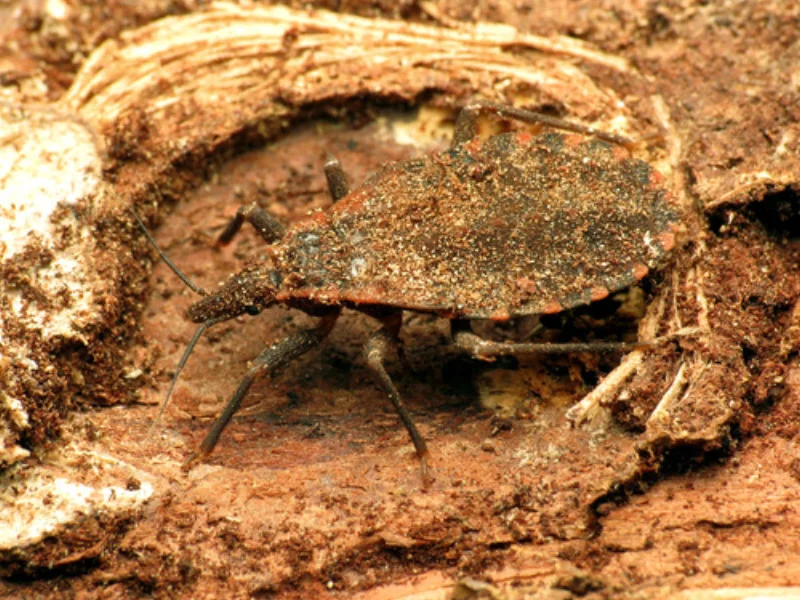
When Kissing Bugs Are Most Active in California
Now (November): Lower Outdoor ActivityVerified California Counties, Species & US Range
Counties with Verified Observations
- Riverside
- Los Angeles
- Fresno
- San Bernardino
- San Diego
- San Luis Obispo
- Santa Barbara
- Santa Clara
- Sonoma
- Contra Costa
Species Recorded in California
| Species | Scientific Name | GBIF Records |
|---|---|---|
| Western Conenose | Triatoma protracta | 530 |
| Triatoma rubida | Triatoma rubida | 23 |
| Triatoma recurva | Triatoma recurva | 6 |
How California Compares to Neighboring States
Note: Wildlife does not follow state or county lines. GBIF totals reflect verified citizen and museum records, so low counts in a neighboring county do not guarantee absence.
How to Identify Kissing Bugs
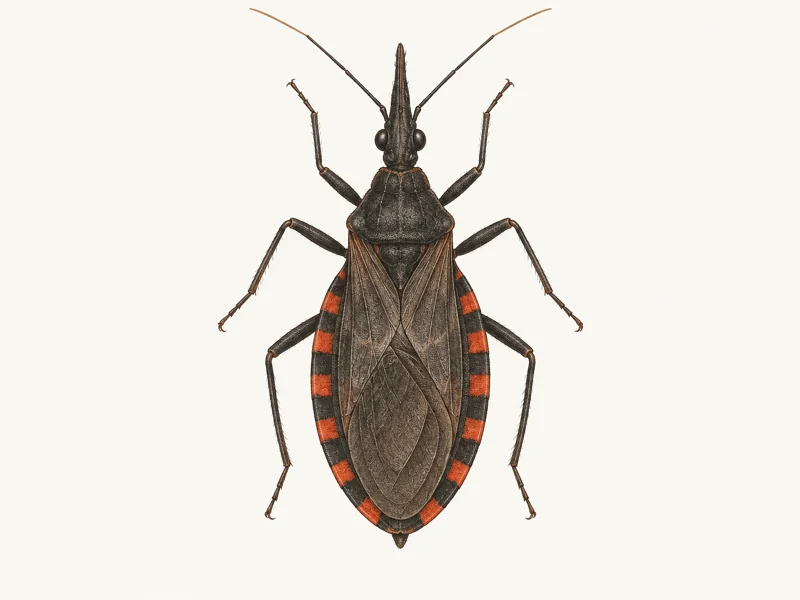
Annotated Anatomy Key (Kissing Bug)
- Cone-shaped head: Narrow, elongated cone-shaped head with a straight 3-segmented beak tucked underneath.
- Overlapping wings: Flat oval dark-brown back covered by overlapping half-leathery, half-membranous wings.
- Six slender legs: Three pairs of thin, relatively uniform dark legs without widened leaf-like pads.
- Striped abdomen rim: Distinct alternating orange-red and black bars framing the outer edge of the abdomen (connexivum).
Kissing Bugs Field Checklist
- Elongated cone-shaped head with a straight, slender 3-segmented beak tucked underneath
- Dark brown to black body with distinct orange, red, or tan stripes along the outer abdomen rim
- Flat oval back with overlapping leathery/membranous wings
- Nocturnal blood-feeder; never crush with bare hands
Side-by-Side Look-Alike Comparisons
Kissing Bugs Size at True Relative Scale
Quick Answer: Yes, kissing bugs are common in California, with 572 verified GBIF sightings concentrated in Riverside, Los Angeles, Fresno, San Bernardino, and San Diego counties. The Western conenose (Triatoma protracta), Triatoma rubida, and Triatoma recurva are recorded in the state. Activity peaks in June, July, and August, when adults fly toward lights at night.
Where Kissing Bugs Live in California
For anyone asking whether there are kissing bugs in California, verified records show they are widespread. Sightings cluster in Southern California and the Central Valley, where warm, dry conditions suit these blood-feeding insects. Riverside, Los Angeles, Fresno, San Bernardino, and San Diego counties lead the state in GBIF observations.
Kissing bugs (subfamily Triatominae) typically live alongside wild hosts. In California, the Western conenose is closely associated with woodrat (packrat) nests, which are often built in brush, rock piles, and canyon edges. Homes bordering chaparral, desert scrub, or foothill habitat see the most encounters.
California Kissing Bug Identification
- Size: Roughly 1/2 to 1 inch long, depending on species. The Western conenose is on the smaller end.
- Head: Long, narrow, and cone-shaped, with thin antennae attached near the front.
- Mouthparts: A slender, straight beak that folds under the head.
- Color: Dark brown to black. Triatoma rubida may show reddish-orange markings along the abdomen edges.
- Body: Flattened and oval, with legs that look thin compared to the body.
When Kissing Bugs Are Most Active in California
California kissing bug season peaks in June, July, and August. During these warm months, adult bugs disperse from host nests and fly at night, often drawn to porch lights and lit windows. This is when most bugs end up indoors.
Kissing bugs feed at night while hosts sleep, which is why bites are often noticed in the morning. Activity tends to slow in cooler months, though bugs living near indoor or under-house rodent nests may appear at other times of year.
Look-Alikes Frequently Mistaken for Kissing Bugs
Several common California insects get confused with kissing bugs. Checking the head shape and beak is the fastest way to tell them apart.
- Stink bugs: These have a broad, shield-shaped body and a short, wide head rather than a long cone-shaped one. They feed on plants, not blood.
- Boxelder bugs: Black with bright red-orange lines on the back and wing edges. They gather in large groups on sunny walls and trees and do not bite people for blood.
- Cockroaches: Fast runners with long antennae and a head tucked under a shield-like plate. They lack the straight piercing beak of a kissing bug.
When identification is uncertain, a clear photo shared with a local University of California Cooperative Extension office or county agricultural commissioner can help confirm the species.
How to Keep Kissing Bugs Out of Your California Home
Knowing how to prevent kissing bugs in California starts with Integrated Pest Management (IPM). Non-chemical steps such as exclusion, habitat reduction, and lighting changes should come first.
Exclusion
- Seal gaps around doors, windows, utility lines, and foundation cracks with caulk or weatherstripping.
- Repair torn window and door screens, and install door sweeps.
- Screen attic, crawlspace, and chimney openings.
Habitat and Host Reduction
- Remove woodrat nests, brush piles, and stacked wood near the house.
- Keep firewood and debris well away from exterior walls.
- Address rodent activity in attics, garages, and under decks.
- Keep pets indoors at night where possible, and keep pet bedding off the ground and away from walls.
Lighting Adjustments
- Switch to yellow or warm-toned LED bulbs outdoors, which attract fewer insects.
- Turn off porch lights when not needed and close blinds at night during summer.
Chemical Options
Insecticides are a secondary step and work best combined with exclusion and habitat cleanup. Anyone using a product should follow the EPA-registered label exactly, including application sites and safety precautions.
When to Call a Licensed California Pest Professional
- Kissing bugs are found indoors repeatedly or in bedrooms.
- Rodent nests are present in walls, attics, or crawlspaces.
- Nymphs (wingless young bugs) appear, suggesting breeding nearby.
- Exclusion efforts have not stopped new sightings.
A professional licensed by the California Structural Pest Control Board can inspect and treat safely.
Health Note
Kissing bugs are medically significant. Some people experience allergic reactions to bites, and these insects can carry the parasite that causes Chagas disease. This guide is not medical advice. For bite reactions, contact US Poison Control at 1-800-222-1222 and consult a doctor. Seek emergency care for signs of a severe allergic reaction. Avoid crushing bugs with bare hands.
IPM Prevention Checklist for California Homes
- Repair torn window screens and install tight door sweeps
- Keep outdoor pets indoors at night and move wood/rock piles away from the house
- Turn off bright porch lights that attract adult bugs at night
 EXCLUSION BLUEPRINT
Inspect eaves, screens, door sweeps, foundation cracks, and utility penetrations around California homes before peak season.
Kissing Bugs in California: Frequently Asked Questions
Are kissing bugs common in California?
Yes. California has 572 verified GBIF sightings, with the most records in Riverside, Los Angeles, Fresno, San Bernardino, and San Diego counties.
What kissing bug species live in California?
Recorded species include the Western conenose (Triatoma protracta), Triatoma rubida, and Triatoma recurva.
When is kissing bug season in California?
Activity peaks in June, July, and August, when adults fly at night and are drawn to lights.
What should Californians do with a suspected kissing bug?
Avoid touching it with bare hands. Use gloves or a container to capture it, then contact a UC Cooperative Extension office or county agricultural commissioner for identification. For bite concerns, call Poison Control at 1-800-222-1222 or a doctor.
Sources & Verification
- Texas A&M Kissing Bug Citizen Science Program
- CDC — Triatomine Bugs (Kissing Bugs)
- GBIF Global Biodiversity Occurrence Records
Data refreshed · Editorial & GBIF Methodology