Kissing Bugs in Arkansas: Identification, Season, and Prevention
Quick Answer: Kissing bugs in Arkansas are rare. GBIF lists just 2 verified sightings, both of the big bed bug (Triatoma sanguisuga), with Conway and Johnson counties leading the records. Most bugs people find in the home turn out to be look-alikes, but it is still smart to know how to identify a true kissing bug and keep it outside.
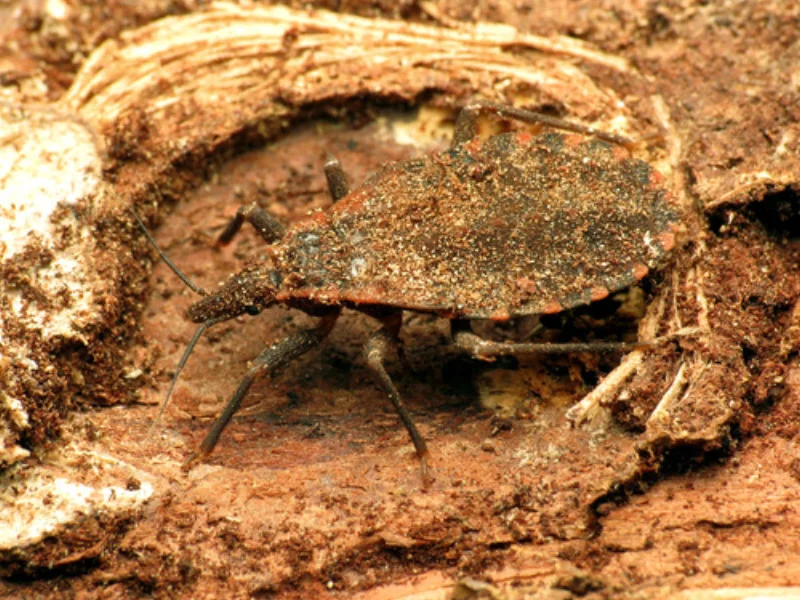
When Kissing Bugs Are Most Active in Arkansas
Now (November): Lower Outdoor ActivityVerified Arkansas Counties, Species & US Range
Counties with Verified Observations
- Conway
- Johnson
Species Recorded in Arkansas
| Species | Scientific Name | GBIF Records |
|---|---|---|
| Big Bed Bug | Triatoma sanguisuga | 2 |
How Arkansas Compares to Neighboring States
Note: Wildlife does not follow state or county lines. GBIF totals reflect verified citizen and museum records, so low counts in a neighboring county do not guarantee absence.
How to Identify Kissing Bugs
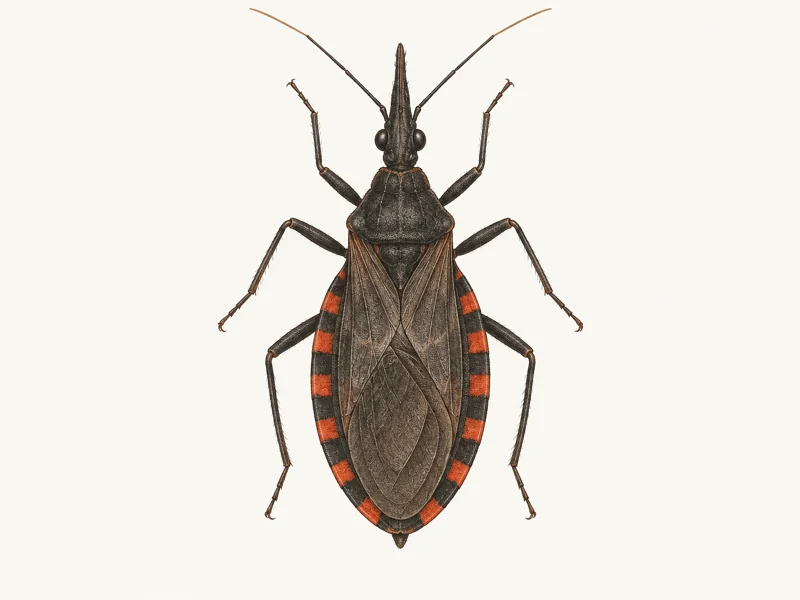
Annotated Anatomy Key (Kissing Bug)
- Cone-shaped head: Narrow, elongated cone-shaped head with a straight 3-segmented beak tucked underneath.
- Overlapping wings: Flat oval dark-brown back covered by overlapping half-leathery, half-membranous wings.
- Six slender legs: Three pairs of thin, relatively uniform dark legs without widened leaf-like pads.
- Striped abdomen rim: Distinct alternating orange-red and black bars framing the outer edge of the abdomen (connexivum).
Kissing Bugs Field Checklist
- Elongated cone-shaped head with a straight, slender 3-segmented beak tucked underneath
- Dark brown to black body with distinct orange, red, or tan stripes along the outer abdomen rim
- Flat oval back with overlapping leathery/membranous wings
- Nocturnal blood-feeder; never crush with bare hands
Side-by-Side Look-Alike Comparisons
Kissing Bugs Size at True Relative Scale
Quick Answer: Kissing bugs in Arkansas are rare. GBIF lists just 2 verified sightings, both of the big bed bug (Triatoma sanguisuga), with Conway and Johnson counties leading the records. Most bugs people find in the home turn out to be look-alikes, but it is still smart to know how to identify a true kissing bug and keep it outside.
Where Kissing Bugs Live in Arkansas
So, are there kissing bugs in Arkansas? Yes, but they are uncommon. The two verified GBIF occurrence records come from Conway and Johnson counties in the Arkansas River Valley region, and the only species recorded is the big bed bug, Triatoma sanguisuga.
Kissing bugs belong to the subfamily Triatominae. In the wild they shelter in woodrat nests, animal burrows, rock piles, tree hollows, and brush or wood piles, and they feed on the blood of mammals and birds. Arkansas has a humid subtropical climate (USDA zones 6b-8b) with hot, muggy summers and mild, damp winters, which suits many outdoor insects but has produced few kissing bug records.
Basic Arkansas Kissing Bug Identification
Adults of T. sanguisuga are roughly three-quarters of an inch to an inch long, dark brown to black, with a cone-shaped head and a long, thin beak. The edges of the abdomen are usually marked with alternating reddish-orange and dark bands.
- Narrow, elongated head with a straight beak held under the body
- Flat, oval body with a banded orange-and-dark edge
- Thin legs and long antennae
- Wings folded flat over the back
If you are unsure, photograph the insect and send it to your county Cooperative Extension office. Do not handle it bare-handed.
When Kissing Bugs Are Most Active in Arkansas
The two GBIF records fall in June and August, so the Arkansas kissing bug season appears to center on summer. Adults tend to fly at night in warm weather and are drawn to porch lights and other bright lights near homes.
Because the sample is only two records, treat these months as a general guide rather than a firm calendar. Sightings are most likely on warm evenings near wooded edges, kennels, and wood piles.
Kissing bugs can carry Trypanosoma cruzi, the parasite behind Chagas disease, in their droppings. Transmission in the United States is considered uncommon, but the species is medically significant. This guide offers no medical diagnosis or home treatment. If you are bitten or have a concerning reaction, call US Poison Control at 1-800-222-1222 and contact a doctor.
Look-Alikes Frequently Mistaken for Kissing Bugs
Several common Arkansas insects get mistaken for kissing bugs. Checking the head shape and beak helps sort them out quickly.
- Stink bugs: Shield-shaped and wider, with a short, broad head. They often enter homes in fall to overwinter.
- Boxelder bugs: Black with red-orange lines along the wings, and they cluster on sunny walls. They have a rounder look than a kissing bug.
- Cockroaches: Flat and brown with long antennae, but they have chewing mouthparts and no needle-like beak, and they run quickly rather than crawl.
A kissing bug's cone-shaped head and long beak, combined with the banded abdomen edge, set it apart from all three.
How to Keep Kissing Bugs Out of Your Arkansas Home
Anyone wondering how to prevent kissing bugs in Arkansas should start with non-chemical steps. Integrated Pest Management (IPM) guidance from university extension programs emphasizes exclusion, sanitation, and reducing attractants before any pesticide is considered.
- Seal gaps around doors, windows, soffits, and utility lines, and repair damaged screens.
- Install weatherstripping and door sweeps.
- Switch outdoor lights to yellow or LED bulbs, or turn them off when not needed, to reduce night attraction.
- Move wood piles, brush, and rock piles away from the foundation.
- Clear woodrat nests, rodent burrows, and bird nests near the house.
- Keep pet bedding and kennels clean and checked, and reduce rodent access.
- Fix leaks and reduce moisture around the foundation.
If you find a suspected kissing bug indoors, wear gloves, place it in a container, and keep it for identification. Do not crush it.
When to Call a Licensed Arkansas Pest Professional
- You have confirmed more than one kissing bug inside the home.
- You find bugs repeatedly near beds or pet sleeping areas.
- You suspect rodent or bird nests in walls, attics, or crawl spaces.
- You cannot identify what you are seeing.
If insecticides are used, always follow the EPA-registered product label exactly, and let a licensed professional handle indoor or structural applications.
IPM Prevention Checklist for Arkansas Homes
- Repair torn window screens and install tight door sweeps
- Keep outdoor pets indoors at night and move wood/rock piles away from the house
- Turn off bright porch lights that attract adult bugs at night
 EXCLUSION BLUEPRINT
Inspect eaves, screens, door sweeps, foundation cracks, and utility penetrations around Arkansas homes before peak season.
Kissing Bugs in Arkansas: Frequently Asked Questions
Are there kissing bugs in Arkansas?
Yes, but they are rare. GBIF has 2 verified records, in Conway and Johnson counties, both of Triatoma sanguisuga.
What month are kissing bugs most active in Arkansas?
The recorded peak months are June and August. Warm summer nights are the most likely time to see adults near lights.
What should I do if I find a kissing bug?
Avoid touching it with bare hands. Capture it in a sealed container using gloves, and ask your county extension office to confirm the identification.
What if I think a kissing bug bit me?
Call US Poison Control at 1-800-222-1222 and see a doctor. This site does not offer medical advice or home remedies.
Sources & Verification
- Texas A&M Kissing Bug Citizen Science Program
- CDC — Triatomine Bugs (Kissing Bugs)
- GBIF Global Biodiversity Occurrence Records
Data refreshed · Editorial & GBIF Methodology