Carpenter Ants in New York: Species, Season, and Prevention
Quick Answer: Carpenter ants (Camponotus) are common in New York, with 5,331 verified GBIF sightings statewide. Activity peaks from May through August, and the main concern is structural damage to moist or decayed wood. Moisture control and exclusion are the first line of defense.
When Carpenter Ants Are Most Active in New York
Now (November): Lower Outdoor ActivityVerified New York Counties, Species & US Range
Counties with Verified Observations
- Westchester
- Wyoming
- Suffolk
- Bronx
- Monroe
- Tompkins
- Onondaga
- Albany
- Erie
- Richmond
Species Recorded in New York
| Species | Scientific Name | GBIF Records |
|---|---|---|
| Black Carpenter Ant | Camponotus pennsylvanicus | 2,832 |
| Red Carpenter Ant | Camponotus chromaiodes | 799 |
| Bearded Carpenter ant | Camponotus subbarbatus | 415 |
How New York Compares to Neighboring States
Note: Wildlife does not follow state or county lines. GBIF totals reflect verified citizen and museum records, so low counts in a neighboring county do not guarantee absence.
How to Identify Carpenter Ants
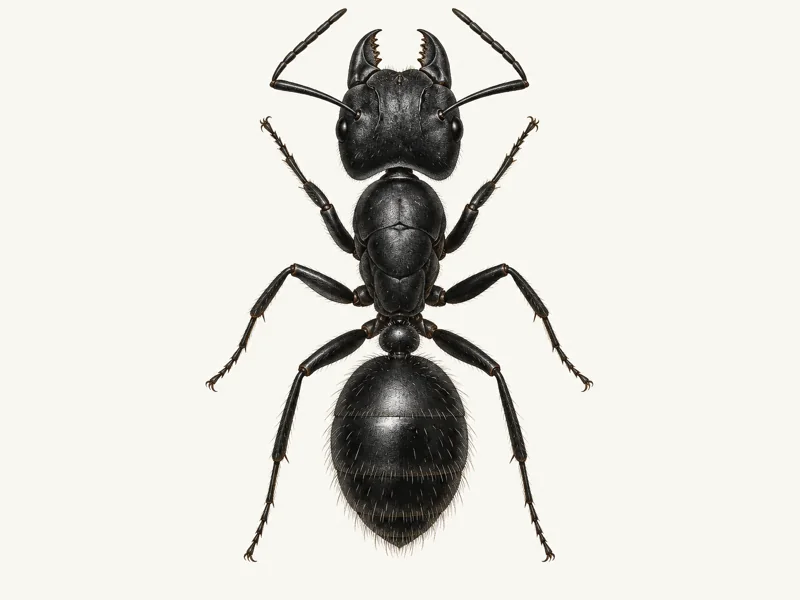
Annotated Anatomy Key (Carpenter Ant)
- Elbowed antennae: Sharply bent antennae on a broad heart-shaped black head (straight in termites).
- Rounded black thorax: Evenly arched wingless thorax without spines; workers vary widely in size (6–13 mm).
- Single waist node: EXACTLY ONE distinct small node (petiole) pinching the narrow waist.
- Silky matte abdomen: Plump black gaster lightly dusted with pale golden-gray hairs; excavates damp wood.
Carpenter Ants Field Checklist
- Large black, red-and-black, or brown ant with a smoothly rounded thorax profile
- Elbowed antennae and a single narrow waist node (petiole)
- Excavates smooth galleries in damp wood rather than eating wood like termites
- Pushes out piles of coarse sawdust-like frass mixed with dead insect fragments
Side-by-Side Look-Alike Comparisons
Carpenter Ants Size at True Relative Scale
Quick Answer: Carpenter ants (Camponotus) are common in New York, with 5,331 verified GBIF sightings statewide. Activity peaks from May through August, and the main concern is structural damage to moist or decayed wood. Moisture control and exclusion are the first line of defense.
Where Carpenter Ants Live in New York
So, are there carpenter ants in New York? Yes, and they turn up across the state. GBIF records are densest in Westchester, Wyoming, Suffolk, Bronx, and Monroe counties, spanning both the humid continental inland climate and the milder humid subtropical zone near New York City and Long Island (USDA zones 3b-7b).
Three species are recorded in the state:
- Black Carpenter Ant (Camponotus pennsylvanicus)
- Red Carpenter Ant (Camponotus chromaiodes)
- Bearded Carpenter Ant (Camponotus subbarbatus)
Nesting habits
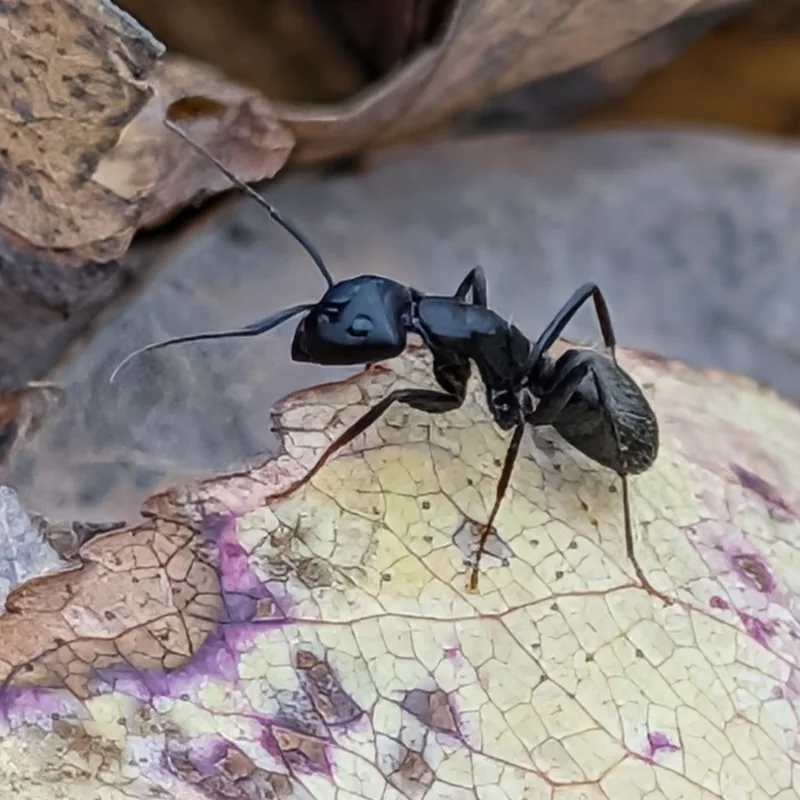
Outdoors, colonies nest in dead trees, stumps, firewood piles, and rotting logs. Indoors, they favor wood softened by moisture, such as window frames, roof edges, porch posts, and wall voids near leaky plumbing. Carpenter ants do not eat wood. They excavate smooth galleries to make room for the nest.
When Carpenter Ants Are Most Active in New York
New York carpenter ant season runs from late spring through summer, with GBIF sightings peaking in May, June, July, and August. Foraging workers are most visible in the evening and at night as colonies grow.
Winged reproductives (swarmers) often appear in spring. Seeing swarmers indoors can suggest a mature colony inside the structure. Sightings of a few wandering workers in the kitchen in early spring are common, and they often come from a nest outdoors or in a damp wall.
Signs of an active colony
- Coarse sawdust-like debris (frass) piled beneath small openings, often mixed with insect parts
- Faint rustling sounds inside walls
- Large black, red-and-black, or brownish ants trailing along baseboards or pipes at night
- Smooth, sanded-looking tunnels in damaged wood
Look-Alikes Frequently Mistaken for Carpenter Ants
New York carpenter ant identification starts with body shape. Carpenter ants are fairly large, have a single node between thorax and abdomen, an evenly rounded thorax profile when viewed from the side, and a circle of tiny hairs at the abdomen tip. Several local insects are often confused with them:
- Termites: Have straight antennae, a thick waist, and wings of equal length. Carpenter ants have elbowed antennae, a pinched waist, and forewings longer than hindwings. Termite damage usually contains mud and no clean frass.
- Flying ants: Many ant species produce winged swarmers. Check the waist and wing proportions, or the species may be harmless.
- Fire ants: Often reported by homeowners, but they are not the same as carpenter ants. Compare size, color, and nesting in soil rather than wood.
- Pavement ants: Smaller, dark brown, with parallel lines on the head and thorax. They nest under slabs and in cracks, not in wood.
If you are unsure, collect a few ants in a sealed container or take a clear photo and bring it to your local cooperative extension office for identification.
How to Keep Carpenter Ants Out of Your New York Home
Learning how to prevent carpenter ants in New York comes down to removing moisture and entry points. University extension IPM guidance consistently stresses these non-chemical steps first:
- Fix leaky roofs, gutters, pipes, and window seals, and ventilate crawl spaces and attics.
- Replace water-damaged or rotted wood rather than just treating it.
- Trim branches and shrubs so they do not touch the house or roof.
- Store firewood off the ground and away from the foundation, ideally 20 feet or more.
- Seal gaps around utility lines, vents, and door and window frames.
- Remove stumps, dead trees, and woody debris near the structure.
If baits or insecticides are used, choose products labeled for carpenter ants and follow the EPA-registered label exactly. Spraying visible workers alone rarely solves the problem, because the colony and any satellite nests remain.
When to call a licensed New York pest professional
- You find swarmers indoors or frass repeatedly appearing
- You hear activity in walls or suspect hidden nests
- Damage is near structural wood, or moisture problems cannot be located
- Control attempts fail after a few weeks
Carpenter ants can bite and spray formic acid, but they are not considered medically significant. If someone has a severe reaction, call US Poison Control at 1-800-222-1222 and contact a doctor.
IPM Prevention Checklist for New York Homes
- Repair roof leaks, clogged gutters, and plumbing drips that soften structural wood
- Trim tree branches touching rooflines or siding
- Store firewood elevated and away from exterior walls
 EXCLUSION BLUEPRINT
Inspect eaves, screens, door sweeps, foundation cracks, and utility penetrations around New York homes before peak season.
Carpenter Ants in New York: Frequently Asked Questions
Are there carpenter ants in New York?
Yes. They are common statewide, with 5,331 verified GBIF sightings, including Black, Red, and Bearded Carpenter Ants.
When is carpenter ant season in New York?
Activity peaks from May through August, with swarmers often seen in spring.
Do carpenter ants eat the wood in my house?
No. They tunnel through wood to build nests, which can weaken it over time, especially when it is damp or decayed.
Are carpenter ants the same as termites?
No. Carpenter ants have elbowed antennae, a narrow waist, and unequal wing lengths. Termites have straight antennae, a broad waist, and equal wings.
Sources & Verification
- Penn State Extension — Carpenter Ants
- University of Minnesota Extension — Carpenter Ants
- GBIF Global Biodiversity Occurrence Records
Data refreshed · Editorial & GBIF Methodology