Carpenter Ant vs Wasp: How to Tell Them Apart and Which Is Worse
Quick ID Verdict: Look at the waist and the thorax. A carpenter ant (Camponotus) has a smoothly rounded thorax and a sturdy, ant-shaped body, while a wasp (Vespidae) has a slender, smooth, nearly hairless body with a very narrow pinched waist. Carpenter ants threaten wood, and wasps threaten people with medically significant stings.
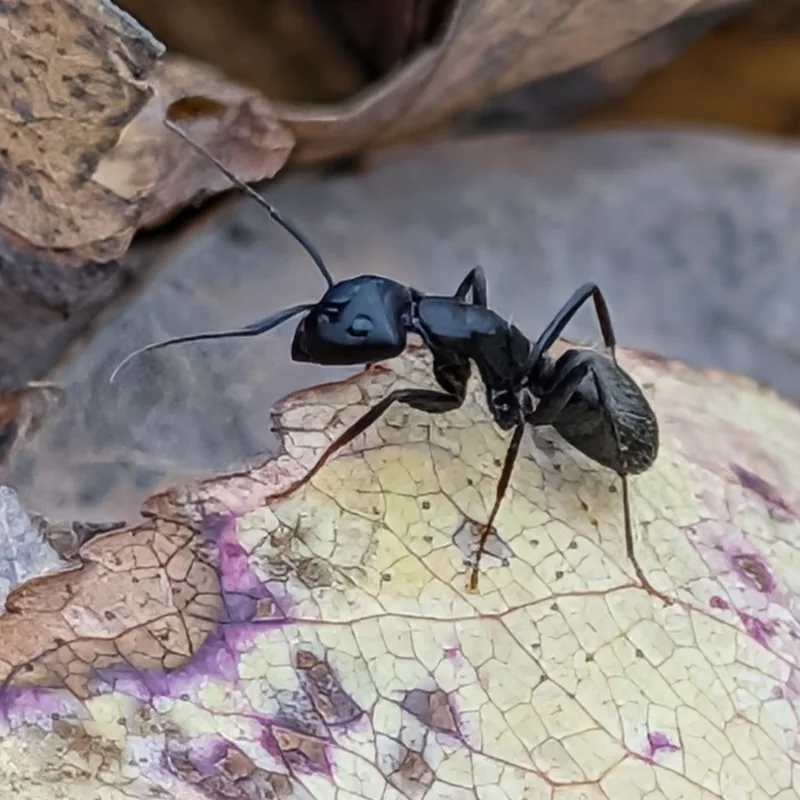
Carpenter Ant
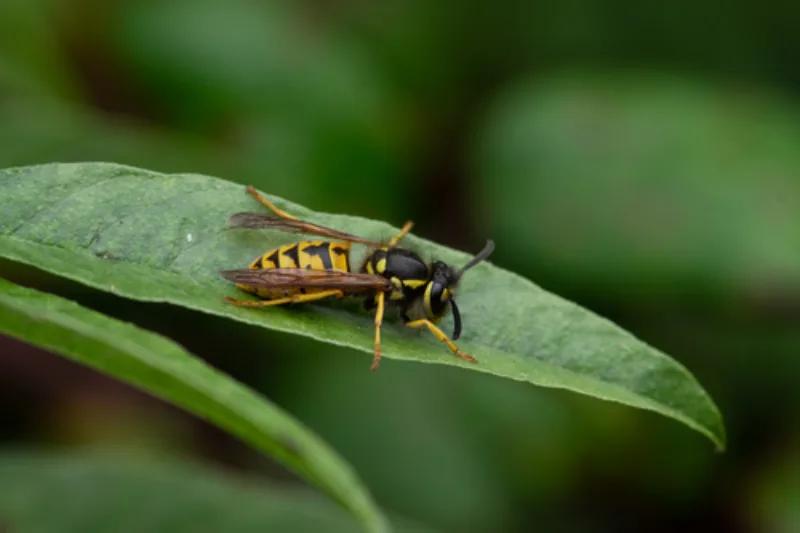
Wasp
Side-by-Side Comparison Table
| Trait | Carpenter Ant | Wasp |
|---|---|---|
| Scientific Group | Camponotus | Vespidae |
| Category | Insect | Insect |
| Typical Size | 6–16 mm | 12–28 mm |
| Danger Level | Structural | Medically Significant |
| Bites or Stings? | Yes | Yes |
| Peak US Months | April, May, June, July | July, August, September, October |
| Key ID Trait | Large black, red-and-black, or brown ant with a smoothly rounded thorax profile | Slender, smooth, nearly hairless body with a very narrow pinched waist |
Carpenter Ant vs. Wasp: True Size Comparison
Side-by-Side Anatomy Blueprint
Compare body segments, antennae, leg count, and key markings directly before treating or removing either species.
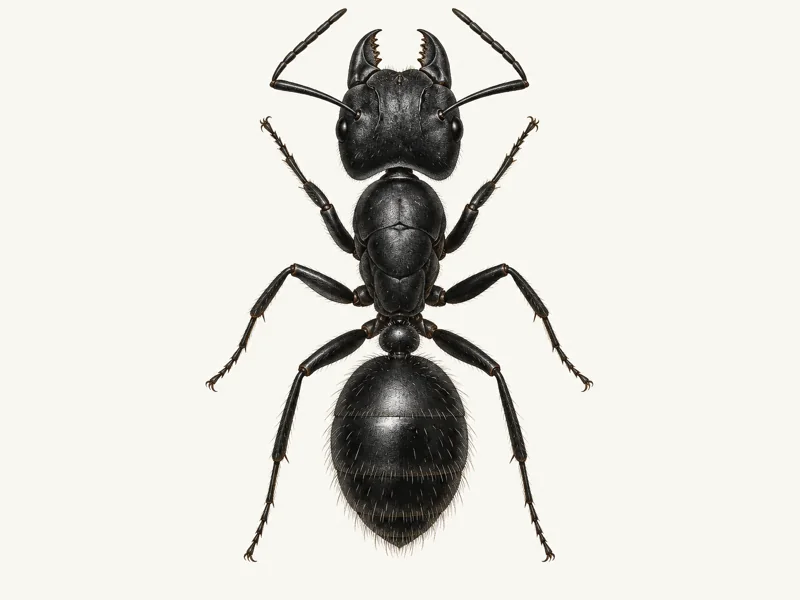
- Elbowed antennae: Sharply bent antennae on a broad heart-shaped black head (straight in termites).
- Rounded black thorax: Evenly arched wingless thorax without spines; workers vary widely in size (6–13 mm).
- Single waist node: EXACTLY ONE distinct small node (petiole) pinching the narrow waist.
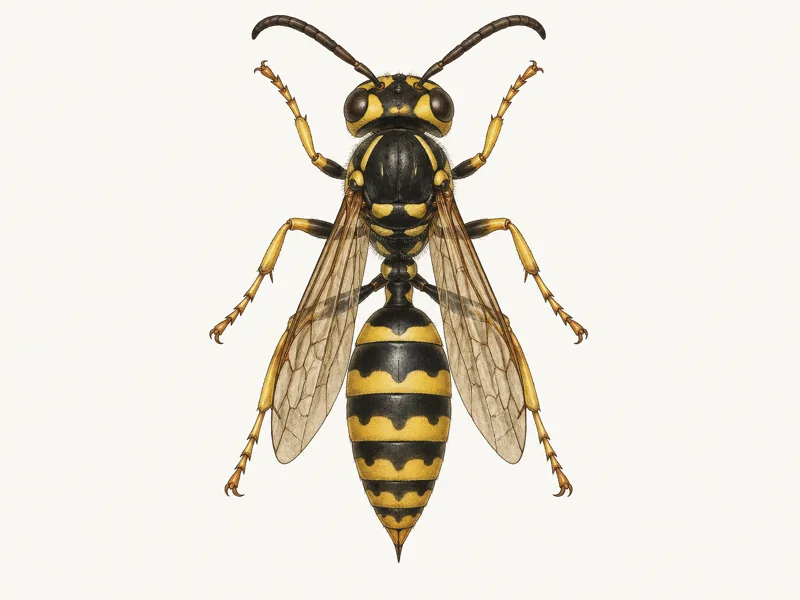
- Curved dark antennae: Segmented dark antennae and strong chewing mandibles for wood pulp nests.
- Smoky folded wings: Two pairs of narrow veined wings that fold lengthwise along the back at rest.
- Pinched waist: Sharp slender constriction separating the smooth hairless thorax from abdomen.
Quick Answer: Look at the waist and the thorax. A carpenter ant (Camponotus) has a smoothly rounded thorax and a sturdy, ant-shaped body, while a wasp (Vespidae) has a slender, smooth, nearly hairless body with a very narrow pinched waist. Carpenter ants threaten wood, and wasps threaten people with medically significant stings.
Winged carpenter ant swarmers often get mistaken for wasps, especially in spring when both appear near homes. Knowing the difference between a carpenter ant and a wasp helps homeowners choose the right response and avoid unnecessary risk.
Key Visual & Physical Differences
Size alone can be misleading, but it offers a useful first clue. Verified measurements put carpenter ants at 6-16 mm, while wasps in the family Vespidae range from 12-28 mm. A large insect over about 16 mm is far more likely to be a wasp.
Carpenter Ant Identification
- Color: Large black, red-and-black, or brown.
- Thorax: Smoothly rounded, evenly arched profile when viewed from the side.
- Antennae: Elbowed, with a distinct bend.
- Waist: A single small node between the thorax and abdomen, not a long, thread-like stalk.
- Wings (swarmers only): Front wings noticeably longer than hind wings; most workers are wingless.
Wasp Identification
- Body: Slender, smooth, and nearly hairless.
- Waist: Very narrow and pinched, giving a sharply segmented look.
- Color: Often yellow-and-black, black, or reddish-brown, depending on species.
- Antennae: Usually straight or gently curved rather than sharply elbowed.
- Wings: All adults are winged; many fold wings lengthwise at rest.
For quick carpenter ant vs wasp identification, remember this: wingless means ant, and a pinched, wasp-thin waist on a smooth, shiny body means wasp. When a winged insect has elbowed antennae and a rounded thorax, it is likely a carpenter ant swarmer.
Behavior, Habitat & Danger Comparison
Carpenter Ants
Carpenter ants nest in wood, favoring material softened by moisture, such as rotted window sills, leaky roof edges, and damp crawl spaces. They do not eat wood; they excavate galleries and push out sawdust-like debris called frass. Workers often forage at night along trails, fences, and utility lines.
Their danger is structural. Large or long-established colonies can weaken framing, trim, and other wooden components over time. They may bite if handled, but they are not considered a medical threat for most people.
Wasps
Vespid wasps, including yellowjackets, hornets, and paper wasps, build papery nests under eaves, in shrubs, inside wall voids, or in ground burrows. They hunt insects and scavenge sweets and proteins, which draws them to picnics and garbage cans. Colonies become more defensive as they grow.
Their danger is medically significant. Wasps can sting repeatedly, and some people experience severe allergic reactions. Anyone stung who has trouble breathing, swelling of the face or throat, or dizziness should call 911. For other sting questions, contact US Poison Control at 1-800-222-1222 and consult a doctor.
Side-by-Side Snapshot
- Group: Carpenter ants (Camponotus) vs wasps (Vespidae)
- Size: 6-16 mm vs 12-28 mm
- Key ID: Rounded thorax vs narrow pinched waist
- Primary risk: Structural damage vs stings
Which One Is Worse for Homeowners?
The answer depends on the type of harm. Wasps pose the more immediate risk to people, especially children, pets, and anyone with sting allergies. Carpenter ants pose the slower, costlier risk to property, since hidden damage can build for years before it is noticed.
IPM Steps for Carpenter Ants
- Fix leaks and replace water-damaged wood to remove nesting sites.
- Trim branches and shrubs away from siding and rooflines.
- Seal gaps around pipes, wires, and foundation cracks.
- Store firewood off the ground and away from the house.
IPM Steps for Wasps
- Keep trash cans tightly lidded and clean up food and sugary drinks outdoors.
- Seal openings in eaves, vents, and siding before nesting season.
- Check sheds and overhangs early in spring, when nests are small.
- Keep a safe distance from active nests and avoid swatting.
If non-chemical steps fall short, use only products labeled for the specific pest and follow the EPA product label exactly. Large wasp nests, nests inside walls, or suspected carpenter ant damage are best handled by a licensed pest management professional.
Frequently Asked Questions
Is a winged black insect a carpenter ant or wasp?
Check the antennae and waist. Elbowed antennae and a rounded thorax point to a carpenter ant swarmer, while a very narrow pinched waist and smooth, slender body point to a wasp.
Can carpenter ants sting like wasps?
No. Carpenter ants can bite and may spray formic acid, but they do not have a stinger. Wasps can sting repeatedly and are considered medically significant.
Do carpenter ants mean there is moisture in the house?
Often, yes. Carpenter ants prefer damp or decaying wood, so an indoor colony frequently signals a leak or moisture problem that should be repaired.
When should a homeowner call a professional?
Call a professional for wasp nests near doorways or inside walls, for anyone with sting allergies in the household, or when sawdust-like frass suggests carpenter ants are nesting in the structure.