Carpenter Ants in Arizona: Identification, Season, and Prevention
Quick Answer: Yes, carpenter ants (genus Camponotus) are common in Arizona, with 6,198 verified GBIF sightings statewide. Activity peaks in April, July, and August. They hollow out damp or damaged wood for nests, so moisture control and exclusion are the best first steps.
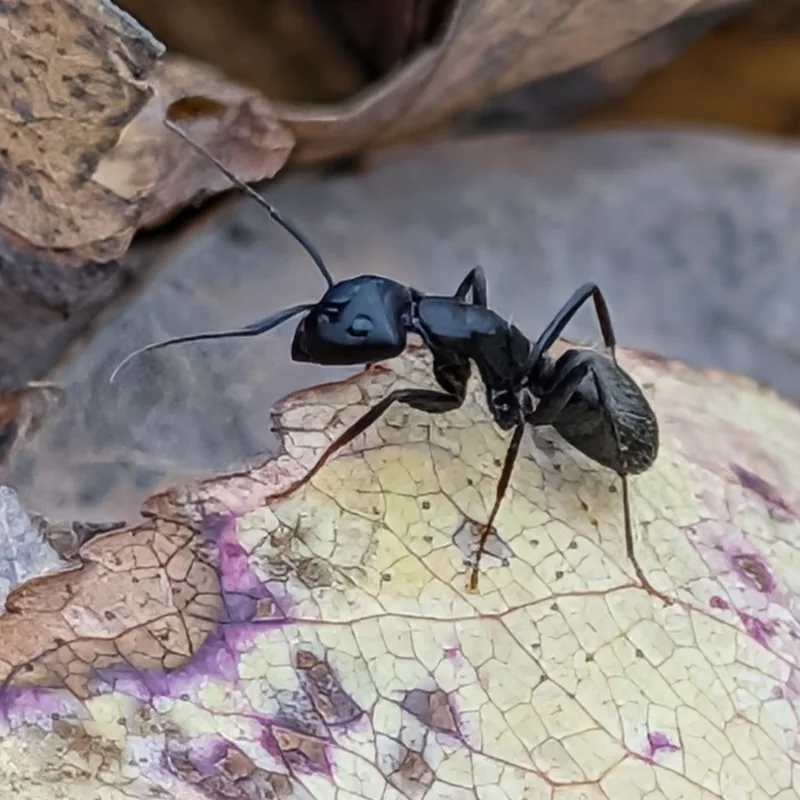
When Carpenter Ants Are Most Active in Arizona
Now (November): Lower Outdoor ActivityVerified Arizona Counties, Species & US Range
Counties with Verified Observations
- Cochise
- Pima
- Yavapai
- Pinal
Species Recorded in Arizona
| Species | Scientific Name | GBIF Records |
|---|---|---|
| Camponotus ocreatus | Camponotus ocreatus | 892 |
| Camponotus sansabeanus | Camponotus sansabeanus | 806 |
| Bicolored Carpenter Ant | Camponotus vicinus | 678 |
How Arizona Compares to Neighboring States
Note: Wildlife does not follow state or county lines. GBIF totals reflect verified citizen and museum records, so low counts in a neighboring county do not guarantee absence.
How to Identify Carpenter Ants
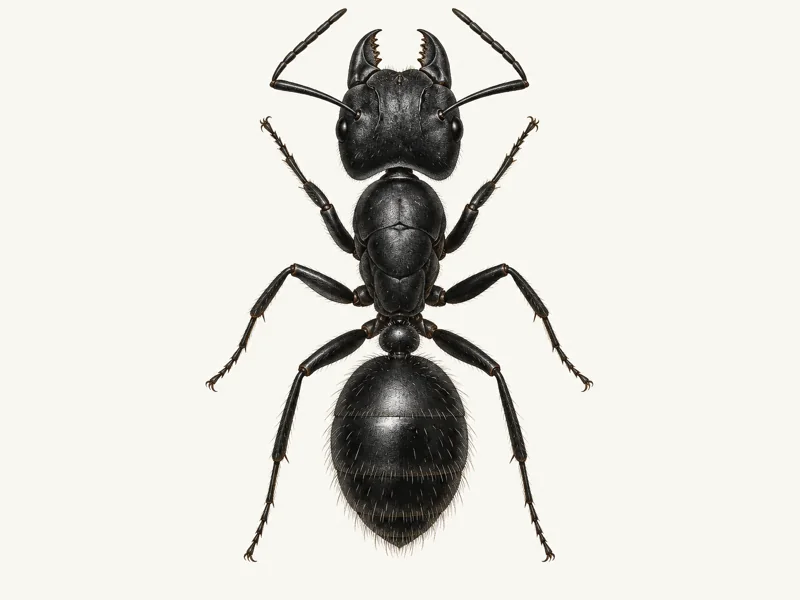
Annotated Anatomy Key (Carpenter Ant)
- Elbowed antennae: Sharply bent antennae on a broad heart-shaped black head (straight in termites).
- Rounded black thorax: Evenly arched wingless thorax without spines; workers vary widely in size (6–13 mm).
- Single waist node: EXACTLY ONE distinct small node (petiole) pinching the narrow waist.
- Silky matte abdomen: Plump black gaster lightly dusted with pale golden-gray hairs; excavates damp wood.
Carpenter Ants Field Checklist
- Large black, red-and-black, or brown ant with a smoothly rounded thorax profile
- Elbowed antennae and a single narrow waist node (petiole)
- Excavates smooth galleries in damp wood rather than eating wood like termites
- Pushes out piles of coarse sawdust-like frass mixed with dead insect fragments
Side-by-Side Look-Alike Comparisons
Carpenter Ants Size at True Relative Scale
Quick Answer: Yes, carpenter ants (genus Camponotus) are common in Arizona, with 6,198 verified GBIF sightings statewide. Activity peaks in April, July, and August. They hollow out damp or damaged wood for nests, so moisture control and exclusion are the best first steps.
Where Carpenter Ants Live in Arizona
Are there carpenter ants in Arizona? Records say so, and from many habitats. GBIF occurrences cluster in Cochise, Pima, Yavapai, and Pinal counties, which span desert grassland, Sonoran lowlands, and cooler oak and pine country.
Recorded species include Camponotus ocreatus, Camponotus sansabeanus, and the bicolored carpenter ant (Camponotus vicinus). Outdoors, colonies nest in dead trees, stumps, logs, and under stones. Indoors, they favor wood softened by leaks, such as roof edges, window frames, door thresholds, and wall voids near plumbing.
Arizona's mix of hot southern lowlands, monsoon humidity, and cooler northern highlands means nest sites vary. Irrigated landscapes in the desert can create the moisture these ants seek.
When Carpenter Ants Are Most Active in Arizona
Arizona carpenter ant season shows two clear bumps in the sighting data: April and then July and August. Spring warming sends workers out to forage and can trigger winged reproductives to leave mature colonies. Summer monsoon moisture drives a second surge.
Carpenter ants forage mostly at night, so many homeowners notice them after dark near kitchens and bathrooms. In the heat of the southern lowlands, they often stay in cooler, damp shelter by day.
- Spring (April): foraging increases and swarmers may appear.
- Midsummer (July-August): monsoon humidity boosts activity near moist wood.
- Cooler months: colonies slow down, though indoor nests near warm walls may stay active.
Look-Alikes Frequently Mistaken for Carpenter Ants
Arizona carpenter ant identification starts with body shape. Carpenter ants have a single node between thorax and abdomen, a smoothly rounded upper thorax profile, and a circle of fine hairs at the abdomen tip. Workers vary in size within one colony, and many are fairly large.
- Termites: Have a thick waist, straight beaded antennae, and wings of equal length. Carpenter ants have a pinched waist and elbowed antennae.
- Flying ants: Winged reproductives of many ant species look similar. Check the waist and wing lengths: ants have larger front wings than hind wings.
- Fire ants: Smaller, usually reddish, with two nodes and a stinging habit. They nest in mounds in soil, not in wood.
- Pavement ants: Small, brownish-black, with two nodes and parallel lines on the head and thorax. They nest under slabs and pavers.
Carpenter ants do not eat wood. They excavate smooth galleries and push out coarse sawdust-like debris called frass, often mixed with insect parts. Termite damage, by contrast, usually contains mud and soil.
How to Keep Carpenter Ants Out of Your Arizona Home
Anyone asking how to prevent carpenter ants in Arizona should begin with moisture and access. University cooperative extension IPM guidance consistently emphasizes eliminating wet wood and cutting off entry routes before using any product.
- Fix roof, gutter, plumbing, and swamp cooler leaks promptly, and replace water-damaged wood.
- Trim branches and shrubs that touch the roof or siding.
- Store firewood off the ground and away from the house.
- Seal gaps around utility lines, windows, doors, and foundation cracks.
- Keep irrigation from soaking walls and wood trim.
- Clean up food and pet-food residue, and store sweets in sealed containers.
- Remove stumps and dead wood near the structure.
If you use any bait or insecticide, read the EPA-registered label and follow it exactly. Baits tend to work better than sprays alone because workers carry them back to the colony.
When to Call a Licensed Arizona Pest Professional
- You find frass piles or hear faint rustling inside walls.
- Large numbers of winged ants appear indoors.
- Trails of big ants keep returning despite sanitation and sealing.
- You suspect a nest in structural wood, or damage is visible.
- You cannot find the nest, or there may be satellite colonies.
Carpenter ants are a structural pest and are not generally dangerous, but they can bite when handled. If a bite or sting causes a severe reaction, contact US Poison Control at 1-800-222-1222 and a doctor.
IPM Prevention Checklist for Arizona Homes
- Repair roof leaks, clogged gutters, and plumbing drips that soften structural wood
- Trim tree branches touching rooflines or siding
- Store firewood elevated and away from exterior walls
 EXCLUSION BLUEPRINT
Inspect eaves, screens, door sweeps, foundation cracks, and utility penetrations around Arizona homes before peak season.
Carpenter Ants in Arizona: Frequently Asked Questions
Are carpenter ants in Arizona dangerous to my house?
They can be. Over time, established colonies hollow out wood, especially if moisture problems persist. Damage is usually slower than termite damage, but early action limits repairs.
Which Arizona counties have the most carpenter ant sightings?
GBIF records are highest in Cochise, Pima, Yavapai, and Pinal counties. Sightings reflect both ant abundance and where people report observations.
How can I tell carpenter ants from termites?
Look at the waist, antennae, and wings. Carpenter ants have a narrow waist and elbowed antennae, while termites have a broad waist and straight antennae.
Do carpenter ants eat wood?
No. They chew wood to build nest galleries and discard it as frass. They feed on insects, honeydew, and sugary or greasy foods.
Sources & Verification
- Penn State Extension — Carpenter Ants
- University of Minnesota Extension — Carpenter Ants
- GBIF Global Biodiversity Occurrence Records
Data refreshed · Editorial & GBIF Methodology